
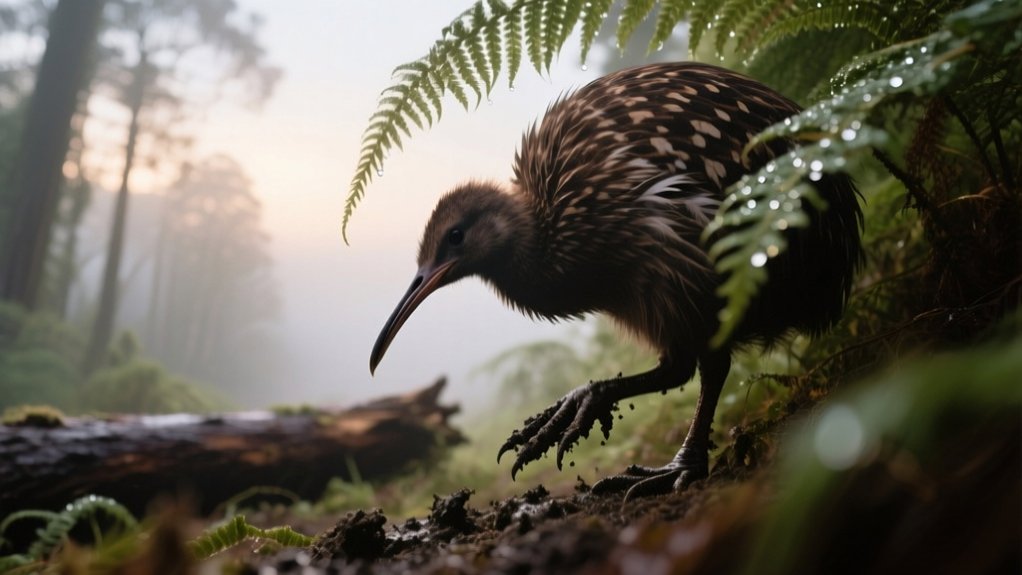
To check if the kiwi bird is extinct, you should consult updated conservation status databases like the IUCN Red List and national wildlife reports that track species population and trends. Look for data on population size, breeding success, and threat levels such as predation and habitat loss.
Field monitoring methods like acoustic surveys and radio-tracking provide detailed insights into survival. Understanding these indicators clarifies the kiwi’s status and reveals ongoing conservation impacts vital to its persistence.
Current Conservation Status of Kiwi Species

Although all kiwi species remain classified as threatened or conservation dependent under the New Zealand Threat Classification System, their population trends vary considerably.
You’ll find that the overall wild kiwi population is roughly 68,000, with unmanaged populations declining about 2% annually.
Only 5–10% of kiwi chicks survive to adulthood without active management. North Island brown kiwi numbers are increasing, projected from 24,550 to 32,081 by 2030, while species like the Great spotted kiwi and Tokoeka are declining.
Intensive predator control in managed areas has stabilized or boosted some populations, with some doubling every decade.
Key threats include introduced mammalian predators, habitat loss, and fragmentation. Stoats account for approximately half of kiwi chick deaths on the mainland, making predator control critical for chick survival.
You must consider these factors when evaluating kiwi conservation status or monitoring population viability.
Official Sources for Kiwi Extinction Verification
When verifying whether the kiwi bird is extinct, you should consult authoritative official sources that provide up-to-date and rigorously obtained data. Key sources include New Zealand’s Department of Conservation (DOC), which offers detailed species status, threat assessments, and recovery plans. Kiwis are currently classified as vulnerable or near threatened, reflecting ongoing conservation challenges but confirming their continued existence in the wild.
Internationally, the IUCN Red List confirms kiwi species as “Vulnerable” or “Endangered,” not extinct. NGOs like Save the Kiwi provide corroborating population data and ongoing conservation efforts. Peer-reviewed scientific studies also verify active wild populations through genetic and demographic monitoring.
| Source Type | Key Contributions |
|---|---|
| DOC | National status, threat assessments, recovery plans |
| IUCN Red List | Global threat categories, population trends |
| Save the Kiwi (NGO) | Population estimates, conservation programs |
| Scientific Literature | Genetic and field population monitoring |
| Treaty Legislation | Legal recognition of iwi conservation roles |
Population Estimates and Trends Over Time
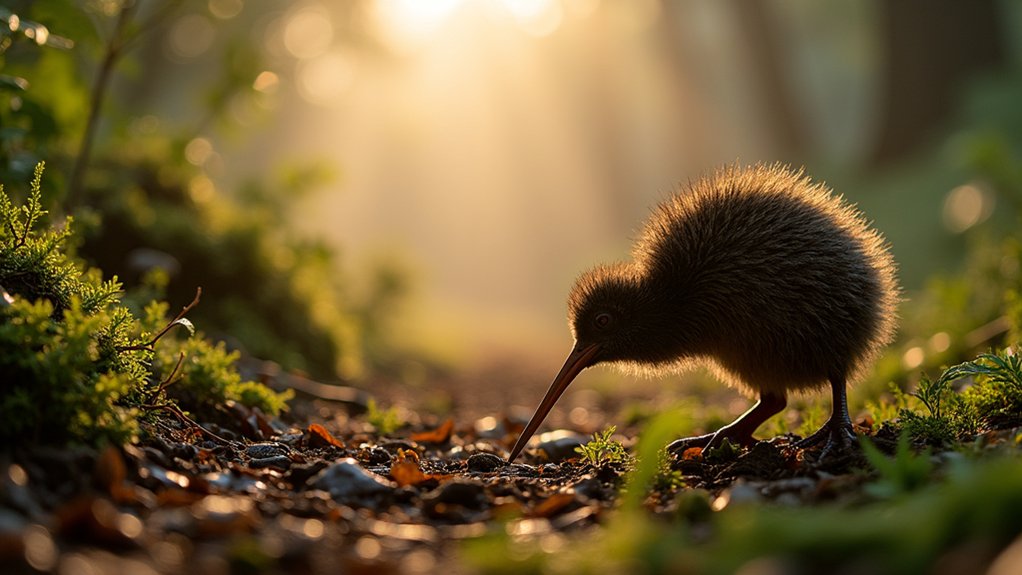
After consulting authoritative sources to verify the kiwi’s conservation status, examining population estimates and trends over time provides a quantitative perspective on its current viability.
The total wild kiwi population is approximately 68,000 birds, down from about 12 million historically. Unmanaged populations decline roughly 2% annually, whereas managed populations remain stable or increase.
Wild kiwi populations now number around 68,000, declining without management but stabilizing or growing with conservation efforts.
Species-level trends vary. North Island brown kiwi numbers are projected to rise by 2030, while great spotted kiwi are expected to decline. Recently, a small breeding population of little spotted kiwi, previously thought extinct on the mainland, was rediscovered in Westland. This remarkable find includes nine individual birds, indicating population stability in a previously uncertain area.
Key points to note:
- Unmanaged populations lose about 20 birds weekly nationally, causing long-term decreases.
- Intensive management programs enable some populations to double every decade.
- Regional sanctuaries like Maungatautari show rapid growth, confirming management effectiveness.
These data demonstrate kiwi survival depends heavily on ongoing conservation efforts.
Major Threats Impacting Kiwi Survival
Understanding the major threats impacting kiwi survival is essential for implementing effective conservation strategies.
Predation by introduced mammals like stoats, dogs, ferrets, and cats causes significant mortality. Stoats kill about 50% of chicks, and dogs halve adult life expectancy in dense populations. These predators are the primary threat to kiwi survival, as no land-based mammalian predators existed before human arrival, making kiwis particularly vulnerable to introduced predators.
Habitat loss from deforestation and fragmentation restricts dispersal and reduces breeding success. Forest clearing for farmland has severely impacted kiwi habitats, drastically altering New Zealand’s landscape and further endangering their survival.
Genetic bottlenecks arise due to small, isolated populations, increasing inbreeding and lowering reproductive rates.
Disease and parasites pose emerging risks, amplified by limited immune diversity in fragmented groups.
Structurally, kiwis’ flightlessness and delicate skeletal features make them more vulnerable to predator attacks and injuries, especially from dogs.
Combined, these factors create severe recruitment deficits, with only 5-10% of chicks reaching adulthood in unmanaged areas.
This really underscores the urgent need for targeted mitigation efforts.
Evidence Supporting Kiwi Population Persistence
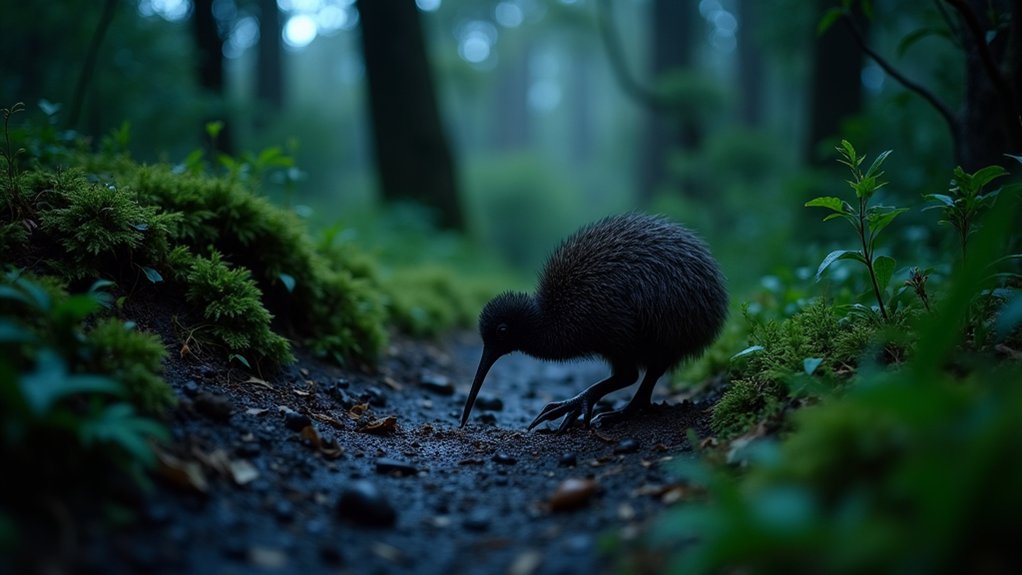
You can confirm kiwi population persistence by looking at consistent monitoring data that shows stable or even increasing numbers in managed areas.
For example, conservation efforts like predator control and habitat protection have made a real difference.
Take the North Island brown kiwi, for instance—these measures have led to measurable population growth. In fact, the population increased by at least 7,000 birds in four years due to efforts from multiple conservation projects population growth.
Population Trends
Although kiwi populations have faced dramatic declines over the past century, recent assessments estimate that around 68,000 birds persist across all species. You should note that these numbers reflect a stabilization after a steep drop from millions to under 100,000 by the late 20th century.
When examining population trends, consider: North Island brown kiwi dominate the current population, while smaller groups like kiwi pukupuku number about 2,000 and show signs of growth. Unmanaged populations decline at roughly 2% annually, indicating ongoing pressures without intervention. In recent years, conservation efforts have reached an unprecedented scale with record translocations of 324 birds during the 2025 kiwi-handling season.
Monitoring data, including acoustic surveys and radio-tagging, confirm active breeding and movement across varied habitats, supporting population persistence.
These quantitative trends provide critical evidence that kiwi remain extant, though vulnerable, requiring continued detailed population assessments.
Conservation Successes
Since predator control is critical, managed kiwi sites have markedly improved chick survival rates, boosting local population persistence. Intensive predator management increases chick survival to adulthood from about 5–10% in unmanaged areas to approximately 65%, as seen in Operation Nest Egg initiatives.
The Department of Conservation’s sanctuaries and fenced sites reduce stoat, cat, and dog predation, stabilising core populations. Offshore island sanctuaries like Kapiti Island sustain translocated populations exceeding 1,300 birds, demonstrating long-term viability.
Kōhanga sites such as Sanctuary Mountain Maungatautari support around 2,500 kiwi, sufficient for self-sustaining populations and further releases. These efforts have led to improved IUCN status, with two species downlisted from Endangered to Vulnerable.
Without ongoing conservation, kiwi populations risk extinction within two generations, underscoring current successes depend on sustained predator control and habitat management.
Conservation Efforts and Their Impact
Multiple coordinated conservation efforts have markedly improved kiwi survival rates and population growth. These efforts focus on reducing predation, improving habitat, and supporting juvenile survival. You can observe significant impacts from:
Coordinated conservation efforts have significantly boosted kiwi survival and population growth.
- Predator control and sanctuaries: Intensive management targeting stoats, cats, dogs, and ferrets boosts chick survival from 11% to 50–60% within sanctuaries like Whangārei and Moehau, where populations have doubled over a decade.
- Operation Nest Egg: Removing eggs or chicks for captive rearing until they reach 1–1.2 kg increases survival chances to 65%, compared to 10% in the wild, facilitating safer reintroduction. This program involves several zoos and captivity institutions that contribute to kiwi conservation efforts through captive rearing.
- The Kiwi Recovery Plan 2018–2028: This national strategy integrates predator control, captive rearing, research, and community involvement to reverse population declines and improve genetic diversity.
These integrated actions have strengthened kiwi populations and habitat resilience.
Key Indicators to Monitor for Future Extinction Risk
You need to keep a close eye on population trends, paying special attention to species-specific counts and how successful their breeding is. This way, you can spot any declines early on.
Also, regularly updated conservation status assessments, like the IUCN Red List classifications, are super important—they give you key benchmarks to evaluate risk levels.
By monitoring these indicators, you’ll be better equipped to identify threats as they arise. For example, understanding the impact of predatory activity on kiwi chick survival is crucial since only 5% survive to adulthood.
Plus, it helps you figure out where to focus your efforts so you can step in before a species faces extinction.
Population Trends Monitoring
Although monitoring kiwi populations presents challenges due to their elusive nature, several key indicators provide reliable measures of their status and trends over time.
You can evaluate population trends by focusing on:
- Acoustic Monitoring: Use passive recorders to capture kiwi calls over consecutive nights. This enables occupancy analysis that models presence probability and tracks changes without disturbing birds. This method aligns with bird monitoring considerations that emphasize non-invasive techniques suitable for elusive species.
- Radio-Tracking: Monitor individual movement, survival, and territory use. Declines in tagged individuals or altered movement patterns signal population stress or decline.
- Territory Mapping: Track daytime burrows and nocturnal calls to detect shifts in territory size, distribution, and connectivity. Contraction or fragmentation indicates increased extinction risk.
Combining these methods helps you form an objective understanding of kiwi population dynamics.
This is critical for evaluating future extinction risk.
Conservation Status Updates
Since predator pressure, habitat condition, genetic diversity, and management coverage directly influence kiwi survival, monitoring these indicators offers critical insights into future extinction risk.
You’ll want to track predator sign and control coverage closely, as unmanaged mortality drives a 2% population decline annually, with only 5–10% of chicks reaching adulthood.
Habitat metrics like fragmentation, legal protection, and land-use trends reveal long-term viability, especially given more than 90% lowland forest loss.
Genetic monitoring helps you assess inbreeding risks and adaptive potential through effective population size and genomic data.
Finally, management coverage matters: over 70% of populations remain unmanaged, so expanding sanctuaries and control programs is essential. Recent efforts have seen a record number of 324 kiwi birds translocated during the 2025 season to boost population resilience and spread.
Frequently Asked Question
What Do Kiwi Birds Eat in the Wild?
You’ll find that kiwi birds eat an omnivorous diet dominated by invertebrates like earthworms, beetles, and grubs.
They also consume snails, spiders, and caterpillars, plus fruits, berries, seeds, and leaves from native plants.
Occasionally, they feed on aquatic prey such as freshwater crayfish and eels.
Their long bills with nostrils at the tip help detect prey underground, while gritty stones in their gizzard aid digestion of tough animal and plant material.
How Long Do Kiwi Birds Live?
Kiwi birds typically live between 25 to 50 years in the wild, with some species reaching up to 100 years under ideal conditions.
You should know that without predator control, only about 5 to 10% of chicks survive to adulthood, greatly limiting realized lifespan.
In managed habitats, survival rates improve, allowing kiwis to reach their full potential.
Captivity extends their lifespan further, often up to 33 or even 40 years, due to controlled environments and veterinary care.
Are Kiwi Birds Nocturnal or Diurnal?
Kiwi birds are nocturnal, meaning you’re most likely to observe them active from dusk until dawn. They spend daylight hours resting in burrows or dense vegetation to avoid predators.
Their sensory adaptations support this lifestyle: small eyes with improved rod cells favor low-light vision, while their nostrils at the beak’s tip allow them to detect prey underground by smell.
This nocturnal behavior helps kiwi efficiently forage and avoid threats during the night.
Can Kiwi Birds Fly or Only Run?
You won’t catch a kiwi bird taking to the skies anytime soon; they can’t fly. Their wings are vestigial, about an inch long, hidden beneath hair-like feathers. They lack the necessary musculature and skeletal structure, like the missing keel on their sternum.
Instead, they rely on powerful legs, which make up a third of their body weight. This lets them run swiftly and dig efficiently.
Flightlessness is a specialized adaptation, not a temporary inconvenience.
How Do Kiwi Birds Care for Their Chicks?
You’ll find that male kiwi birds incubate eggs alone, leaving nests to feed early on.
They maintain humidity with damp feathers and stay seated until hatching, losing significant weight.
After chicks hatch, parents don’t feed them; chicks rely on yolk sac nutrition for days.
Kiwi chicks hatch fully developed, begin moving after a few days, and forage instinctively.
Parental care focuses on incubation and protection until chicks become independent.
Conclusion
To truly know if the kiwi bird is extinct, you must rely on verified data from official conservation sources and population studies. Remember, extinction isn’t always a sudden silence but a slow fading, like a dimming light.
By tracking population trends, major threats, and ongoing conservation efforts, you gain a clear, evidence-based picture. Staying vigilant with key indicators guarantees you won’t mistake temporary decline for the final disappearance of this unique species.