
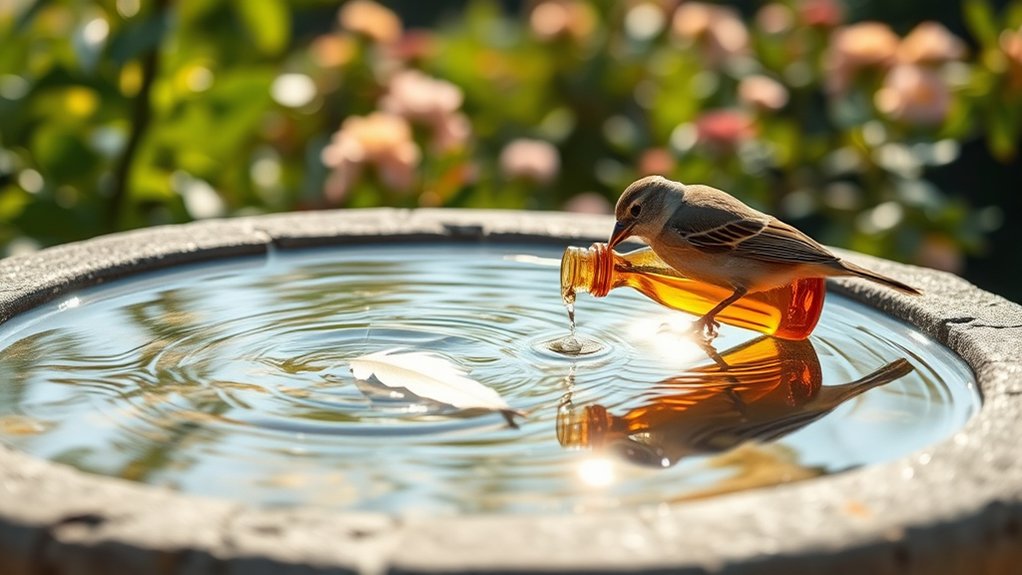
You can use apple cider vinegar safely in your bird bath to naturally prevent algae and harmful bacteria, keeping water fresher for your feathered visitors. Just add about one teaspoon per gallon or a capful for smaller baths, and clean regularly with a diluted vinegar solution.
This method avoids harsh chemicals, protects wildlife like bees, and supports a healthier environment. To get the best results and seasonal tips, you’ll find more helpful insights ahead.
How Apple Cider Vinegar Prevents Algae in Bird Baths
Although many bird bath cleaners rely on harsh chemicals, you can prevent algae growth naturally by adding apple cider vinegar. Its acidic nature effectively combats algae, stopping it from taking over your bird bath.
When you add apple cider vinegar regularly, it inhibits harmful bacteria and toxins that often develop in stagnant water, creating a healthier environment for birds. This natural solution not only keeps the water clear but may also offer birds beneficial vitamins and minerals.
Community members have found that using diluted apple cider vinegar maintains clean, appealing bird baths without risking birds’ health. By choosing apple cider vinegar, you avoid harsh chemicals and support a safer, more inviting space for your feathered visitors.
How to Add Apple Cider Vinegar Safely to Your Bird Bath
To keep your bird bath clean and safe using apple cider vinegar, you need to add it in the right way.
Start by emptying and thoroughly cleaning the bird bath to remove algae and debris. Then, mix one teaspoon of vinegar per gallon of water for a safe, diluted solution.
Empty and clean the bird bath, then add one teaspoon of vinegar per gallon of water for a safe solution.
If your bird bath is smaller, use just a capful of vinegar to avoid overwhelming the birds. Always use a plastic container when mixing the vinegar, as metal can react and harm birds.
After adding the vinegar solution, monitor the water temperature and quality regularly, especially during hot weather. Heat can affect both the vinegar’s effectiveness and the birds’ health.
Following these steps guarantees you provide a safe, algae-free environment for your feathered visitors.
The Best Dosage of Apple Cider Vinegar for Bird Bath Water
When you add apple cider vinegar to your bird bath, sticking to the right dosage is key to keeping the water safe and effective against algae. The recommended amount is one capful or one teaspoon per gallon of water. This concentration prevents algae growth without overwhelming the birds visiting your bath.
Using apple cider vinegar at this level is safe for regular use and helps maintain a healthy environment by reducing harmful bacteria and pests like mosquitoes. Plus, it provides trace vitamins and minerals that benefit birds’ well-being.
Be sure to avoid higher concentrations, as apple cider vinegar should remain much milder than chemical cleaners to protect local wildlife. Following this dosage helps you create a clean, inviting bird bath that supports your feathered friends’ health.
How to Clean Your Bird Bath Using Apple Cider Vinegar
Cleaning your bird bath with apple cider vinegar is a simple and natural way to keep it fresh and inviting. Start by emptying the bird bath completely.
Mix one part apple cider vinegar with ten parts water to create a cleaning solution. Use a stiff-bristle brush to scrub the sides and bottom, focusing on algae or grime spots.
Combine one part apple cider vinegar with ten parts water and scrub with a stiff brush to tackle algae and grime.
Once scrubbed thoroughly, rinse the bird bath well with clean water to remove all vinegar residue.
After cleaning, you can add one capful of apple cider vinegar to the fresh water to help prevent algae growth.
Keep an eye on your bird bath regularly and change the water every few days to maintain a healthy environment for your feathered visitors.
How Often Should You Clean and Treat Your Bird Bath?
Keeping your bird bath clean with apple cider vinegar is a great start, but you might wonder how often you should repeat the process to keep it safe and inviting.
To prevent algae and bacteria buildup, clean your bird bath every few days, especially during warmer months when algae grows faster.
After scrubbing, add one capful of apple cider vinegar to the water to help keep it fresh and discourage algae growth safely. Changing the water regularly, combined with this treatment, also reduces mosquito breeding risks.
While some bird lovers clean daily for ideal hygiene, others clean weekly.
Whatever frequency you choose, consistent maintenance is key to supporting your local birds with a healthy, attractive bath.
Picking the Best Bird Bath Material for Vinegar Use
When you’re picking out a bird bath to use with apple cider vinegar, it’s important to choose a material that won’t react or corrode.
Plastic waterers are a fantastic option because they’re non-porous, easy to clean, and safe for the birds.
You’ll want to stay away from metal baths, though, since vinegar can cause some harmful reactions and end up damaging the surface.
Materials like polypropylene, commonly found in bird baths such as the VIVOHOME 28 Inch Polyresin Antique Outdoor Garden Bird Bath, offer excellent weather resistance and durability while being safe for vinegar use.
Material Compatibility With Vinegar
Although apple cider vinegar offers effective cleaning benefits, you need to choose your bird bath material carefully to avoid harmful reactions.
Using vinegar to clean metal bird baths isn’t safe because acidic vinegar can cause metals like aluminum and copper to leach toxins, posing risks to birds.
Instead, opt for plastic bird baths, which don’t corrode or chemically interact with vinegar, making them a safer choice for regular cleaning.
Ceramics and glass might also be compatible, but you should inspect them regularly for cracks or damage caused by vinegar exposure.
Benefits Of Plastic Waterers
Three key benefits make plastic waterers the top choice for using apple cider vinegar in bird baths. First, plastic won’t react with vinegar, keeping water safe for birds. Second, they’re lightweight, making cleaning and refilling simple. Third, plastic waterers often have UV protection, reducing algae growth. Additionally, their durable materials ensure long-lasting use in various weather conditions. Many plastic bird baths also feature thermostatic control to maintain water temperature efficiently.
| Benefit | Why It Matters | How You Feel |
|---|---|---|
| Non-reactive | Keeps water safe | Confident in bird health |
| Lightweight | Easy to clean & maintain | Relieved, less hassle |
| Affordable | Accessible for all budgets | Empowered to help birds |
| UV Protection | Reduces algae growth | Satisfied with clarity |
| Durable | Long-lasting, reliable | Proud of your setup |
Choose plastic waterers to guarantee a safer, cleaner bird bath environment with vinegar use.
Health and Environmental Benefits of Apple Cider Vinegar vs. Chemicals
Because you want to keep your bird bath safe for wildlife, choosing apple cider vinegar over harsh chemicals is a smart move.
Apple cider vinegar effectively reduces algae without releasing harmful toxins that bleach or synthetic cleaners do.
Its natural acidity cleans surfaces gently, preserving your bird bath’s integrity while providing a safe water source.
Unlike chemicals, apple cider vinegar offers vitamins and minerals that can benefit birds’ health, enhancing their wellbeing naturally.
By using this eco-friendly option, you’re not only maintaining a cleaner bird bath but also supporting a healthier ecosystem.
This choice promotes biodiversity and protects local wildlife, making apple cider vinegar a responsible and beneficial alternative to chemical treatments for bird enthusiasts like you.
Is Apple Cider Vinegar Safe for Bees and Other Wildlife?
How safe is apple cider vinegar for bees and other wildlife when used in bird baths? You’ll be glad to know that apple cider vinegar, at the low concentrations typically used, is generally safe for bees.
It doesn’t release harmful toxins, making it an eco-friendly choice that won’t negatively impact other wildlife. Bees might avoid the water if they dislike the taste, but the risk of harm is minimal.
Still, you should monitor bee activity around your bird bath, especially during peak foraging periods, to ascertain their well-being. Many bird lovers report successfully using apple cider vinegar without adverse effects on local wildlife, proving it’s a natural, safe cleaning agent that benefits your outdoor environment without compromising the health of pollinators or other creatures.
Seasonal Tips for Using Apple Cider Vinegar in Bird Baths
Since apple cider vinegar is safe for bees and wildlife, you can confidently use it year-round in your bird bath.
In warmer months, increase the frequency of apple cider applications to control algae growth effectively.
However, be cautious with concentration during hot weather, as heat can intensify acidity and affect birds’ health.
Use apple cider vinegar sparingly in heat to protect birds from intensified acidity.
Come winter, reduce or pause apple cider use to prevent ice formation, ensuring the bird bath stays unfrozen and accessible.
Always watch how birds interact with the water and check its quality throughout each season.
This way, you can adjust apple cider vinegar usage to maintain a clean, safe environment that encourages birds to visit your bath all year long.
What Bird Lovers Say About Using Apple Cider Vinegar
When you add a small amount of apple cider vinegar to your bird bath, many bird lovers find it greatly reduces algae growth, keeping the water cleaner and more inviting for birds.
You can use about one capful per bath or a teaspoon per gallon of water to maintain freshness without overwhelming the birds’ senses.
Enthusiasts often share how cider vinegar not only prevents algae but also provides beneficial vitamins, boosting bird health.
However, you should avoid using vinegar in metal baths since it may cause reactions.
Frequently Asked Questions
Can Apple Cider Vinegar Affect the Taste of Bird Bath Water?
Apple cider vinegar has minimal taste impact on bird bath water when used properly. You won’t notice a strong flavor change because the recommended amount, about one teaspoon per gallon, is very mild.
Most birds don’t avoid the water, showing they adapt well to any slight taste difference.
If you watch closely, you’ll see birds continue drinking comfortably, which means the taste impact is usually negligible and won’t deter them from using your bird bath.
Does Apple Cider Vinegar Attract or Repel Certain Bird Species?
You won’t find apple cider vinegar causing a stampede of bird species nor sending them flying away in droves.
It neither attracts nor repels specific bird species markedly.
Instead, its subtle presence keeps water fresh and insect-free, making your bird bath more appealing overall.
Is It Safe to Use Apple Cider Vinegar in Bird Baths With Fountains?
Yes, it’s safe to use apple cider vinegar in bird baths with fountains.
For effective fountain maintenance, add about one capful per bath to keep algae at bay and maintain clean water.
This dosage is gentle enough not to harm birds while enhancing water freshness.
Just keep an eye on water levels and quality so the vinegar doesn’t become too concentrated, ensuring a healthy environment for your feathered visitors.
Can Apple Cider Vinegar Prevent Mosquito Larvae in Bird Baths?
Yes, apple cider vinegar can act as a natural mosquito repellent in your bird bath.
By adding about one teaspoon per gallon of water, you create an environment that discourages mosquito larvae from developing.
This simple step helps keep mosquito populations down without harming the birds.
To maximize effectiveness, change the water regularly and maintain your bird bath.
You’ll enjoy a cleaner, safer space for your feathered visitors.
How Does Apple Cider Vinegar Interact With Other Natural Additives?
Did you know 70% of bird owners use natural additives for cleaner baths?
Apple cider vinegar has great Natural Additive Compatibility when mixed with bird-safe essentials like lemon juice or aloe vera. This enhances the bath’s health benefits.
You can safely combine it with these mild additives to deter algae and soothe birds.
Just avoid harsh chemicals like bleach, which react dangerously. Always monitor mixtures to keep water safe and fresh for your feathered friends.
Conclusion
Using apple cider vinegar in your bird bath is a simple, natural way to keep the water fresh and algae-free, much like a trusty quill pen keeping ink neat in days of old. You’ll protect your feathered friends and the environment without harsh chemicals.
Just remember to add the right amount and clean regularly. With these easy steps, your bird bath becomes a healthier haven, inviting nature’s beauty right to your backyard.