

You won’t find naturally featherless birds, as feathers are crucial for insulation, flight, and protection. Feather loss can occur due to molting, disease, parasites, or genetic mutations, but no bird species lacks feathers entirely.
Without feathers, birds face severe health and temperature regulation challenges. Understanding their feather biology highlights the evolutionary importance of plumage.
If you want to uncover how feather loss impacts birds and what factors cause it, this overview provides essential insights.
Natural Occurrence of Feather Loss in Wild Birds
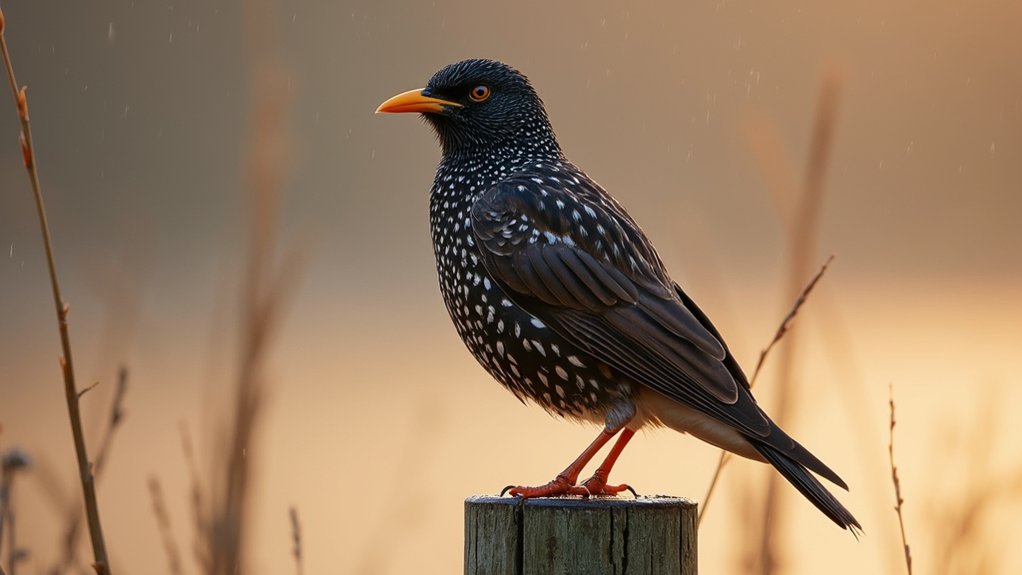
Although you mightn’t always notice it, wild birds undergo natural feather loss primarily through seasonal molting. This is a critical process that replaces worn and damaged feathers to maintain ideal flight and insulation. You’ll find this molting aligns with hormonal changes triggered by daylight duration, preparing birds for migration and harsher winter conditions. Feathers endure continuous degradation from rain, wind, UV exposure, and physical abrasion during activities like preening and dust bathing. Juvenile birds also molt to change into adult plumage, driven by developmental hormonal signals. Furthermore, environmental stressors such as predator encounters and habitat disruption can induce abnormal feather loss, compromising flight and thermoregulation. In addition, stress can cause birds to engage in excessive feather-plucking behavior, leading to significant feather loss beyond normal molting patterns. Diseases and parasites including circovirus, polyomavirus, lice, mites, and fungal infections can further cause localized feather loss, illustrating the complex, natural dynamics influencing wild bird feather maintenance.
Parrot Species Known for Featherlessness
When examining parrot species known for featherlessness, you encounter both pathological conditions and natural adaptations that result in reduced or absent plumage.
For example, the Bald Parrot (Pyrilia aurantiocephala), native to the Amazon Basin, naturally exhibits minimal feathering on its orange head. This represents a rare, naturally occurring featherless trait.
Conversely, feather loss in captive parrots often stems from pathological causes like PBF disease, which Blondie the Lovebird suffered from. This led to permanent feather loss, dry skin, and thermoregulatory challenges. Extra caution is necessary to prevent falls and ensure safety due to the lack of feathers.
Other disorders, such as follicular cysts and chrysanthemum feather disease, also contribute to feather loss. These conditions impair feather regrowth and behavior, requiring lifelong management.
Understanding these distinctions helps clarify that featherlessness in parrots arises from both evolutionary adaptations and disease processes.
Biological Composition and Structure of Feathers

You’ll find that feathers are primarily made of beta-keratin, a protein also found in human hair. This gives them both strength and flexibility through a complex nanoscale architecture. Feather follicles, similar to hair follicles, are responsible for feather growth. Their structure includes a central rachis with branching barbs and barbules. These parts interlock to form functional surfaces that are adapted for flight, insulation, or sensory roles.
Feather Protein Composition
Feathers consist mainly of β-keratin, a specialized protein found exclusively in avian and reptilian tissues such as scales, claws, and beaks. This β-keratin forms tough, insoluble filaments about 3 nanometers wide, stabilized by strong disulfide bonds that confer chemical and physical resilience.
Feather keratin includes vital amino acids, with cysteine-rich domains enabling cross-linking essential for durability. While β-keratin dominates, minor α-keratins appear in structures like the calamus. The protein’s hierarchical organization spans nano to macro scales, supporting multifunctionality.
| Feature | Description |
|---|---|
| Primary Protein | β-keratin (feather corneous β-protein) |
| Protein Content | ~91% in chicken feathers |
| Filament Diameter | ~3 nanometers |
| Cross-linking Bonds | Disulfide bonds (cysteine-rich) |
| Amino Acid Types | Up to eight essential amino acids |
Structural Anatomy Basics
The intricate architecture of avian plumage reveals a multi-scale hierarchical organization spanning from nanometre-sized keratin filaments to metre-scale feather structures. You’ll find keratin filaments, just 3 nanometres wide, forming the foundational units.
From these, the central shaft or rachis divides into the calamus and rachis proper, supporting the vane made of parallel barbs. Each barb branches into barbules equipped with microscopic hooklets, creating a Velcro-like interlocking system that provides smoothness, flexibility, and structural integrity. The calamus is the hollow, base part of the rachis that anchors the feather in the follicle.
The rachis cortex contains longitudinal and circumferentially oriented fibers, while the epicortex’s alternating macrofibril layers reduce brittleness.
Feather types vary structurally: pennaceous feathers have tightly interlocking barbs for rigidity, plumulaceous feathers possess loose, fluffy barbs lacking hooklets, and contour feathers combine both features, tailored to their biological roles.
Evolutionary Adaptation Insights
Understanding the structural anatomy of feathers sets the stage for examining how these features have adapted through evolution, particularly in species that have lost the ability to fly.
You’ll find that superficial feather elements, like asymmetry essential for flight, disappear first, while foundational skeletal changes occur later due to higher metabolic costs.
Evolution prioritizes energy-efficient modifications. Feathers remodel through lineage-specific processes, shedding less critical traits before altering skeletal structures.
Genetically, regulatory regions guide forelimb reduction without impairing hind limbs, resulting in convergent morphologies across flightless birds.
Moreover, feather functions specialize. Penguin feathers improve swimming, whereas ostrich feathers lose aerodynamic roles.
Comparative timelines reveal that skeletal changes and body mass shifts coincide early in flight loss evolution.
This sequential adaptation clarifies how metabolic demands and genetic regulation orchestrate feather and skeletal transformations in flightless species. The study of these transitions provides valuable insights into how relaxed natural selection in isolated environments contributes to the loss of flight.
Genetic and Developmental Causes of Feather Loss
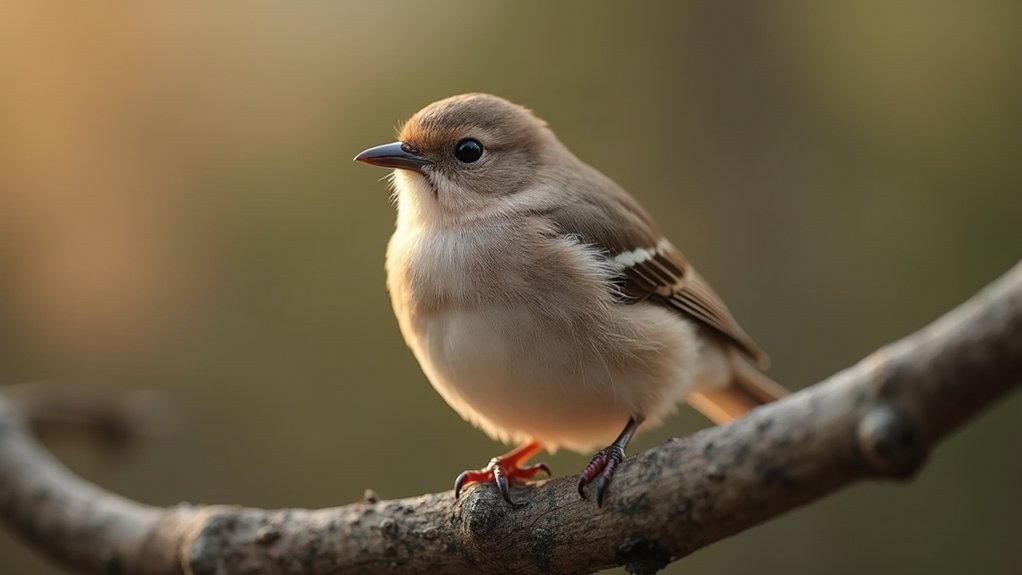
Although environmental factors influence feather condition, genetic and developmental mechanisms play a central role in feather loss. You need to understand that specific gene mutations and regulatory disruptions drive this phenomenon. For example, mutations in α-keratin gene clusters cause the frizzle phenotype, resulting in abnormal feather texture and incomplete feather coverage. The naked neck mutation, an autosomal incompletely dominant allele on chromosome 3, leads to substantial feather reduction on the neck. Furthermore, follicular cyst disorder impairs follicle development, causing permanent feather loss. Genes like GLI2 and CSPG4 regulate molt timing and feather regeneration, further linking hereditary control to feather distribution. Disruptions in epidermal differentiation proteins (EDCRP, EDMTFH) and β-keratin expression also impair feather morphogenesis, producing malformed or absent feathers. These genetic factors collectively determine feather presence, patterning, and structural integrity. Additionally, studies on migratory birds have shown that genetic variation in genes linked to molting can correlate with changes in seasonality and precipitation, highlighting the complex genetic control of feather replacement and condition.
Environmental and Medical Factors Influencing Featherlessness
Genetic factors lay the foundation for feather development, but environmental and medical influences often determine the final condition and presence of feathers in birds.
Poor housing conditions like small cages and low humidity damage feathers and impair growth. Feathers, composed primarily of keratin, develop from follicle outgrowths in the skin, which are sensitive to environmental stressors disrupting normal feather development. Additionally, birds require optimal environmental conditions because their reproductive and incubation periods can be affected by stress and poor health.
Nutritional deficiencies, especially in vitamin A and protein, cause malformation and increased feather loss. This is commonly seen in pet birds fed inadequate diets.
Infectious diseases such as beak and feather disease disrupt feather growth cells, leading to malformed or absent feathers.
Parasitic infestations by mites and lice inflict feather damage and loss, often compounded by bacterial infections.
Behavioral disorders triggered by stress or inadequate enrichment provoke excessive grooming and feather plucking.
These factors interact complexly, emphasizing the critical role of environment and health in maintaining feather integrity.
Impact of Feather Loss on Bird Health and Survival
When birds lose their feathers, their ability to fly deteriorates sharply, affecting survival chances. You’ll notice flightless birds struggle to escape predators and access food, increasing extinction risk. Feathers are key characteristics of birds, providing essential insulation to maintain body temperature.
Their immune defenses weaken without feathers’ protective barrier, making them vulnerable to infections. Physical injuries rise as environmental exposure intensifies wounds and dermatitis.
This vulnerability also raises slaughter rejection rates due to skin conditions, reflecting systemic health decline.
| Impact Factor | Consequence |
|---|---|
| Flight loss | Reduced escape and foraging efficiency |
| Immune vulnerability | Increased disease susceptibility |
| Physical injury risk | Higher trauma and infection rates |
| Health deterioration | Raised slaughter rejection |
| Extinction likelihood | Heightened due to compounded stressors |
You must understand these factors to grasp how feather loss critically endangers bird populations.
Temperature Regulation Challenges in Featherless Birds
When you lose the critical insulation that feathers provide, your body struggles to maintain stable temperatures against changes in the environment.
Without this thermal barrier, heat exchange becomes uncontrolled.
So, you end up having to rely a lot more on metabolic heat production just to survive. This is because birds must often raise metabolic rate in cold environments to prevent internal temperature drops.
This lack of insulation creates serious challenges in both cold and warm conditions, meaning you need to adopt very precise behavioral and physiological adaptations to cope.
Insulation Loss Effects
Although featherless birds benefit from certain heat dissipation advantages, they face significant temperature regulation challenges due to the loss of insulation. Without feathers, they experience increased metabolic demands to maintain core temperature in cooler environments, as insulation loss forces raised energy expenditure. Studies using thermal cameras have shown that feathers provide crucial insulation, reducing heat loss through the skin and trapped air, which featherless birds lack (thermal performance of feathers).
You’ll notice these birds rely heavily on unfeathered areas like legs, feet, bills, and eye regions to actively modulate heat exchange. However, these surfaces can’t fully compensate, requiring improved evaporative cooling through respiratory mechanisms such as panting or gular flutter.
This evaporative reliance increases water loss and metabolic stress, especially in arid conditions.
Furthermore, dynamic adjustments of heat dissipation areas help regulate temperature, but the absence of feathers fundamentally compromises thermal buffering, making these birds vulnerable to rapid temperature fluctuations and energy deficits during environmental stress.
Environmental Temperature Needs
Since feathers provide critical insulation and protection against environmental extremes, featherless birds face unique temperature regulation challenges. These challenges demand specialized physiological and behavioral adaptations.
However, truly featherless birds don’t naturally occur in the wild, as feathers are fundamental to avian thermoregulation. Birds rely on feathers to conserve heat in cold environments and dissipate heat in warm conditions. Recent studies have shown that birds primarily regulate heat loss through featherless body parts like beaks and legs, highlighting the importance of heat regulation mechanisms.
Without feathers, a bird would lose this crucial insulation, making it vulnerable to hypothermia or overheating. While some birds exhibit localized feather loss for thermoregulatory purposes, fully featherless birds would require alternative mechanisms such as increased metabolic heat production or behavioral adjustments like seeking microhabitats to maintain homeostasis.
Due to the lack of natural featherless bird species, specific studies on their environmental temperature needs remain hypothetical and unverified.
Historical and Scientific Documentation of Featherless Birds
While featherless birds have captured popular imagination, scientific and historical records do not document any truly featherless bird species.
All known birds retain feathers as a defining biological trait, even flightless species like penguins, ostriches, and kiwis.
You’ll find no credible evidence of birds naturally lacking feathers entirely; evolutionary history confirms feathers evolved early and persist universally.
| Aspect | Documentation Summary |
|---|---|
| Evolutionary History | Feathers present in all avian ancestors |
| Flightless Birds | Fully feathered despite flight loss |
| Scientific Records | No verified featherless bird species |
| Historical Accounts | Mythical, not factual, references |
This table clarifies that featherless birds remain absent from both scientific literature and historical accounts.
Care and Management of Birds Without Feathers
When caring for birds without feathers, you must prioritize creating an environment that compensates for their lack of natural insulation. Maintain a warm, dark, and quiet space to prevent hypothermia and minimize stress. It is important to observe from a distance to determine if parental care is present before intervening.
Provide daily direct sunlight or ultraviolet bulb exposure to support health. House the birds in raised, well-ventilated containers lined with natural materials while avoiding fabric to reduce injury risk.
Feeding requires species-specific nutrient protocols; consult a veterinarian to establish precise diets, including omega fatty acid supplementation when indicated. Minimize handling to lower stress levels.
Monitor health closely, and seek professional medical treatment, including pharmaceuticals, acupuncture, or behavioral consultations if necessary.
For rehabilitation, prioritize returning nearly featherless birds to their original nests or involve licensed wildlife rehabilitators to optimize survival and behavioral stability.
Evolutionary Significance of Feather Development
Although feathers are commonly associated with flight, their evolutionary development reflects a complex history of structural and functional adaptations. You’ll find that early feathers began as simple filamentous structures, evolving through stages like barbules before hooklets formed tight, flat planes. Recent research has shown that the flight feathers exhibit a common core design with specialized performance options that have been fine-tuned through evolution.
Fossil evidence from 100-million-year-old amber and Early Cretaceous deposits shows a clear progression from “dino fuzz” to complex pennaceous feathers with asymmetrical vanes, predating modern birds.
100-million-year-old fossils reveal feather evolution from simple “dino fuzz” to advanced, asymmetrical flight feathers before modern birds appeared
Molecular genetics reveal that genes like WNT2B regulate hooklet formation and feather diversity, integrating developmental pathways with physical structure.
Functionally, feathers initially served thermoregulation and later aerodynamic roles. The evolution of feather follicles and their hierarchical development enabled intricate morphologies, supporting insulation, waterproofing, and soaring.
Understanding these processes highlights feathers’ multifaceted evolutionary significance beyond mere flight capability.
Frequently Asked Question
Can Featherless Birds Fly as Well as Feathered Birds?
You can’t expect featherless birds to fly as well as feathered ones because feathers are essential for generating aerodynamic lift and controlling flight.
Without feathers, birds lose insulation, waterproofing, and the structural design needed for propulsion and maneuverability.
Featherless birds lack the necessary wing surface and control surfaces, making sustained flight impossible.
Do Featherless Birds Have a Normal Lifespan in Captivity?
You won’t find concrete data showing featherless birds have a normal lifespan in captivity because they don’t truly exist as a distinct group.
What you can rely on is that birds with fewer feathers often face increased health challenges, like temperature regulation issues and skin infections. These problems can shorten their life expectancy.
Are Featherless Birds More Prone to Predators in the Wild?
Yes, you’re more vulnerable to predators in the wild without feathers.
Feathers provide essential protection against injuries and physical trauma during attacks. Without them, your skin is exposed, increasing injury severity.
You’ll also struggle with thermoregulation, making you weaker and slower to escape.
Your impaired mobility and reduced ability to signal threats or defend territory further heighten your risk, putting you at a significant disadvantage compared to feathered birds.
Can Featherless Birds Reproduce Successfully?
You won’t find truly featherless birds, but those with reduced feathers can reproduce successfully if they manage thermoregulation effectively.
For example, female ostriches that cool their heads well under heat have higher egg-laying rates.
This thermoregulatory trait is heritable and improves reproductive output in hot conditions.
How Do Featherless Birds Communicate or Attract Mates?
You’ll find featherless birds sing like orchestras without their usual costumes, using their syrinx to produce chirps, warbles, and trills that broadcast territory and readiness.
They replace feathered dances with head bobs, wing flicks, and exposed skin hues, creating vivid visual signals.
Touch becomes a language too; allopreening and skin contact reinforce bonds, while synchronized flight patterns and wing beats add rhythmic, percussive notes to their complex communication symphony.
Conclusion
Feathers act like nature’s tailored armor, essential for birds’ survival and adaptation. While true featherless birds are rare and often result from genetic or environmental factors, understanding these exceptions reveals much about avian biology and evolution.
By studying feather loss, you gain insight into temperature regulation, health challenges, and evolutionary pathways. Ultimately, appreciating featherlessness deepens your grasp of the intricate balance between form, function, and environment in the avian world.