
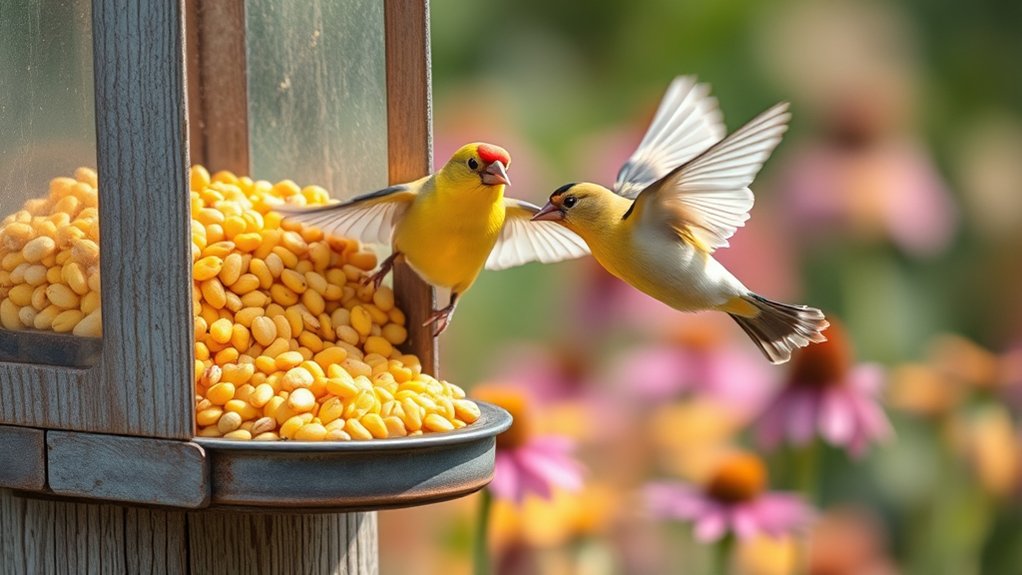
To attract finches and goldfinches, offer shelled sunflower seeds in platform or specialty finch feeders placed in open, visible areas near fresh water. Use modest seed amounts to minimize waste and deter unwanted birds, and keep the feeding area clean to encourage repeat visits.
Store seeds properly to maintain freshness and monitor for mold. Combining shelled sunflower seeds with nyjer or millet can draw even more finch species.
Explore these tips to create a vibrant finch-friendly backyard habitat.
Why Finches Love Shelled Sunflower Seeds
Although finches will eat various seeds, they especially love shelled sunflower seeds because these seeds offer easy access to their favorite food without the hassle of shelling.
When you use shelled sunflower seeds, you’ll notice an increase in finches, including house finches, at your feeder.
These seeds reduce waste since the birds can eat right away, avoiding the mess that comes with shells. Plus, shelled sunflower seeds help in attracting finches by minimizing unwanted competitors like house sparrows, so your backyard visitors can enjoy a peaceful feeding environment.
If you want to boost bird activity and enjoy watching more finches, offering shelled sunflower seeds is the efficient, bird-friendly choice that keeps your feathered guests happy and coming back.
How to Choose the Best Feeder for Shelled Sunflower Seeds
Now that you know why shelled sunflower seeds attract finches, choosing the right feeder can make a big difference in how many birds visit your yard.
Platform feeders are your best bet for shelled sunflower seeds. They reduce competition and let seeds spill, benefiting ground feeders too. Many smart feeders now come with weatherproof features that ensure durability in diverse outdoor conditions.
Platform feeders work great for shelled sunflower seeds, lowering competition and providing extra food for ground birds.
Tube feeders can work but often cause squabbles since they’ve limited perches, making them less ideal for multiple finches. You might also consider specialty finch feeders with small feeding ports to keep larger birds from dominating.
Quick-Clean finch feeders offer easy maintenance and protect seeds from the elements, keeping them fresh.
Combining platform feeders for shelled sunflower seeds with nearby nyjer seed feeders can maximize visits from house finches and goldfinches, creating a lively, diverse feeding area.
For example, the Kingsyard 2 Pack Tube Feeders provide transparent compartments for easy seed level monitoring, which helps maintain a fresh supply for your feathered visitors.
Where and When to Place Your Feeder for Maximum Visits
When you place your platform feeder in an open area with good visibility, you reduce competition and squabbling among finches while allowing seeds to spill, attracting ground feeders as well. Adding a water wiggler to your nearby birdbath can keep the water fresh and inviting, further encouraging bird visits.
Position a modest amount of shelled sunflower seeds on your platform feeder, then add a nyjer feeder nearby to draw house finches and goldfinches steadily.
Make sure your feeders are close to fresh water, like a shallow birdbath, to enhance attraction year-round.
Pay attention to seasonal timing. Spring through early fall (April to September) is prime for goldfinch visits.
By placing feeders thoughtfully and adjusting locations as needed, you create an inviting spot for backyard birds.
This strategic setup maximizes visits and keeps your finch-friendly feeding station buzzing throughout the seasons.
To protect your feeders and ensure consistent visits, consider installing a squirrel baffle to deter unwanted visitors and maintain feeding peace.
Keep Your Shelled Sunflower Seeds Fresh and Waste-Free
To keep your shelled sunflower seeds appealing to finches, you should monitor them regularly for mold or clumping and replace any spoiled seed promptly.
Store your shelled sunflower seeds in a cool, dry place and use them within a few months to maintain freshness.
Offering sunflower chips instead of whole hearts helps small birds consume the seed in your feeder completely, reducing waste.
Using platform feeders minimizes squabbling and allows spilled seeds to benefit ground-feeding birds while keeping clean feeder areas easier to maintain.
Regularly cleaning feeder areas is essential to prevent disease from droppings mixed with spilled seeds.
How to Combine Shelled Sunflower Seeds With Nyjer and Millet
Maintaining fresh, waste-free shelled sunflower seeds sets the stage for combining them with nyjer and millet to attract an even wider variety of finches and goldfinches.
You can place shelled sunflower seeds on a platform feeder, while positioning a nyjer feeder nearby. This setup draws house finches and goldfinches, as they especially favor sunflower seeds but also enjoy nyjer and millet.
Nyjer seeds discourage squirrels and larger birds, reducing competition and allowing finches to feed more freely on your shelled sunflower seeds.
Using these seeds together creates a diverse feeding environment that maximizes birdwatching opportunities and minimizes waste since finches pick their preferred seeds.
Keep replenishing all three regularly to maintain an active, attractive feeding station that finches will visit throughout the season.
Providing Water to Boost Finch Attraction to Your Feeder
Although finches are drawn primarily by food, providing fresh water year-round can greatly increase their visits to your yard.
Water attracts finches independently and complements your shelled sunflower seeds feeder perfectly. Selecting a birdbath with weather-resistant materials will help ensure longevity and ease of maintenance.
To boost finch activity, focus on these three key points:
- Place a shallow birdbath near your feeders to encourage finches to drink and bathe.
- Regularly clean and refill the birdbath to keep water fresh and inviting.
- In winter, make certain water doesn’t freeze by thawing or using heated birdbaths.
Choosing a birdbath made from durable materials ensures it withstands weather conditions and remains a reliable water source for finches.
Managing Unwanted Birds at Shelled Sunflower Seed Feeders
When you switch to shelled sunflower seeds, you’ll notice fewer unwanted birds like house sparrows crowding your feeders. This makes it easier to enjoy finches and goldfinches.
Shelled sunflower seeds attract your favorite finches while discouraging nuisance species that often plague seed mixes.
Using platform feeders works well with shelled seeds, as they allow seed spillage for ground-feeders without encouraging unwanted birds to dominate.
Keep your offerings modest and place nyjer or millet feeders nearby to maintain a steady flow of finches.
Regularly monitor seed quality and feeder cleanliness, replacing spoiled seeds promptly to prevent attracting unwanted birds.
This approach helps you manage unwanted birds effectively, ensuring your feeders stay a welcoming spot for finches and goldfinches all season long.
Additionally, using black oil sunflower seeds in combination can attract a wider variety of songbirds while maintaining feeder cleanliness.
Common Challenges With Shelled Seeds and Simple Solutions
If you’re using shelled sunflower seeds, you’ll quickly notice some challenges like seed waste and mess under your feeders.
This seed waste can attract unwanted pests and create hygiene issues. To tackle these problems, try these simple solutions:
- Use tray feeders with baffles to catch dropped sunflower seeds, reducing mess and waste.
- Move feeders regularly to encourage birds to consume spilled seeds and prevent buildup.
- Combine shelled sunflower seeds with less favored seeds, like those used in nyjer feeders, to attract a wider variety of birds and limit competition among finches.
Tips for Creating a Finch-Friendly Backyard Habitat
To attract more finches to your backyard, focus on creating a habitat that meets their feeding and hydration needs. Use a feeder stocked with shelled sunflower seeds to reduce competition and attract American goldfinches, Pine Siskins, and other finch species.
Consider combining this with nyjer and millet feeders to offer variety and keep finches coming back. Placing a shallow birdbath near your feeders not only provides fresh water for drinking and bathing but also encourages natural activity by supporting local wildlife.
Place a shallow birdbath near your feeders to provide fresh water for drinking and bathing. Finches love this.
Regularly clean the feeder and birdbath to guarantee a safe, inviting environment.
Keep your seed supply fresh to prevent deterring these birds.
Using shell-free sunflower hearts in your feeder can reduce waste and attract a wider variety of birds, including finches.
Enjoying More Finches: Final Thoughts and Next Steps
Although attracting finches requires some effort, you’ll find that offering fresh shelled sunflower seeds and maintaining a clean, well-organized feeding area keeps these vibrant birds returning regularly.
To enjoy more finches and goldfinches at your feeder, focus on these next steps:
- Provide a consistent supply of fresh shelled sunflower seeds to keep finches interested throughout the season.
- Use a combination of seeds like nyjer and millet alongside shelled sunflower seeds to attract a wider variety of finches while limiting less desirable birds.
- Space feeders apart and clean the feeding area frequently to reduce competition and prevent seed spoilage.
For best results, store your bird seed in an airtight container to maintain freshness and prevent pest contamination.
Frequently Asked Questions
Can Shelled Sunflower Seeds Benefit Finch Health and Nutrition?
Yes, shelled sunflower seeds can greatly benefit your finches’ health and nutrition. Their high nutritional value matches finches’ seed preferences, encouraging natural feeding behavior without wasting energy cracking shells.
By offering these seeds, you support their health benefits, like improved immune function and reproductive wellness.
You’ll notice increased feeding activity as finches appreciate the easy access to essential vitamins, minerals, and fatty acids, ultimately boosting their overall vigor and well-being.
How Do Weather Conditions Affect Finch Feeding Habits?
You know what they say: “When it rains, it pours.”
Temperature influence and rainfall impact play big roles in finch feeding habits. Cold temps push finches to visit feeders more since natural food’s scarce, while heavy rain can spoil seeds, making the area less inviting.
Seasonal variations also shift their activity, especially in spring and summer.
Don’t forget wind effects; strong gusts can deter feeding by making birds uneasy around your feeder.
Are There Specific Finch Species Attracted More to Shelled Seeds?
Yes, certain finch species show clear seed preferences, especially when it comes to shelled seeds.
You’ll notice American Goldfinches and House Finches are more attracted to these high-energy seeds during finch feeding times.
Habitat influences play a role too. Finches in areas with abundant natural food might be less drawn to feeders.
Seasonal variations matter as well; during colder months, finches prefer shelled seeds for their energy boost.
Can Finches Distinguish Between Shelled and Unshelled Seeds?
You’ll find that finches can distinguish shelled from unshelled seeds with ease, showing a 30% higher feeding activity on shelled options.
Their seed preference is driven by visual perception and feeding behavior, allowing them to quickly identify convenient food sources.
This ability influences their dietary choices, ensuring they select seeds that maximize nutrition while minimizing effort.
What Time of Day Do Finches Prefer Visiting Feeders?
Finches prefer morning visits and evening flocks at your feeders, taking advantage of cooler temperatures.
You’ll notice these feeding patterns especially during early morning and late afternoon when competition is lower.
Seasonal changes also play a role, influencing when natural food is available and when finches choose to visit.
Conclusion
By offering shelled sunflower seeds, you’re inviting a splash of color and song, like a living Monet in your backyard. With the right feeder, careful placement, and a bit of patience, you’ll watch goldfinches dance and dine, turning your space into a peaceful refuge.
Keep seeds fresh, manage visitors wisely, and blend in nyjer or millet to keep the show vibrant. Soon, your backyard will be a little Eden, alive with fluttering wings and joyful chirps.