
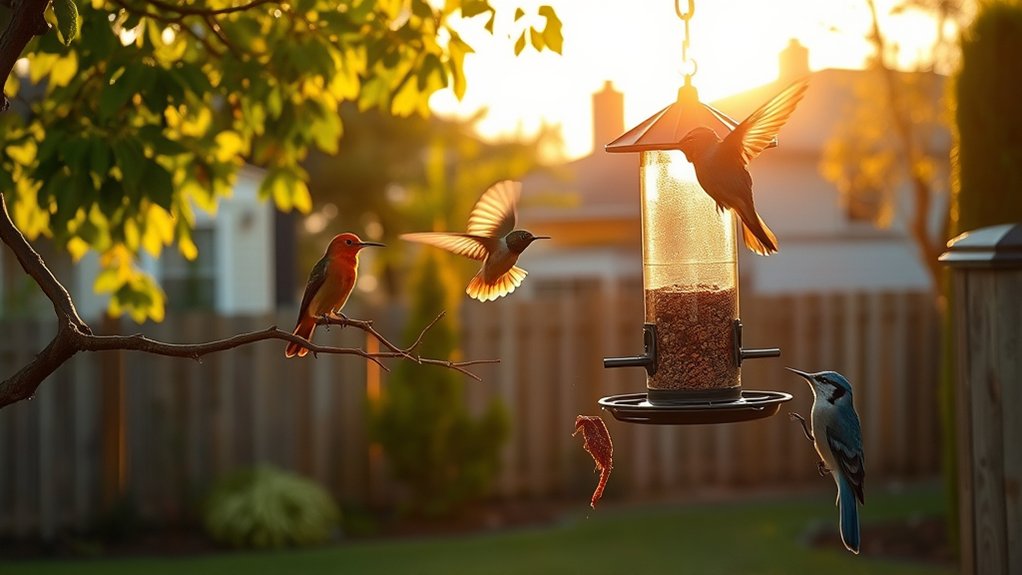
You might not realize backyard birds change with the seasons. They migrate, molt, or care for young, which affects how they act.
Males and females often look very different, like bright red cardinals versus duller females. Birds eat surprising foods beyond seeds: insects, fruits, and even human scraps.
Watch feeders for social hierarchies. Dominant birds push others aside using threat displays.
Camouflage helps nests stay safe. Birds also fluff feathers to regulate temperature.
Keep exploring, and you’ll uncover even more amazing bird behaviors.
How Backyard Bird Populations Change With the Seasons
Although backyard bird populations shift throughout the year, you can notice distinct patterns as seasons change. Different bird species appear or disappear depending on migration schedules. For example, Ruby-Throated Hummingbirds return in late spring, while some birds leave for warmer climates during winter.
Non-migratory backyard birds may seem less visible in colder months because they become more reclusive when food is scarce. You’ll also observe changes in their activity levels; many birds slow down during molting or while caring for their young.
If you have backyard feeders, pay attention. More frequent visits often mean birds are feeding chicks or attracting mates.
Seasonal shifts also influence social behavior, with feeding patterns and dominance hierarchies evolving based on food availability.
Understanding these patterns helps you appreciate the dynamic life of your local backyard bird community.
Understanding Sexual Dimorphism in Backyard Birds
You’ll notice that male and female birds often look quite different. Take the bright red male Northern Cardinal, for example. The female is more muted in color, making them easy to tell apart.
Sometimes, these differences aren’t constant—they can change with the seasons.
Like with the male American Goldfinch, which loses its vibrant plumage outside of the breeding season. This can make identifying them a bit trickier.
But if you pay attention to these seasonal shifts, it becomes easier to spot and appreciate the unique traits of backyard birds all year round.
Male Versus Female Differences
When you observe backyard birds, noticing differences between males and females can greatly improve your identification skills. Male versus female differences often appear in coloration and size among species of birds.
For example, male Northern Cardinals sport bright red feathers, while females wear a subtle brown that provides camouflage. In species like Cooper’s Hawks, females are larger than males, influencing hunting and territorial behavior.
However, not all species show clear sexual dimorphism; Blue Jays look almost identical regardless of gender, so you’ll need to focus on behavior or vocalizations to tell them apart.
Recognizing these differences helps you identify birds more accurately and deepens your appreciation of their unique roles in nature. Using a bird feeder pole with squirrel baffles can help maintain a peaceful feeding environment and allow clearer observation of these behaviors.
Seasonal Appearance Changes
Since many backyard birds change their appearance with the seasons, understanding these shifts is key to accurate identification. Seasonal molt can dramatically alter a bird’s colors and size, complicating things for you.
Sexual dimorphism adds another layer, where males and females look distinct year-round or only during breeding. For example, the male Northern Cardinal shines bright red, while the female stays light brown. Off-season, the American Goldfinch loses its vibrant yellow feathers, adopting duller tones.
Knowing these patterns helps you recognize birds correctly throughout the year.
| Bird Species | Male Appearance (Breeding) | Female Appearance | Seasonal Molt Effect |
|---|---|---|---|
| Northern Cardinal | Bright red | Light brown | Minimal |
| Cooper’s Hawk | Smaller, patterned | Larger, different pattern | Moderate |
| American Goldfinch | Bright yellow | Duller yellow | Dramatic off-season dulling |
| Common Redpoll | Red forehead | Less vibrant | Noticeable color fading |
Unexpected Foods Birds Eat in Your Backyard
You might be surprised by the insects birds prefer—sometimes they go for unusual ones you wouldn’t expect.
And it’s not just insects; they also snack on plant-based foods that go beyond the usual seeds and berries.
Plus, many backyard birds take advantage of human food scraps, which really shows how adaptable they are.
It’s pretty fascinating to see what they’ll eat when given the chance!
Surprising Insect Preferences
Although many backyard birds are known for enjoying seeds and fruits, you might be surprised to learn that they often rely on insects as an essential part of their diet. Insects provide crucial protein, especially during breeding season.
You’ll notice fascinating behaviors like Blue jays adapting by adding insects to their usual nuts and seeds.
House wrens deliver hundreds of spiders to their young in one afternoon.
Baltimore orioles eat wasps and caterpillars alongside nectar.
American robins use sharp eyesight to forage worms and hidden invertebrates in your lawn.
Unusual Plant-Based Snacks
Insects play a big role in many birds’ diets, but they don’t stop there. Backyard birds like House Finches and American Goldfinches also enjoy unusual plant-based snacks like fruits and buds.
You might be surprised to see Baltimore Orioles feeding on grape jelly, a sweet treat often offered by bird-friendly gardeners using suet feeders.
Blue Jays go beyond seeds, munching on acorns and nuts, which they cleverly bury for later.
Even cardinals engage in anting, using ants for parasite control rather than food.
Ruby-throated Hummingbirds sip nectar but supplement their diet with tiny insects.
Human Food Consumption
Several backyard birds surprise observers by enjoying unexpected human foods alongside their natural diets.
When you watch your Bird Feeders, you might notice some surprising human food consumption habits among your feathered visitors.
For example, you’ll see:
American Robins and Northern Cardinals savoring backyard berries, a nutritious treat.
House Sparrows and European Starlings scavenging leftover crumbs, seeds, and bread from picnics or feeders.
Blue Jays skillfully cracking open peanuts, sometimes plucking shelled ones right from your Bird Feeders.
American Crows adapting by munching on pizza crusts or fries, showing urban savvy.
What Bird Behavior at Feeders Shows About Social Hierarchies
When you watch birds at feeders, you quickly notice they follow strict social hierarchies that determine who gets to eat and when.
Dominant species or individuals, like a female Northern Cardinal, often claim prime feeding spots, pushing subordinates such as White-throated Sparrows aside.
These social hierarchies aren’t random; males usually dominate females, and older birds often displace younger ones.
You’ll see this in multi-species settings where size and experience matter.
Displacement behavior is common. Dominant birds assert control by physically removing competitors.
Watching these interactions reveals a complex social order, showing you how dominance shapes feeding patterns.
Understanding these bird behaviors enhances your appreciation of backyard wildlife and offers a glimpse into the structured communities birds create around feeders.
How Birds Use Threat Displays to Communicate Dominance
Although birds rarely resort to physical fights, they rely heavily on threat displays to assert dominance and protect their territory. Different species use unique gestures to send clear signals to one another, avoiding costly conflicts.
When you watch backyard birds, notice these common threat displays:
- Chickadees perform the bill-up display, raising their bills to show aggression.
- Nuthatches spread their wings wide, making themselves look larger and more intimidating.
- Many birds puff up their feathers to appear bigger and more dominant.
- Some species vocalize sharply to warn intruders without physical contact.
These displays communicate power and help maintain social hierarchies.
Camouflage and Nesting Strategies Birds Use to Stay Safe
Threat displays help birds protect their space, but staying safe also means blending in and choosing the right nesting spots.
Take the Common Potoo: it uses incredible camouflage to mimic tree branches, laying eggs in simple depressions rather than building nests, making detection tough for predators.
The Common Potoo’s masterful camouflage and simple nesting keep predators guessing and chicks safe.
Bushtits craft long, hanging nests from spiderwebs and plant fibers that blend into their environment, shielding their young with natural insulation.
Meanwhile, female Brown-headed Cowbirds skip nesting altogether by laying eggs in other birds’ nests, cleverly boosting their chicks’ survival chances.
How Backyard Birds Regulate Their Body Temperature
Because backyard birds can’t sweat, they rely on clever methods to regulate their body temperature and stay comfortable in varying weather.
You’ll notice these fascinating behaviors, especially during warmer months when temperature swings challenge birds’ comfort.
Black Vultures spread their wings in the sun to warm up on chilly days and expose wing undersides to cool off during heat.
American Coots huddle in open water to conserve heat in colder conditions.
Chickadees fluff their feathers, creating insulating air pockets to retain warmth.
Hummingbirds enter torpor, lowering their metabolic rate to save energy and maintain temperature overnight or in cold weather.
These strategies show how every bird adapts uniquely to keep their body temperature just right.
Frequently Asked Questions
Why Do Some Birds Mimic Predator Calls in Backyard Environments?
You see, some birds mimic predator calls to gain mimicry advantages, tricking potential threats into thinking a predator is nearby.
This clever behavior boosts predator awareness among birds, making enemies hesitate or flee.
By imitating hawks or other predators, these birds protect their territory and nesting sites, reducing competition and increasing their chances of survival.
What Is “Anting” Behavior in Birds and Why Do They Do It?
You know what they say, an ounce of prevention is worth a pound of cure. That’s exactly why birds use anting techniques, covering themselves with ants or similar materials to fend off parasites like lice.
The benefits of anting go beyond pest control. It also helps clean their feathers and maintain health.
Can Backyard Birds Really Nap While Flying During Migration?
Yes, some backyard birds do take flying naps during migration.
These flying naps let them get migratory rest without landing, which saves time and energy.
While not all backyard birds nap in flight, species like frigatebirds master this skill, soaring on air currents while catching short sleep periods.
If you watch closely during migration seasons, you might spot birds conserving energy midair, showing how cleverly they manage rest on the go.
How Do Birds Use Tools or Problem-Solving in Backyard Settings?
You’ll notice backyard birds often display impressive tool use and problem solving.
For example, Blue Jays crack open tough peanut shells using their feet, showing cleverness.
European Starlings might use twigs to extract insects from bark.
Crows drop nuts onto roads to crack them open.
These behaviors reveal how birds adapt and think creatively to access food, turning everyday objects into helpful tools right in your backyard.
What Unusual Sounds or Calls Do Backyard Birds Make and Why?
You know what they say, “Still waters run deep.”
Backyard birds use unusual alarm calls that vary in complexity to warn of predators. Chickadees add extra “dee” notes when danger’s near.
You’ll also hear courtship songs like the American robin’s melodic tunes, which attract mates and stake territory.
Blue jays mimic hawks’ calls to trick others, protecting their nests.
These unique sounds reveal how birds cleverly communicate and survive around you.
Conclusion
Now that you’ve uncovered these fascinating backyard bird behaviors, you’ll see your feathered visitors in a whole new light. Remember, “a bird in the hand is worth two in the bush,” so cherish each moment observing them.
Their seasonal changes, surprising diets, social dances, and clever survival tactics show just how complex and enchanting their world is. Keep watching closely. You’ll be amazed at what these backyard acrobats reveal next!