
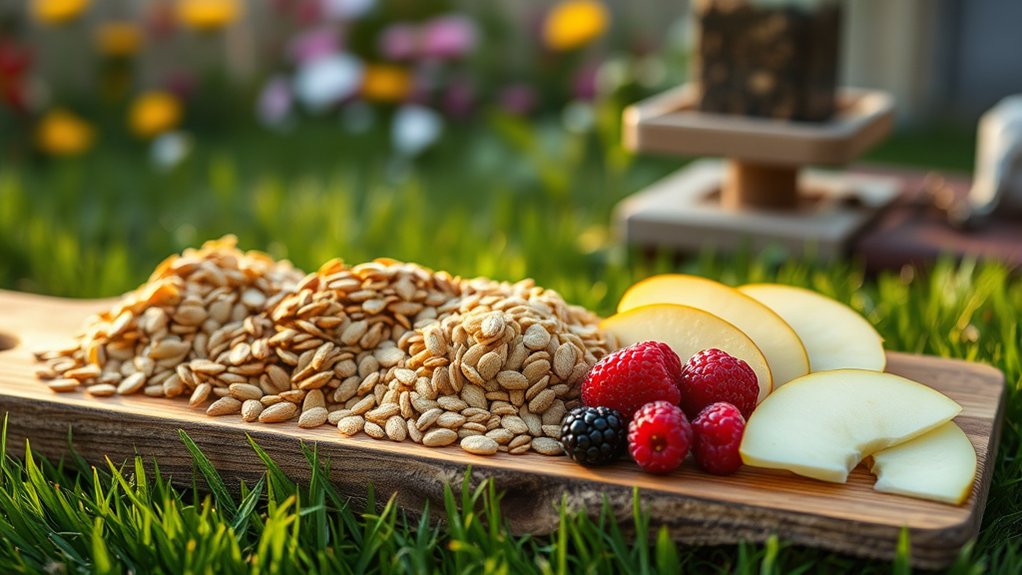
For your backyard bird charcuterie board, choose fresh seed mixes like sunflower and millet to attract ground and seed-eating birds. Add fresh and dried fruits for vitamins and color, plus unsalted peanuts and other nuts for healthy fats.
Include suet cakes to boost energy, especially in cold weather, and dried mealworms for insect-eaters. Native plants and fragrant herbs complete the board by offering extra nutrition and appeal.
Keep exploring to discover how each ingredient supports your feathered visitors.
Choose Seed Mixes for Your Bird Charcuterie Board
To create an inviting bird charcuterie board, start by choosing seed mixes that include black oil sunflower seeds, safflower seeds, and white-striped sunflower seeds. These favorites attract many backyard birds and are compatible with various feeder styles to encourage consistent visits.
Look for blends that also feature cracked corn and millet to draw in ground-feeding species. Adding unsalted whole peanuts or peanut pieces offers extra nutrition and appeals to birds like Blue Jays and woodpeckers.
Specialty seed mixes designed for specific birds, such as nyjer seeds for finches or suet pellets for insectivores, can diversify your bird food selection.
When filling your bird feeder or arranging your board, guarantee all seed mixes are fresh and free from mold or contaminants to support the health and safety of your feathered visitors.
Including high-energy seeds like black oil sunflower is essential to meet the nutritional needs of birds during colder months.
This careful selection will make your bird charcuterie board a hotspot for various birds.
Add Fresh and Dried Fruits to Attract Fruit-Eating Birds
While seeds attract many birds, adding fresh and dried fruits will bring in fruit-eating species like orioles and waxwings to your backyard charcuterie board.
Fresh fruits such as sliced apples, oranges, and pears provide essential vitamins and natural sugars that fruit-eating birds crave, especially during nesting season when they need more energy.
Dried fruits like raisins, cranberries, and apricots offer a concentrated energy boost and appeal to a wide range of birds.
To keep your board safe and inviting, cut fruits into manageable pieces and remove any seeds or pits that could pose choking hazards.
Combining fresh fruits and dried fruits not only supports bird health but also creates a colorful, attractive display that encourages more birds to visit your outdoor feeding spot.
Include Unsalted Peanuts and Nuts for Healthy Fats
Adding a variety of foods to your backyard bird charcuterie board keeps the visitors coming back. Including unsalted peanuts and other nuts provides birds with essential healthy fats and protein. These nutrients are perfect for energy during colder months, and placing your board on a sturdy bird feeder pole can enhance accessibility and safety for the birds.
Blue Jays and woodpeckers love unsalted peanuts, while walnuts, almonds, and pecans attract different species. Always use nuts specifically packaged for birds to avoid harmful additives.
| Nut Type | Benefits | Bird Favorites |
|---|---|---|
| Unsalted Peanuts | High in healthy fats | Blue Jays, Woodpeckers |
| Walnuts | Rich in protein | Nuthatches, Chickadees |
| Almonds | Energy dense | Sparrows, Finches |
| Pecans | Nutrient variety | Grosbeaks, Jays |
This mix enhances your bird feeding station’s appeal and supports diverse bird species. Using feeders with adjustable hanging height can help you position your charcuterie board optimally for bird access and safety.
Offer Suet Cakes and Fat Treats to Support Bird Energy
Because birds need extra energy during cold months and migration, you should offer suet cakes and fat treats on your backyard bird charcuterie board.
These high-fat foods fuel your feathered friends when natural resources dwindle.
High-fat treats provide essential energy for birds when natural food sources are scarce.
Including suet nuggets or homemade fat treats attracts a variety of birds like woodpeckers and chickadees, enhancing your birdwatching experience.
Visualize adding to your charcuterie boards:
- Square suet cakes hanging from tree branches.
- Pinecones coated with peanut butter and seeds.
- Small suet nuggets nestled among nuts and dried fruits.
Add Dried Mealworms to Nourish Insect-Eating Birds
Three key reasons make dried mealworms a must-have on your backyard bird charcuterie board: they offer high protein, support insect-eating birds like bluebirds and chickadees, and provide essential nutrients during breeding season.
By including dried mealworms, you give your feathered visitors a nutritious snack that closely mimics their natural diet. This encourages a healthy, diverse group of birds to visit your yard, increasing your bird-watching enjoyment.
Their rich protein content helps insect-eating birds thrive, especially when raising chicks.
Adding dried mealworms to your bird charcuterie board also enhances its visual appeal, making your feeding setup more inviting.
Use Native Plants and Herbs to Enhance Nutrition and Appeal
You can really boost your bird charcuterie board’s nutrition and appearance by adding some native plants like holly and elderberries.
These not only provide extra nutrients but also add a nice pop of color.
Plus, popular herbs such as rosemary, thyme, and mint are great choices.
They attract birds with their lovely scents and make your board look even more inviting.
By choosing these native options, you’re also supporting local wildlife while creating a vibrant, welcoming feeding spot.
It’s a win-win!
Benefits Of Native Plants
When you include native plants and herbs like elderberries, holly, rosemary, and thyme on your bird charcuterie board, you not only boost the nutrition available to local birds but also make your setup more attractive and beneficial.
Native plants provide food sources perfectly suited to your area’s birds, inviting a diverse range of birds to visit.
Plus, they support local ecosystems by matching seasonal needs.
Here’s how native plants benefit your bird board:
- Offer essential nutrients that keep birds healthy and thriving.
- Attract a diverse range of birds with fruits, seeds, and natural shelter.
- Enhance your yard’s appeal while providing natural insect repellents through herbs.
Using native plants enriches your feeding area, creating a welcoming habitat year-round.
Popular Bird-Friendly Herbs
Native plants offer more than just food and shelter. They can also enhance your bird charcuterie board with fragrant, nutrient-rich herbs that attract a wider variety of feathered visitors. Incorporate native herbs like rosemary, thyme, and parsley to provide birds with essential nutrients while adding natural aroma and texture.
Birds are drawn to the fragrant oils these herbs produce, which helps entice diverse species to your feeding area. Consider adding medicinal herbs such as echinacea and chamomile; they support avian immune health and digestion.
Planting native herbs nearby creates a welcoming habitat, offering food and shelter that boost backyard biodiversity.
Enhancing Board Visual Appeal
Although attracting birds depends largely on nutritious offerings, enhancing your bird charcuterie board with native plants and herbs also boosts its visual appeal.
Adding native flora around your feeder creates a vibrant, inviting space that encourages more bird visits.
Try these ideas to improve both nutrition and aesthetics:
- Arrange holly and elderberries to provide colorful, natural food sources that local birds love.
- Use sprigs of rosemary and thyme to add texture and a fresh aroma, enhancing your board’s visual appeal.
- Incorporate a mix of native plants to increase biodiversity, fostering a lively habitat for various bird species.
Frequently Asked Questions
How Often Should I Clean My Bird Charcuterie Board?
You should clean your bird charcuterie board daily to maintain bird health and prevent harmful bacteria buildup.
Use gentle cleaning methods like mild soap and water, avoiding harsh chemicals.
Once a week, do a deep clean with a bird-safe disinfectant, rinsing thoroughly and air-drying before reuse.
Regular cleaning frequency and proper methods help keep your feathered visitors safe and guarantee they enjoy a fresh, healthy feeding environment.
What Is the Best Time of Day to Put Out the Board?
Think of your bird charcuterie board as a stage where early risers and evening performers take turns.
You’ll want to set the scene during morning hours and again when evening activity peaks, as these are when birds are most enthusiastic to feed.
Keep in mind seasonal variations, just like actors adjusting their cues, birds shift their schedules with the seasons.
Can I Use Homemade Bird Treats Safely?
Yes, you can use homemade treats safely if you focus on homemade treat safety and bird health considerations.
Make sure you source ingredients carefully. Unsalted nuts, seeds, and safe dried fruits work best.
Avoid salt, processed sugars, and bread, which can harm birds. Always remove seeds or pits from fruits to prevent choking or toxicity.
How Do I Protect the Board From Squirrels?
You might find it ironic that squirrels, those clever acrobats, can’t crack your board if you use smart squirrel proofing strategies.
Start by placing your charcuterie at a feeding height adjustment of 5-6 feet, away from jumping-off points.
Add natural deterrents like safflower seeds, which squirrels dislike, and install baffles or guards on poles to block their climb.
With these moves, you’ll enjoy bird visits without unwanted furry guests stealing the show.
Should I Provide Fresh Water Alongside the Charcuterie Board?
Yes, you should definitely provide fresh water alongside your charcuterie board. Bird hydration importance can’t be overstated, especially during hot or dry seasons when natural water sources dry up.
Offer shallow water in safe containers to encourage visits and prevent drowning.
Consider seasonal water considerations by changing water frequently to avoid algae and contamination.
You can use birdbaths, shallow dishes, or even small fountains as water source options to keep your feathered friends happy and healthy.
Conclusion
By including these six essential ingredients, you’ll create a backyard bird charcuterie board that attracts a vibrant variety of feathered friends. Did you know that over 50 million Americans feed wild birds, helping boost local bird populations?
Your thoughtful mix of seeds, fruits, nuts, suet, mealworms, and native plants not only nourishes birds but also turns your yard into a lively, colorful haven. Get ready to enjoy nature up close like never before!