
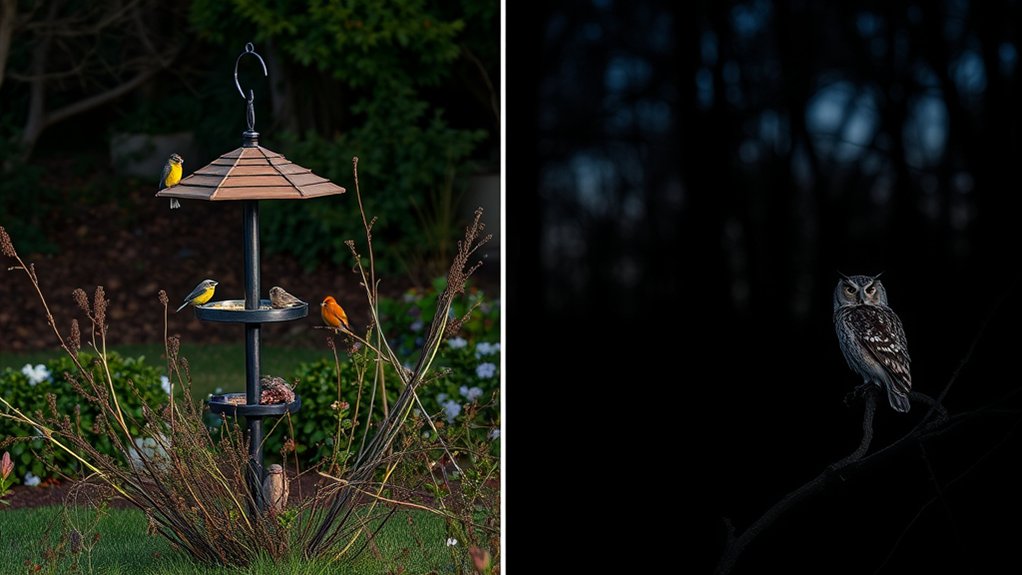
When you bait owls, you disrupt their natural hunting instincts, risk their health, and make them overly dependent on humans. This raises chances of injury and vehicle collisions. Feeding backyard birds, however, supports their survival with nutritious food that doesn’t change their behavior or safety.
Feeding encourages natural foraging and community connection, while baiting raises ethical and legal concerns. If you want to better understand these impacts and how to support wildlife responsibly, there’s more useful insight ahead.
Owl Baiting vs. Bird Feeding: Key Differences
While both owl baiting and feeding backyard birds involve providing food, they serve very different purposes and have distinct effects on wildlife.
Owl baiting uses live or dead rodents to lure owls closer for research or photography. This creates an unnatural association between owls and humans. This baiting can disrupt owls’ instincts, making them more vulnerable to dangers like traffic.
Owl baiting lures owls with rodents, disrupting instincts and increasing risks like traffic accidents.
On the other hand, feeding backyard birds typically involves seeds or mealworms. This supports conservation efforts by enhancing bird survival without altering their natural behaviors. Feeding encourages natural foraging and is widely accepted among enthusiasts.
Baiting often faces ethical concerns due to its negative impact on owls. Understanding these key differences helps you appreciate why backyard bird feeding supports wildlife health, while owl baiting can harm it.
Why Feeding Backyard Birds Is Good for Them
Feeding backyard birds offers tangible benefits that go beyond simply attracting wildlife to your yard.
When you engage in responsible bird feeding practices, you provide essential nutrients like protein from mealworms. This especially helps bluebirds survive harsh weather. Using balanced seed blends can further support diverse dietary needs throughout the year.
Conservation organizations highlight that moderate feeding encourages natural behaviors without creating dependency.
By feeding backyard birds, you actively support their survival and contribute to increased biodiversity in your area.
Studies from Cornell Lab of Ornithology confirm that backyard bird feeding improves bird populations in urban environments.
Plus, joining over 5 million U.S. households in this practice helps sustain a $6.3 billion industry that funds local economies and conservation efforts.
Providing high-energy foods such as black oil sunflower seeds during winter is key to supporting bird health and vitality.
Your simple act of feeding birds can make a real, positive difference.
How Baiting Owls Changes Their Natural Hunting
When you bait owls, you’re actually messing with their natural hunting instincts.
They start depending on human food instead of hunting like they normally would. This connection makes it harder for them to find food on their own and survive out in the wild.
Once you understand how this changes their behavior, it becomes clear why baiting isn’t just harmless fun.
Altered Hunting Instincts
If you bait owls, you’ll quickly notice how their natural hunting instincts start to fade. Instead of honing their survival skills, they develop a reliance on humans for easy food.
Unlike feeding backyard birds, which usually doesn’t disrupt natural behaviors, baiting owls reduces their activity and hunting proficiency. This change can lead to dangerous encounters, as owls lose their natural fear of people.
| Behavior Aspect | Baiting Owls | Feeding Backyard Birds |
|---|---|---|
| Hunting Activity | Decreases considerably | Remains natural |
| Reliance on Humans | Increases | Minimal |
| Survival Skills | Decline due to inactivity | Maintained |
| Fear of Humans | Lost | Retained |
| Adaptation to Wild | Compromised | Unaffected |
You’ll see baiting owls disrupt their natural instincts long-term.
Human Food Association
Baiting owls doesn’t just dull their hunting skills. It also makes them link humans directly with food. When you bait owls, you create a human food association that leads to habituation, where owls lose their natural fear of people.
This shift alters their natural hunting behaviors, making them rely on you instead of honing their independent foraging skills. In contrast, feeding backyard birds supports natural hunting instincts by encouraging owls to seek prey themselves.
Habituation from baiting owls can push them into urban areas, increasing risks like vehicle collisions. If you want to help owls thrive, avoid baiting and instead support practices that preserve their wild behavior.
Maintaining their natural hunting skills is essential for their survival and well-being.
Reduced Natural Foraging
Although it may seem harmless, luring owls with food can considerably reduce their natural foraging instincts. When you bait owls, you disrupt their hunting behaviors, making them rely on humans rather than honing their skills.
This dependence lowers their survival rates because they lose essential self-preservation instincts and become vulnerable to dangers like vehicle collisions. Owls spending too much time near bait lose their natural movement patterns, which further diminishes their ability to hunt effectively in the wild.
| Effect of Baiting | Impact on Owls |
|---|---|
| Reduced natural foraging | Less active hunting behaviors |
| Increased dependence | Lowered survival rates |
| Loss of self-preservation | Vulnerability to dangers |
| Disrupted movement | Ineffective hunting patterns |
The Risks of Habituation From Baiting and Feeding
When you bait owls, you’re risking them getting too comfortable around humans. This can lead to some pretty dangerous behaviors, like them wandering near roads or even losing their natural hunting skills.
And that’s a big deal because it makes them more likely to get hurt and lowers their chances of survival in the wild.
See, unlike backyard birds that just visit feeders on their own, owls don’t naturally rely on humans for food. So when you bait them, it can really mess with their behavior.
It’s not just about feeding them; it changes how they act and survive out there.
Habituation Risks Explained
If you lure owls with bait, they quickly start linking humans to easy meals, which puts them at greater risk of dangers like car accidents. This habituation causes owls to lose their natural behaviors, making them dependent on human-provided food instead of hunting on their own.
Baiting increases human interaction, which stresses wildlife and drains their energy, lowering survival rates.
Unlike baiting, feeding backyard birds usually doesn’t create this level of dependence because birds keep their natural foraging instincts intact.
When owls become habituated, they lose their natural fear of humans, making them more vulnerable to injuries in urban environments.
Behavioral Changes Impact
You might not realize how much baiting owls changes their behavior, but it seriously impacts their survival. Baiting leads to habituation, making owls rely on humans instead of their natural foraging behaviors. This dependence increases risks like vehicle collisions and urban dangers.
In contrast, feeding backyard birds encourages visits without creating dependency, allowing birds to keep their natural habits intact.
| Aspect | Baiting Owls | Feeding Backyard Birds |
|---|---|---|
| Habituation Level | High owls associate humans with food | Low birds visit feeders but forage naturally |
| Impact on Foraging | Reduced natural hunting instincts | Maintains natural foraging behaviors |
| Risk of Injury | Increased (vehicle collisions, urban hazards) | Minimal risk |
| Long-term Effects | Negative impact on owl survival | Generally positive for bird welfare |
Avoid baiting to protect owls’ natural behaviors and safety.
Health Concerns of Baiting Owls With Live or Fake Prey
Although baiting owls with live mice or fake lures might seem harmless, it can expose these birds to serious health risks. Pet shop mice often carry salmonella, which may infect owls when ingested.
Baiting owls encourages them to get too close to humans, increasing their risk of vehicle collisions, a common trauma seen in Snowy Owls. This human interaction also leads to stress and injuries as owls expend energy chasing bait, sometimes hurting themselves.
Wildlife rehabilitators frequently treat owls hurt in areas where baiting occurs, showing the direct harm caused. When you bait owls, you’re not just disrupting their natural habits, you’re putting their health and safety at real risk.
It’s important to reflect on these consequences before interfering with these wild birds.
How Feeding Supports Natural Bird Behavior Safely
Feeding backyard birds with nutritious options like mealworms can boost their survival during tough seasons, especially for species such as bluebirds.
When you focus on feeding birds responsibly, you support their natural behaviors, allowing them to forage and thrive without becoming dependent on you. Using feeders made of durable materials helps ensure longevity and safe feeding conditions.
Conservation organizations emphasize that responsible feeding helps maintain healthy bird populations and supports natural instincts.
Specialized feeders designed for cavity-dwelling birds encourage safe feeding practices that align with their behaviors.
By feeding backyard birds moderately and thoughtfully, you provide a reliable food source during scarce periods without disrupting their ecological balance.
This approach guarantees you contribute positively to bird conservation while enjoying the presence of healthy, active birds in your yard.
Using feeders with squirrel-proof features can further protect the food supply and promote safe feeding environments for birds.
How Baiting Owls Increases Their Risk of Vehicle Collisions
When you bait owls, they begin to associate humans with food.
Because of this, they might start wandering closer to roads.
And that’s a problem because roads turn into unintended feeding areas for them.
This behavior really ups their chances of getting hit by vehicles.
Human Food Associations
Because baiting owls links humans directly to food, you may unintentionally encourage them to approach dangerous areas like roads. This human food association changes their natural behavior, making owls less wary of vehicles and more likely to venture near traffic.
Wildlife rehabilitators often see injured owls around baiting sites, confirming how altered behavior from baiting owls compromises their safety. When owls begin to expect food from people, they lose their instinctive caution, increasing their risk of vehicle collisions.
Unlike feeding backyard birds, which usually occurs in safer, controlled environments, baiting draws owls to hazardous spots.
To protect owls, it’s essential to avoid creating these risky human food associations that jeopardize their well-being and survival.
Roadside Attractant Hazards
Although baiting owls may seem harmless, it actually increases their chances of wandering onto busy roads where vehicles pose serious threats.
When you bait owls, you encourage increased human interaction, which reduces their natural caution and draws them closer to roadside hazards.
This habituation makes owls more likely to approach roads in search of food, raising their risk of vehicle collisions.
Wildlife rehabilitators often report more injured owls near baiting sites, confirming the dangers of attracting these birds to areas with heavy traffic.
Studies show that a significant number of owls suffer trauma or death from car strikes linked to baiting practices.
Ethical Concerns: Baiting Owls vs. Feeding Birds
If you want to support wildlife ethically, understanding the difference between baiting owls and feeding backyard birds is essential. Baiting owls raises serious ethical concerns because it disrupts their natural behaviors and can cause habituation, where owls lose their instinctual fear of humans.
This dependence increases their risk of injury and dangerous encounters. On the other hand, feeding backyard birds generally supports their survival without causing harmful dependencies or altering behaviors. When done responsibly, feeding helps birds endure harsh conditions without compromising their wild instincts.
Unlike baiting owls, feeding backyard birds involves less direct intervention, preserving their natural habits. So, while feeding can be a positive practice, baiting owls poses ethical dilemmas that can harm owl populations and should be avoided to maintain ecological balance.
Community and Legal Views on Owl Baiting
Understanding the ethical concerns surrounding baiting owls naturally leads to examining how communities and laws respond to this practice. Many wildlife photography groups oppose baiting owls due to its negative effects on owl populations and behavior.
In places like Canada, local bans protect owls and encourage ethical wildlife observation. However, in regions such as Minnesota, legislative efforts to restrict baiting have faced challenges, reflecting ongoing debates. Laws against wildlife harassment exist in protected areas but rarely cover baiting thoroughly.
Public education campaigns play an essential role by raising awareness about the ethical concerns linked to baiting owls, helping people understand why this practice can harm owls and why responsible observation is better for both wildlife and enthusiasts alike.
How to Enjoy and Support Birds Without Baiting Owls
When you want to support backyard birds without baiting owls, providing a variety of feeders filled with seeds, nuts, and dried fruits attracts a wide range of species while keeping them wild and wary of humans. Using mealworms as live food offers essential protein, especially during harsh weather, boosting bluebird survival. Selecting feeders mounted on heavy-duty bird feeder poles with squirrel baffles can protect your birds’ food supply and reduce feeder raiding.
Place feeders away from busy roads to reduce risks and avoid habituation. Practice moderation in bird feeding to prevent dependency and participate in conservation efforts through citizen science programs.
Smart bird feeders equipped with AI-powered bird identification can enhance your birdwatching experience by helping you learn more about the species visiting your yard.
| Aspect | Recommendation |
|---|---|
| Feeder Variety | Seeds, nuts, dried fruits |
| Protein Source | Live food like mealworms |
| Feeder Placement | Safe locations, away from roads |
| Conservation Actions | Join citizen science and education |
This approach supports backyard birds ethically, unlike owl baiting.
Frequently Asked Questions
What Types of Food Are Best for Feeding Backyard Birds Safely?
You should offer seed types like sunflower, safflower, and millet to attract various birds safely.
Place feeders where birds feel secure and away from predators to enhance bird safety.
Adjust your offerings seasonally. Suet in winter and mealworms during breeding season help meet their nutritional needs.
Store food properly to avoid mold and spoilage.
Can Baiting Owls Attract Other Unwanted Wildlife to My Yard?
Yes, owl baiting can attract unwanted pests to your yard, disrupting the ecological balance.
When you use owl baiting, you might unintentionally invite rodents, raccoons, or hawks, increasing predator presence.
This changes wildlife interactions and can create dependencies, leading to overpopulation of some species.
To keep your yard healthy and balanced, it’s better to avoid baiting owls and focus on safer ways to enjoy local wildlife.
How Does Seasonality Affect Feeding Backyard Birds Versus Baiting Owls?
Seasonality dances through your backyard like a well-timed symphony. During winter feeding, you support birds whose food availability dwindles, helping them survive harsh months.
Seasonal migrations bring new visitors, and spring attraction aligns with nesting behavior, encouraging life cycles.
Owls, however, don’t follow this tune; baiting disrupts their natural patterns and hunting instincts.
Are There Specific Bird Species That Benefit Most From Backyard Feeding?
Yes, certain species benefit most from backyard birdwatching feeding. Bluebirds, chickadees, finches, and cardinals thrive because their species preferences align with common feeder offerings.
You’ll notice their feeding behavior adapts well to backyard setups, especially during winter. Migratory patterns also play a role; some species rely on consistent food sources during migration stops.
Plus, habitat requirements matter. Cavity-dwelling birds like bluebirds benefit from specialized feeders that suit their needs perfectly.
What Equipment or Feeders Are Recommended for Feeding Backyard Birds?
Imagine setting up a feeding station with platform feeders that attract cardinals and sparrows.
You should choose bird feeder types based on seed selection tips, like sunflower seeds for general birds or thistle for finches.
Place feeders in safe, visible spots, and follow cleaning maintenance guidelines to prevent disease.
This care helps attract specific species consistently, making your backyard a lively bird haven you’ll enjoy watching every day.
Conclusion
Feeding backyard birds can boost their survival, but baiting owls disrupts their natural hunting instincts. Did you know that owls baited with live prey are twice as likely to collide with vehicles?
By choosing to feed birds responsibly instead of baiting owls, you help protect wildlife and support healthy ecosystems. So, next time you want to enjoy nature, stick to feeding birds the right way. It’s safer, ethical, and benefits your feathered friends without unintended harm.