
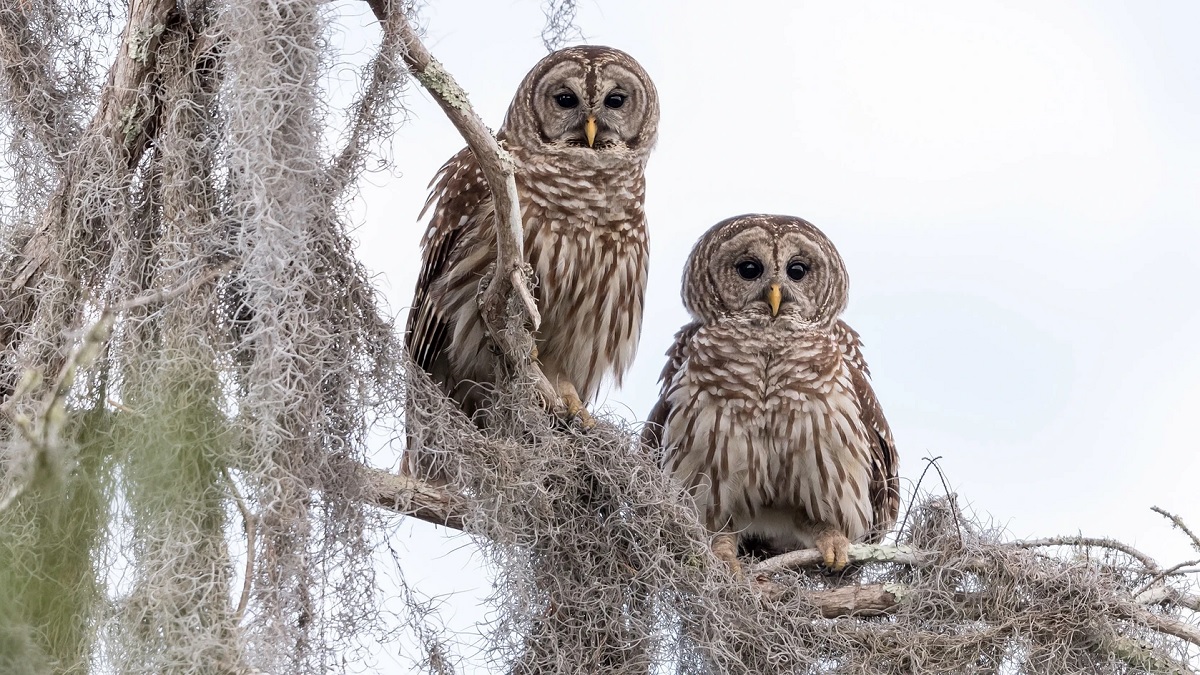
When it comes to fascinating owls of the North American and Eurasian forests, the barred owl vs great grey owl comparison often sparks curiosity among bird enthusiasts and nature lovers alike. Both species are impressive in size and possess unique traits that make them stand out in their respective habitats. The barred owl, native primarily to North America, is known for its distinctive hooting call and striking barred pattern on its chest.
Meanwhile, the great grey owl, one of the largest owls by length, is admired for its massive facial disk and silent hunting skills across the boreal forests of North America and Eurasia. In this barred owl vs great grey owl comparison, we’ll explore their physical characteristics, behaviors, and habitats to understand what sets these two remarkable owls apart. Whether you’re a casual observer or a dedicated birder, knowing the differences between these owls adds a new layer of appreciation for their role in the ecosystem.
Overview of Barred Owl
The barred owl is one of North America’s most recognizable and intriguing owls. Known for its distinctive hooting call and striking appearance, this owl plays an important role in forest ecosystems. Let’s take a closer look at the barred owl’s physical characteristics, habitat, behavior, and diet to understand what makes this bird so special.
Physical Characteristics
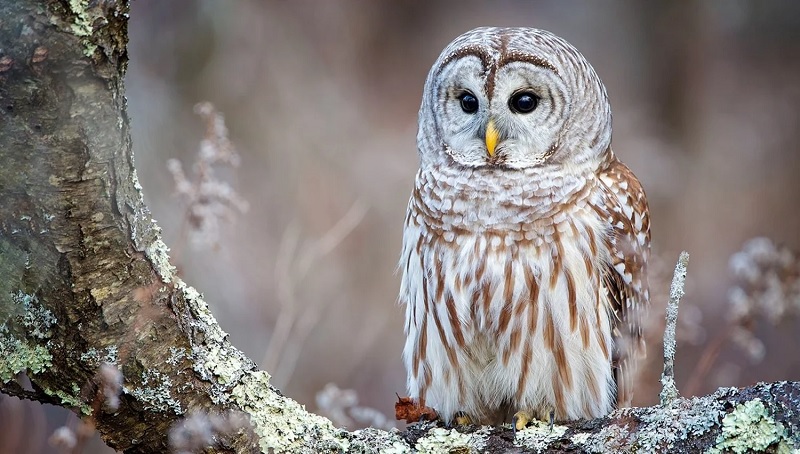
Barred owls are medium to large-sized owls, measuring about 16 to 25 inches in length with a wingspan ranging from 38 to 49 inches. Their name comes from the distinctive horizontal barring on their chest and vertical streaks on their belly. Their overall coloration is mottled brown and white, which helps them blend seamlessly into forest environments. One of the owl’s most recognizable features is its round head without ear tufts, and large dark eyes that give it an intense, almost haunting gaze. The barred owl’s facial disk is pale with concentric rings that help funnel sound to their ears, aiding in their exceptional hearing.
Habitat and Range
Barred owls primarily inhabit mature forests, especially those near water sources such as rivers, swamps, and lakes. They prefer dense woodlands with large trees for nesting and roosting. Originally native to the eastern United States and southern Canada, barred owls have expanded their range westward over the past century, now commonly found in the Pacific Northwest and even parts of California. This adaptability to different forest types, including mixed deciduous and coniferous forests, has helped their population remain stable.
Behavior and Diet
Barred owls are primarily nocturnal but are also active during dawn and dusk. They are known for their distinctive call, which sounds like “Who cooks for you? Who cooks for you all?” This call is often used to establish territory and attract mates. These owls are solitary hunters, relying on their excellent hearing and silent flight to catch prey. Their diet consists mainly of small mammals such as mice, rats, rabbits, and squirrels, but they also eat birds, amphibians, reptiles, and invertebrates. Barred owls typically hunt by perching silently and waiting for movement before swooping down on their prey.
Overview of Great Grey Owl
The great grey owl is one of the most majestic and mysterious owls found across the northern forests of North America and Eurasia. Famous for its impressive size and striking appearance, this owl captivates bird watchers and nature enthusiasts alike. Let’s explore the great grey owl’s physical characteristics, habitat, behavior, and diet to better understand what makes it such a fascinating bird.
Physical Characteristics
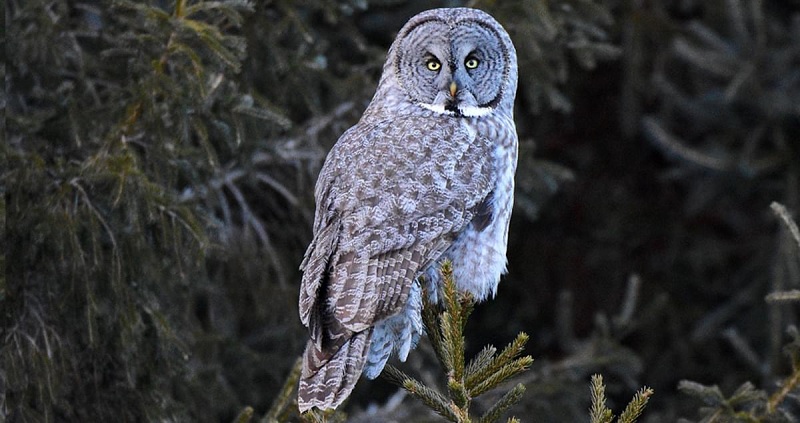
The great grey owl is among the largest owls in the world by length, measuring between 24 and 33 inches, with an impressive wingspan ranging from 55 to 60 inches. Despite its size, this owl appears relatively lightweight, with a body structure adapted for silent flight. One of its most notable features is its enormous, round facial disk, which is outlined by concentric rings of feathers and framed with white “bows” above the yellow eyes.
Unlike many other owls, the great grey owl lacks prominent ear tufts. Its plumage is a mottled mix of grey, white, and brown, which provides excellent camouflage in the snowy boreal forests it calls home. The dense feathers around its neck give the owl a “fluffy” appearance that enhances its already impressive size.
Habitat and Range
Great grey owls inhabit the dense coniferous and mixed forests of the northern hemisphere. Their range stretches across much of Canada, Alaska, and the northern United States, and they are also found in parts of northern Europe and Asia. These owls prefer cold, remote boreal forests with open meadows or bogs nearby, which provide ideal hunting grounds. Unlike some other owl species, the great grey owl tends to avoid heavily populated areas and thrives in secluded wilderness, relying on mature forests for nesting and dense cover.
Behavior and Diet
Great grey owls are primarily crepuscular and nocturnal hunters, though they can occasionally be seen hunting during the day, especially in winter. They have an extraordinary ability to locate prey beneath deep snow, thanks to their highly sensitive hearing and large facial disk that funnels sound to their ears.
Their diet mainly consists of small mammals, particularly voles, which make up the majority of their food intake. They also hunt mice, squirrels, and occasionally birds. The great grey owl hunts by perching silently or soaring low over open areas, then diving swiftly to capture prey hidden under snow or vegetation. These owls are generally solitary outside the breeding season and use large stick nests, often repurposing old nests of other birds like hawks.
Key Differences Between Barred Owl and Great Grey Owl
While both the barred owl and great grey owl are impressive birds of prey, they differ significantly in several aspects. Understanding these differences helps bird watchers and nature enthusiasts distinguish between the two and appreciate their unique adaptations. Here’s a closer look at how these owls vary in size, vocalizations, hunting, nesting, and habitat preferences.

Size and Appearance
One of the most obvious differences between the barred owl and the great grey owl is their size and physical appearance. The great grey owl is generally larger, measuring 24 to 33 inches in length with a wingspan of up to 60 inches, making it one of the largest owls by length. Its massive facial disk, mottled grey plumage, and fluffy neck feathers give it a distinctive and imposing look.
In contrast, the barred owl is smaller, about 16 to 25 inches long with a wingspan up to 49 inches. It has a brown and white barred pattern across its chest and lacks the extensive facial disk of the great grey. The barred owl’s eyes are dark, giving it a different facial expression compared to the great grey’s bright yellow eyes.
Vocalizations and Calls
The calls of these two owls are quite different and serve as a key identifying feature. The barred owl is famous for its rhythmic, clear hooting call often described as “Who cooks for you? Who cooks for you all?” This call is used to establish territory and communicate with mates. The great grey owl, on the other hand, has a much softer and more subtle vocalization. Its call is typically a low, repetitive “whoo” sound that is less musical and more haunting compared to the barred owl’s.
Hunting Techniques
Both owls are skilled hunters but differ in their approach. The barred owl often hunts by perching quietly in the forest and swooping down on prey like small mammals, birds, and amphibians. It relies heavily on its acute hearing and vision, usually hunting during the night or twilight hours. The great grey owl specializes in hunting small mammals hidden under snow in boreal forests. It uses its large facial disk to pinpoint prey beneath the surface and dives with incredible precision. Great grey owls are also known to hunt during daylight hours, especially in winter.
Nesting and Breeding Habits
Barred owls typically nest in tree cavities or abandoned nests of other large birds, favoring mature forests with large trees. They lay about 2 to 4 eggs per season and both parents share incubation and feeding duties. Great grey owls do not build their own nests but often take over large nests made by hawks or other raptors, usually placed high in trees or on cliffs. They tend to lay fewer eggs, usually 2 to 3, and the breeding cycle is closely tied to prey availability.
Habitat Preferences
The barred owl prefers dense, mature forests with abundant water sources like rivers and swamps, often in eastern and parts of western North America. Great grey owls inhabit colder, northern boreal forests with open meadows or bogs nearby. Their range includes Alaska, Canada, northern U.S., and parts of northern Eurasia. The barred owl is more adaptable to different forest types, while the great grey prefers remote, less disturbed wilderness areas.
Similarities Between Barred Owl and Great Grey Owl
Despite their differences, the barred owl and great grey owl share several key similarities that highlight their evolutionary adaptations to life as formidable nocturnal predators. These parallels in behavior, diet, and environmental adaptations help them thrive in their respective habitats.
Adaptations to Environment
Both the barred owl and great grey owl have evolved remarkable adaptations that allow them to survive and hunt efficiently in forested environments. One key adaptation is their exceptional hearing. Both species have facial disks that function like satellite dishes, funneling sound to their ears and enabling them to detect prey even under thick foliage or snow.
Their feathers are specially structured for silent flight, allowing them to approach prey without being detected. Additionally, their strong talons and sharp beaks are perfectly designed for capturing and killing small animals. These adaptations make both owls highly effective nocturnal hunters well suited to dense forests and remote wilderness areas.
Diet Overlap
While these owls live in somewhat different habitats, their diets show significant overlap, reflecting their role as top predators in forest ecosystems. Both barred owls and great grey owls primarily feed on small mammals such as mice, voles, squirrels, and rabbits. They also occasionally eat birds, amphibians, and insects depending on availability. This shared dietary preference emphasizes their importance in controlling rodent populations and maintaining ecological balance. Their ability to adapt their diet based on seasonal availability of prey helps ensure their survival across various environments.
Nocturnal Activity
Barred owls and great grey owls are primarily nocturnal, meaning they are most active during the night. This nocturnal lifestyle provides them with a competitive advantage by reducing encounters with other predators and taking advantage of prey that is also active at night.
Their large eyes are highly sensitive to low light, allowing them to navigate and hunt effectively in darkness. Although both species can sometimes be active during twilight or early morning hours, nighttime remains their prime hunting period. This shared behavior reinforces their evolutionary niche as stealthy nighttime predators.
Interaction and Competition in Overlapping Territories
In areas where the barred owl and great grey owl share overlapping territories, their interactions and competition can be quite intriguing. Both species rely on similar prey, such as small mammals, which can lead to competition for food resources. However, their differences in hunting techniques and habitat preferences often reduce direct conflict.
Barred owls tend to favor dense, mature forests with ample water, while great grey owls prefer colder boreal forests with open meadows nearby. These subtle habitat distinctions allow them to coexist more peacefully. Still, when food is scarce, competition can intensify, sometimes pushing one species to shift its hunting grounds. Overall, their interactions highlight a delicate balance that enables both owls to thrive in shared environments.
Conservation Status and Threats
Both the barred owl and great grey owl currently maintain stable populations, but they face ongoing conservation challenges. The barred owl, adaptable and widespread, is generally not considered threatened, though habitat loss and fragmentation from logging and urban development can impact local populations. In contrast, the great grey owl, which relies on pristine boreal forests and specialized habitats, is more vulnerable to environmental changes.
Climate change, deforestation, and human disturbances pose significant threats to its habitat. Additionally, both species face risks from collisions with vehicles and exposure to pesticides that reduce prey availability. Conservation efforts focused on protecting mature forests and maintaining healthy ecosystems are crucial to ensure these majestic owls continue to thrive in the wild.
People Also Ask
What Are The Main Physical Differences Between Barred Owl And Great Grey Owl?
The barred owl is smaller, typically 16 to 25 inches long with a wingspan up to 49 inches, and features a barred brown-and-white pattern on its chest with dark eyes. The great grey owl is larger, measuring 24 to 33 inches in length with a wingspan up to 60 inches, and is known for its massive round facial disk with yellow eyes and mottled grey feathers. These physical traits make it easier to identify each species in the wild.
How Do The Vocalizations Of Barred Owl And Great Grey Owl Differ?
Barred owls are famous for their distinctive, rhythmic hooting that sounds like “Who cooks for you? Who cooks for you all?” This call is clear and repetitive. The great grey owl’s call is softer, more haunting, and less musical, often described as a low, repetitive “whoo” sound. Listening for these vocal differences is one of the best ways to tell these owls apart in their natural habitats.
What Types Of Habitats Do Barred Owls And Great Grey Owls Prefer?
Barred owls prefer dense, mature forests near water sources such as swamps, rivers, and lakes, mostly in eastern and parts of western North America. Great grey owls favor colder, remote boreal forests often accompanied by open meadows or bogs, spanning northern North America and Eurasia. Their habitat preferences help reduce direct competition between the two species when their ranges overlap.
How Do The Hunting Techniques Of Barred Owl And Great Grey Owl Compare?
Both owls are skilled hunters relying on sharp hearing and silent flight, but their hunting styles differ. Barred owls tend to perch quietly and swoop down on prey like small mammals, birds, and amphibians, mainly at night. Great grey owls specialize in detecting small mammals beneath snow using their large facial disk and often hunt during daylight in winter. This unique hunting adaptation allows great grey owls to thrive in colder environments.
Do Barred Owls And Great Grey Owls Compete For Food?
Yes, both species have overlapping diets that mainly consist of small mammals such as mice, voles, and rabbits. However, their slight differences in habitat and hunting methods help minimize direct competition. When food is scarce, competition can increase, sometimes causing one species to adjust its territory or hunting strategy. Overall, they maintain a balance that supports coexistence.
How Do The Nesting Habits Of Barred Owl And Great Grey Owl Differ?
Barred owls typically nest in tree cavities or use abandoned nests of other birds like hawks, laying 2 to 4 eggs per season. Great grey owls don’t build their own nests but often take over large nests made by other raptors, usually in tall trees or cliffs, and tend to lay fewer eggs, around 2 to 3. These differences reflect their unique breeding strategies suited to their environments.
What Are The Conservation Concerns For Barred Owl And Great Grey Owl?
Barred owls are generally stable and adaptable, but habitat loss due to deforestation and urbanization poses risks. Great grey owls, dependent on specialized boreal forest habitats, are more vulnerable to habitat destruction, climate change, and human disturbances. Both face threats from pesticide use and collisions. Conservation efforts focus on preserving mature forests and maintaining healthy ecosystems to support their populations.
Can You See Barred Owls And Great Grey Owls In The Same Region?
Yes, in some areas, especially in parts of the northern United States and Canada, their ranges overlap. While they share some habitats, barred owls tend to occupy wetter, denser forests, and great grey owls prefer colder, more open boreal forest landscapes. This spatial separation helps reduce direct competition, but you might be lucky enough to spot both species if you explore diverse forested environments.
Conclusion
In the barred owl vs great grey owl comparison, both species showcase unique adaptations that make them remarkable hunters in their own right. The barred owl’s striking barred pattern and familiar call contrast with the great grey owl’s impressive size and haunting presence. While they share similarities in diet and nocturnal habits, their differences in habitat preference, hunting techniques, and vocalizations set them apart.
Understanding these distinctions not only helps bird watchers identify them more easily but also deepens our appreciation for their roles in forest ecosystems. Whether you encounter the barred owl’s steady hoots or the great grey owl’s silent flight, both owls remain captivating symbols of wilderness and natural balance.