
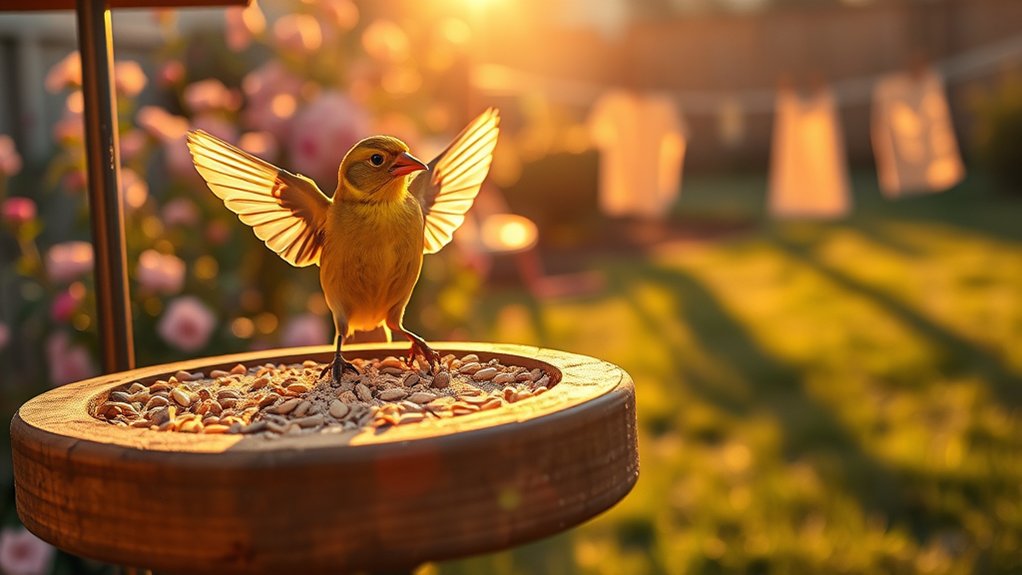
To begin backyard bird watching, start by setting up durable feeders filled with high-quality birdseed to attract diverse birds. Place feeders away from trees to deter squirrels and add a birdbath for fresh water.
Use binoculars with 8-10x magnification for clear views without disturbing birds. Keep a journal or use an app to identify species and track visits.
Creating a welcoming habitat with native plants enhances your chances. Keep following this guide to discover how to enjoy and improve your birding experience.
What You Need to Start Backyard Bird Watching
Starting backyard bird watching is simple and affordable. You just need a few basic items to get going.
First, a bird feeder is essential. Choosing one made of metal or wood will guarantee it lasts through various weather conditions. Incorporating a bird feeder pole with a squirrel baffle can help keep squirrels away and maintain peaceful feeding.
A sturdy metal or wooden bird feeder ensures year-round durability in all weather conditions.
You’ll also need birdseed, which is inexpensive and attracts a variety of species to your yard.
To observe birds closely without disturbing them, consider binoculars with 8 to 10 times magnification.
Moreover, a field guide or a mobile app like the Merlin Bird App will help you identify the birds you spot.
Finally, adding a birdbath or a small water source can draw even more feathered visitors. This will enhance your bird-watching experience right in your backyard.
Selecting a feeder with weather-resistant materials ensures durability and consistent bird visits throughout the seasons.
How to Choose the Right Birdseed and Feeders for Your Yard
When selecting birdseed and feeders for your yard, choosing durable materials like metal or wood guarantees your feeders withstand the elements and last longer. Plastic feeders may degrade quickly, so investing in quality materials pays off. Using feeders compatible with black oil sunflower seeds helps attract a wide variety of birds.
To attract a variety of birds to your space, opt for high-quality seed blends, such as those from Wild Birds Unlimited, which reduce filler waste. Consider specialized feeders: nyjer feeders lure goldfinches, while peanut feeders attract jays and crows. Position your feeders on poles or hangers away from climbable trees to keep squirrels at bay.
Adjust your seed choices seasonally; safflower seeds in spring help deter unwanted birds while welcoming preferred species. These steps ensure a vibrant, diverse bird population visits your yard. For optimal feeding, store your seeds in sealed containers to maintain freshness and prevent insect contamination.
Set Up Your Feeding Station and Water Features to Attract Birds
Selecting the right birdseed and feeders sets a strong foundation. But how you arrange your feeding station and water features can make all the difference in attracting a variety of birds. Choosing feeders with strong suction cups ensures they stay securely attached to your windows or walls, providing stable feeding spots for birds.
Choose metal or wooden feeders for durability and place them where birds can feed safely, away from climbing trees. Add a birdbath or shallow dish for fresh water. Birds love it!
Clean feeders and water sources regularly to keep birds healthy and enthusiastic to visit. Using a squirrel-proof bird feeder can help protect your seed and ensure more birds get to enjoy the feast.
| Feeder Type | Best For |
|---|---|
| Tray Feeders | Larger birds |
| Nyjer Feeders | Finches and small birds |
| Hopper Feeders | Mixed seed varieties |
Setting up thoughtfully helps you feed birds effectively and enjoy diverse backyard visitors.
How to Use Binoculars to See Backyard Birds Clearly
Though binoculars can seem tricky at first, mastering their use will let you enjoy clear, close-up views of backyard birds. Start by choosing binoculars with 8 to 10 magnification and at least a 40mm objective lens for a balanced view and good light gathering.
To focus, close your right eye and adjust the center wheel for your left eye, then open your right eye and fine-tune clarity with the diopter. Hold binoculars steady with both hands, keeping elbows close to your body to reduce shaking.
Focus first with one eye using the center wheel, then fine-tune with the diopter for perfect clarity.
Position them close to your eyes, aligning with your line of sight, using rubber eyecups for comfort. Slowly scan the area, using your peripheral vision to spot movement or color changes among foliage.
Choosing binoculars with fully multi-coated lenses can enhance clarity and brightness for better bird viewing.
This technique helps you see backyard birds clearly with your binoculars.
How to Identify Common Backyard Birds Easily
You can start identifying backyard birds by focusing on key features like size, color, and bill shape. It really helps to pay attention to those details.
And don’t forget, birds often change their plumage with the seasons, so keep that in mind while you’re observing them.
Also, using a bird guide or an app that’s tailored to your region can make matching what you see much easier.
Give it a try, and you’ll get the hang of it in no time!
Key Bird Features
Identifying common backyard birds becomes easier when you focus on key features like size, shape, and coloration.
These birds often display distinct traits that help you tell them apart quickly.
Here are three key bird features to observe:
- Size and Shape: Notice body length, wingspan, and tail shape. These features vary widely among species.
- Coloration and Patterns: Look for unique plumage colors and markings. Many birds have distinctive color patterns that stand out.
- Behavior: Watch for feeding habits, flight style, and social interactions. These behaviors give clues about the species.
Seasonal Bird Changes
Because many birds change their behaviors and appearances with the seasons, paying attention to these shifts can make spotting and identifying common backyard birds much easier.
Seasonal bird changes mean some birds, like goldfinches, stay year-round, while others, such as warblers, appear only during spring and fall migrations.
You’ll notice birds nesting in spring and switching to foraging in fall, which helps you identify them by activity.
Color and plumage often shift too; male American Robins brighten during mating season, while females stay duller. Providing year-round hydration is crucial for supporting birds through these seasonal changes.
In winter, birds like chickadees prefer seeds and suet, but in warmer months, hummingbirds seek insects and nectar.
Keeping a seasonal bird journal lets you track these changes and better understand your backyard visitors’ patterns.
Providing a reliable water source, such as a weather-resistant bird bath, encourages birds to visit your yard throughout the year.
Using Bird Guides
Noticing seasonal changes in birds sets a strong foundation for recognizing them throughout the year.
To identify backyard birds easily, using bird guides is essential. Start with beginner guides that sort birds by color or shape, making quick ID possible.
You can also use a pair of binoculars to get a closer look at details like plumage and bill shape.
Here’s how to get started:
- Use mobile apps like the Merlin Bird App for sound and visual identification.
- Keep a field journal to note unique features and behaviors.
- Explore resources like Cornell’s All About Birds to learn about local species.
Engaging with community birding groups can also boost your skills and make bird watching more enjoyable.
Keeping a Bird Journal to Track Your Backyard Sightings
Keeping a bird journal lets you capture every sighting in detail, from species and behaviors to dates and locations. By keeping a bird journal, you can note weather conditions, feeding types, and exact spots where birds visit.
Sketching or photographing your feathered friends helps with identification and deepens your connection to each sighting. Tracking arrival and departure dates, especially for migratory birds, reveals seasonal patterns in your backyard.
This practice not only sharpens your observation skills but also creates a personal record of your birding journey.
Plus, sharing your bird journal with other bird watchers can spark conversations, exchange tips, and build a community.
Keeping a bird journal turns casual watching into a rewarding, ongoing experience you’ll cherish.
Enhancing Your Yard With Native Plants for Backyard Birds
When you incorporate native plants into your yard, you create a welcoming habitat that provides birds with natural food sources and shelter.
Native plants support local bird species by offering seeds, nectar, fruits, and cover.
To enhance your yard for backyard birds, focus on these three key strategies:
- Plant native flowering species like coneflowers and black-eyed Susans to attract pollinators and seed-eating birds.
- Include native shrubs such as elderberry and serviceberry that produce fruits many birds enjoy.
- Add native grasses like bluestem or switchgrass to supply cover and nesting materials for ground-nesting birds.
Joining Local Birding Groups to Connect and Learn
You can find local bird clubs through community centers or online forums.
It’s a simple way to connect with fellow bird watchers. When you join these groups, you get to learn from experienced members and go on outings to spot new species.
Plus, sharing your birding adventures helps build friendships and makes you appreciate backyard birds even more.
Finding Local Bird Clubs
How can joining a local bird club enhance your birdwatching experience? Local bird clubs connect you with fellow enthusiasts, offer organized outings, and provide educational opportunities that deepen your knowledge.
To find the right club for you, try these steps:
- Search online resources like the National Audubon Society’s website to locate nearby groups.
- Use social media platforms to join local birding communities and stay updated on events.
- Visit community centers or nature reserves where bird clubs often post flyers or hold meetings.
Benefits of Group Birding
Joining local birding groups opens up a world of learning and connection that can greatly enrich your birdwatching experience.
The benefits of group birding include gaining insights from experienced members who help you identify birds around your backyard and beyond.
These groups often organize guided walks and workshops, offering hands-on opportunities to explore diverse habitats and improve your skills.
By joining, you’ll connect with a supportive community that shares tips and encourages regular Backyard Birding.
Many groups also participate in national wildlife citizen science projects, letting you contribute valuable data on bird populations and migration patterns.
This sense of community keeps you motivated and deepens your appreciation for the birds around you, making your birdwatching hobby more rewarding and engaging.
Simple Tips to Enjoy and Relax While Backyard Birding
When you set up a bird feeder stocked with high-quality seeds like black oil sunflower, you’ll attract a variety of birds that make your backyard birding more enjoyable.
To relax and truly enjoy the experience, try these simple tips:
- Create a calm spot: Position your feeder near a window or quiet area to watch birds up close without disturbing them.
- Use binoculars: Choose ones with 8–10x magnification to see details and colors clearly.
- Keep a bird journal: Note your sightings to deepen your connection with local species and track your progress.
Adding a birdbath can also enhance your backyard birding by inviting more visitors. Choosing the right birdbath with weather-resistant materials helps ensure it lasts through all seasons.
These steps help you unwind and appreciate nature’s beauty right at home.
Troubleshooting Common Backyard Birding Challenges
If squirrels keep raiding your feeders, try putting up baffles—they’re those little barriers that stop squirrels from climbing up.
Also, moving your feeders away from trees can really help since squirrels often jump over from branches.
Now, when bigger birds like crows start hogging all the food, a neat trick is to switch to safflower seeds. Crows don’t like them much, so it helps keep them away.
And don’t forget to check your feeders often. It’s the best way to see what’s working and make changes so your backyard stays a friendly spot for all the right birds.
Managing Squirrel Intrusions
Although squirrels add charm to your backyard, they can quickly become a nuisance by raiding bird feeders and scaring away your feathered visitors.
To manage squirrel intrusions effectively, try these strategies:
- Use squirrel-proof feeders that close access when a heavier animal climbs on them, ensuring only birds get the food.
- Install baffles on poles and place feeders at least 5-6 feet off the ground and away from climbable surfaces like trees.
- Fill feeders with safflower seeds, which squirrels find less appealing, helping to discourage their visits.
Regularly monitor feeder activity and adjust your setup as needed.
With these steps, you’ll protect your bird feeders and enjoy more peaceful backyard bird watching.
Deterring Aggressive Birds
Since aggressive birds like crows and grackles can dominate your feeders and scare away smaller species, you’ll want to take steps to deter them. Using safflower seeds, which these birds avoid, encourages smaller birds to visit.
Position feeders away from climbable trees to limit access. Adding baffles stops larger birds and squirrels from reaching the food. Specialized feeders for nyjer or peanuts attract target species and deter aggressive ones.
Regularly check and adjust your setup based on bird behavior to maintain balance.
| Strategy | Purpose | Notes |
|---|---|---|
| Safflower Seeds | Avoided by aggressive birds | Attracts smaller birds |
| Baffles | Block large birds and squirrels | Easy to install |
| Feeder Placement | Limits aggressive bird access | Keep away from trees |
| Specialized Feeders | Target specific species | Use nyjer or peanut feeders |
| Monitoring | Adjust based on activity | Improves overall birding |
Frequently Asked Questions
What Time of Day Is Best for Backyard Bird Watching?
The best time for backyard bird watching is early morning, just after sunrise.
During this time, bird behavior is at its peak since birds are actively foraging for food and singing to mark their territory.
You’ll notice more variety and activity compared to later in the day when birds tend to rest or hide from the heat.
How Do Weather Changes Affect Bird Activity in My Yard?
Think of your yard as a stage where weather changes direct the show.
Seasonal patterns play a big role. During cold snaps, birds might skip visits, seeking shelter instead.
Rainy days often quiet the activity, but after storms, you’ll see bursts of energy as birds forage more.
Warmer, calm weather brings the most visitors, so keep an eye on your yard’s climate to predict when your feathered friends will perform their best.
Can I Attract Birds if I Live in an Urban Area?
Yes, you can definitely attract birds even if you live in an urban area.
Urban feeding is a great way to support local bird populations by providing food sources like seeds, suet, and nectar.
You’ll want to choose feeders that suit common city birds and place them near shrubs or trees for shelter.
With consistent care and clean water, you’ll enjoy a lively backyard full of feathered visitors despite the urban setting.
Are There Any Safety Tips for Bird Watching With Children?
Yes, you should take safety precautions when bird watching with children. Make certain kids stay close and avoid touching birds or nests to prevent harm.
Bring water, sunscreen, and insect repellent to keep them comfortable. Teach them to respect wildlife and watch quietly to not scare the birds.
Also, check the area for hazards like poison ivy or uneven ground.
These safety precautions help guarantee a fun, safe birding experience for everyone.
How Can I Encourage Migratory Birds to Visit My Backyard?
You might think migratory birds won’t stop by your yard, but you can definitely attract them.
Place your bird feeder near natural cover like trees or shrubs to offer safety and shelter.
Use native plants that provide berries and seeds migratory birds love.
Also, keep water sources clean and fresh.
Conclusion
By embracing backyard bird watching, you’re opening a gentle window to nature’s quiet wonders right outside your door. Even if some days feel a bit slow or the birds play hard to get, remember, patience is part of the charm.
With a little care and curiosity, your yard will become a lively sanctuary where you can unwind, connect, and find unexpected joy in every flutter and chirp. Your new feathered friends are just waiting to say hello.