
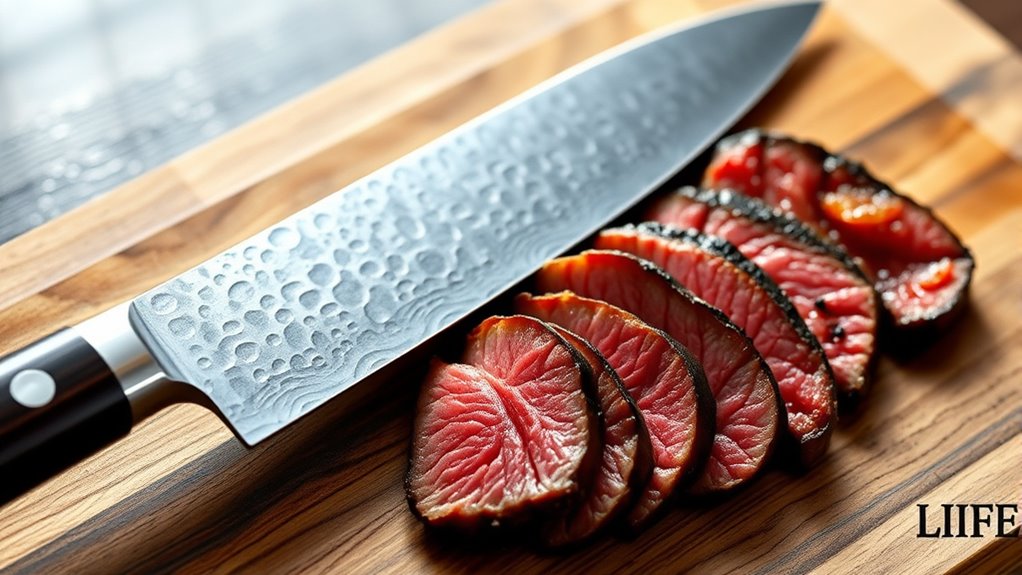
If you’ve ever struggled with dull knives that make precision cutting a nightmare, you’re not alone. Many home cooks and professionals alike find it frustrating when their blades can’t deliver clean, effortless slices. It’s amazing how much the right knife can change your entire cooking experience—making prep work smoother, faster, and even more enjoyable.
Whether you’re chopping vegetables or slicing delicate fish, having a reliable, sharp knife is a game changer.
If you want precision cutting in 2026, the Matsato 6.3″ Japanese Steel Chef Knife is your top pick. It features corrosion-resistant 1.4116 Japanese stainless steel, delivering sharp, long-lasting edges for effortless slicing.
The solid oak handle offers a comfortable, secure grip, while its balanced 150-gram weight reduces hand strain.
Maintenance is simple with proper care, and its sleek design complements any kitchen. Keep exploring to discover why it stands out among other knives.
| Image | Name | Editor's Rating | Price |
|---|---|---|---|

|
Matsato Chef Knife - Perfect Kitchen Kni...
|
|
Matsato 6.3″ Japanese Steel Chef Knife
- Chef knife for every kitchen | Whether you are a home cook or a...
- Well-balanced craftsmanship | solid oak handle crafted from...
- Chef knives | The Matsato Japanese Steel kitchen knife was...
- Sharp chef knife | The Matsato chef knife offers a premium...
- Multi-purpose tool | This knife can chop vegetables, meats, and...
The Matsato 6.3″ Japanese Steel Chef Knife offers a perfect balance of precision and durability for everyday kitchen tasks. Its sharp 1.4116 Japanese stainless steel blade cuts through vegetables, meats, and herbs with ease, helping you work faster and more efficiently.
Designed with a well-balanced blade and a solid oak handle, this knife gives you enhanced control and safety. The comfortable grip reduces hand fatigue during longer prep sessions, making it suitable for both home cooks and professional chefs.
Maintaining this knife ensures long-lasting performance. It requires hand washing and immediate drying to preserve the wooden handle and prevent blade damage. This care routine helps keep the blade sharp and chip-free.
Its 6.3-inch blade length offers excellent maneuverability, though it may feel shorter for chefs who prefer larger knives. The wooden handle adds a classic touch but needs more maintenance than synthetic alternatives.
Best for: home cooks and professional chefs seeking a versatile, durable Japanese steel chef knife for precise chopping, slicing, and dicing.
What We Like:
- Sharp, chip-resistant 1.4116 Japanese stainless steel blade
- Comfortable solid oak handle for a secure grip
- Well-balanced design enhances control and safety
- Easy to handle size ideal for various kitchen tasks
- Durable blade that maintains sharpness with proper care
Specification:
| Specification Title | Detailed Description |
|---|---|
| Blade Material | 1.4116 Japanese stainless steel |
| Blade Length | 6.3 inches (16 cm) |
| Handle Material | Premium solid oak |
| Overall Length | Approximately 11.5 inches (29 cm) |
| Weight | Around 150 grams |
| Maintenance | Hand wash and dry immediately |
Factors to Consider When Choosing a Japanese Steak Knife
When choosing a Japanese steak knife, you’ll want to focus on the blade material quality and how sharp it stays over time. Don’t forget to take into account the handle’s comfort and grip since you’ll be holding it a lot.
Also, think about the knife’s weight, balance, and how easy it is to maintain.
Blade Material Quality
Why does the blade material matter so much in a Japanese steak knife? Because it directly impacts durability, sharpness, and overall performance. When you choose a knife with premium stainless steel like VG-10 or 1.4116, you’re selecting a blade known for corrosion resistance and excellent edge retention.
Layered Damascus steel is another great option, offering enhanced toughness and a striking look. The hardness of the blade, measured on the Rockwell scale, determines how well it keeps its sharp edge and resists chipping.
A high-quality blade balances sharpness and toughness while being easy to maintain, ensuring you get precise, clean cuts every time you slice through steak or other meats. This makes blade material quality essential for long-term satisfaction.
Handle Comfort And Grip
The quality of the blade means little without a handle that feels comfortable and secure in your hand. When choosing a Japanese steak knife, prioritize ergonomic handles designed to fit your hand’s natural contours. This design boosts control and precision, making every cut smoother.
Look for materials like wood, rubber, or textured composites, as they enhance grip stability and prevent slipping—even when your hands are wet. The handle’s shape and size should match your hand perfectly to avoid discomfort and improve safety.
A secure grip also reduces hand fatigue during extended use, letting you work longer without strain. Remember, a comfortable handle isn’t just about feel; it’s essential for precise, safe cutting every time you use your knife.
Knife Weight And Balance
Although it might seem minor, the weight and balance of your Japanese steak knife greatly affect how easily you can cut through steak and how comfortable it feels during use. A well-balanced knife distributes weight evenly between the blade and handle, giving you precise control without causing fatigue, even during extended use.
Heavier knives let you apply more force with less effort, while proper balance enhances maneuverability and reduces strain on your wrist and hand muscles. Typically, these knives weigh between 3 to 6 ounces, depending on design and purpose.
Choosing a knife with ideal weight and balance ensures you make cleaner cuts, preserving your steak’s texture and presentation. Pay close attention to these factors—they’re key to a seamless cutting experience.
Edge Sharpness And Retention
When you choose a Japanese steak knife, you want an edge sharp enough to slice through tender meat effortlessly. A razor-sharp edge ensures clean, precise cuts that improve both presentation and your dining experience. Equally important is edge retention — how long the blade stays sharp during regular use without needing frequent sharpening.
Knives made from high-quality Japanese steel, like 1.4116 stainless steel, excel at maintaining sharpness and resisting dulling. While the initial sharpness matters, a well-honed edge will last longer when you use appropriate sharpening tools. Focusing on sharpness and retention guarantees your steak knife delivers consistent performance, making every slice smooth and precise without unnecessary strain or tearing.
Maintenance And Care Needs
Because Japanese steak knives feature finely crafted blades, you’ll need to handle them with care to keep their performance at its best. Always hand wash your knife with mild soap and water to avoid blade damage, and dry it immediately to prevent rust, especially if it’s made from high-carbon or stainless steel. Avoid the dishwasher, as harsh detergents and heat can dull the edge and harm the handle.
To maintain precision, regularly hone or sharpen your knife. When not in use, store it in a dry, secure place like a knife block or sheath to protect the blade from chips and unnecessary wear. Following these simple maintenance steps will guarantee your Japanese steak knife stays sharp, reliable, and ready for precision cutting.
Design And Aesthetic Appeal
While choosing a Japanese steak knife, you’ll want to take into account its design and aesthetic appeal, since these factors reflect both functionality and style. Look for a sleek, minimalist design that emphasizes precision and elegance. High-quality materials like polished stainless steel and finely finished handles not only enhance durability but also add visual appeal.
You might appreciate traditional knives featuring cultural motifs or intricate patterns, which offer unique character. The knife’s shape—whether a narrow, pointed tip or a broader edge—affects both cutting performance and its overall look. Don’t overlook color schemes and surface finishes; matte or shiny options can help your knife blend seamlessly with either modern or traditional kitchen decor.
Ultimately, the right design balances beauty with practical performance to elevate your dining experience.
Frequently Asked Questions
How Do I Properly Sharpen a Japanese Steak Knife?
To properly sharpen a Japanese steak knife, start with a whetstone soaked in water for about 10 minutes. Hold the knife at a 15-degree angle and gently slide the blade across the stone, maintaining consistent pressure. Repeat on both sides evenly.
Use a finer grit stone for polishing. Don’t rush—take your time to keep the edge sharp and precise. Finish by wiping the blade clean and testing the sharpness carefully.
Can Japanese Steak Knives Be Used for Other Types of Meat?
Think of your Japanese steak knife as a samurai’s sword—crafted for precision and versatility. Yes, you can absolutely use it on other meats. Its sharp, thin blade slices through poultry, pork, and even fish with ease, preserving texture and flavor.
Just like a skilled warrior adapts to any battle, your knife handles different cuts smoothly, giving you clean, effortless slices every time. Keep it sharp, and it’ll serve you well beyond steak.
Are Japanese Steak Knives Dishwasher Safe?
No, you shouldn’t put Japanese steak knives in the dishwasher. The high heat and harsh detergents can damage the blade’s delicate edge and cause rust or corrosion, especially if the knife has a carbon steel blade.
Instead, wash your knife by hand with warm, soapy water and dry it immediately. Taking care this way will keep your knife sharp and in great condition for precise cutting every time you use it.
What Is the Typical Lifespan of a Japanese Steak Knife?
Typically, your trusty Japanese steak knife can last decades with diligent care. If you sharpen it regularly and avoid dishwasher damage, it stays sharp and strong. These knives feature exceptional craftsmanship, so they resist rust and retain their edge well.
However, neglecting maintenance or using it improperly shortens its lifespan. You’ll want to clean it promptly, hand wash gently, and store it safely to savor its slicing superiority for years to come.
How Should I Store My Japanese Steak Knife Safely?
You should store your Japanese steak knife in a wooden knife block, magnetic strip, or a protective sheath to keep the blade safe and sharp. Avoid tossing it loosely in a drawer where it can get nicked or damaged.
Make sure the storage area is dry to prevent rusting, and always clean and dry the knife thoroughly before storing it. This way, your knife stays in top condition and lasts longer.
Conclusion
So, you want the perfect Japanese steak knife for precision cutting in 2026? Search no more than the Matsato 6.3″—because who doesn’t want a blade sharper than your wit and a handle comfier than your favorite chair?
Remember, it’s not just about slicing steak; it’s about wielding a masterpiece that balances weight, edge, and style. After all, if your knife isn’t practically an extension of your hand, are you even trying?
When choosing the best Japanese steak knife for precision cutting in 2026, the Matsato 6.3″ stands out for its exceptional craftsmanship and design.