
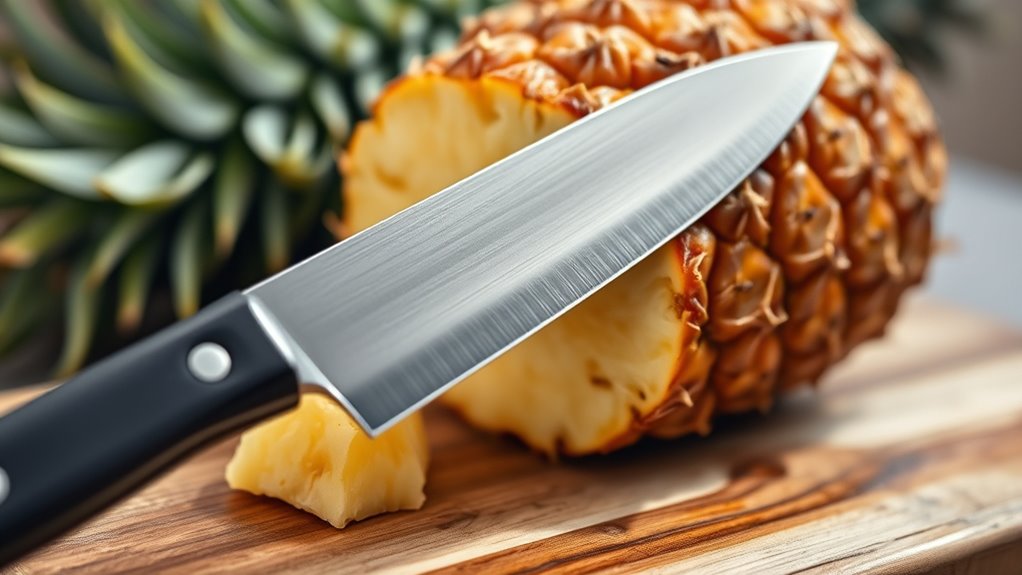
Cutting a pineapple can be a real challenge. The tough skin, the slippery texture, and the juicy core often leave many people frustrated and worried about making a mess—or worse, cutting themselves. You’re not alone if you’ve ever struggled to get those perfect, clean slices without wasting too much fruit or feeling like the knife just isn’t up to the task.
Finding the right knife makes all the difference, and it’s worth investing in one that handles pineapple with ease, precision, and safety. Whether you’re prepping a tropical snack, making a fresh fruit salad, or experimenting with new recipes, having the ideal tool can save you time and effort, making the whole experience more enjoyable.
You’ll want the DDF iohEF 7 Inch Japanese Stainless Steel Chef Knife for cutting pineapple in 2026. Its high-carbon stainless steel blade stays sharp and resists corrosion from pineapple acids.
At 7 inches, it offers the perfect balance of control and precision, while the ergonomic, non-slip handle keeps your grip secure and comfortable. This knife’s weight and balance reduce fatigue, making slicing effortless.
Keep going to discover why it stands out and how to care for it properly.
| Image | Name | Editor's Rating | Price |
|---|---|---|---|

|
DDF iohEF Kitchen Knife, Chef's Knife In...
|
|
DDF iohEF 7 Inch Japanese Stainless Steel Chef Knife
- 【Premium Japanese Stainless Steel Chef's Knife】: This chef's...
- 【Double-Edged Blade Design】: Double-Edged blade design so...
- 【Well Balanced Kitchen Knife】: The balance between blade and...
- 【Multifunctional Cooking Knife】: This professional 7 inch...
- 【100% Satisfation】: We offer you 100% satisfaction product....
Looking for a reliable chef knife that handles tough cutting tasks with ease? The DDF iohEF 7 Inch Japanese Stainless Steel Chef Knife offers precise control, making it ideal for slicing through thick pineapple skin and juicy flesh. Its sharp, Santoku-style blade ensures clean cuts every time.
Crafted from durable 5Cr15Mov Japanese stainless steel, this knife maintains sharpness and strength, with a hardness rating of up to 58. The double-edged 15-degree blade works well for both left- and right-handed users, providing balanced handling and accuracy.
The ergonomic stainless steel handle is designed for comfort, reducing hand fatigue during extended use. While the handle may feel slippery when wet, its solid construction offers a secure grip for most kitchen tasks.
Maintenance is straightforward since the knife is dishwasher safe, though regular honing is advised to keep the plain edge blade in optimal condition. This combination of durability and ease of care makes it a practical addition to any kitchen.
Best for: Home cooks and professional chefs who need a versatile, durable chef knife for precise cutting, including tough fruits like pineapple.
What We Like:
- Sharp double-edged blade suitable for left- and right-handed users
- Comfortable ergonomic handle reduces fatigue
- Durable 5Cr15Mov Japanese stainless steel construction
- Dishwasher safe for easy cleaning
Specification:
| Specification Title | Detailed Description |
|---|---|
| Blade Length | 7 inches |
| Blade Material | 5Cr15Mov Japanese stainless steel |
| Blade Type | Santoku-style, double-edged, 15-degree angle |
| Hardness Rating | Up to 58 HRC |
| Handle Material | Stainless steel |
| Weight | Approximately 8 ounces |
| Dishwasher Safe | Yes |
Factors to Consider When Choosing a Knife to Cut a Pineapple
When choosing a knife to cut a pineapple, focus on blade material durability and length to make certain it handles the tough skin and size. Sharpness and precision are key for clean cuts, while a comfortable grip helps you maintain control.
Don’t forget to take into account the knife’s weight and balance for easier, safer slicing.
Blade Material Durability
Because cutting pineapple involves handling tough, fibrous flesh and acidic juice, you’ll want a knife with a durable blade material that resists corrosion and maintains sharpness. High-carbon stainless steel blades are ideal—they combine hardness and corrosion resistance, keeping your knife sharp through repeated use. Look for blades with high chromium content, as they offer extra protection against rust and staining from the pineapple’s acidity.
Forged blades usually last longer than stamped ones, providing better durability when cutting through fibrous produce. Also, consider the blade’s hardness on the Rockwell scale; a harder blade resists chipping and dulling. Choosing a knife with a quality alloy composition ensures your blade stays sharp and reliable, making your pineapple prep easier and more efficient every time.
Blade Length Suitability
Choosing the right blade length makes cutting a pineapple much easier and safer. You’ll want a blade between 5 and 7 inches, as it offers the perfect balance of reach and control. Blades shorter than 5 inches force you to make more cuts, which means extra effort and time.
On the other hand, blades longer than 7 inches tend to be bulky and tricky to maneuver around the pineapple’s curves. Picking a blade length that fits comfortably in your hand not only boosts your precision but also reduces fatigue while slicing. This fit is essential to prevent slips or loss of control, keeping you safe throughout the process.
Edge Sharpness Precision
Although selecting the right blade length is important, the sharpness of your knife’s edge plays an equally crucial role in cutting a pineapple efficiently. A razor-sharp edge slices cleanly through the tough, fibrous exterior, making the task smoother and faster.
When your blade is precisely sharpened, typically at a 15-20 degree angle, it reduces slipping risks, keeping you safer. You’ll also need less force, which means less strain and fatigue during repetitive cuts.
To keep that edge in prime condition, regular honing and sharpening are essential. Neglecting this can dull the blade, making it harder to cut through the pineapple’s thick skin and increasing the chance of accidents.
Handle Comfort Grip
How comfortable your knife’s handle feels can make a big difference when cutting a pineapple. Since slicing and coring pineapples often involves repetitive motions, a comfortable grip reduces hand fatigue and keeps you going longer without discomfort.
Look for ergonomic handles with non-slip textures—they give you better control and keep you safe when cutting through tough skin and juicy flesh. A well-designed handle also absorbs pressure, preventing blisters or soreness during extended use.
Handles made from moisture-resistant materials maintain grip stability even if your hands get wet or sweaty. Finally, choose a handle with the right shape and size for your hand, so you get a secure, natural grip that lets you cut precise, uniform pineapple slices every time.
Weight And Balance
A comfortable handle grip sets the stage, but the knife’s weight and balance play a big role in how easily you can slice through a pineapple. A well-balanced knife distributes weight evenly between blade and handle, reducing your fatigue as you work. The right weight gives you controlled slicing—essential for cutting through tough pineapple skin and dense flesh smoothly.
Heavier knives offer momentum but need more strength and steady hands to avoid slipping. On the other hand, lighter knives give you greater maneuverability and precision, especially for detailed cuts. Proper balance helps you maintain steady control, minimizing accidents when handling this dense fruit.
Choosing a knife with the right weight and balance ensures safer, easier, and more efficient pineapple slicing every time.
Versatility In Use
When choosing a knife to cut a pineapple, you’ll want one that handles every step of the process with ease—from peeling to coring to slicing. A versatile knife features a sharp, durable blade that easily penetrates the tough outer skin and fibrous interior. Its shape and size should let you make both precise cuts and larger slices without switching tools.
Look for a comfortable, secure handle that guarantees control and safety through every motion. This kind of knife doesn’t just stop at pineapple—it works well on other fruits and vegetables too, boosting your kitchen’s overall functionality.
Maintenance And Care
Choosing a versatile knife for cutting pineapple makes your prep work easier, but keeping that knife in top condition is just as important. You should regularly hone the blade to maintain sharpness for clean, precise cuts through tough pineapple skin and flesh. Always hand wash and dry your knife thoroughly to prevent rust and corrosion, especially if it’s stainless steel.
Avoid cutting on hard surfaces like glass or stone, which can dull or damage the edge quickly. Periodically sharpen the knife using a whetstone or professional sharpener to restore its precision. Finally, store your knife in a knife block or protective sheath to preserve the blade’s edge and prevent accidental damage.
Proper care guarantees your pineapple knife stays efficient and long-lasting.
Frequently Asked Questions
How Do I Properly Store a Knife After Cutting Pineapple?
After cutting pineapple, you should rinse your knife under warm water to remove sticky residue. Dry it thoroughly with a clean towel to prevent rust and bacteria buildup.
Store the knife in a knife block, magnetic strip, or protective sheath to keep the blade sharp and safe. Avoid tossing it in a drawer where it can get damaged or cause accidents. Taking these steps keeps your knife in great shape for next time.
Can I Use the Same Knife for Other Fruits Safely?
Sure, you can safely slice strawberries, starfruit, and other sweet snacks with the same knife! Just remember to rinse it rigorously right after cutting pineapple to remove any sticky sap or acidic residue. This prevents cross-contamination and preserves your knife’s sharpness.
Keeping your knife clean and cared for means you’ll confidently cut a cornucopia of fruits without worry, ensuring fresh flavors and safe slicing every time you pick up that blade.
What Is the Best Way to Sharpen a Pineapple Knife?
The best way to sharpen your pineapple knife is by using a whetstone or a ceramic sharpening rod. First, soak the whetstone in water for about 10 minutes. Hold the knife at a 20-degree angle and slide it across the stone, maintaining consistent pressure.
Repeat on both sides until sharp. If you use a ceramic rod, draw the blade down the rod at the same angle. Regular sharpening keeps your knife effective and safe.
Are There Any Safety Tips for Cutting Pineapples?
Yes, you should always use a sharp knife to reduce slipping, and cut on a stable, non-slip surface. Hold the pineapple firmly but keep your fingers away from the blade’s path. Cut slowly and carefully, especially when removing the tough skin.
It’s smart to trim the base first to create a flat surface so the pineapple won’t roll. Wearing cut-resistant gloves can add extra protection if you’re nervous.
How Long Does a High-Quality Pineapple Knife Typically Last?
You can expect a high-quality pineapple knife to last several years with proper care—often 5 to 10 years or more.
Remember, “a stitch in time saves nine,” so regularly sharpening and cleaning your knife will keep it performing well. Avoid cutting on hard surfaces and always store it safely.
Conclusion
When you pick the DDF iohEF 7 Inch Japanese Stainless Steel Chef Knife, you’re not just choosing a tool—you’re embracing a trusty companion that makes cutting pineapples feel like a breeze.
With its sharp blade, comfortable grip, and perfect balance, slicing through tough skin becomes as smooth as a summer breeze. Don’t settle for less; this knife will transform your kitchen experience and make every pineapple prep a joy you look forward to.