
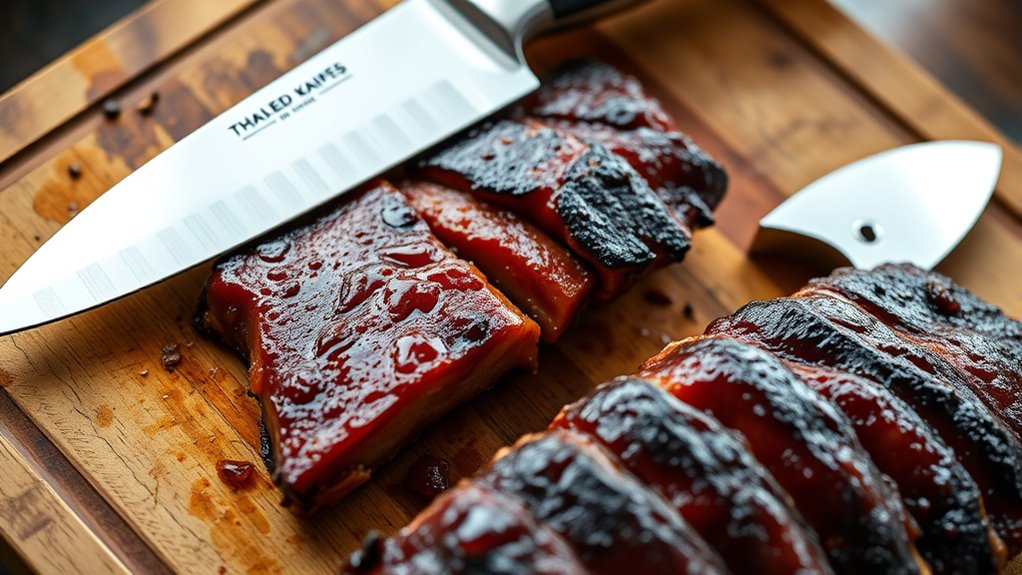
Cutting ribs can be a real challenge, right? Many people struggle with finding the right knife that can handle both the toughness of bones and the tenderness of the meat without causing frustration or injury.
If you’ve ever wrestled with a dull blade or a knife that just can’t cut through cleanly, you’re not alone. The good news is, having the right tools can make all the difference.
You’ll want a Mueller 7-inch Heavy Duty Butcher Cleaver for its sturdy, high-carbon stainless steel blade that easily chops through bones and cartilage with minimal effort.
For more precise slicing, the HOSHANHO 7″ High Carbon Stainless Steel Fillet Knife offers a sharp, flexible edge that handles tender meat cleanly.
Both knives balance comfort, durability, and sharpness, making rib preparation efficient and safe.
Keep going to discover how these choices fit different cutting needs and care tips.
| Image | Name | Editor's Rating | Price |
|---|---|---|---|

|
Mueller 7-Inch Meat Cleaver Butcher Knif...
|
|
|

|
HOSHANHO Fillet Knife 7 Inch, Super Shar...
|
|
Mueller 7-inch Heavy Duty Butcher Cleaver
- LASER-TESTED GERMAN STEEL EDGE — Mueller's 7-inch cleaver is...
- SEAMLESS STAINLESS STEEL HANDLE — BUILT FOR SERIOUS COOKS —...
- HEAVY-DUTY BONE CHOPPER & MULTI-PURPOSE KITCHEN KNIFE — Power...
- PRO GRADE — HOME KITCHEN AND RESTAURANT READY — Mueller...
- THE GIFT EVERY COOK WANTS — BACKED BY MUELLER'S GUARANTEE —...
The Mueller 7-inch Heavy Duty Butcher Cleaver is designed to make tough meat and bone cutting tasks more manageable. Its sharp 7-inch high-carbon stainless steel blade cuts through ribs and bones with minimal effort, helping you work faster and more precisely. This cleaver reduces the strain of heavy chopping.
The ergonomic full tang handle offers a secure and comfortable grip. It helps reduce hand fatigue, making longer kitchen sessions easier. This practical design supports better control and safety when handling dense cuts.
Durability is a key benefit. The blade resists rust and corrosion, standing up well to repeated use. While it’s not dishwasher safe, the cleaver cleans easily by hand and sharpens quickly to maintain its edge.
This cleaver fits well in both home kitchens and professional settings. It delivers reliable performance for heavy-duty meat preparation without sacrificing user comfort.
Best for: Home cooks and professional chefs needing a tough, sharp cleaver for chopping meat and bones efficiently.
What We Like:
- Sharp high-carbon stainless steel blade for precise cutting
- Comfortable ergonomic full tang handle reduces fatigue
- Durable, rust-resistant construction for long-lasting use
- Easy hand-cleaning and quick sharpening
Specification:
| Specification Title | Detailed Description |
|---|---|
| Blade Length | 7 inches |
| Blade Material | High-carbon stainless steel |
| Handle Type | Ergonomic full tang |
| Weight | 1.1 pounds |
| Rust and Corrosion Resist | Yes |
| Dishwasher Safe | No |
HOSHANHO 7″ High Carbon Stainless Steel Fillet Knife
- 【Premium High Carbon Steel】This professional fish fillet...
- 【Excellent Cutting Results】With a 7 inch long, thin blade,...
- 【Ergonomic Design】The ergonomic shape of the fish knife's...
- 【Mutifunctional Use】In addition to easily cutting fish bones...
- 【Flexible and Lightweight】The blade of the fish knife is...
Experience precision and ease with the HOSHANHO 7″ High Carbon Stainless Steel Fillet Knife. This knife is designed to make delicate cuts effortless, helping you work through fish and meat with confidence. Its sharp, hand-polished 15-degree edge ensures clean slicing while minimizing waste.
The flexible 7-inch blade adapts smoothly around bones, perfect for boning and trimming ribs. You’ll find the lightweight design reduces hand fatigue, allowing for longer, more comfortable use. The pakkawood handle adds an ergonomic touch, providing a secure grip even during extended prep sessions.
Maintaining the knife requires hand washing only, preserving the integrity of the high-carbon stainless steel blade. Avoiding the dishwasher protects the pakkawood handle from moisture damage and keeps the blade sharp over time. This care routine ensures your knife stays reliable and efficient.
Ideal for both professional chefs and home cooks, this fillet knife offers versatility between fish and meat preparation. Its balance of sharpness, flexibility, and comfort makes it a trusted tool for precise cuts in your kitchen.
Best for: professional chefs and home cooks who need a lightweight, precise, and versatile fillet knife for delicate fish and meat preparation.
What We Like:
- Sharp, hand-polished 15-degree edge for precise cuts
- Flexible blade smoothly navigates around bones
- Ergonomic pakkawood handle reduces hand fatigue
- Lightweight design enhances control and comfort
Specification:
| Specification Title | Detailed Description |
|---|---|
| Blade Length | 7 inches |
| Blade Material | High carbon 10Cr15CoMoV stainless steel |
| Edge Angle | 15 degrees, hand-polished |
| Handle Material | Ergonomic pakkawood |
| Weight | 10.6 ounces |
| Care Instructions | Hand wash only; avoid dishwasher |
| Intended Use | Filleting, slicing, boning, and trimming ribs |
Factors to Consider When Choosing a Knife to Cut Ribs
When choosing a knife to cut ribs, you’ll want to focus on blade material quality and sharpness for smooth, precise cuts. Don’t forget how comfortable the handle feels and how well the knife balances in your hand.
Durability and ease of maintenance also play a big role in making sure your knife lasts through many meals.
Blade Material Quality
Although many factors influence knife performance, the blade material quality plays an essential role in how effectively you can cut ribs. You want a blade made from stainless steel, carbon steel, or high-carbon stainless steel for durability and sharpness retention. The blade’s hardness, measured on the Rockwell scale, guarantees it maintains a sharp edge during tough cuts.
High-carbon stainless steel offers corrosion resistance, preventing rust and discoloration when slicing moist, fatty ribs. Forged blades outperform stamped ones in strength and edge stability, which is critical for cutting through rib bones and cartilage. Ultimately, the blade’s composition and treatment determine how efficiently your knife handles heavy-duty rib cutting without dulling or damage.
Choose wisely to maximize cutting performance.
Handle Comfort And Grip
Since cutting ribs demands both strength and precision, a comfortable handle that offers a secure grip is essential to prevent hand fatigue and maintain control. You want an ergonomic design that fits your hand naturally, helping you apply force without losing precision. Handles made from non-slip materials are especially important, as wet or greasy hands can easily cause slips, risking accidents.
Look for textured or contoured grips—they enhance comfort and keep the knife steady in your hand. Additionally, a well-balanced handle distributes weight evenly, making the knife easier to maneuver and reducing wrist strain during extended use. When you prioritize handle comfort and grip, you’ll find cutting ribs becomes safer, more efficient, and far less tiring.
Blade Sharpness And Edge
A comfortable handle helps you maintain control, but the blade’s sharpness and edge make all the difference in cutting through ribs smoothly and safely. A sharp blade cuts cleanly through ribs and bones, reducing slips and accidents.
You want a knife with high edge retention so it stays sharp longer, meaning less time spent sharpening during your cookout. A finely honed edge lets you slice precisely, giving you evenly cooked ribs that look as good as they taste.
Look for blades tested for consistent, reliable sharpness—they’ll perform well through multiple uses. Keeping your blade sharp also minimizes effort and fatigue, making the task safer and more efficient.
Sharpness isn’t just about cutting; it’s about control and confidence every time you handle ribs.
Knife Weight And Balance
When you choose a knife for cutting ribs, its weight and balance play a crucial role in how comfortable and effective your cuts will be. A well-balanced knife distributes weight evenly between the blade and handle, giving you smoother control and reducing wrist strain. The balance point, usually near the bolster or handle, affects how natural the knife feels during slicing.
Heavier knives offer more chopping power but can cause fatigue, which may reduce your precision over time. To cut through dense rib meat efficiently, pick a knife whose weight matches your strength and cutting style. This way, you’ll maintain safety and accuracy without tiring out your hand, making your rib-cutting tasks smoother and more enjoyable.
Durability And Maintenance
Along with weight and balance, durability and maintenance play a big role in choosing the right knife for cutting ribs. You’ll want a knife made from high-quality stainless or high-carbon steel to resist rust and wear. A full tang construction adds strength and stability, preventing bending or breaking during tough cuts.
To keep your knife in top shape, always hand wash and dry it thoroughly—especially if it’s high-carbon steel, which is more prone to corrosion. Regular sharpening is essential to cut through bones and meat efficiently while extending the blade’s lifespan.
Additionally, opting for a corrosion-resistant finish or coating can ease maintenance and keep your knife performing well longer, making your rib-cutting tasks smoother and more reliable.
Versatility For Meat Cuts
Since ribs involve various textures and cuts, you’ll want a knife that handles more than just slicing. Look for a broad, sturdy blade that can slice tender meat and chop through denser cartilage or bones with ease. A slightly curved or flexible blade helps you glide smoothly through rib racks, providing better control and precision.
Your knife should be versatile enough to trim, fillet, and slice, covering all stages of rib preparation without switching tools. Choose one made from durable, corrosion-resistant materials to withstand frequent use on different cuts. With a multi-purpose meat knife, you’ll tackle ribs and related tasks efficiently, making your cooking experience smoother and more enjoyable.
Frequently Asked Questions
How Do I Properly Sharpen a Rib-Cutting Knife?
To properly sharpen a rib-cutting knife, start by using a whetstone or sharpening system. Hold the blade at a 20-degree angle, then gently slide it across the stone in smooth, consistent strokes. Make sure you sharpen both sides evenly to maintain the edge.
After sharpening, use a honing rod to realign the edge. Finally, rinse and dry your knife thoroughly to prevent rust and keep it ready for your next rib-cutting session.
Can Rib Knives Be Used for Other Meats?
Absolutely, you can use rib knives for other meats—they’re not just rib royalty! These knives slice through brisket, pork shoulder, and even chicken like a hot knife through butter. Their sharp, flexible blades make separating meat from bone effortless, turning any cutting task into an art form.
Just remember, while they excel with ribs, they might not replace your chef’s knife for precision tasks, but they sure bring versatility to your kitchen arsenal.
What Is the Best Way to Clean Rib-Cutting Knives?
You should clean rib-cutting knives right after use to keep them sharp and safe. Rinse off any meat residue with warm water, then wash the blade gently using mild dish soap and a soft sponge—avoid abrasive materials that can dull the edge.
Dry the knife thoroughly with a clean towel to prevent rust. For best results, hand wash only; avoid putting rib knives in the dishwasher, which can damage the blade and handle.
Are Serrated or Straight Edges Better for Ribs?
Straight edges are better for cutting ribs because they give you clean, precise slices through the meat and bone without tearing. Serrated knives tend to shred the meat, making your cuts less neat. When you want to maintain the rib’s texture and presentation, a sharp straight-edged knife lets you work smoothly.
How Long Do Rib Knives Typically Last With Regular Use?
A rib knife typically lasts 1 to 3 years with regular use before it needs sharpening or replacement. If you treat it right—cleaning and honing after every use—it’ll stay sharp longer than a superhero’s sword in battle.
But constant cutting through tough ribs will dull it over time. Keep an eye on its edge, and don’t let it get too dull, or you’ll struggle cutting through those meaty ribs.
Conclusion
When it comes to cutting ribs, choosing the right knife is like picking the perfect key to open tender, juicy flavor. Whether you go with the sturdy Mueller Butcher Cleaver or the precise HOSHANHO Fillet Knife, you’ll want a blade that feels comfortable, sharp, and balanced in your hand.
Keep durability and versatility in mind, and you’ll slice through ribs like a pro every time—making meal prep effortless and enjoyable.