
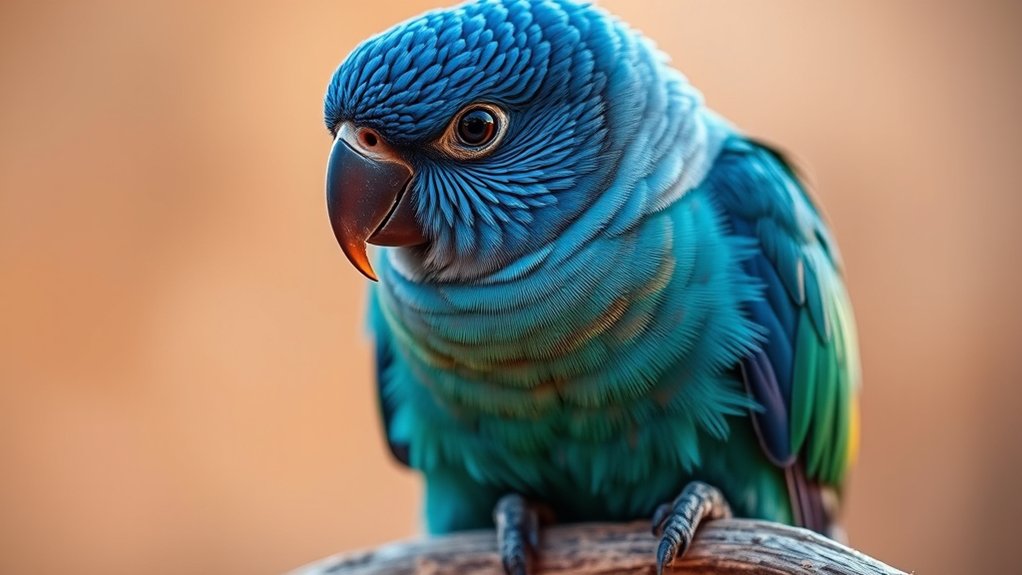
You’ll find the Blue Quaker bird unique because of its vibrant blue-green feathers and impressive vocal mimicry that lets it imitate human speech and household sounds. It’s highly social, forming strong bonds with you and even building large, intricate nests together with others.
This playful parrot also needs plenty of interaction and a stimulating environment to thrive. If you’re curious about its diet, health, and how to create the perfect home, there’s plenty more to discover.
What Is a Blue Quaker Parrot and Where Does It Come From
The Blue Quaker Parrot, also called the monk parakeet, stands out with its bright blue feathers that gradually fade to green and its compact, stocky shape, measuring about 11 inches long.
The Blue Quaker Parrot boasts bright blue feathers fading to green and a compact, stocky 11-inch frame.
Native to South America, this bird thrives in grasslands across Uruguay, southern Brazil, and Bolivia.
When you bring a Blue Quaker Parrot into your life, you’ll notice how quickly it forms strong social bonds, making it an engaging companion.
Its intelligence shines through in its remarkable vocal mimicry. You’ll be surprised at how well it imitates household sounds and even human speech.
This monk parakeet’s unique behaviors and adaptability have made it a popular pet, while its native roots continue to influence its lively and social nature.
How the Blue Quaker’s Appearance Sets It Apart
Blue Quaker Parrots catch your eye with their vibrant blue feathers that blend seamlessly from green on their backs to bright blue on their wings and tails. This striking blue plumage gives the Blue Quaker its unique and vibrant appearance, making it stand out among other parrots.
When you observe one, notice these key features:
- A compact body around 11 inches long with a distinctive curved beak designed for handling seeds.
- Subtle sexual differences, with males often more vocal.
- A playful demeanor reflecting their intelligent and social nature.
However, their feathers can suffer from feather plucking if stressed, so maintaining a calm environment is essential to preserve their beauty and health.
Fun and Unique Behaviors of Blue Quaker Parrots
You’ll love how Blue Quaker parrots mimic sounds and speech—they really show off their playful vocal skills.
They’re super social birds, too, often seeking cuddles and interaction with you.
And on top of that, their unique nest-building habits make them endlessly entertaining companions.
It’s like having a little feathered friend who’s always up for some fun!
Playful Vocal Mimicry
Although Quaker parrots are small, they boast impressive vocal mimicry skills that can surprise you. Their playful behaviors shine as they practice sounds independently, showing off their intelligence and curiosity.
Thanks to their social nature, these birds develop strong communication abilities, often creating unique personal languages with their owners. You’ll find blue Quakers are entertaining companions, capable of building an extensive vocabulary that rivals larger parrots.
Here’s why their vocal mimicry stands out:
- They imitate a wide range of sounds, from human speech to household noises.
- Their vocal clarity is remarkable for their size.
- They use different vocalizations to express emotions, grabbing your attention when needed.
Their blend of vocal mimicry and social play makes them truly unique pets.
Social Bonding Habits
When you spend time with Quaker parrots, you’ll quickly notice how deeply they bond with their owners through affectionate behaviors like cuddling and nuzzling. Their social bonding thrives on constant interaction, which supports their emotional well-being and prevents behavioral issues.
Blue Quakers use vocal mimicry not only to entertain but also to communicate, forming a personal language unique to their relationships with you. They love being part of your daily activities, often perching on your shoulder and joining conversations.
| Behavior Type | Description |
|---|---|
| Affectionate behaviors | Cuddling, nuzzling, close physical contact |
| Vocal mimicry | Unique sounds signaling social bonds |
| Interaction | Playful antics, participation in family activities |
| Emotional well-being | Maintained by regular social contact, prevents stress |
Unique Nest Building
If you observe Blue Quaker parrots closely, you’ll notice their remarkable nest-building skills. Their unique nest-building involves crafting large, intricate structures using natural materials like twigs and leaves. These nests can exceed 1 meter in diameter and often house multiple pairs, showcasing impressive intelligence and problem-solving abilities.
Blue Quakers engage in communal nesting, which helps strengthen social bonds and creates a safe space for breeding.
Here’s what makes their nest-building stand out:
- Use of diverse natural materials adapted to their environment
- Construction of complex, apartment-like nests with private entrances
- Collaboration through communal nesting enhancing social connections
This behavior highlights not only their cleverness but also the importance of social cooperation in their survival.
Blue Quakers’ Social Nature Explained
Because Blue Quaker parrots thrive on interaction, you’ll find they form strong bonds with their owners, often favoring one person above all others.
These social birds crave companionship, so you’ll notice they enjoy cuddling and perching on your shoulder as you go about your day.
Their playful nature shines through in their constant need to interact, keeping them engaged and happy.
Blue Quakers are also known for their impressive vocal mimicry, often developing a unique language with you.
Without regular attention, they can experience anxiety, showing signs of distress when left alone too long.
To keep your Blue Quaker content, provide consistent social interaction and playtime, ensuring their emotional well-being and strengthening the special connection you share.
The Importance of Early Bonding With Blue Quakers
Understanding the social nature of Blue Quakers highlights why starting your bond early makes such a difference. Early bonding is essential for their emotional well-being and helps establish a secure attachment between you and your bird.
When you invest time in these formative weeks, you’ll notice key benefits:
- Reduced behavioral issues like aggression and feather plucking caused by stress or neglect.
- Enhanced social behavior, allowing your Blue Quaker to become an affectionate companion who integrates smoothly into family life.
- Stronger trust and comfort, which pave the way for a lifelong positive relationship.
How Blue Quakers Mimic Sounds and Speech
You’ll be amazed at how Blue Quakers pick up sounds and speech with impressive clarity.
Their ability to mimic human words and everyday noises rivals that of much larger parrots.
And with a little patience and training, you can help them build a vocabulary that makes interaction even more rewarding.
Vocal Mimicry Skills
Though Blue Quaker parrots are smaller than some other talkative birds, they mimic sounds and human speech with remarkable clarity.
Their exceptional vocal mimicry skills make them entertaining companions who easily pick up common household sounds.
Their social nature encourages them to practice and expand their vocabulary during interactions with you and other environmental noises.
You’ll notice these key traits in their mimicry:
- Ability to imitate diverse phrases and familiar sounds with impressive clarity.
- Vocalizations ranging from soft chatter to loud calls, reflecting their mood and desire for attention.
- Development of a unique personal language that strengthens your bond and enhances communication.
Speech Learning Ability
Because Blue Quaker parrots thrive on social interaction, they quickly pick up on sounds and speech in their environment. Their impressive speech learning ability allows them to mimic human speech with surprising clarity.
As social birds, they use their vocal abilities to engage with you, often developing extensive vocabularies that rival larger parrot species. While not every Blue Quaker will talk, many enthusiastically practice new sounds on their own, creating a unique bond through personalized “languages.”
Their natural desire for attention makes them engaging companions, constantly vocalizing to stay connected. If you want a bird that listens, learns, and responds, Blue Quakers offer a remarkable blend of intelligence and sociability unmatched by many other pets.
Blue Quaker Parrot Diet and Nutrition Needs
When caring for a Blue Quaker Parrot, you should focus on a diet that includes about 70% high-quality pellets to provide balanced nutrition and prevent obesity.
Meeting their nutrition needs properly helps avoid common health issues linked to poor diet.
Along with pellets, fresh fruits and vegetables like apples, berries, and leafy greens should be offered daily as crucial supplements.
You need to be cautious with high-fat foods such as peanuts and sunflower seeds, offering them only occasionally.
To summarize, keep in mind:
- Pellets make up the majority of their diet for balanced nutrition.
- Fresh fruits and veggies are essential daily additions.
- Treat high-fat foods sparingly to prevent obesity.
Always provide fresh water to keep your Blue Quaker Parrot healthy and hydrated.
Common Health Challenges in Blue Quaker Parrots
If you want your Blue Quaker Parrot to thrive, you’ll need to watch for common health challenges like respiratory issues, obesity, and feather plucking.
Respiratory problems often stem from poor air quality or smoke, so maintaining a clean environment is essential.
Obesity can develop if your bird consumes too many fatty seeds and lacks exercise, making a balanced diet with pellets and fresh produce important.
Feather plucking may indicate stress or boredom, so providing stimulating activities and social interaction helps reduce anxiety.
Regular veterinary check-ups play a significant role in early detection and management of these issues.
Creating the Ideal Home for Blue Quakers
To create the ideal home for your Blue Quaker, start with a spacious, safe cage that offers plenty of room to move.
You want to make sure your bird has enough space to stretch its wings and explore comfortably.
Next, include a variety of toys and perches.
These keep your bird mentally stimulated and active, which is super important for their happiness and health.
And don’t forget to provide bird-safe nesting materials—this lets your Quaker express its natural behaviors and feel right at home.
Cage Size And Safety
Ensuring your Blue Quaker has a cage at least 24 × 24 × 24 inches lets them move freely and stay active.
When choosing a cage, prioritize avian-safe materials that resist chewing and prevent escapes.
Inside, provide multiple perches, toys, and bird-safe nesting materials like paper strips or ropes to satisfy natural instincts.
Keep in mind these three essentials:
- Adequate cage size for movement
- Durable, non-toxic materials for safety
- Regular cleaning to maintain hygiene
Blue Quakers can be messy eaters, so cleaning the cage frequently keeps their environment healthy.
Separate zones for eating, playing, and sleeping within the cage help your bird feel secure and comfortable.
Enrichment And Toys
Because Blue Quaker parrots thrive on mental stimulation, providing a variety of toys like foraging puzzles, swings, and chewable materials keeps them engaged and happy.
For best enrichment, choose interactive toys that challenge your bird’s problem-solving skills and encourage exploration. This helps reduce boredom and destructive behaviors.
Rotate toys regularly to maintain interest, as Blue Quakers can get attached to specific items. Use safe, non-toxic materials like untreated wood and natural fibers to protect their health.
Furthermore, create designated play areas outside the cage equipped with safe toys and perches. These spaces allow your Blue Quaker to engage in acrobatic play, promoting physical fitness and strengthening your bond.
Prioritizing enrichment and diverse toys guarantees your Blue Quaker stays mentally sharp and physically active.
Nesting Materials Provided
While Blue Quaker parrots naturally build complex nests with multiple entry points, you can support this instinct by providing safe, non-toxic materials like paper strips, natural fibers, and untreated wood.
These nesting materials encourage them to engage in nest-building, mimicking their communal nesting structures in the wild.
To create the ideal home for your Blue Quaker, focus on:
- Offering a variety of textures to promote mental enrichment and stimulate natural behaviors.
- Ensuring all materials are non-toxic and free from harmful chemicals.
- Regularly changing and replenishing nesting materials to maintain hygiene and encourage ongoing nest-building.
Dallas Parrots’ Support for Blue Quaker Owners
Many Blue Quaker owners find that Dallas Parrots goes beyond just selling birds by offering hands-on support throughout the adoption process.
When you adopt a Quaker from them, you’re not just getting a pet bird; you’re gaining a partner in proper care and social interaction.
Dallas Parrots guarantees you understand the unique needs of these exotic pets through honest discussions and practical guidance. They help you pick the right cage, feeding options, and perches, making sure your new bird settles in comfortably.
Their supportive blog gives tips on feather care and managing anxious behavior, enhancing your experience.
With knowledgeable staff and a clean environment, Dallas Parrots makes adopting and caring for your Blue Quaker an informed and enjoyable journey.
Frequently Asked Questions
How Long Do Blue Quaker Parrots Typically Live in Captivity?
Blue Quaker parrots typically live 20 to 30 years in captivity if you meet their care requirements.
Their lifespan factors include a balanced diet, social behaviors, and environmental needs like exercise and mental stimulation.
You’ll want to watch for health issues by providing regular vet check-ups and a clean cage.
Neglecting these diet considerations or social interactions can shorten their life, so staying committed guarantees your bird thrives longer.
Are Blue Quaker Parrots Legal to Own Everywhere?
You should know Blue Quaker parrots face Quaker parrot restrictions in at least 10 states, so they’re not legal everywhere.
When considering legal ownership, you must review state regulations overview and local laws comparison carefully.
Exotic pet legislation varies widely, meaning responsible pet ownership includes checking your area’s rules before getting one.
Staying informed helps you comply with laws and guarantees your Quaker parrot stays safe and legal in your care.
What Is the Average Cost of a Blue Quaker Parrot?
You can expect the average cost of a Blue Quaker Parrot to range from $300 to $800, depending on breeder pricing and the bird’s age.
Don’t forget to factor in care costs like food expenses, habitat setup, and toys, which can add several hundred dollars.
Health considerations might lead you to explore insurance options or choose breeders offering health guarantees, ensuring your new pet stays happy and healthy.
Can Blue Quaker Parrots Be Trained for Tricks?
Of course, you can’t train a Blue Quaker parrot for tricks unless you enjoy watching a highly intelligent bird enthusiastically pick up behavioral cues through positive reinforcement.
Their knack for trick training thrives on social interaction and mental stimulation, so you’ll find them surprisingly responsive.
Use consistent, patient methods, and you’ll be amazed at how quickly they learn to wave, dance, or mimic sounds, turning training sessions into fun bonding experiences.
Do Blue Quaker Parrots Require Special Grooming?
Yes, Blue Quaker parrots do require special grooming to keep their coat health in top shape.
You’ll need to stay on top of feather care by checking for dirt and encouraging regular bathing habits.
Nail trimming every 4-6 weeks is essential to prevent discomfort.
Beak maintenance is just as important. Provide chewing toys to help naturally wear down their beak.
Using proper grooming tools will make the process easier and keep your bird happy and healthy.
Conclusion
Caring for a Blue Quaker is like nurturing a vibrant friendship wrapped in feathers. Their unique blue hues and lively personalities brighten any home, but they thrive on your attention and gentle care.
By understanding their special needs and quirks, you’re not just providing a habitat. You’re creating a cozy nest where trust and joy take flight.
Embrace the journey, and watch your bond with these charming birds soar to new heights.