
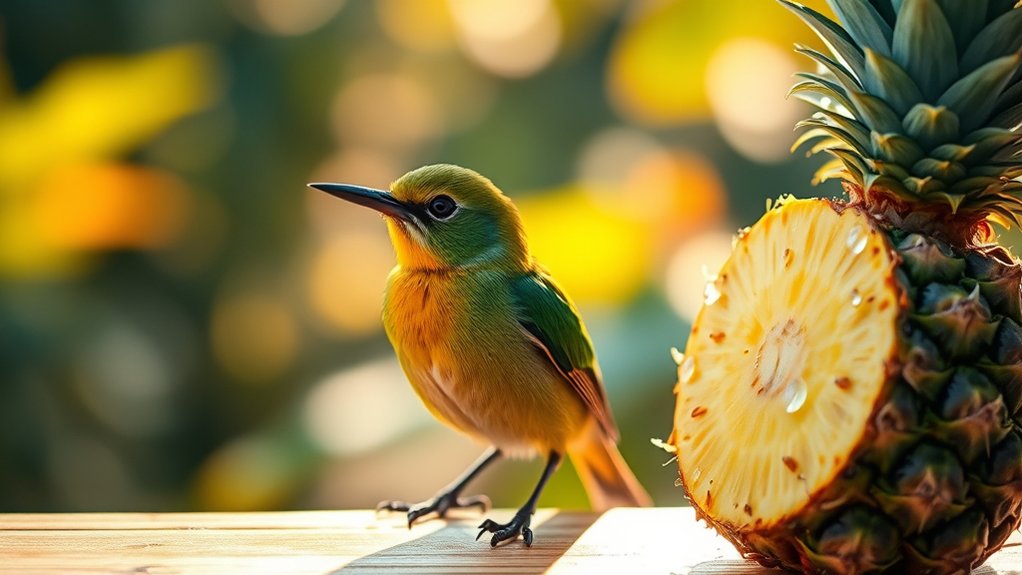
You can safely offer your bird fresh pineapple in moderation, but avoid canned versions with added sugars or preservatives. Always remove the tough skin and core to prevent choking, and cut the fruit into small, manageable pieces.
Pineapple provides valuable vitamins and fiber, boosting your bird’s health, but too much acidity or sugar might cause digestive issues. Watch your bird’s reaction carefully to guarantee they tolerate it well.
There’s more to know about feeding pineapple safely and effectively.
Is Pineapple Safe For Different Bird Species?
Although pineapple offers beneficial vitamin C, you should only feed it to your bird in moderation. Always remove the tough skin and core to prevent choking.
Pineapple is generally safe for various bird species, including parakeets and parrots, when served fresh and in small amounts. Its natural sweetness appeals to many birds, but the high sugar content means you shouldn’t overdo it. Too much can cause digestive issues.
Fresh pineapple is safe and tasty for many birds but should be given sparingly due to its high sugar content.
Avoid canned pineapple altogether since added sugars and preservatives can harm your feathered friend.
When introducing pineapple to your parakeets or parrots, start with small portions and watch for any signs of adverse reactions.
This careful approach guarantees pineapple remains a healthy, enjoyable treat in their diet.
What Nutrients Does Pineapple Provide For Birds?
When you feed your bird pineapple, you’re not just offering a tasty treat but also a boost of significant nutrients. This tropical fruit delivers a variety of essential elements that support your bird’s health and well-being.
Here are some key nutrients pineapple provides:
- Vitamin C: Strengthens the immune system and promotes overall health.
- Manganese: Supports bone health and metabolic functions.
- Dietary Fiber: Aids digestion and maintains a healthy gut.
- Vitamin B6: Helps with protein metabolism and sustains energy levels.
Additionally, pineapple contains natural sugars, giving your bird a quick energy boost. However, you should offer it in moderation to avoid excessive calorie intake.
How To Prepare Pineapple For Your Pet Bird
When you’re getting pineapple ready for your pet bird, the first thing to do is peel off that tough outer skin.
You definitely want to remove the core too, since it can be a choking hazard.
After that, just chop the fruit into small, bite-sized pieces.
That way, your bird can easily nibble on them without any trouble.
Following these easy steps will make sure your feathered friend can enjoy pineapple safely and happily.
Removing Skin And Core
Anyone preparing pineapple for their pet bird should start by carefully removing the tough outer skin and the hard core. These parts are difficult for birds to digest and could cause choking or digestive troubles.
When removing skin and core, keep these tips in mind:
Use a sharp knife to peel away the thick, spiky skin completely.
Cut out the fibrous core in the center and discard it.
Choose fresh fruits, preferably organic, to avoid pesticides.
Wash the pineapple thoroughly before cutting to remove dirt and contaminants.
Cutting Into Small Pieces
After removing the tough skin and core, the next step is to cut the pineapple into small pieces that your bird can easily handle and eat.
Cutting into small pieces helps prevent choking hazards and guarantees your pet can enjoy every bite without difficulty.
Always use fresh, preferably organic pineapple to avoid pesticides and harmful additives.
Avoid canned pineapple, as its added sugars and preservatives aren’t healthy for birds.
When cutting into small pieces, aim for sizes that match your bird’s beak and feeding habits.
Introduce these pieces gradually into your bird’s diet, watching closely for any digestive reactions.
Why You Should Choose Fresh Over Canned Pineapple
Because fresh pineapple doesn’t contain the additives and sugars found in canned versions, you’ll provide your bird with a healthier treat.
Choosing fresh pineapple helps you avoid harmful preservatives and excess sugars that canned pineapple often has.
Plus, fresh pineapple offers more nutritional benefits and a texture that encourages your bird’s natural foraging instincts.
Here’s why fresh pineapple is the better choice for your feathered friend:
- Free from added sugars and preservatives
- Higher in vitamins and antioxidants
- Encourages natural foraging with its fresh texture
- Allows better control over portion size
How Often Should You Feed Pineapple To Pet Birds?
Now that you know why fresh pineapple is a healthier option for your bird, it’s important to contemplate how often you should offer this sweet treat.
Because pineapple has high sugar content, you should feed it in moderation, ideally once or twice a week.
Always cut pineapple into small pieces and remove the skin and core to prevent choking hazards.
Monitor your bird closely after offering pineapple to spot any digestive upset, adjusting the frequency if needed.
Remember, pineapple should be an occasional treat that complements a balanced diet of pellets, seeds, and other fruits and vegetables, not replace them.
How To Combine Pineapple With Other Fruits
When you combine pineapple with other fruits, it’s a good idea to pick ones that complement its tropical flavor and offer balanced nutrition.
Think about mixing softer fruits like bananas with pineapple—this creates an easy-to-eat treat that’s really enjoyable.
On the other hand, pairing pineapple with crunchier fruits can encourage foraging, which is great for keeping things interesting.
Just remember to keep the portions moderate. You don’t want to overwhelm your bird’s digestive system.
A little variety goes a long way!
Complementary Fruit Choices
Although pineapple offers great nutritional benefits on its own, combining it with other fruits like mango, papaya, and kiwi can provide your bird with a wider range of essential vitamins and minerals.
Using complementary fruit choices not only enhances nutrition but also keeps your bird interested in its diet.
Here are some smart pairings to try:
- Mix pineapple with berries like blueberries and strawberries to encourage natural foraging and varied textures.
- Combine pineapple with apples for a sweet and crunchy treat, but always remove apple seeds first.
- Pair pineapple with high-fiber fruits such as bananas to support digestion and balance sugar intake.
- Limit pineapple portions and mix with lower-sugar fruits to avoid overwhelming your bird with too much sugar.
These complementary fruit choices guarantee a healthy, engaging diet for your feathered friend.
Balanced Fruit Portions
Since pineapple contains natural sugars, you should offer it in small portions and pair it with lower-sugar fruits like blueberries or strawberries to keep your bird’s diet balanced and healthy.
Mixing pineapple with something like mango or kiwi adds variety and essential vitamins, making meals colorful and nutritious for birds. Always cut fruits into manageable bites to encourage natural foraging and prevent choking hazards.
Remember, pineapple is a treat, not a staple, so rotate the fruits you offer regularly. This rotation keeps your bird engaged and guarantees they get a wide range of nutrients.
Signs Your Bird Reacts To Pineapple
How can you tell if your bird enjoys pineapple? When you introduce pineapple to birds, watch for clear signs of their reaction. Positive responses often include excitement and curiosity as they explore the fruit.
Here are key indicators that your bird is reacting to pineapple:
- Vocalizing happily or making playful sounds
- Willingly eating the pineapple without hesitation
- Showing playful behavior around the fruit
- Maintaining normal appetite and droppings after eating
If your bird refuses pineapple or displays discomfort, such as loose droppings or decreased appetite, it may not tolerate the fruit well.
What Are The Potential Risks Of Feeding Pineapple?
When you feed pineapple to your bird, you need to be aware of several potential risks. Pineapple contains high natural sugars, which can cause digestive issues if your bird eats too much.
Avoid canned pineapple, as it often has added sugars and preservatives harmful to your pet.
Also, never give your bird pineapple skin or core. The tough texture can be a choking hazard.
Because pineapple is acidic, some birds mightn’t tolerate it well, so watch for any signs of discomfort or digestive upset.
Always remove any parts that could pose a risk and offer pineapple in moderation. Being mindful of these risks helps keep your bird safe and healthy while enjoying this tropical treat.
How To Introduce Pineapple To A Picky Bird
If you want to introduce pineapple to a picky bird, a good way to start is by offering small, easy-to-handle pieces.
Try putting them alongside their favorite fruits. This way, the new flavor won’t seem as intimidating.
Keep an eye on your bird while they’re trying it out. If you notice any signs of discomfort or if they just seem uninterested, it’s best to take the fruit away for the time being.
Don’t get discouraged if they don’t take to it right away.
Keep offering pineapple regularly because sometimes it takes a few tries before your bird starts to enjoy it. Just be patient and consistent!
Gradual Fruit Offering
Although introducing a new fruit like pineapple to a picky bird can be challenging, starting with small, fresh pieces helps you gauge their interest without overwhelming them.
Begin with tiny, manageable chunks of fresh fruit, ensuring they’re free from tough skin and core to avoid choking hazards.
Gradually increase the amount based on your bird’s reaction, watching for any digestive issues or disinterest.
Remember to maintain a balanced diet by offering pineapple occasionally alongside pellets and seeds.
Here’s how to approach it:
- Offer small, fresh pineapple pieces initially
- Avoid tough skin and core for safety
- Monitor your bird’s response carefully
- Balance pineapple with their regular diet
This gradual offering helps your bird adjust comfortably to the new taste and texture.
Observing Bird Reactions
How can you tell if your bird is ready to try pineapple? Start by offering a small piece of fresh, organic pineapple cut into bite-sized chunks.
Bird owners should watch their bird’s reaction closely. If your bird shows curiosity and explores the new food, encourage tasting.
If they seem distressed or disinterested, remove the pineapple and try again after a few days. Some birds need time to accept new foods, so persistence matters.
Always monitor for any digestive issues after pineapple introduction, and stop offering it if adverse reactions occur.
Where To Buy Safe And Fresh Pineapple For Birds
Where can you find safe and fresh pineapple for your bird? Start by checking local grocery stores or farmers’ markets, where ripe, organic pineapples are often available without added sugars or preservatives.
Always choose fresh fruit that’s firm, fragrant, and vibrantly colored to confirm ripeness.
Avoid canned pineapple, as it usually contains additives and high sugar levels, which aren’t healthy for birds. You can also explore pet supply stores, which sometimes offer bird-friendly fruit mixes including pineapple.
Here are four tips to buy fresh pineapple for your bird:
- Shop at farmers’ markets or grocery stores for fresh, ripe pineapples
- Pick organic pineapples to reduce pesticide exposure
- Avoid canned or processed pineapple products
- Check pet stores for safe, bird-specific fruit mixes
These steps help assure your bird enjoys safe, fresh pineapple.
Frequently Asked Questions
Can Birds Eat Pineapple Skin or Core?
You shouldn’t give birds pineapple skin or core because they can be tough to digest and might cause choking.
While pineapple nutrients are great, they’re mostly in the fleshy part, which is safer and easier for birds to eat.
The skin may also carry pesticides, which could harm your bird.
Stick to offering only the soft, juicy flesh in small pieces to keep your feathered friend healthy and happy.
Does Pineapple Help With a Bird’s Digestion?
When you notice your bird enthusiastically nibbling on fresh pineapple, you’re seeing pineapple benefits in action.
Yes, pineapple helps with a bird’s digestion by providing dietary fiber that regulates their digestive system.
Plus, the bromelain enzyme breaks down proteins, boosting nutrient absorption. Its high water content keeps your bird hydrated, and the fibrous texture prevents blockages.
Offering pineapple in moderation can really support your bird’s digestive health and overall well-being.
Can Pineapple Cause Allergies in Birds?
Yes, pineapple allergy can affect some birds, causing symptoms like vomiting, diarrhea, or skin irritation.
You should introduce pineapple gradually to spot any allergic reactions early.
If your bird shows signs of distress after eating pineapple, remove it from their diet immediately.
Always consult an avian veterinarian for advice tailored to your bird’s species and health, especially if it has pre-existing sensitivities or isn’t used to tropical fruits.
Is Pineapple Safe for Baby or Young Birds?
Yes, pineapple is safe for baby or young birds in moderation. You’ll want to introduce it slowly to monitor any adverse reactions.
The nutritional benefits, like vitamin C and manganese, support their growth and immune system.
Always remove the skin and core to avoid choking hazards. Remember, pineapple’s high sugar content means it should be an occasional treat, not a regular part of their diet.
Consult your vet before adding it.
Can Pineapple Juice Be Given to Birds?
Think of pineapple juice as a golden sunbeam, bright but intense. Yes, you can give your bird pineapple juice, but only in small, diluted amounts to avoid overwhelming their system.
Pineapple nutrients like vitamin C can boost their health, but the high sugar content means it’s best as an occasional treat.
Always choose fresh juice without additives, and watch how your bird reacts to keep their diet safe and balanced.
Conclusion
Feeding pineapple to your bird is like offering a tropical treat that’s both invigorating and nutritious, but moderation is key. Just like my parrot Luna, who brightened up after trying pineapple for the first time, many birds enjoy its sweet tang and vitamin boost.
Remember, too much can upset their tummy, so introduce it slowly and watch for any reactions. With care, pineapple can be a delightful addition to your feathered friend’s diet.