
To control milkweed seed spread in your garden, start by tying mature pods with rubber bands or string before they open, especially from mid to late October. Harvest the pods carefully to prevent seeds from escaping and remove immature pods regularly throughout the growing season.
You’ll also want to hand-pull new seedlings and monitor root growth to keep your patch manageable. Taking these steps guarantees you balance growth while supporting monarch butterflies. Keep going to explore effective planting and maintenance tips.
The Best Time to Manage Milkweed Seed Pods
The best time to manage milkweed seed pods is in mid to late October, once they’ve hardened but before they burst open. At this stage, the seed pods hold mature milkweed seeds ready for collection or containment.
You’ll want to check your milkweed plants regularly from late summer onward to monitor pod development and prevent premature seed dispersal. To stop seeds from spreading uncontrollably, tie the seed pods with rubber bands or string before they open.
After a frost, the pods are mature enough for harvesting without losing seeds. Removing any immature seed pods early also helps control milkweed growth and keeps your garden from becoming overcrowded.
Managing seed pods at the right time guarantees you balance growth and control effectively.
How to Identify Mature Milkweed Seed Pods
You’ll know milkweed seed pods are mature when they turn brown or tan and develop a leathery texture.
They usually have a horn-shaped or tubular form, which is pretty distinctive. This typically happens in late summer.
It’s a good idea to catch them before they split open—that way, you can control the spread of the seeds more effectively.
Recognizing Seed Pod Maturity
When milkweed seed pods turn from green to brown and develop a hardened, horn-shaped or tubular form, they’re ready for harvesting.
Recognizing seed pod maturity is essential to control milkweed seed spread effectively.
Mature pods dry out, making it easier to collect the milkweed seeds inside. You’ll notice the seeds have a leathery texture and brown color, while immature seeds remain green and soft.
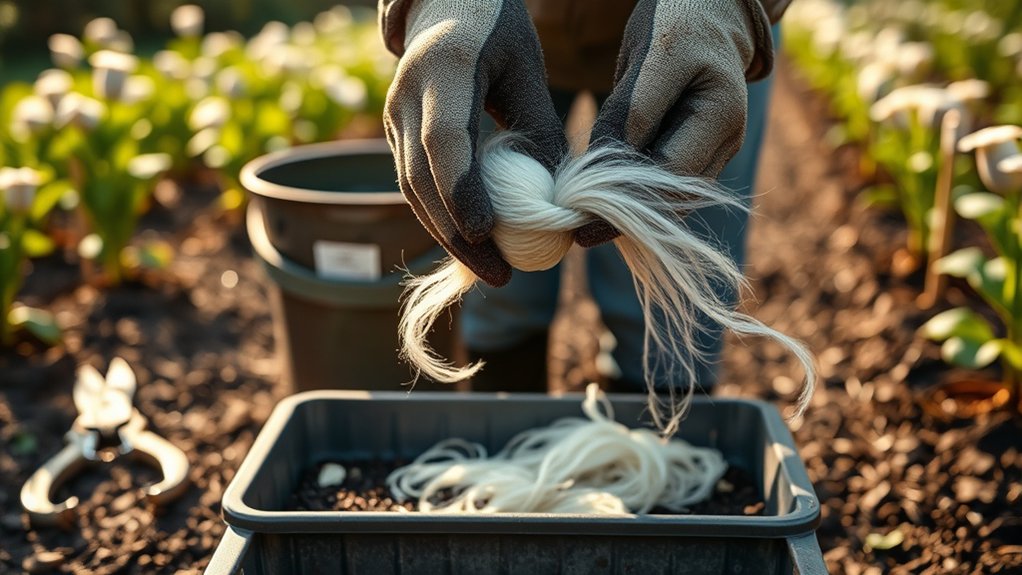
Each pod holds many seeds surrounded by fluffy white floss, which helps seeds disperse by wind once the pod splits open.
Keep an eye out for milkweed bugs on the pods since their presence often signals non-viable seeds.
Visual Seed Pod Traits
Identifying mature milkweed seed pods starts with observing their shape and texture.
As you keep an eye on your garden, focus on monitoring color and texture changes—from bumpy green to brown and leathery—that signal ripeness. Recognizing these visual seed pod traits helps you control seed spread effectively.
Look for these key signs:
- Horn-shaped or tubular pods with a rough exterior
- Pods shifting from vibrant green to deep brown
- Fluffy white floss inside, ready to disperse seeds
- Presence of milkweed bugs, indicating low seed viability
- Pods appearing in late summer, signaling harvest time
How to Tie Milkweed Seed Pods to Prevent Seed Dispersal
If you want to stop your milkweed seeds from spreading, a good way is to tie the green seed pods securely with string or rubber bands before they open. This usually happens around mid to late October.
You can use simple materials like garden twine, which makes the whole process pretty easy and effective.
Not only does this method keep the seeds contained, but it also lets them safely go through natural cold stratification until spring.
Timing For Tying
Since milkweed seed pods start opening in mid to late October, you’ll want to tie them with string or rubber bands before this happens to stop seeds from spreading. Monitoring the timing is key to success.
Even if some pods have opened, you can still tie the rest to maintain control. Ideally, wait until after a hard frost when seeds are mature. Keep tied pods on the plant through early spring to benefit from natural cold stratification.
To manage timing for tying effectively:
- Check pods regularly throughout fall
- Tie pods before they split open
- Don’t worry if some pods are already open
- Wait for frost to guarantee seed maturity
- Leave tied pods on plants until spring
This careful timing preserves seeds and keeps your garden balanced.
Materials Needed
Gathering the right materials makes tying milkweed seed pods simple and effective.
To control their growth and prevent milkweed seeds from spreading, you’ll need rubber bands or sturdy string.
Rubber bands work well because they stretch and hold the pods tightly without damaging them. If you prefer string, choose a thin but strong type like twine or garden floss to wrap securely around the green pods before they fully mature and open.
You may also want scissors or garden shears on hand to trim excess string or remove any pods that have already opened.
Having these materials ready lets you act promptly, tying the pods in mid to late October to contain the seeds and keep your garden neat and controlled throughout the season.
Benefits Of Tying
When you tie milkweed seed pods with rubber bands or string before they ripen, you keep the seeds from spreading uncontrollably. This simple step guarantees controlled management of plant spread, letting you decide where new plants grow.
Tying milkweed seed pods in mid to late October locks in seeds for natural cold stratification, boosting germination success. Plus, it lets you collect seeds easily for sharing or replanting.
Here’s why you’ll love this method:
- Prevents unwanted milkweed growth in your garden
- Supports a balanced local ecosystem
- Helps protect pollinator habitats without overcrowding
- Makes seed harvesting neat and efficient
- Encourages healthy seed germination through natural processes
How to Harvest Milkweed Seeds Without Losing Them
You can harvest milkweed seeds without losing them by cutting mature pods from the plant in mid to late October, before they fully open. To prevent seeds from escaping, tie the pods shut with rubber bands or string while they’re still green.
After cutting, place the pods in a paper bag and let them dry naturally. This drying process makes it easier to open the pods without losing seeds.
When the pods are dry, carefully open them and extract the seeds using a pinch-and-separate technique to keep the fluffy floss contained.
Once harvested, store the seeds in a cool, dry place or stratify them in the refrigerator with damp paper towels to prepare for spring planting.
This method helps you harvest milkweed seeds efficiently and prevent unwanted spread.
How to Clean and Separate Milkweed Seeds From Floss
You’ll want to separate the milkweed seeds from the fluffy floss to get them ready for planting or storage. It’s not too tricky once you know a few simple tricks.
One easy way is to put the seeds and floss in a paper bag with some coins and give it a good shake. The coins help break up the floss so the seeds come loose.
Another method is using a shop vacuum, which can gently suck the floss away without damaging the seeds.
Both techniques make the whole process faster and less messy. Finding the right way for you means you can clean your seeds well while keeping them healthy for your garden.
Seed Floss Separation
Although separating milkweed seeds from their fluffy floss can seem tricky, using simple tools and techniques makes the process straightforward. Mastering seed floss separation helps you manage the spread of various milkweed species effectively.
To get started, try these tips:
Place seed pods in a paper bag with coins and shake gently to let seeds fall while floss stays above. Avoid plastic bags; they trap moisture and cause mold. Use fine mesh bags to collect seeds as pods split naturally.
Employ a shop-vac to suck up floss while heavier seeds drop into a container. For large batches, craft a separator with a trash can to speed up separation.
These methods guarantee clean separation, keeping your garden orderly and your milkweed thriving.
Effective Cleaning Methods
Mastering seed floss separation sets the stage for effective cleaning methods that guarantee your milkweed seeds are ready for planting or storage. You can use the shake method by putting seeds and floss in a paper bag with coins, shaking to separate, then snipping a hole for easy seed recovery.
A shop-vac traps fluff while collecting seeds, and a trash can separator speeds up cleaning by letting seeds fall through. Avoid plastic bags; choose breathable materials to keep seeds viable and handle them minimally to prevent damage.
| Method | Key Benefit |
|---|---|
| Shake Bag | Simple, no special tools |
| Shop-Vac | Efficient fluff removal |
| Trash Can | Speeds up cleaning |
| Breathable Bag | Prevents moisture buildup |
| Minimal Handling | Maintains seed viability |
How to Store Milkweed Seeds for Future Planting
Harvesting milkweed seeds at the right time is crucial for future planting success. Collect pods when they’re mature, usually in mid to late October, before seeds disperse.
To store milkweed seeds properly, follow these tips:
Confirm seeds are completely dry to avoid mold.
Use paper envelopes or cardboard boxes for storage. Keep seeds in a cool, dry place to preserve viability.
Label containers with species and collection date.
Avoid plastic bags unless for cold stratification later.
Planting Milkweed Seeds After Cold Stratification
Once you’ve completed cold stratification by refrigerating your milkweed seeds for about 30 days, you can plant them in well-drained soil to promote strong germination. Planting milkweed seeds after cold stratification is best done in fall or early spring.
Sow seeds about 1/4 to 1/2 inch deep and water lightly to keep the soil moist without causing rot. Monitor seedlings and manage weeds to guarantee healthy growth, supporting pollinators like monarch butterflies.
| Step | Details |
|---|---|
| Timing | Fall or early spring |
| Soil Depth | 1/4 to 1/2 inch |
| Soil Type | Well-drained |
| Watering | Light, keep moist, avoid rot |
| Care | Weed control, mulching |
Controlling Milkweed Spread From Roots and Seedlings
Although milkweed supports important pollinators like monarch butterflies, you need to manage its spread carefully because common milkweed can quickly take over garden areas through its root system and seed dispersal.
Milkweed benefits monarchs but requires careful management to prevent it from overtaking your garden.
To control the spread from roots and seedlings, stay proactive.
Here’s how you can keep milkweed plants in check:
Regularly remove immature seed pods before they release seeds.
Hand-pull seedlings and new plants after the last frost.
Monitor rhizomatous roots to prevent unwanted growth.
Use herbicides cautiously, only after monarchs have emerged.
Leave some milkweed on the edges to support butterflies without overwhelming your garden.
How to Maintain a Healthy, Controlled Milkweed Patch
Keeping your milkweed patch healthy and under control means staying consistent with monitoring and management. Regularly check for immature seed pods and remove them to limit seed spread.
Tie green pods with rubber bands in mid to late October to prevent premature seed release. Hand-pulling or targeted herbicide use helps control aggressive growth, but verify monarch butterflies have emerged first.
Leave some milkweed on garden edges to support monarch butterfly populations while managing the core patch.
| Task | Timing | Purpose |
|---|---|---|
| Remove immature pods | Throughout growing season | Limit seed dispersal |
| Tie green pods | Mid-late October | Prevent premature seed release |
| Control growth | After monarch emergence | Manage patch size |
| Leave outskirts | Year-round | Support monarch butterflies |
How to Support Monarch Butterflies While Managing Milkweed Growth
If you want to support monarch butterflies while managing your milkweed growth, focus on maintaining a balanced habitat.
Leave some common milkweed on your garden’s outskirts to provide monarch butterflies with essential egg-laying and caterpillar feeding sites. Then, keep your milkweed in check by monitoring seed pods and managing their spread carefully.
Here’s how to help monarch butterflies without letting milkweed take over:
- Leave milkweed at garden edges for habitat
- Regularly remove immature seed pods
- Plant native, less aggressive species like swamp milkweed
- Use rubber bands on mature seed pods to control seeds
- After caterpillars emerge, thin excess common milkweed
Frequently Asked Questions
Can Milkweed Seeds Be Composted Safely?
Yes, you can compost milkweed seeds safely, but you need to handle seed disposal carefully.
Cut open mature seed pods and remove the seeds before adding them to your compost pile to prevent unwanted germination.
The fluffy floss can be composted but takes longer to break down.
Make sure your compost reaches a high temperature and turn it regularly to speed decomposition and kill any viable seeds.
This way, milkweed composting won’t cause spread issues.
Do Deer or Other Animals Eat Milkweed Pods?
Think of milkweed pods as nature’s bitter fortress. Deer behavior shows they rarely cross its walls. Most animals avoid these pods because the plant’s toxic sap makes them taste like a bitter warning.
While deer and other herbivores usually skip milkweed due to their preferences for tastier treats, monarch caterpillars happily dine on its leaves.
Is It Legal to Remove Milkweed From Public Land?
You usually can’t remove milkweed from public land without permission because public land regulations protect it due to its role in milkweed conservation.
Before doing anything, you should check with local authorities or environmental agencies to understand the specific rules and get any necessary permits.
Ignoring these regulations can lead to fines or penalties.
Instead, focus on supporting milkweed conservation efforts to help local ecosystems thrive.
How Often Should I Water Milkweed Plants in Summer?
You should water your milkweed plants about once a week during summer, providing roughly 1 inch of water. This watering frequency supports healthy growth and vibrant flowers.
Deep watering encourages strong roots, so avoid shallow watering. Keep an eye on soil moisture; if the top inch dries out, it’s time to water again.
As part of your summer care, remember milkweed becomes more drought-tolerant as it matures, so adjust watering accordingly.
Can Milkweed Cause Allergic Reactions in Gardeners?
Yes, milkweed allergies can cause allergic reactions in gardeners.
When you handle milkweed, its sticky sap might irritate your skin or eyes, especially if you have sensitive skin.
You could experience itching, redness, or even more severe reactions if you’re allergic.
Wearing gloves helps protect you from milkweed allergies.
If you have latex allergies, be extra cautious since similar proteins could trigger reactions.
Always wash your hands after working with milkweed to reduce risks.
Conclusion
Controlling milkweed seed spread is like steering a ship. You need careful attention to keep it on course. By managing seed pods, cleaning seeds properly, and controlling root growth, you’ll maintain a healthy milkweed patch without letting it take over your garden.
With these steps, you’ll support monarch butterflies while keeping your space balanced and beautiful. Stay consistent, and you’ll enjoy both thriving plants and a well-tamed garden.