
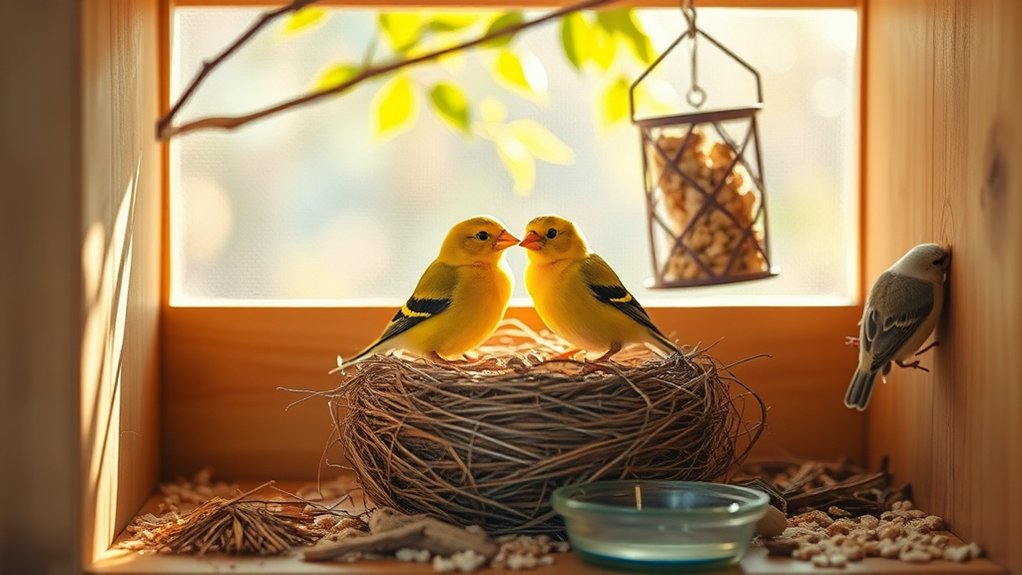
To successfully breed goldfinches, set up a spacious aviary with proper sections and nesting materials to reduce stress and encourage breeding. Pair males and females carefully to limit aggression, and provide privacy for the female during egg-laying.
Feed a nutrient-rich diet like Nyjer and sunflower seeds to support chicks’ growth. Monitor their behavior daily and keep the aviary clean for a healthy environment. Keep these tips in mind as you explore how to create the ideal breeding setup.
Set Up the Perfect Aviary for Breeding Goldfinches
When setting up the perfect aviary for breeding goldfinches, you should confirm it measures at least 4 meters long, 2.4 meters wide, and 2.1 meters high. This gives your birds enough space to move freely and reduce aggression.
This size provides an ideal environment where your goldfinches can thrive during breeding.
Make certain to maintain proper environmental conditions, including cleanliness and a steady food supply, to support their health and nesting success.
Providing nesting materials is essential, as it encourages natural breeding behaviors.
To guarantee privacy and minimize stress, divide the aviary into smaller sections using tin or hessam cloth strings, giving each pair a safe nest area.
Prioritizing privacy during nesting considerably boosts the chances of successful egg laying and rearing of young.
Pair Your Goldfinches to Reduce Aggression and Increase Breeding Success
Although goldfinches can be social, pairing them carefully is key to reducing aggression and boosting breeding success.
Careful pairing of goldfinches minimizes aggression and enhances their chances of successful breeding.
When pairing goldfinches, keep male and female goldfinches in smaller cages to limit fighting and encourage successful breeding. Avoid larger groups, as they often increase aggression and stress.
Use dividers made of tin or hessam cloth strings to manage space within the aviary, helping minimize conflicts.
It’s also essential to provide a safe nesting area where females feel secure during egg-laying. Regular monitoring behavior lets you catch any signs of aggression early, allowing prompt intervention.
Provide Nesting Materials and Privacy for Goldfinch Egg Laying
Providing goldfinches with a variety of nesting materials and a private space plays an essential role in successful egg laying.
During nesting season, the female American goldfinch carefully selects plant fibers, spider silk, and milkweed down to build a comfortable, waterproof nest. You should offer these nesting materials to encourage natural behavior.
Privacy is equally important.
Separating your birds or using smaller cages reduces stress and aggression, creating a secure environment for the female American goldfinch to lay her pale bluish-white eggs. Ensuring this privacy helps the bird focus on incubation and protects the clutch from disturbances.
Feed a Balanced Diet and Control the Environment for Goldfinch Chicks
Creating a comfortable nest sets the stage for the next important step: feeding your goldfinch chicks a balanced diet while maintaining the right environment.
Focus on providing plenty of Nyjer seed and sunflower seeds to guarantee your goldfinch chicks get essential nutrients. Including high-energy nutrition in seed blends supports healthy growth and frequent feeding visits.
Don’t forget to support the female with high-quality seeds and supplements during nesting.
Keep environmental conditions stable, avoid temperature swings and disturbances to boost breeding success.
Use appropriate nesting materials to keep the nest secure and comfortable.
- Offer a diverse, balanced diet rich in Nyjer seed
- Guarantee female nutrition supports chick development
- Maintain stable environmental conditions
- Provide soft, secure nesting materials
Including black oil sunflower seeds in their diet can help meet the high-energy needs of growing finches during colder months.
Monitor Goldfinch Behavior for Stress and Keep the Aviary Clean and Healthy
When you closely watch your goldfinches, you can quickly spot signs of stress or aggression, especially among males. This helps keep the aviary peaceful and breeding on track.
To monitor goldfinch behavior effectively, observe their interactions daily and address any conflicts promptly.
Daily observation and quick conflict resolution keep goldfinch behavior healthy and breeding on track
Maintain strict cleanliness by regularly removing waste and uneaten food. This prevents disease and promotes health.
Safeguard the aviary’s temperature and humidity to stay stable, as extreme changes add stress.
Provide ample nesting materials and privacy for females during egg-laying to reduce stress and support healthy offspring.
Finally, keep a consistent, high-quality food source and clean water available to all birds. Nutritional deficiencies can increase stress and disrupt breeding.
Together, these steps create a healthy environment for successful goldfinch breeding.
Frequently Asked Questions
How Do Seasonal Changes Affect Goldfinch Breeding Cycles?
Seasonal changes affect goldfinch breeding cycles by shifting breeding timing to match food availability and temperature influence.
As daylight hours increase, hormonal changes trigger nesting behavior, prompting you to gather appropriate nesting materials.
Cooler temperatures or reduced daylight signal the end of breeding, so you’ll notice they often breed late summer when seeds are abundant.
Understanding this helps you support their natural cycle and improve breeding success.
Can Goldfinches Breed Successfully in Mixed-Species Aviaries?
Like maneuvering a delicate dance, you can breed goldfinches successfully in mixed-species aviaries if you master mixed species compatibility and aviary dynamics.
You’ll need to monitor breeding behavior closely to prevent territorial disputes and manage social interactions wisely.
Providing private, secure spaces respects their nesting preferences and reduces stress.
What Are the Signs of Infertility in Goldfinch Eggs?
You’ll notice signs of infertility in goldfinch eggs when there’s no egg development during the typical two-week incubation period.
If the eggs lack visible embryo health indicators like blood vessels or movement after a week, infertility is likely.
Poor nesting conditions and inadequate parental care, such as neglecting incubation, also hint at problems.
Genetic factors may cause repeated failures, especially if multiple eggs never hatch despite proper care.
How Long Do Goldfinch Chicks Stay in the Nest Before Fledging?
Goldfinch chicks stay in the nest for about 11 to 19 days before fledging.
During this nesting period, you’ll notice intense parental care, especially the female’s feeding habits. She exclusively feeds the chicks to support their development.
As they approach fledging, they start practicing short flights, marking the fledgling process.
This critical period boosts survival rates, so your attentive care during these days is key to their healthy growth and independence.
Are There Specific Health Checks Needed Before Breeding Goldfinches?
Yes, you need health evaluations before breeding goldfinches to guarantee breeding readiness.
Focus on disease prevention by checking for respiratory issues, parasites, and feather condition.
Conduct a nutrition assessment to provide a balanced diet that boosts fertility.
Monitor stress factors closely, separating any stressed or ill birds to keep the environment safe.
Genetic testing can also help identify potential hereditary problems, improving the chances of healthy offspring and a successful breeding season.
Conclusion
Breeding goldfinches might seem tricky at first, but with the right setup and care, you’ll see great results. Don’t worry if you’re new to this. It’s all about creating a calm environment, offering proper food, and keeping an eye on their behavior.
Once you get the hang of pairing and providing nesting materials, you’ll enjoy watching your goldfinches thrive. Stick with it, and the rewards of successful breeding will be well worth the effort!