
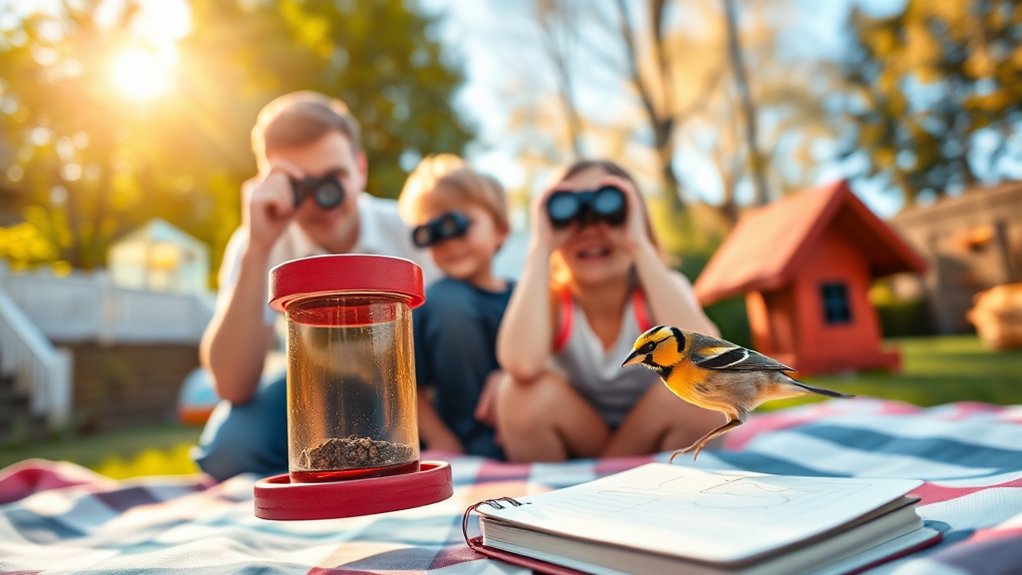
To get kids interested in birdwatching, start by creating a bird-friendly backyard with feeders and native plants. Teach them to recognize birds by sight and sound using games and DIY binoculars.
Make it fun with scavenger hunts and bird bingo, and encourage keeping creative nature journals. Explore local parks together and join community bird counts or online birding groups to build excitement.
Keep going, and you’ll discover even more ways to make birding a joyful adventure for your kids!
Get Started Birdwatching Right in Your Backyard
You can kick off birdwatching right in your backyard by setting up bird feeders, baths, and planting native flora that attract local birds.
Regularly refilling bird feeders and baths encourages more bird species to visit, making your yard a lively spot for bird watching. Using a bird feeder pole with squirrel baffles helps protect the feeders, ensuring the birds have uninterrupted access.
Keeping feeders and baths full invites a variety of birds, turning your yard into a vibrant birdwatching haven.
Grab a pair of binoculars to get a closer look at these feathered visitors; teaching kids how to handle binoculars properly enhances the experience.
As you watch, help them identify birds by pointing out distinct features or using field guides.
Making birdwatching interactive with simple games keeps kids engaged and enthusiastic to learn about different bird species.
Creating this bird-friendly environment turns your backyard into the perfect classroom for sparking a lasting interest in birdwatching.
Choosing the right bird feeders can attract a variety of birds and make the experience more enjoyable for kids.
Teach Kids to Identify Birds by Sight and Sound
After setting up a bird-friendly backyard and observing feathered visitors, it’s time to sharpen your child’s ability to identify birds by both sight and sound. Help them tune into birdcalls and songs, which often make identification easier than visuals alone. Using a bird feeder with a high-resolution camera can also provide clear images to aid in recognition.
You can also boost their skills with these tips:
- Encourage listening to distinct bird sounds to develop auditory recognition.
- Use mnemonics like “cheer-up, cheerily” for the American Robin’s call.
- Craft DIY cardboard binoculars to practice spotting birds up close.
- Explore the Audubon Bird Guide app for matching birds by image and sound.
- Play “I Spy” with bird calls for fun, interactive learning.
These steps will engage your child’s senses and make birdwatching a rewarding adventure. For enhanced viewing, consider introducing them to a compact and lightweight monocular designed for birdwatching to make close observation easier and more exciting.
Make Birding Fun With Games and Challenges
When kids engage in birdwatching through games and challenges, their curiosity and observation skills soar. You can make birding exciting by organizing a scavenger hunt or a photography challenge. Bird bingo helps them spot behaviors or colors, while nature journals let kids capture their discoveries creatively. Try a blindfold game to boost their listening skills too.
| Game Type | How It Works |
|---|---|
| Scavenger Hunt | Search for specific birds or features |
| Photography Challenge | Snap photos of birds you find |
| Bird Bingo | Mark off bird behaviors or colors |
| Nature Journals | Record sightings and reflections |
These activities turn birdwatching into a fun adventure, making learning about birds playful and memorable.
Explore Local Parks and Nature Spots Together
Local parks and nature spots offer a perfect setting to spark kids’ interest in birdwatching. When you explore these areas together, you’ll find diverse birds and habitats that keep kids curious and engaged.
Discover diverse birds and habitats in local parks that inspire children’s curiosity and love for birdwatching.
Make your visits interactive and educational by trying these tips:
- Visit different habitats like woodlands, wetlands, and meadows to see varied bird species.
- Join guided birdwatching tours or educational programs offered in local parks.
- Use bird identification apps to help kids recognize and log birds on the spot.
- Encourage scavenger hunts for spotting specific birds or behaviors.
- Focus on areas near water, as they attract many interesting bird species.
Build DIY Bird Feeders and Kid-Friendly Binoculars
You can boost your child’s birdwatching excitement by building DIY bird feeders and kid-friendly binoculars together. Use simple materials like pine cones, peanut butter, and birdseed to build DIY bird feeders that attract a variety of local bird species to your yard. Choosing seeds that are compatible with feeders ensures the birds can easily access the food.
Let your child decorate the feeders with paint or natural elements to make the project more engaging.
For kid-friendly binoculars, create lightweight models from cardboard tubes that help them practice focusing on birds without strain.
Involving your child in making and maintaining these items deepens their connection to nature and improves their birdwatching experience.
Regularly refilling the feeders keeps birds coming and gives ongoing opportunities for observation and learning, making birdwatching both fun and educational.
Including high-energy seeds like black oil sunflower in your feeders helps attract a wide range of birds and supports their nutrition during winter.
Help Kids Keep Fun and Creative Birdwatching Journals
You can help kids design birdwatching journals with sections for dates, locations, and weather to keep entries organized.
It’s a great way to help them track their observations clearly. Encourage them to get creative by adding sketches, stickers, or stamps to make each sighting memorable.
Those little personal touches really bring the journal to life. These simple layout ideas and recording techniques will keep birdwatching fun and engaging, so they’ll want to keep exploring and jotting down their finds.
Journal Layout Ideas
Although birdwatching itself is exciting, keeping a creative and organized journal can make the experience even more rewarding for kids. When designing a birdwatching journal, you want it to be both fun and functional.
Here are some layout ideas to inspire you:
Create a personalized cover page with drawings or collages of favorite birds. Dedicate sections for recording sighting details like date, location, weather, and bird behavior.
Feature a “Bird of the Week” to research and illustrate different species. Add a creative writing section for poems, stories, or interesting bird facts.
Use stickers or stamps as an interactive tracking tool to mark completed sightings.
This approach encourages kids to observe carefully and express themselves creatively while staying organized.
Creative Recording Techniques
When kids keep a birdwatching journal, using creative recording techniques can make the experience more engaging and memorable.
Encourage them to sketch the birds they see, capturing colors, sizes, and behaviors to sharpen their observational skills.
Suggest adding a “Bird of the Day” section where they research fun facts about a species they encounter. Using stickers or stamps to mark different birds makes their journals interactive and visually fun.
Teach kids to record the date, location, and weather for each sighting, helping them link observations to the environment.
Finally, inspire creativity by having them write short stories or poems based on their birdwatching adventures.
These techniques help kids keep a birdwatching journal that’s both educational and enjoyable.
Join Community Bird Counts and Online Birding Groups
You can join community bird counts to spot and report different birds while helping scientists track wildlife.
It’s a great way to get involved and contribute to important research. Plus, sharing your sightings online connects you with other birdwatchers who love spotting birds just like you.
This makes birdwatching more fun because you get to swap stories and tips. And who knows? You might even learn a thing or two from others in the birding community.
Participate In Bird Counts
By joining community bird counts like The Great Backyard Bird Count and online groups such as the American Birding Association Discussion Group, you can actively contribute to tracking local bird populations while connecting with fellow birdwatchers.
When you participate in bird counts, you engage in citizen science, helping researchers understand bird populations better. It also sharpens your observational skills and encourages teamwork.
Here’s what makes joining bird counts so rewarding:
- Contribute valuable data on bird populations
- Improve your birdwatching and identification skills
- Collaborate with other kids and birdwatchers
- Access resources, tips, and fun challenges
- Support conservation efforts in your community
Participating in bird counts turns birdwatching into an exciting, educational adventure you won’t forget!
Share Sightings Online
Although birdwatching can be a quiet, solo activity, sharing your sightings online brings it to life by connecting you with a vibrant community of fellow bird lovers.
You can join community bird counts like The Great Backyard Bird Count to contribute valuable data and see how your observations fit into bigger patterns.
Online birding groups on platforms like Facebook and eBird let you share sightings online, ask questions, and learn from other bird watchers.
Apps like Merlin Bird ID help you log your finds and track your progress.
Encouraging kids to post their birdwatching experiences on social media using specific hashtags builds excitement and raises awareness.
Sharing this way turns birdwatching into a fun, interactive experience that inspires curiosity and teamwork.
Connect With Birders
Sharing your bird sightings online opens the door to connecting with a larger community of bird enthusiasts.
By joining community bird counts and online birding groups, you can deepen your birdwatching activities and make learning experiences more fun and meaningful.
Here’s how to connect and share sightings effectively:
- Participate in the Great Backyard Bird Count to contribute to citizen science.
- Join online groups like the American Birding Association Discussion Group to learn from others.
- Attend local Audubon society events for workshops and group birdwatching activities.
- Use birding apps like eBird to log sightings and connect with fellow birders.
- Join guided nature walks to meet peers and enhance teamwork skills.
These opportunities help you connect, share sightings, and grow your passion for birdwatching.
Frequently Asked Questions
What Is the Best Age to Start Birdwatching With Kids?
You should start birdwatching with kids as early as age 3 to encourage early exposure to nature.
This age is perfect for simple skill development, like recognizing bird shapes and colors.
Following age recommendations helps you tailor activities, boosting their interest.
Birdwatching offers a fun outdoor adventure that promotes family bonding.
As kids grow, their skills improve, making birdwatching an engaging way to connect and learn together.
How Can I Teach Kids to Respect Birds and Nature?
To teach kids to respect birds and nature, start by showing them how ethical birdwatching protects bird habitats without disturbing wildlife.
Explain that wildlife conservation relies on mindful outdoor exploration and nature appreciation, not just observation.
Encourage them to keep a safe distance, avoid touching nests, and use binoculars.
This hands-on understanding helps them grasp the importance of preserving ecosystems and fosters a genuine respect for the natural world.
What Equipment Is Safe and Suitable for Young Children?
You should choose child-friendly outdoor gear like lightweight binoculars with 4x to 8x magnification to guarantee binocular safety and easy handling.
Pair these with colorful, child-friendly guides that simplify bird identification.
Encourage hands-on activities by letting kids create nature journals to record sightings, which boosts engagement and learning.
DIY cardboard binoculars are also great for safe, fun exploration without risking expensive equipment.
This combo keeps birdwatching exciting and safe for young children.
How Do I Handle Kids’ Short Attention Spans During Birdwatching?
Think of birdwatching as a quick dance, not a slow waltz.
To handle kids’ short attention spans, keep activities short and sweet, around 10-15 minutes.
Use engaging games like nature scavenger hunts or interactive storytelling to make each moment lively.
Encourage them with small rewards for spotting birds or completing tasks.
This way, you’ll turn birdwatching into an exciting adventure that keeps their curiosity flying high without dragging on.
Are There Any Apps for Kids to Learn About Birds?
Yes, there are great bird identification apps made just for kids! You can find interactive bird games and educational bird quizzes that keep them engaged.
Nature exploration apps like Merlin Bird ID and BirdNET help kids learn by identifying birds through pictures and sounds.
Some even offer virtual bird tours, letting your child explore different habitats right from home.
These tools make birdwatching fun and educational for young learners.
Conclusion
By bringing birdwatching into your daily life, you’ll spark your kids’ curiosity and help them connect with nature, kind of like a Victorian explorer discovering new worlds in their own backyard. Keep it fun and interactive with games, DIY projects, and local adventures.
Encourage them to note their sightings in creative journals and join community events to feel part of something bigger. With these tips, birdwatching will become a cherished family adventure you all look forward to.