
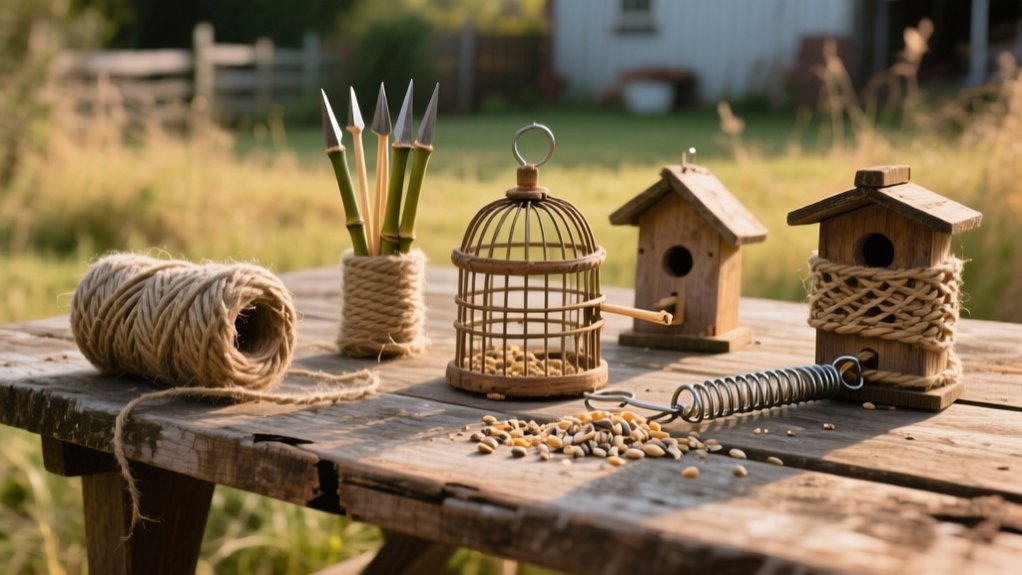
To make a bird trap in 5 simple steps, start by selecting sturdy materials like a large branch, thin perch stick, rock, and cord. Next, construct the Ojibwa pole trap by sharpening the stick, drilling a hole for the perch, and tying a noose with tension.
Then, build a household trap using a box with a hole and a live spring trap. Set the traps in quiet areas and bait with seeds. Handle caught birds carefully to guarantee safety.
For detailed techniques and safety tips, continue exploring this guide.
Choosing the Right Materials for Your Bird Trap

Selecting the appropriate materials is crucial for constructing an effective bird trap. You’ll find that choosing sturdy components, like a large branch 5-6 feet long and a pencil-thin stick about six inches for the perch, works much better for securing birds.
Choosing sturdy materials like a long branch and a thin perch stick is key for a successful bird trap.
Including a fist-sized rock and a 3-4 foot cord or rope, such as shoelaces, is essential for maintaining tension in the trap mechanism.
When setting up a household trap, combining a live rat or mouse trap with a cardboard box featuring an entry hole twice the bird’s size yields much better results.
Anchoring the trap to the ground with nails prevents movement.
Having a knife on hand to sharpen sticks and drill holes guarantees precise assembly and improved trap functionality.
Constructing the Ojibwa Bird Pole Trap
Begin by sharpening both ends of a sturdy branch measuring 5 to 6 feet. Then drill a hole near one end to securely insert a pencil-thin stick about six inches long, which will serve as the perch.
Attach a fist-sized rock to one end of a 3-4 foot cord, tying a slip noose knot at the other end to form the snare. Position the trap in open fields.
Test effectiveness by pressing down the perch; this action should tighten the noose swiftly to capture birds.
| Component | Description |
|---|---|
| Main Pole | 5-6 feet, sharpened ends |
| Perch Stick | ~6 inches, pencil-thin |
| Snare Cord | 3-4 feet with slip noose knot |
| Weight | Fist-sized rock attached to cord |
Building a Simple Household Bird Trap

When constructing a simple household bird trap, you’ll need a live rat or mouse trap equipped with a spring mechanism and a cardboard box with a hole twice the size of the target bird.
Cut the hole in the box’s center to allow easy bird entry.
Secure the trap firmly to the ground using nails to prevent movement and maintain tension in the spring mechanism. Position the box so birds can access the hole without obstruction.
Before setting, test the trap by manually triggering the spring to confirm proper function and tension.
Use attractive bait such as bread or birdseed placed near the entrance to lure birds inside.
Regularly check the trap for captures and adjust its position or bait as needed to optimize performance.
Setting and Baiting Your Trap Effectively
Although setting and baiting bird traps requires careful attention, mastering these steps greatly improves your chances of a successful capture.
Start by choosing an appropriate location. Open and quiet areas reduce bird disturbance and increase trap effectiveness. For the Ojibwa Bird Pole Trap, bait with seeds or fruits and place it where birds frequently land. The Household Bird Trap works best with bread or birdseed inside the box.
Key considerations include:
- Securely position the perch to release the snare when triggered, testing the mechanism beforehand.
- Adjust spring tension on mouse-trap-based devices to guarantee prompt closure.
- Regularly check traps to monitor catches and maintain functionality.
Following these precise steps helps guarantee your trap operates reliably and attracts birds efficiently.
Safely Handling and Releasing Caught Birds
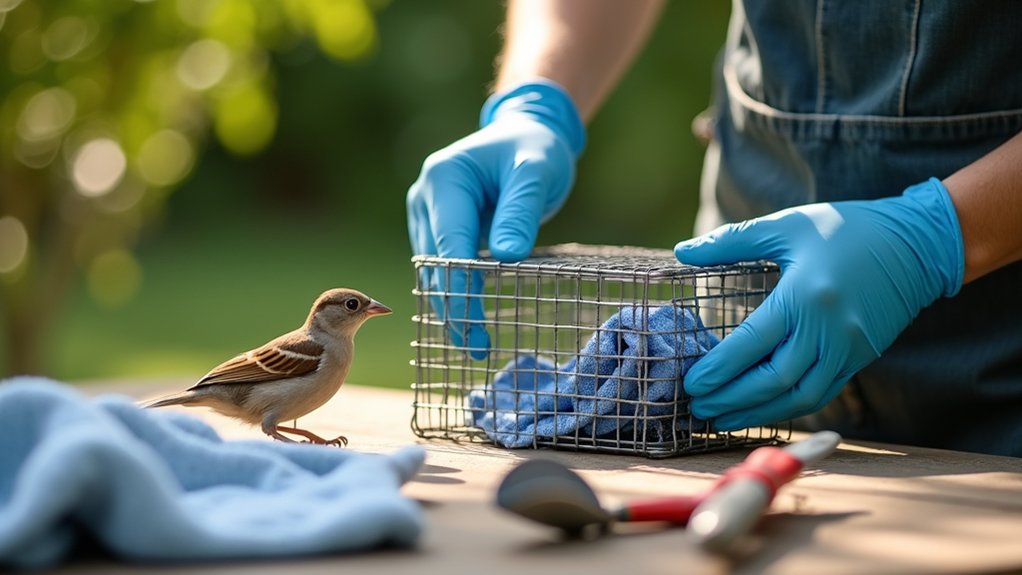
Handle caught birds with care by wearing long sleeves and gloves to protect yourself from pecking or scratching.
Approach the trap calmly, guaranteeing the environment is quiet and free from sudden movements to minimize the bird’s stress.
Approach traps calmly in a quiet, still environment to reduce stress for captured birds.
Work in a dimly lit area; reduced light helps disorient the bird, making it easier to handle safely.
When lifting the bird from the trap, support its body firmly to prevent injury to wings or legs.
After handling, release the bird promptly into a suitable habitat away from human activity, complying with local wildlife regulations.
This approach guarantees both your safety and the bird’s well-being, promoting ethical and responsible trapping practices.
Frequently Asked Question
Are Bird Traps Legal to Use in My Area?
You need to check your local wildlife regulations to determine if bird traps are legal in your area.
Laws vary by state and country, and some species require permits or are entirely protected.
Using traps without authorization can result in substantial fines.
So, it’s important to consult your local fish and wildlife agency or official government website to get accurate, up-to-date information.
Always guarantee your trapping methods comply with legal and ethical standards to avoid penalties.
How Do I Prevent Catching Non-Target Animals?
To prevent catching non-target animals, you’ll want to use bait that specifically attracts your target bird species and avoid scents or foods appealing to others.
Place traps only in habitats frequented by your chosen birds, adjusting entrance size to exclude larger animals.
Regularly monitor traps to promptly release unintended captures.
Opt for humane designs that allow smaller non-target animals to escape while securing your intended birds safely and effectively.
What Are the Ethical Considerations of Trapping Birds?
Catching birds is a double-edged sword; you need to balance your actions carefully. You must guarantee your traps cause no harm or prolonged stress.
Promptly release any captured birds unless you have a valid reason to keep them.
Always consider the ecological ripple effects. Avoid capturing non-target species and respect local wildlife laws.
Can Bird Traps Be Reused Multiple Times?
Yes, you can reuse bird traps multiple times if you maintain them properly.
Regularly clean the traps to remove debris and residue that might deter birds. Always re-bait with fresh food like bread or birdseed to attract them effectively.
Inspect the trap’s mechanism for wear to guarantee it functions reliably.
How Do Weather Conditions Affect Trap Effectiveness?
You’ll notice weather’s gentle nudges can sway your trap’s success.
Rain and strong winds often keep birds grounded, reducing captures. Overcast skies, however, offer a cloak of safety, encouraging bird movement and boosting effectiveness.
Temperature extremes shift feeding habits, so birds might avoid traps.
Humidity plays a subtle role, enhancing bait scent and drawing birds in.
Seasonal changes, influenced by daylight and temperature, also guide migration and trap outcomes.
Conclusion
By mastering these five precise steps, you’ll craft bird traps as reliable as a finely tuned instrument. Selecting materials with care, assembling traps methodically, and setting them strategically guarantees success akin to a well-executed experiment.
Remember, handling and releasing birds safely is the final, essential variable, respecting their role in nature’s equation. With this knowledge, you’ll balance effectiveness and ethics, turning your efforts into a harmonious dance between human intent and avian freedom.