
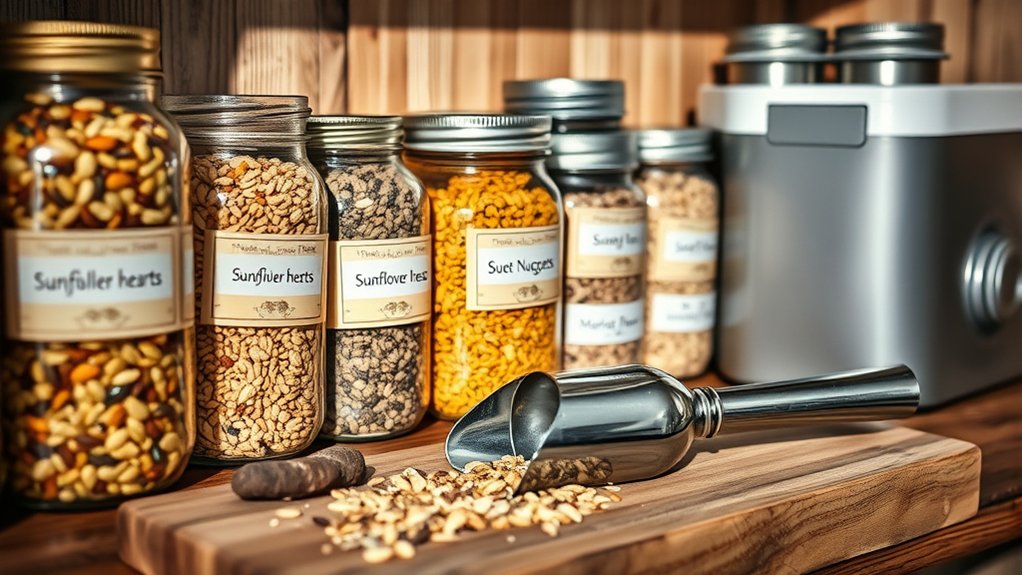
To keep your bird feed fresh, store it in a cool, dry place away from moisture and pests. Use airtight containers with tight-fitting lids to block humidity and rodents.
Keep old and new seed separate, labeling containers with seed type and date. Only store enough for 2 to 4 weeks, and check regularly for mold or spoilage.
Refill feeders daily with small amounts to guarantee freshness. Following these tips will help you maintain healthy, nutritious feed for your birds.
Store Bird Feed in a Cool, Dry Place
When you store bird feed in a cool, dry place, you prevent mold growth and keep the seeds fresh. To achieve good storage, choose a location away from humidity and moisture, as dampness can spoil your seed quickly.
You should avoid indoor spots prone to temperature swings and pests. Instead, pick a well-ventilated area that maintains a stable temperature to protect nutritional quality.
To store seed effectively, many bird enthusiasts use metal garbage cans because these containers help keep seed dry and shield it from pests.
Regularly check your storage area to verify it remains dry and cool, adjusting as needed.
Choose Airtight Containers That Keep Birdseed Fresh
You’ll want to pick airtight containers made of metal or heavy plastic to keep your birdseed fresh and safe from rodents.
It’s important that the lids fit tightly so moisture and pests can’t get in.
Using durable materials not only protects the seed but also helps keep its quality for a longer time.
Regularly checking the seal for damage is essential to maintain an airtight seal and ensure maximum freshness.
Rodent-Proof Container Choices
Although many storage options exist, choosing metal or heavy plastic containers with airtight seals will best keep your birdseed fresh and rodent-free.
Metal containers offer sturdy storage that pests find hard to chew through, while heavy plastic provides a durable, lightweight alternative.
Make sure your airtight containers have tight-fitting lids to block moisture and pests, preserving seed quality. Properly sealing these containers not only keeps rodents out but also maintains the freshness of the birdseed by protecting it from humidity.
Label each container clearly to avoid mixing seed types and to streamline refills.
Finally, store your containers in a cool, dry, and well-ventilated area to enhance longevity and prevent spoilage.
With these rodent-proof container choices, you’ll keep your birdfeed safe and ready to use.
Airtight Seal Importance
An airtight seal plays an essential role in keeping your birdseed fresh by blocking moisture, humidity, and pests that can spoil or infest the seeds.
Using airtight containers with a tight-fitting lid guarantees that moisture doesn’t cause mold growth or spoil your high quality seed.
When you choose the right container for seed storage, it keeps insects and rodents out, preserving freshness longer.
Make certain to check the seal regularly to maintain its effectiveness.
Proper labeling helps you avoid mixing old seeds with new, which can reduce overall seed quality.
Durable Material Benefits
When you choose airtight containers made from durable materials like metal or heavy plastic, you protect your birdseed from moisture, pests, and harsh outdoor conditions. These rodent-proof containers keep moisture and humidity out, preserving freshness and preventing mold.
Durable materials resist chewing and damage from rodents, ensuring your feed remains uncontaminated. Plus, airtight containers stop rancidity, so your birds get the healthiest seeds. Labeling containers also helps you quickly find the right mix.
| Benefit | Emotion Evoked |
|---|---|
| Keeps seed fresh | Confidence |
| Prevents rodent damage | Relief |
| Blocks moisture | Security |
| Withstands weather | Trust |
| Easy identification | Convenience |
Choose durable, airtight containers to protect your birdseed and enjoy worry-free feeding.
Don’t Mix Old and New Seed: Keep Them Separate
Since old seeds can spoil faster and contaminate fresh batches, you should always keep new and old birdseed separate.
Mixing them risks accelerating spoilage, which compromises the quality of your bird food.
Mixing old and new birdseed can speed up spoilage and reduce the quality of your bird food.
When storing bird seed, maintaining freshness is key to feeding healthy birds. Here’s how you can manage this effectively:
- Store fresh seeds in clean, airtight containers away from older stock to prevent cross-contamination.
- Regularly check the age of stored seed to avoid using any that have deteriorated or gone rancid.
- Dispose of any mixed seed that shows mold or unpleasant odor to protect the birds’ health.
Label Containers Clearly With Seed Type and Purchase Date
Keeping your birdseed organized goes beyond separating old and new batches. Proper labeling of containers with the seed type and purchase date streamlines your bird feeding routine and helps maintain seed freshness. Use durable, waterproof labels to withstand outdoor conditions.
Color-coded labels or symbols speed up identification for everyone involved. Always update labels when adding or discarding seed to keep your system efficient.
| Labeling Tip | Benefit |
|---|---|
| Seed Type | Quickly find the right feed |
| Purchase Date | Monitor freshness, prevent spoilage |
| Waterproof Labels | Guarantee clarity in humid conditions |
| Color-Coding | Simplify identification |
Clear labels guarantee you feed your birds fresh, appropriate seed every time, promoting their health and happiness.
Store Only What You Can Use Within 2–4 Weeks
You should only store enough bird seed to last about 2 weeks when it’s warm outside.
In cooler months, you can keep a supply that lasts up to 4 weeks.
Just keep an eye on how much the birds are eating and adjust your stash accordingly.
This way, you won’t end up with extra seed going to waste or attracting pests.
Plus, it helps keep the seed fresh and tasty for the birds.
Limit Storage Amounts
Only store the amount of bird seed you can use within two to four weeks to keep it fresh and safe.
Limiting storage amounts helps prevent spoilage and reduces the risk of mold or insect infestations.
To manage your bird seed effectively, you should:
- Assess bird feeding habits regularly to understand how much seed your birds consume.
- Store only a two-week supply in warm weather, as seeds spoil faster in heat.
- Increase storage to a four-week supply during cooler months when birds eat more.
Adjust Seasonally
Adjusting the amount of bird feed you store based on the season helps maintain its freshness and prevents waste.
During warm months, store bird feed in quantities that last no more than two weeks to avoid spoilage caused by heat and humidity.
In cooler months, birds eat more, so you can safely keep a four-week supply.
Regularly assess bird consumption by observing your bird feeders to fine-tune how much feed you keep on hand.
Avoid mixing old and new seed to preserve quality and prevent spoilage.
Prevent Overstocking
Storing bird seed in quantities that match your usage within two to four weeks helps keep it fresh and prevents waste.
To prevent overstocking, follow these key storage practices:
- Store only a two-week supply during warm months and up to four weeks in cooler weather to avoid spoilage.
- Regularly monitor your bird seed consumption and adjust quantities accordingly to maintain freshness.
- Separate different seed types and discard any seed showing signs of deterioration to guarantee quality.
Inspect Seed Regularly for Mold and Spoilage
Keep a close eye on your bird seed by inspecting it regularly for any signs of mold or spoilage. Look for discoloration, clumping, or a foul odor, which all indicate the seed has gone bad. If you spot mold or spoilage, discard any seed immediately to protect the birds from harm.
Also, check for insect infestations by looking for tiny holes in the seeds or small insects inside the container. Make it a habit to inspect seed regularly, ideally every few weeks, so you can catch problems early.
Regularly inspect bird seed for tiny holes or insects to prevent infestations and keep your feeders safe.
Remember, mixing old seed with new can spread contamination, so store them separately.
Consistent monitoring guarantees your bird feed stays fresh and safe, attracting healthy birds to your feeders throughout the season.
Refill Feeders Daily With Small Amounts of Birdseed to Maintain Freshness
Although it might seem easier to fill bird feeders once and forget them, you’ll guarantee fresher seed by refilling with only a one- or two-day supply. This approach maintains freshness and prevents spoilage, especially with popular foods like sunflower seeds.
To optimize feeding, follow these steps:
- Refill feeders daily with small amounts to make sure birds eat fresh seed before it degrades.
- Monitor consumption rates closely; adjust the amount you refill to avoid waste and discourage squirrel attraction.
- Clean feeders regularly to remove old seed and mold, creating a healthy feeding spot.
- Using feeders with built-in drainage holes helps prevent moisture buildup, keeping seeds dry and fresh longer.
Frequently Asked Questions
Can Storing Bird Feed in the Refrigerator Extend Its Shelf Life?
Yes, storing bird feed in the refrigerator can extend its shelf life by taking advantage of refrigerator benefits like consistent cool temperature effects that slow mold growth and insect activity.
To maximize freshness, you should use airtight storage containers to prevent moisture absorption and odors from affecting the feed.
This method is especially helpful for high-fat seeds, keeping them from going rancid quickly.
Just remember to check the feed regularly for spoilage.
Is It Safe to Use Homemade Bird Feed Mixes for Storage?
You can absolutely use homemade mixes for storage. They’re like a treasure chest of nutrients for your birds!
Just make sure you’re using airtight storage containers to keep freshness locked in.
Pay attention to ingredient ratios to maintain the nutritional balance your feathered friends need.
Avoid mixing old and new seeds, and store everything in a cool, dry place.
With proper care, your homemade mixes will stay safe and tasty for your birds.
How Do Different Bird Feed Types Affect Storage Methods?
Different bird feed types demand unique storage methods.
For seed type storage, use airtight, rodent-proof containers to keep seeds fresh.
Oil seed considerations mean storing them in cool, dry places to prevent rancidity.
Grain feed storage requires moisture control to avoid mold.
Nut mix tips include separating them from oily seeds to prevent spoilage.
Tailoring your storage approach guarantees your feed stays fresh and nutritious for your feathered friends.
Can Moisture-Absorbing Packets Help Keep Birdseed Dry?
Yes, moisture-absorbing packets can reduce humidity levels by up to 50%, boosting moisture control and seed preservation.
When you place these packets inside airtight storage containers, they absorb excess moisture that could spoil your birdseed. This helps keep seeds dry and fresh longer.
Just remember, moisture control works best alongside proper storage containers and a cool, dry environment to protect your bird feed effectively.
What Are Signs That Bird Feed Has Lost Nutritional Value?
You’ll notice nutritional loss in bird feed through several signs.
Visual indicators include seeds that look shriveled, discolored, or dusty.
If the feed smells rancid or foul, that’s a strong smell change signaling spoilage.
Also, watch out for infestation signs like insects or weevils crawling in the seed.
When you spot any of these, it’s best to discard the feed to keep your birds healthy and happy.
Conclusion
By storing your bird feed properly, you’re giving birds the best chance to enjoy fresh, nutritious meals. Did you know moldy or spoiled seed can spread illness to wild birds? That’s why keeping feed dry and fresh is essential.
Remember, using airtight containers and refilling feeders daily helps maintain quality. Follow these tips, and you’ll not only save money but also support healthier, happier feathered visitors in your yard every season.