
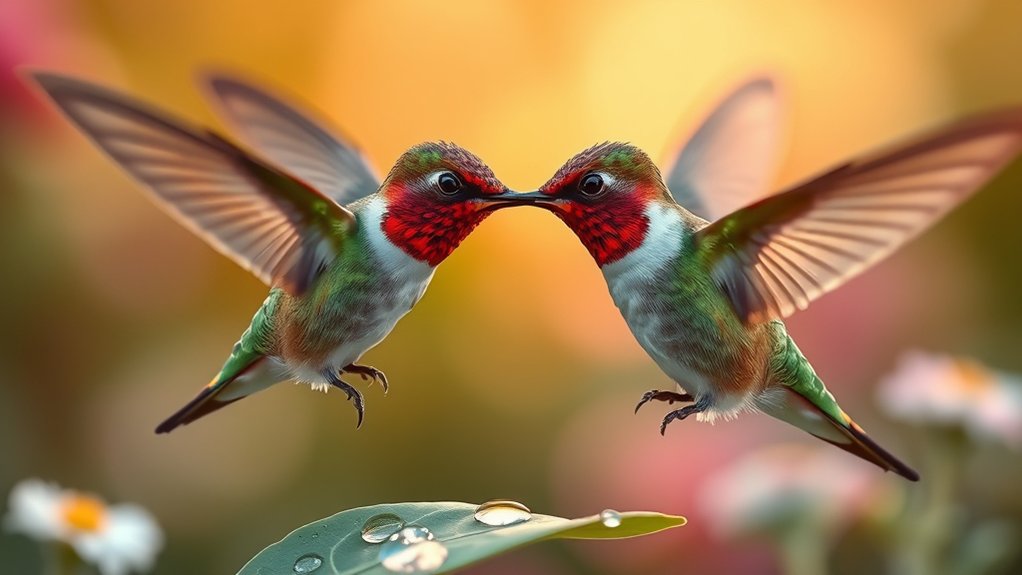
You can learn a lot from hummingbirds’ aggressive fighting behavior about determination and protecting what matters most. They fiercely defend their territory and resources, showing how strategic defense and persistence help secure survival and success, especially during tough times like breeding season.
Their warning displays and calculated attacks remind you to recognize signs before conflicts escalate and to stand your ground wisely. Stick around, and you’ll discover how these tiny birds’ tactics can inspire your own challenges and relationships.
Why Do Hummingbirds Fight?
Because nectar is scarce and vital for their energy, hummingbirds fight fiercely to defend their feeding territories. You’ll notice that adult male hummingbirds are the most aggressive, using tail fanning and chattering to warn rivals.
This hummingbird behavior helps them secure the limited food sources they need to survive and maintain their high-energy lifestyle.
When competition intensifies, these disputes often escalate into physical confrontations with plunge-dives and bill grabs aimed to drive intruders away.
During the breeding season, defending food is even more important, as energy demands increase.
Furthermore, males show aggression during courtship, performing aerial displays and sometimes fighting rivals to attract females.
Understanding this behavior reveals how survival and reproduction depend on controlling scarce resources.
How Territorial Behavior Drives Hummingbird Aggression
You’ll notice that male hummingbirds defend their territories with intense displays like tail fanning and aerial chases to keep rivals away.
It’s pretty fascinating how they do this—not just to fight, but really to secure essential food sources and boost their chances of mating.
When resources are scarce, competition heats up, and these tiny birds get even more fierce about protecting their feeding spots.
Territory Defense Strategies
Hummingbirds fiercely defend their territories to secure the nectar they need for survival. Their territory defense strategies involve a mix of bold displays and physical confrontations to keep rivals at bay.
You’ll notice these tactics:
- Tail fanning and chattering to warn intruders.
- Plunge-dives and aerial chases to intimidate and drive off competitors.
- Bill grabs during close encounters to assert dominance.
These aggressive behaviors aren’t just about food. They also boost mating chances by showcasing strength.
Feeders often become hotspots for intensified aggression because hummingbirds treat them as crucial parts of their territory.
By mastering these territory defense strategies, hummingbirds guarantee they maintain exclusive access to nectar, which fuels their high metabolism and supports their reproductive success.
You can see how fundamental aggression is for their survival in such a competitive environment.
Aggression Among Males
Male hummingbirds drive their aggressive behavior largely through territorial defense, especially during breeding season. You’ll notice aggression among males intensifies as they fiercely protect feeding areas and potential mates from rivals.
Adult males lead these aggressive displays, fanning their tails, chattering loudly, and engaging in aerial chases that can reach speeds of 40-50 mph. When you observe these encounters, physical confrontations aren’t uncommon. They escalate quickly as males compete for dominance.
This aggression among males isn’t just about intimidation; it directly affects their survival and reproductive success. By holding territory, a male secures better access to resources and attracts females, increasing his chances to pass on genes.
Understanding this behavior helps you see how territoriality fuels the intense aggression among male hummingbirds.
Resource Competition Impact
Because nectar is a scarce resource, competition for feeding territories drives hummingbird aggression to intense levels. When you watch hummingbirds around feeders, you’ll notice how fiercely males defend their patches.
This territorial behavior impacts their survival and mating opportunities by:
- Triggering aggressive displays like tail fanning and chattering to warn off rivals.
- Leading to aerial chases and dive attacks that escalate conflicts.
- Ensuring access to hummingbird feeders rich in nectar, crucial for energy and breeding success.
As a result, defending these feeding zones is critical. You can see that the need to secure limited nectar sources pushes hummingbirds into high-energy, aggressive encounters, especially during breeding season.
Understanding this helps you appreciate why these tiny birds fight so fiercely over such small but indispensable resources.
How Male Hummingbirds Use Aggression to Win Mates
When you watch these tiny birds during mating season, you’ll notice they don’t shy away from aggression to secure a mate. Male hummingbirds exhibit bold behaviors like aerial chases and loud vocalizations to showcase strength.
These aggressive displays help them dominate territories rich in resources, attracting females. Physical fights among males can determine who controls the best feeding spots, directly impacting mating success.
Their courtship involves not just beauty but fierce competition, signaling vigor through aggressive posturing.
| Behavior | Purpose |
|---|---|
| Aerial chases | Demonstrate agility |
| Dive displays | Exhibit strength |
| Loud vocalizations | Signal fitness |
| Physical confrontations | Defend territory and resources |
You see, aggression among male hummingbirds is a powerful tool in winning mates.
What Triggers Hummingbird Battles at Feeders?
Although hummingbirds are small and swift, they don’t hesitate to fight fiercely at feeders to protect their essential food sources. You’ll notice these battles spark mainly because hummingbirds instinctively guard limited nectar, crucial for their high energy needs.
Here are three key triggers for these aggressive encounters:
- Multiple hummingbirds competing for the same feeder, leading to territorial disputes.
- Limited nectar availability, pushing birds to defend their feeding spots more aggressively.
- Adult male hummingbirds acting as the primary defenders, using displays like tail fanning and chattering to assert dominance.
Understanding these triggers helps you see why hummingbirds fiercely protect their food sources and why feeder setup can impact their behavior.
Warning Signs Before a Hummingbird Fight
If you watch closely, you’ll notice hummingbirds give clear warning signs before a fight breaks out. At popular hummer spots, males often fan their tails and chatter sharply to warn rivals.
You’ll see their neck feathers flare as they assert dominance, making it clear they’re ready to escalate if challenged.
Sharp chirps and sudden aerial dives signal increased aggression, especially during breeding season when competition peaks. These behaviors aren’t random; they’re strategic signals to avoid unnecessary conflict.
Sharp chirps and aerial dives warn of rising aggression, key to avoiding needless hummingbird conflicts during peak breeding.
When a hummingbird starts these displays, you know it’s defending territory or mates fiercely.
Recognizing these warning signs helps you understand the hummer’s language of warning before a physical fight erupts, giving you insight into their intense, territorial nature without needing to witness the actual clash.
When Can Hummingbird Fights Lead to Injury or Death?
You’ll notice that fights among highly aggressive species like ruby-throated and rufous hummingbirds can quickly escalate into serious injuries.
When sharp chirps and close aerial attacks intensify, it’s a sign the conflict could cause harm or even death.
Understanding these causes and warning signs helps you recognize when a fight might turn dangerous.
Causes Of Serious Injuries
When hummingbirds compete fiercely over scarce food or mates, their fights can quickly turn dangerous. Serious injuries often arise during aggressive territorial disputes, especially over a limited food source.
Here’s when you’ll see harm occur:
- Intense aerial chases and bill grabs can damage wings, bodies, or beaks.
- Adult males escalate displays during breeding season, increasing violent encounters.
- Limited access to a food source pushes birds into prolonged, high-risk fights.
These confrontations aren’t just minor scuffles; they can leave hummingbirds incapacitated or even lead to death.
If you ever come across an injured hummingbird, remember that licensed rehabilitation centers following the Migratory Bird Act are the proper place for intervention.
Understanding these causes helps you appreciate the risks hummingbirds face in their struggle for survival.
Species With High Aggression
Although many hummingbird species display territorial behavior, the Rufous and Ruby-throated hummingbirds stand out for their intense aggression.
When you observe these hummingbirds, you’ll notice that males fiercely defend their territories, especially during mating season. Their aerial chases and dives aren’t just displays. They can quickly escalate to physical fights.
If warning signals like sharp chirps are ignored, these aggressive encounters may lead to serious injuries or even death. You might see injured hummingbirds struggling to fly or feed, sometimes requiring rehabilitation.
Understanding which species show such high aggression helps you recognize when hummingbird fights become dangerous. So, if you’re watching these tiny fighters, keep in mind that their battles aren’t just for show. They can have life-or-death consequences.
Signs Of Severe Conflict
If you watch closely, you’ll spot clear signs that a hummingbird fight is turning serious. Fighting often escalates beyond mere displays into dangerous confrontations, especially among males defending territory during breeding season.
Here are three key signs of severe conflict:
- Sharp chirps and flaring neck feathers signal rising aggression.
- Sudden, close aerial dives increase the chance of physical clashes.
- High-speed chases, sometimes reaching 40-50 mph, heighten collision risks.
Ruby-throated and rufous hummingbirds are notorious for these intense fights. Injuries can range from minor wounds to severe trauma, sometimes leading to death.
When you see these signs during fighting, it’s a clear indication that the conflict has escalated to a life-threatening level. It requires careful observation or intervention if possible.
How Hummingbird Aggression Helps Them Survive
Because hummingbirds rely on a constant supply of nectar to fuel their rapid metabolism, they aggressively defend their territories to secure these crucial resources. When you observe hummingbirds fighting, you’re seeing a significant survival strategy in action.
Adult males, especially, use displays like tail fanning and chattering to warn rivals away. These territorial battles often escalate to aerial chases and physical clashes, all aimed at maintaining control over rich feeding areas.
By fighting to safeguard these nectar sources, hummingbirds guarantee they get the energy needed for daily activities and long migrations. Without this fierce defense, they’d struggle to find enough food, putting their survival at risk.
Feeding Strategies to Reduce Hummingbird Conflicts
When you provide multiple feeding options spaced apart, hummingbirds encounter fewer reasons to fight over nectar.
Using multiple feeders not only spreads out feeding opportunities but also reduces competition and aggressive encounters.
Multiple feeders increase feeding spots and ease competition among hummingbirds.
Here are three strategies to help you minimize conflicts:
- Space multiple feeders apart or place them in visually separate locations to prevent territorial disputes.
- Group feeders closely to overwhelm aggressive birds, discouraging them from dominating a single spot.
- Maintain cleanliness and refill feeders regularly to guarantee a steady nectar supply, reducing the urgency to defend food sources.
What We Can Learn From Hummingbird Aggression
Though hummingbird aggression might seem harsh, it offers valuable insights into their survival and behavior. You can see how hummingbirds fiercely defend their feeding territories, essential for securing the limited nectar they rely on to fuel their high-energy lives.
Male hummingbirds especially ramp up aggression during mating season, competing not just for food but also for female attention through intense aerial displays. This behavior shows how vital resource protection is to their survival and reproductive success.
By understanding this aggression, you gain a clearer picture of how hummingbirds manage competition and risks, sometimes at great personal cost.
These lessons highlight the importance of territory and resource management in nature’s delicate balance, helping you appreciate the complexity behind hummingbirds’ bold fighting behavior.
How to Apply Hummingbird Lessons to Our Own Lives
If you want to succeed in competitive environments, adopting hummingbirds’ fierce protection of their resources can teach you valuable lessons about setting and defending your boundaries.
Like hummingbirds guarding their feeders, you need to be clear about what’s yours and stand firm.
Here’s how you can apply their behavior:
- Assert yourself confidently. Don’t hesitate to chase away distractions or threats.
- Maintain your energy by prioritizing self-care, just as hummingbirds regularly feed to stay strong.
- Balance competition with cooperation. Learn from their social interactions to navigate relationships wisely.
Frequently Asked Questions
How Do Hummingbirds Communicate Aggression Without Fighting?
You can recognize hummingbirds’ aggression signals through tail fanning, chattering, and sharp chirps, which warn others without physical fights.
They also perform plunge-dives and bill grabs as visual cues to assert dominance and protect territory.
These non-violent displays let you see how hummingbirds communicate aggression effectively, helping you understand their social interactions during feeding times without witnessing actual combat.
You’ll spot clear signs before any real fighting happens.
Do Female Hummingbirds Display Aggressive Behavior Too?
Yes, female aggression is definitely a part of hummingbird behavior. You’ll notice female hummingbirds defending their nesting sites and food sources aggressively, especially during breeding season.
They don’t just sit back. They’ll chase intruders, give sharp chirps, and show off warning postures to protect their territory and offspring.
How Do Hummingbirds Recover After Aggressive Encounters?
Hummingbirds recover from aggression like a dancer catching their breath after a fierce performance.
You’ll notice their aggression recovery involves quickly healing minor injuries without much trouble.
If you find one cold or weak, you can warm it gently in a small container and keep it dry.
Offering a stress-free space with plenty of food helps them regain strength.
Proper feeder care also prevents future conflicts and supports smoother recovery.
Are Some Hummingbird Species More Aggressive Than Others?
Yes, you’ll notice species comparison reveals that some hummingbird species are definitely more aggressive than others.
For example, Rufous hummingbirds show intense territoriality, especially during breeding, while Ruby-throated males also fiercely defend feeding spots.
Anna’s and Costa’s hummingbirds display aggression too, but it varies based on food availability and mating competition.
Can Hummingbird Aggression Impact Local Ecosystems?
Yes, hummingbird aggression can impact local ecosystem dynamics considerably.
When you observe their territorial fights, you’ll notice they control access to nectar sources, which affects which plants get pollinated.
This behavior can reduce species diversity by pushing away less aggressive pollinators, altering plant distribution and growth.
Conclusion
Next time you watch hummingbirds dart and clash like tiny warriors guarding their treasure, remember their fierce fights teach you about standing your ground and protecting what matters. Their buzzing battles aren’t just noise; they’re lessons in courage, strategy, and survival. You can take their fiery spirit to heart, facing your own challenges with boldness and grace, knowing that sometimes a little aggression helps keep your world bright and thriving.