
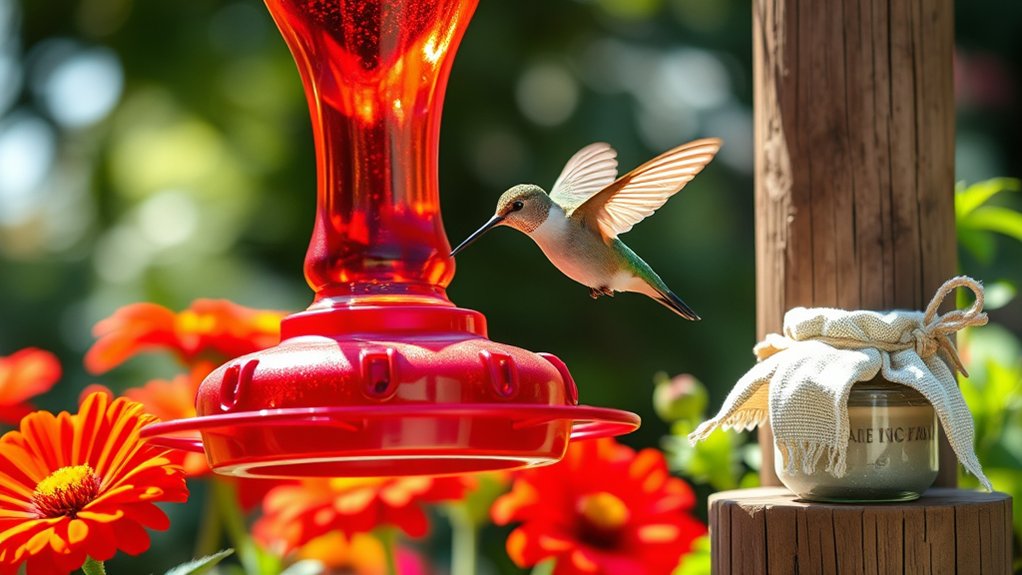
To keep bees and wasps off your hummingbird feeders, choose feeders with red flower ports and built-in nectar guards that block insects but let hummingbirds feed. Hang feeders using fishing line and add water-filled ant moats to stop ants and wasps from climbing.
Move feeders every few days to confuse pests, hang fake wasp nests for territorial deterrence, and plant nectar-rich flowers nearby to draw bees away. Keep feeders clean and leak-free to avoid attracting insects.
You’ll find even more easy, effective tips ahead.
Choose Feeder Designs That Deter Bees and Wasps
When choosing a hummingbird feeder, focus on designs that naturally deter bees and wasps to keep your feeder hummingbird-friendly.
You should choose feeder designs with red flower ports, as bees are less attracted to red compared to yellow. Avoid feeders with yellow accents since these can draw unwanted insects.
Opt for saucer-style feeders that position feeding ports on top, preventing bees and wasps from reaching the nectar easily.
Look for models with built-in bee guards or nectar guard tips; these restrict access to smaller insects while letting hummingbirds feed freely.
Also, select feeders marketed as wasp-resistant, which feature shapes and barriers minimizing wasp attraction.
Use Nectar Guards to Keep Bees and Wasps Away
While bees and wasps can quickly overwhelm your feeder, nectar guards offer a simple way to keep them out without disturbing hummingbirds. These guards make feeding holes too small for bees and wasps but still allow hummingbirds to feed freely.
Many hummingbird feeders include built-in nectar guards, but you can also add them separately to keep bees away. Regular maintenance keeps them effective in deterring insects and preserving your feeder’s accessibility for hummingbirds.
| Feature | Benefit |
|---|---|
| Small feeding holes | Blocks bees and wasps |
| Easy to add | Fits most feeders |
| Durable material | Long-lasting protection |
| Built-in options | Convenient and ready to use |
| Simple maintenance | Keeps nectar guards effective |
Hang Feeders With Fishing Line to Stop Ants and Wasps
If you want to keep ants and wasps off your hummingbird feeders, hang them using fishing line. This thin, slippery material creates a nearly invisible barrier that’s tough for ants and wasps to climb. It helps keep wasps away from the nectar ports.
When you hang the feeder with fishing line, you reduce insect access while maintaining a clean, pest-free feeding spot for your hummingbirds. The fishing line blends discreetly into your garden setting, so it doesn’t distract from your feeder’s appearance.
Make certain to regularly inspect the fishing line for any signs of wear and replace it as needed to guarantee it continues to keep wasps and ants at bay.
This simple trick effectively protects your nectar ports and improves your hummingbirds’ feeding experience.
Use Water-Filled Ant Moats to Keep Ants Away
Because ants can’t swim, filling an ant moat with water creates an effective barrier that stops them from reaching your hummingbird feeder.
Water-filled ant moats are typically 3 inches wide and 1 to 2 inches deep. This makes it impossible for ants to cross and access the nectar feeders.
You can hang ant moats just above your feeders to protect nectar without disturbing hummingbirds.
To keep bees and wasps away, maintaining these moats is key.
Remember to regularly clean and refill ant moats to uphold their effectiveness.
Use feeders with built-in ant moats for convenience.
Also, position ant moats properly to guarantee a water barrier is always present.
Using ant moats helps you keep ants away while letting hummingbirds feed freely.
Move Feeders Often to Confuse Bees and Wasps
Try moving your feeder just a few feet every few days. This little trick can really confuse bees and wasps.
Since these insects rely on visual clues, changing the location messes with their ability to find the nectar.
But don’t worry—your hummingbirds will easily adjust and keep coming back for a visit.
It’s a simple way to keep your feeder humming with the birds you want!
Confuse Insect Navigation
How often do you move your hummingbird feeder? Regularly moving feeders by just 3 to 4 feet can confuse the navigation of bees and wasps. This makes it harder for them to pinpoint the nectar cooler.
Since bees are attracted to consistent locations, shifting the feeder disrupts their memory and deters insects from lingering.
Here’s why moving feeders works:
- Bees and wasps struggle to relocate nectar sources when positions change frequently.
- Hummingbirds quickly adapt, continuing to feed without interruption.
- This simple tactic reduces insect gatherings and keeps your feeder pest-free.
Encourage Hummingbird Visits
When you move your hummingbird feeder every few feet, you encourage more visits by keeping bees and wasps off balance. Shifting the location by 3 to 4 feet regularly disrupts their foraging patterns, making it harder for them to associate a fixed spot with a food source.
This simple tactic is one of the best natural ways to keep bees and wasps away without deterring hummingbirds. Since hummingbirds easily find feeders despite minor moves, you maintain a steady feeding routine for them.
By confusing these insects through periodic relocations, you reduce their presence and competition for nectar, especially during peak insect activity.
Using this approach with your hummingbird feeders helps guarantee your feathered friends get the attention they deserve while keeping pests at bay.
Hang Fake Wasp Nests to Deter Wasps
Since wasps are highly territorial, hanging a fake wasp nest near your hummingbird feeder can discourage them from invading the area.
To effectively keep bees and wasps away, choose a fake wasp nest that closely resembles a real one in size and color. Place it where wasps can easily see it, reinforcing their territorial instincts to deter wasps from approaching your feeders.
Select a realistic fake wasp nest and place it visibly to trigger wasps’ territorial behavior and keep them away.
To maximize the effect of your fake wasp nest, remember to:
- Position it in a protected but visible spot near your hummingbird feeders
- Regularly check and adjust its placement for continued effectiveness
- Combine it with other pest control methods for better results
This simple strategy helps maintain a wasp-free zone and keeps your feeders inviting for hummingbirds.
Plant Flowers That Attract Bees and Hummingbirds
Planting a variety of nectar-rich flowers not only beautifies your garden but also draws bees away from your hummingbird feeders by offering alternative food sources.
Choose plants like fuchsia, bee balm, and trumpet vine, which attract bees and hummingbirds alike.
Adding annuals such as zinnias and petunias enhances visual appeal while supporting pollinators.
Focus on flowers with colors like purple and red, as these especially attract hummingbirds.
Avoid yellow blooms near feeders to reduce bee presence.
Incorporate native plants suited to your region to guarantee they thrive and provide continuous nectar throughout the growing season.
Keep Your Feeders Clean and Leak-Free
You should clean your hummingbird feeders at least once a week. This helps keep the nectar fresh and stops bees and wasps from hanging around.
Also, take a close look at all the connections. If you spot any leaks, fix them right away. Those sticky spots are like magnets for insects, and you definitely don’t want that.
Regular Cleaning Routine
Cleaning your hummingbird feeders at least once a week during cooler months and twice weekly when it’s warm helps keep nectar fresh and insects away.
Regular cleaning prevents bees and wasps from being attracted to spoiled nectar or sticky residues.
Use hot water and a bottle brush to thoroughly clean every part of the feeder. Focus especially on the feeding ports to remove any sugary buildup that insects love.
Before refilling, make sure your feeder is fully air-dried to stop mold and bacteria growth.
To maintain an effective cleaning routine:
- Clean feeding ports and seals with cotton swabs to remove sticky residue.
- Avoid bleach; it can leave harmful residues.
- Dry feeders completely before adding fresh nectar.
This routine keeps your feeders inviting only for hummingbirds, not pests.
Fix Leaks Promptly
Keeping your feeders spotless is just the first step; ensuring they don’t leak is equally important. Leaks cause sugary nectar to drip onto nearby surfaces, attracting bees and wasps keen for an easy meal.
To prevent this, check the seals between your feeder’s bottle reservoir and ports regularly. Even small gaps can lead to leakage. Use plumber’s tape to secure these connections tightly without contaminating the nectar.
Inspect your feeders frequently for any steady leaks and fix them immediately to avoid inviting unwanted insects. By maintaining leak-free feeders, you not only keep bees and wasps away but also provide a cleaner, safer feeding environment for your hummingbirds.
Promptly fixing leaks is a simple yet effective way to reduce insect visitors and enhance your feeder’s performance.
Frequently Asked Questions
Can Natural Repellents Be Used Near Feeders Without Harming Hummingbirds?
Yes, you can use natural repellents like natural oils, citrus scents, vinegar solutions, and peppermint spray near feeders without harming hummingbirds.
Just make sure you apply them carefully away from the feeding areas and dilute them properly.
Test a small spot first to see how the birds react.
Avoid strong odors or residues that might scare hummingbirds off.
With cautious use, these repellents help keep bees and wasps away while keeping hummingbirds safe.
What Time of Day Are Bees and Wasps Most Active at Feeders?
While you might expect bees and wasps to be equally active all day, their bee activity patterns reveal peak feeding times usually fall in late morning to early afternoon.
You’ll notice time of day plays a big role, with these insects buzzing most during warm, sunny hours.
Seasonal variations also matter. Wasps ramp up activity in late summer and early fall.
Does the Color of the Feeder Influence Bee and Wasp Attraction?
Yes, feeder colors definitely influence bee and wasp attraction.
Bees prefer yellow hues due to their color preferences, while wasp behavior is also affected by bright, warm colors.
By understanding color psychology, you can choose feeders with red or minimal yellow to reduce insect visits.
Red feeder colors appeal more to hummingbirds and discourage bees and wasps, helping you enjoy a cleaner feeding experience without constant insect interference.
Are There Specific Nectar Recipes That Discourage Bees and Wasps?
Yes, you can create nectar with a specific sugar ratio to reduce bee and wasp visits. By balancing the nectar consistency using a lighter, four-to-one water-to-sugar mix, you minimize unwanted attention.
Feeding frequency matters too. Revitalizing nectar often keeps it clean and less attractive to insects.
Also, consider surrounding flower types. Hummingbird-friendly blooms with minimal bee appeal help keep your feeder a peaceful place for birds, not bugs.
How Does Weather Affect Bee and Wasp Activity Around Feeders?
You’ll notice temperature effects play a big role; bees and wasps are more active in warm weather and less so when it’s cooler.
High humidity levels can increase their activity since they thrive in moist conditions.
Seasonal changes also impact them. Activity peaks in late summer and drops in fall.
Wind conditions matter too; strong winds usually keep them away, while calm days encourage foraging near your feeders.
Conclusion
By using these tips, you can keep bees and wasps away from your hummingbird feeders as easily as a gentle breeze sways the flowers. Choosing the right feeder design, hanging fake nests, and keeping everything clean will create a peaceful feeding spot.
Plus, moving feeders and planting flowers will help keep those pesky insects distracted. With a little care and attention, you’ll enjoy watching hummingbirds without unwanted visitors stealing the show.