
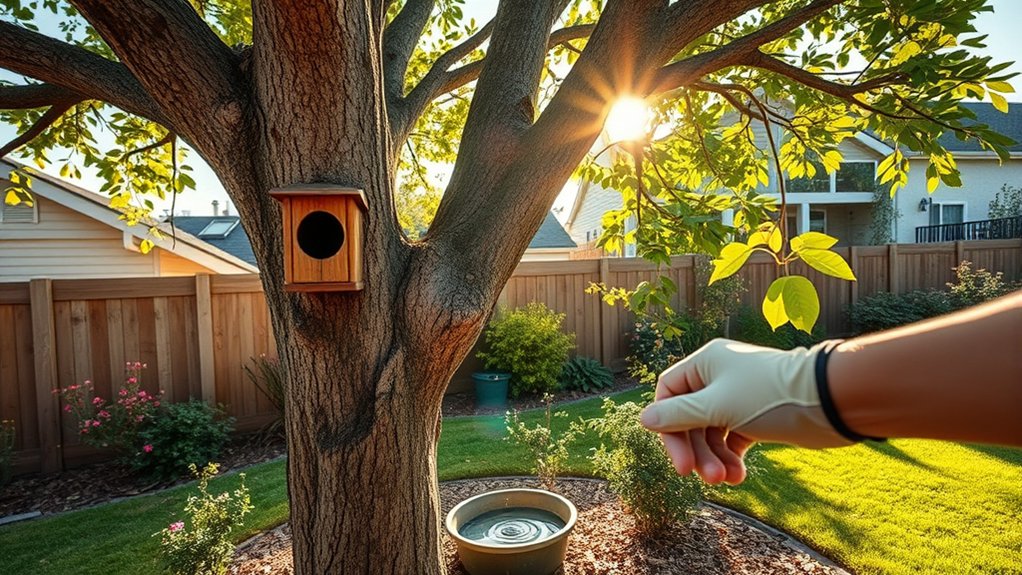
To keep your trees healthy and protect birds, prune between September and December to avoid nesting season. Always check for active nests before starting.
Use proper pruning techniques to support strong growth and preserve some dead trees as essential bird habitats. Avoid pesticides to safeguard beneficial insects and opt for organic soil care.
Keep cats indoors and clean feeders to reduce stress on birds. Following these steps will help you create a safe, thriving yard where both trees and birds flourish.
Choose the Best Time for Tree Care to Protect Birds
When you plan tree care, choose September through December to protect nesting birds in Santa Clara County. This period is the best time for tree trimming because most birds have finished nesting, reducing the risk of disturbing active nests.
Avoid tree work from March 1 to August 31, when peak nesting occurs. By scheduling your tree trimming during these fall and early winter months, you maintain tree health without harming wildlife.
Nesting birds, like Anna’s Hummingbirds, may start as early as November, so staying vigilant is key.
Planning tree care within this timeframe helps you balance tree maintenance and bird protection effectively, ensuring both your trees and local bird populations thrive without conflict.
Check Trees for Active Bird Nests Before Pruning
Before you start pruning, make sure to check your trees carefully for signs of active bird nests, especially between March and August.
Keep an eye out for things like bird droppings or birds acting protective near nests.
Timing your tree work around nesting seasons is a smart move—it helps keep the birds safe and your trees healthy.
Identify Nesting Signs
How can you guarantee your tree pruning doesn’t disturb nesting birds? Start by carefully inspecting your trees for signs of an active bird’s nest. Look for small cup-shaped structures made from plant fibers or notice if birds are especially active or scolding nearby.
Be aware that many birds, including Anna’s Hummingbirds, may nest as early as November, with peak activity from March through August. Check for subtle indicators like bird droppings or concealed nests.
If you find an active nest, stop all tree work immediately and keep a safe distance: 50 feet for songbirds and 500 feet for raptors until the young leave or the nest is empty.
For larger or sensitive areas, consider hiring a trained biologist to ascertain you protect both your trees and the birds living in them.
Timing Tree Work
A well-timed tree trimming can protect nesting birds and keep your trees healthy. When you focus on timing tree work, especially on native trees, you help protect birds and their habitats.
- Schedule pruning from September to January when most birds aren’t nesting.
- Survey your yard for active nests by spotting droppings or bird behaviors.
- Watch for early nesters like Anna’s Hummingbirds starting in November.
- If you find an active nest, stop work immediately and keep your distance until fledging.
Avoid tree work from March 1 to August 31, peak nesting season.
Prune Trees Properly to Promote Health and Bird Habitat
When you prune trees during their dormant season, typically from September to January, you encourage healthy growth while reducing risks to nesting birds.
Proper tree care involves structural pruning to maintain a strong central trunk and well-spaced branches, which supports tree stability and longevity.
Structural pruning fosters a strong trunk and balanced branches, enhancing tree stability and lifespan.
Always check for nesting birds before starting any work, especially from March to August, to avoid disturbing them.
Native plants in your yard complement healthy trees by providing essential food and shelter, creating a supportive habitat where birds rely on both trees and surrounding vegetation.
For best results, consult a Wildlife Trained Arborist who understands bird-friendly tree care practices.
This approach guarantees your trees thrive and continue to offer safe, thriving habitats for local birds.
Preserve Dead and Dying Trees as Vital Bird Shelters
Several bird species depend on dead and dying trees for nesting, shelter, and food.
These dead trees play an essential role in your yard’s ecosystem, even as healthy trees provide overall habitat.
To protect this balance and protect the birds, consider these steps:
- Leave some dead trees standing to offer nesting cavities for woodpeckers and other birds.
- Allow decaying wood to attract insects, a critical food source during breeding.
- Consult a Wildlife Trained Arborist to manage dead trees safely, preserving their habitat value.
- Maintain a mix of healthy trees and dead trees to support diverse bird populations.
Avoid Pesticides That Harm Birds and Trees
Although pesticides can control pests, they often harm beneficial insects that birds rely on for food and disrupt the balance of your yard’s ecosystem.
When you use pesticides, you risk poisoning not just pests but also the insects that support birds, leading to population declines.
This affects the health of your trees and the birds that depend on them for shelter and nourishment.
To protect both trees and birds, avoid harsh chemicals by choosing organic fertilizers and natural pest control methods.
Reducing or eliminating pesticide use creates a safer environment where birds can thrive and your trees can grow strong.
Maintaining a chemical-free lawn supports urban forests and preserves biodiversity, keeping your yard healthy and welcoming for wildlife.
Maintain Soil Health for Healthy Trees and Birds
Protecting your trees and birds goes beyond avoiding harmful pesticides; maintaining healthy soil plays a big role in their well-being.
In Urban Forestry, healthy soil supports trees that provide shelter and food where birds build nests and thrive.
Here’s how you can maintain soil health effectively:
- Leave fallen leaves on the ground to return nutrients and offer habitat for insects birds feed on.
- Use arborist woodchips as mulch to retain moisture and improve soil structure.
- Compost organic waste to enrich the soil with nutrients, promoting robust tree growth.
- Avoid mulch volcanoes around tree bases to prevent root damage and guarantee tree health.
Keep Cats Indoors and Clean Feeders to Protect Backyard Birds
When you keep your pet cats indoors, you greatly reduce their impact on local bird populations. Outdoor cats face significant threats and are estimated to kill billions of birds annually in the U.S. alone.
So keeping cats indoors helps protect these essential creatures that rely on your trees and yard for shelter and food.
Alongside this, maintaining clean feeders is important. Clean feeders prevent disease spread among backyard birds.
Disassemble and wash them every two weeks or more often if it’s wet. Use dish soap and boiling water or a diluted bleach solution. Rinse and dry completely before refilling.
Also, change hummingbird sugar water every 3-5 days to avoid mold.
Together, cats indoors and clean feeders create a safer environment for birds near your trees.
Frequently Asked Questions
How Often Should I Water Newly Planted Trees?
You should water newly planted trees deeply once a week, applying about 10 to 15 gallons each time.
Use proper watering techniques by checking soil moisture in the top 2-4 inches. If it feels dry, it’s time to water.
This approach supports strong tree growth and root establishment.
Adjust watering frequency based on rainfall and season, making sure you don’t overwater or underwater. That way, your trees can thrive effectively.
What Types of Mulch Are Best for Tree Health?
Want your trees to thrive without turning your yard into a mulch monster’s playground? You should use organic mulch like wood chips or shredded leaves. They bring organic mulch benefits by enriching soil and locking in moisture.
Apply mulch correctly by spreading a 2-4 inch donut-shaped layer, keeping it off the trunk. This mulch application technique guarantees proper air flow and prevents rot.
Can Certain Tree Species Attract More Birds Than Others?
Yes, bird friendly trees can definitely attract more birds than others.
When you plant native species, you benefit local wildlife by providing the food and shelter they need.
Seasonal fruiting trees like crabapples and serviceberries lure in frugivorous birds during breeding seasons, while oaks and pines offer nuts and seeds year-round.
Choosing these trees boosts your yard’s appeal to a wider variety of bird species, supporting a thriving, vibrant ecosystem.
How Do I Identify Common Tree Diseases Early?
Don’t wait for your tree to look lifeless before acting; early detection matters.
You can spot tree disease symptoms like unusual leaf discoloration, bark cracks, or fungal growth.
Prevention techniques include regular inspections and proper watering, while treatment options range from pruning affected areas to applying fungicides or insecticides.
Catching issues early lets you save your tree and maintain a healthy yard.
Stay proactive and watch closely!
What Plants Complement Trees to Support Local Bird Populations?
You should plant native shrubs like elderberry and serviceberry to provide food and shelter for birds.
Adding flowering plants such as milkweed and coneflower attracts pollinators, which insect-eating birds rely on.
Don’t forget ground cover like ferns and low-growing shrubs; these offer protection for ground-nesting birds.
Combining these with your trees creates a balanced habitat that supports local bird populations effectively.
Conclusion
Think of your yard as a bustling city where trees are towering apartment buildings and birds are the happy residents. By caring for the trees thoughtfully, checking nests, pruning wisely, and avoiding harmful chemicals, you’re not just maintaining structures but nurturing a vibrant community.
Protecting the soil and keeping predators like cats indoors are like ensuring safe streets and clean parks. When you care for this neighborhood, both trees and birds thrive, creating a lively, harmonious home you’ll love to watch.