
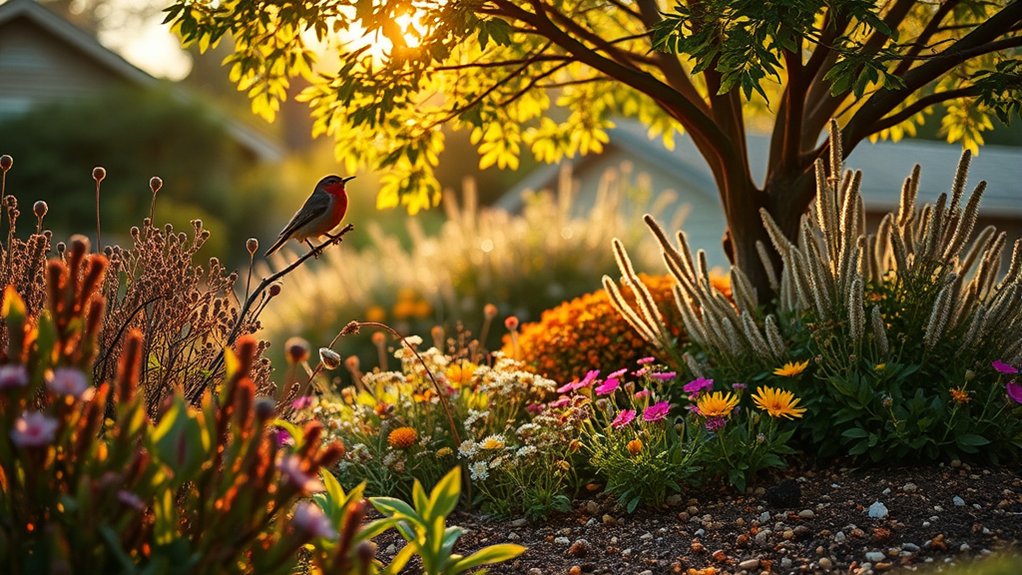
You’ll boost local bird populations by planting native plants because they provide better food, shelter, and nesting sites than non-native ones. Native plants support more insects, like caterpillars, which are essential for feeding baby birds.
They create stable habitats that help birds adapt to climate shifts and attract a greater variety of species. Plus, native gardens improve the environment overall.
If you want to create a thriving bird habitat, there’s plenty more to explore about choosing the right plants.
Why Native Plants Matter for Local Birds
Because native plants have evolved alongside local birds and their insect prey, they play an essential role in providing the food and shelter birds need to thrive.
When you focus on planting native species, you create habitats that support diverse food sources vital for bird populations.
For example, native oaks host hundreds of caterpillar species, which insect-eating birds rely on to raise their young.
Studies show yards with over 70% native plant cover attract notably more birds, sometimes up to eight times as many, compared to non-native landscapes.
By planting native plants, you help reverse the decline in bird populations caused by habitat loss from non-native landscaping.
Your efforts directly support local ecosystems, ensuring birds have the resources necessary to flourish.
How Native Plants Provide Essential Food for Birds
Native plants supply the essential food sources local birds need, especially during breeding season when protein demands soar.
You’ll find that native plants, like native oaks, support a vast number of caterpillars—over 450 species, in fact.
These caterpillars serve as a significant food source for many bird species, particularly insectivores raising their young. For example, chickadees rely on thousands of caterpillars to feed their nestlings.
When you include native plants in your yard, you create an environment that supports more bird species. Yards with over 70% native cover can host eight times more species than those with mostly non-native plants.
Since non-native plants don’t provide the same nutritional value, native plants play an important role in meeting the intense food demands birds face during breeding season.
Why Native Plants Support More Insects Than Non-Native Species
When you plant species that have evolved alongside local wildlife, you create an environment where insects can thrive.
Native plants provide the exact nutrients and habitat required by local insects, making them flourish. This abundance of insects, especially caterpillars, becomes essential food for many bird species, particularly during breeding.
In contrast, non-native plants often support far fewer insects, limiting food sources for birds.
Imagine a yard filled with native plants that:
- Hosts hundreds of moth and butterfly caterpillar species
- Offers dense foliage and varied plant structures
- Supports a rich insect population throughout seasons
- Attracts and sustains diverse bird species by providing ample food
Why Caterpillars From Native Plants Are Vital for Feeding Baby Birds
Although you might not realize it, caterpillars play an essential role in feeding baby birds during the breeding season. Native plants support far more caterpillars, which are critical food sources for baby birds and help sustain healthy bird populations.
For example, chickadees rely on thousands of caterpillars to raise their young, and they prefer native plants because these plants host abundant caterpillar species.
| Native Plant | Caterpillar Species Supported |
|---|---|
| Oak | 450+ |
| Maple | 200+ |
| Willow | 150+ |
| Birch | 120+ |
| Cherry | 100+ |
How Native Plants Offer Better Shelter and Nesting Sites
Beyond providing food, plants also create safe spaces where birds can rest and raise their young.
Native plants offer superior shelter and nesting sites because they’ve evolved alongside local birds, shaping a habitat that meets their specific needs.
Native plants provide ideal shelter and nesting spots, perfectly tailored through evolution with local bird species.
Their structural diversity, from dense shrubs to tall trees, provides a variety of niches perfect for different bird species.
When you fill your yard with over 70% native plants, you boost the availability of these essential nesting sites, attracting more birds and supporting their breeding.
Plus, migratory birds rely on these habitats for safe stopovers during long journeys.
Imagine how native plants create:
- Thick shrubbery for hidden nests
- Sturdy branches for chickadees and robins
- Varied plant heights for diverse shelter options
- Leaf litter and ground cover for ground-nesting birds
How Plant Diversity Boosts Bird Breeding and Survival
When you plant a variety of native species, you’re basically setting up a buffet for insects. Birds love this because insects are their go-to food, especially when they’re breeding.
Plus, having lots of different plants means there’s better shelter and plenty of nesting materials around.
All of this adds up to healthier chicks because the birds have everything they need to eat and raise their young.
Native Plants Support Insects
Native plants support thousands of caterpillars, which are essential food sources for 95% of bird species during breeding season.
Birds need native plants because these plants support local insects that feed their young.
For example, oaks can host over 450 caterpillar species, making them important in plant communities that sustain bird populations.
When you plant native species, you help create a rich insect habitat necessary for bird survival.
Imagine a yard where:
- Oaks host hundreds of caterpillars
- Chickadees feed their chicks thousands of caterpillars
- Native plants flourish, attracting diverse insects
- Bird species thrive with abundant food sources
Enhanced Nesting And Foraging
Three key benefits come from planting a variety of native species: better shelter, more food, and increased bird breeding success.
When you include native plants in your yard, you provide essential food and shelter that local bird populations rely on.
These plants support a diverse insect community, boosting foraging opportunities for birds, especially during breeding season. Caterpillars, abundant on native flora, serve as critical food for nestlings, helping species like chickadees thrive.
Native plants also supply important nesting materials and create safe habitats where birds feel secure to raise their young.
Why Yards With Mostly Native Plants Attract More Birds
If you want to attract more birds to your yard, planting mostly native species is key. Native plants provide the right habitats and essential food sources that local bird populations need.
Because these plants co-evolved with wildlife, they support a rich variety of caterpillars, which feed 95% of bird species during breeding. For example, oaks support over 450 caterpillar species, crucial for chickadees raising their young.
Research shows yards with over 70% native cover attract eight times more birds than non-native landscapes, boosting both bird diversity and abundance.
Yards with 70% native plants attract eight times more birds, enhancing diversity and abundance.
Imagine your yard filled with towering native oaks hosting thousands of caterpillars.
Flowering shrubs serve as shelter and food. Native grasses offer seed and insects. Fruit-bearing plants attract songbirds year-round.
How Native Plants Help Birds Adapt to Climate Change
You can really help birds deal with climate change by planting native species.
These plants offer steady food and shelter that birds rely on.
When native plants create stable habitats, they give birds the resources they need to stay resilient as conditions change.
So, by supporting native plants, you’re directly boosting birds’ chances to adapt and thrive.
It’s a simple way to make a big difference.
Climate Resilience Support
Because native plants provide reliable food and nesting sites year-round, they play an essential role in helping birds adapt to the challenges of climate change.
When you incorporate native plants into your landscape, you support bird populations by maintaining stable habitats and consistent food sources despite shifting weather patterns.
These plants thrive naturally, requiring less water and fertilizers, which fosters healthier ecosystems. As a result, birds find abundant insects and seeds needed to survive climate variability.
You create crucial stopovers for migratory birds facing unpredictable conditions.
Native plants support climate resilience by offering:
- Year-round shelter and nesting spots
- Abundant insects as natural food sources
- Adaptation to local soil and weather conditions
- Critical rest and recharge areas during migration
Habitat Stability Enhancement
Building on how native plants support climate resilience, they also play a key role in enhancing habitat stability for birds facing changing environments. Native plants guarantee steady food availability and nesting sites, helping native birds adapt as climate change disrupts ecosystems.
By fostering diverse insect populations, these plants sustain bird populations during critical breeding periods. Restoring habitats with native flora also offers essential recharge stops for migratory birds, boosting their survival odds.
| Benefit | Effect on Bird Populations | Role of Native Plants |
|---|---|---|
| Food Availability | Supports breeding success | Increases insect abundance |
| Nesting Sites | Provides safe habitats | Offers shelter |
| Migration Support | Enhances survival | Supplies recharge stations |
| Ecosystem Health | Reduces chemical use | Promotes stable habitats |
Environmental Benefits of Native Gardens for Bird Habitats
When native plants thrive in your garden, they create a rich habitat that supports local birds by supplying essential food and shelter.
These plants boost ecosystem health by reducing chemical use and improving soil and water quality.
They also provide vital food resources for local bird populations, including caterpillars, which are essential for raising nestlings.
For migrating birds, native gardens offer much-needed stopover nourishment.
You’ll notice your yard hosting more bird species and greater numbers when native plants dominate your landscape.
Imagine:
- Caterpillars crawling on native leaves, feeding hungry chicks
- Bright berries ripening, attracting migrating birds
- Dense shrubs offering safe nesting spots
- Pollinators buzzing around vibrant wildflowers
Practical Tips for Choosing Native Plants to Support Birds
When you pick native plants, try to focus on species that provide food and shelter for local birds.
It’s a good idea to mix things up—use shrubs, trees, and grasses together. This way, you create a variety of habitats that cater to different bird needs all year round.
Also, think about choosing plants that bloom at different times. That helps keep nectar and insects available for birds throughout every season.
Selecting Native Plant Species
Although choosing native plants might seem straightforward, selecting the right species can make a big difference in supporting local birds.
Focus your plant selection on species that have co-evolved with your area’s wildlife, as these native plants provide the essential food and shelter local bird populations need.
For example, oaks support caterpillars vital for birds that feed their young.
To create an inviting habitat, consider:
- Purple Coneflower and Black-eyed Susan for seeds and nectar
- A diverse mix of plants to attract various insects
- Species suited to your soil and moisture conditions
- Avoid cultivars that lack ecological benefits
Enhancing Bird Habitat
To create a thriving bird habitat, you should focus on planting a variety of native species that provide food and shelter throughout the year.
Incorporate native plants like oaks, which support hundreds of caterpillar species, essential food for nesting birds such as chickadees.
Adding purple coneflower and bee balm attracts goldfinches and hummingbirds, boosting biodiversity.
Aim for at least 70% native plant coverage in your yard to support viable bird populations effectively.
Reducing lawn areas in favor of native gardens not only enhances bird habitat but also lowers maintenance and environmental impact.
Frequently Asked Questions
Can Native Plants Attract Specific Rare or Endangered Bird Species?
Yes, native plants can attract specific rare or endangered bird species by providing rare habitats that these birds depend on.
You’ll find that native plants offer specific food sources and suitable breeding grounds critical for their survival.
By planting natives, you support ecological balance and enhance local conservation efforts.
This targeted approach helps protect vulnerable bird populations and guarantees they’ve the resources they need to thrive in their natural environment.
How Do Native Plants Impact Bird Migration Patterns?
Migration timing meets meaningful momentum when native plants provide perfect places.
You’ll notice habitat connectivity improves, linking landscapes that lure birds along their routes.
Food availability flourishes from familiar fruits and insects, supporting energy needs.
Native plants cater to nesting preferences, offering safe spots for raising young.
Plus, their climate adaptation guarantees these resources remain reliable despite shifting seasons, helping you support steady, successful bird migrations through your local environment.
Do Native Plants Require Less Maintenance in Bird-Friendly Gardens?
Yes, native plants require less maintenance in bird-friendly gardens because they’re well adapted to your local climate and soil.
You’ll enjoy native plant benefits like reduced watering and fewer fertilizers, which lowers garden maintenance efforts.
Plus, they naturally support biodiversity, creating a thriving wildlife habitat.
Can Native Plants Help Control Bird-Related Diseases?
Think of native plants as guardians of a vibrant fortress, where disease transmission finds no easy path.
When you choose native species, you boost habitat health and plant diversity, creating natural pest management that keeps harmful bugs at bay.
This balance helps maintain ecological balance, reducing bird-related diseases.
How Quickly Do Bird Populations Respond to Native Plant Restoration?
You’ll see bird population dynamics start shifting within months after native habitat restoration begins.
Birds respond quickly because restored plants provide essential food and shelter aligned with their seasonal breeding patterns.
While habitat fragmentation effects can slow progress, consistent restoration helps reestablish ecological balance.
Over time, local bird populations rebound as their natural environment improves, supporting healthier, more resilient communities.
Conclusion
By planting native species, you’re creating a vibrant sanctuary where birds find abundant food, shelter, and safe nesting spots. Imagine your yard buzzing with life: caterpillars feeding hungry chicks, colorful birds flitting through branches, and a chorus of chirps welcoming each morning.
Native plants don’t just beautify your space; they nurture the delicate balance of nature, helping local birds thrive and adapt. Your garden becomes a lifeline, a small but powerful haven for winged friends.