
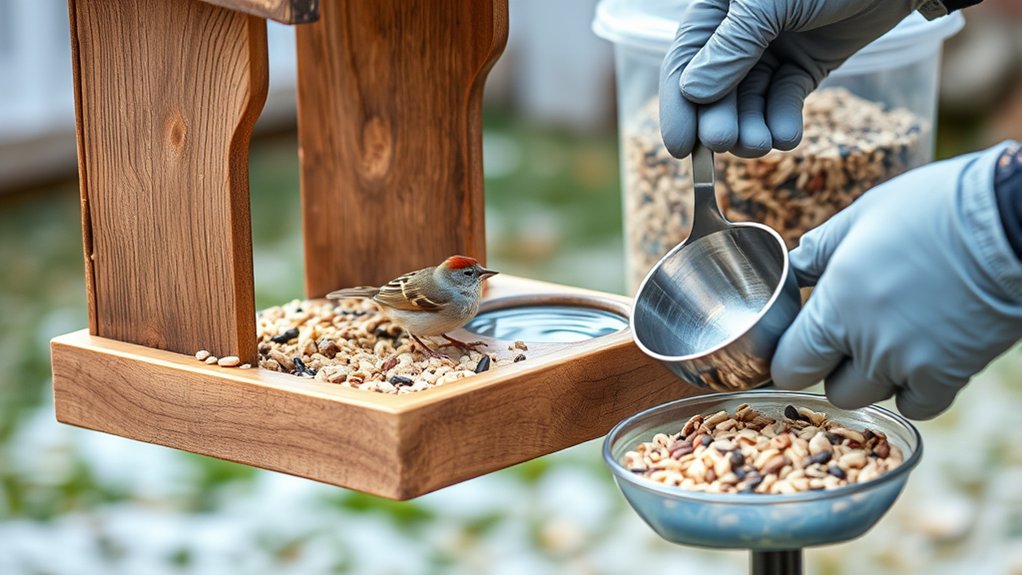
To reduce bird disease in feeders, clean your feeders regularly with a bleach solution and let them dry in sunlight. Rake up droppings and remove moldy seeds to keep the area clean.
Space and rotate your feeders to prevent crowding and the spread of germs. If you spot sick birds, take down the feeders temporarily.
Choose designs with drainage holes and easy-to-clean parts to minimize contamination. Keep these tips in mind so you can protect your feathered visitors effectively.
Clean Your Bird Feeders Regularly to Prevent Disease
To keep your bird feeders safe and disease-free, you should clean them every two weeks using a 10% bleach solution. This method effectively kills bacteria and mold, helping prevent the spread of disease among visiting birds.
When cleaning feeders, scrub all surfaces thoroughly and let them dry completely in sunlight before refilling.
Don’t forget to monitor feeders regularly for signs of contamination like moldy seeds or residue. Removing visible debris reduces the risk of disease transmission and supports a healthy feeding environment.
For hummingbird feeders, clean them more frequently, every week to ten days during warmer months, since sugar water encourages mold growth.
Staying consistent with cleaning feeders and monitoring feeders guarantees you provide a safe, healthy space that attracts birds without putting them at risk.
Using enzyme-based cleaners can also enhance the removal of droppings and odors safely, reducing the chance of disease spread.
Rake Up Droppings and Remove Moldy Seeds Around Feeders
Regularly raking up bird droppings and moldy seeds around your feeders helps reduce the risk of diseases spreading among visiting birds.
When you rake up droppings and remove moldy seeds promptly, you limit bacteria growth and fungal contamination that thrive in these damp, nutrient-rich conditions.
Keeping the ground clean is essential for effective disease prevention, as moldy seeds can attract sick birds and spread illnesses like salmonellosis.
Consistent ground maintenance also supports hygiene by discouraging rodents and pests that carry additional health risks.
To maintain a safe environment, remove any wet or spoiled food immediately and consider using lime to kill lingering bacteria.
Space and Rotate Feeders to Reduce Bird Crowding
When you space out your bird feeders across your yard, you reduce crowding that can spread diseases quickly among birds. By placing multiple feeders in different spots, you prevent large groups from gathering in one area, lowering the risk of disease transmission.
It’s also important to rotate feeders regularly. Moving them to new locations keeps droppings and contaminated seeds from accumulating, which helps control bacteria and fungi that can make birds sick.
Rotating feeders not only prevents disease but also encourages a variety of birds to visit, keeping your yard’s bird population healthy.
Plus, changing feeder spots lets you observe different bird groups, making it easier to spot any signs of illness early and take action to prevent outbreaks.
Take Down Feeders Temporarily If You See Sick Birds
If you spot sick birds near your feeders, you should take them down immediately for at least two weeks to stop diseases from spreading.
Sick birds can pass illnesses through droppings and contaminated feeders, increasing the risk of disease among local populations.
Removing feeders reduces crowding and helps keep other birds healthy by minimizing contact with infected individuals.
After taking feeders down, clean them thoroughly with a bleach solution to kill lingering pathogens before returning them.
Monitor the area carefully for continued signs of illness.
According to Wildlife Health experts, temporarily removing feeders is an essential step in preventing outbreaks and protecting wild birds.
Acting quickly when you see sick birds helps reduce the risk of disease and supports a safer environment for your feathered visitors.
Choose Bird Feeder Designs That Minimize Food Contamination
Because contaminated food can quickly spread disease among birds, choosing feeders designed to minimize this risk is essential.
When selecting bird feeders, look for models with drainage holes to prevent water buildup that causes mold and food spoilage. Many feeders, such as the Kingsyard 2 Pack Tube Feeders, feature built-in drainage holes to help maintain dry seed.
Tube feeders are a great choice since they let birds feed without standing in their food, reducing contamination from droppings.
Platform feeders with a sloped design encourage proper drainage, keeping food dry and fresh.
Make sure your feeders have removable parts, so you can easily clean every surface and maintain good hygiene.
Also, consider squirrel-proof designs to limit access by larger animals that might carry diseases.
Feeders made from durable materials are easier to maintain and resist weather damage, helping keep feeding areas clean and safe.
Frequently Asked Questions
What Types of Bird Diseases Are Most Common at Feeders?
You’ll often see avian pox and salmonella infection at feeders, both spreading easily in crowded spots.
Aspergillosis fungus can develop if moldy feed’s left out, while trichomoniasis parasite and mycoplasmosis bacteria cause eye and throat issues.
Coryza disease and Newcastle virus also pop up, especially when hygiene slips.
Keeping feeders clean helps reduce these risks and keeps your visiting birds healthier and happier.
Can Certain Bird Species Spread Diseases More Than Others?
Yes, certain bird species can spread diseases more than others due to their flock behavior and migratory patterns.
High risk birds like house finches and pigeons often facilitate disease transmission at feeders.
Veterinary studies show these species, especially when stressed or crowded, increase infection risks.
You should focus on feeder hygiene and monitor these birds closely to reduce outbreaks and protect your local bird community effectively.
How Often Should Bird Feeders Be Cleaned During Winter?
You should clean your bird feeders at least every two weeks during winter to maintain proper feeder hygiene and support bird health.
If you notice sick birds, increase cleaning frequency to once a week.
Using effective cleaning methods and sanitizing solutions helps with disease prevention.
Regular winter maintenance, including thorough rinsing and drying, reduces harmful bacteria buildup.
Keeping feeders clean protects birds and guarantees your feeding station stays safe and inviting throughout the cold season.
Is It Safe to Use Homemade Bird Food Mixtures?
Yes, using homemade birdseed recipes can be safe if you focus on ingredient sourcing tips and perform a nutritional value assessment to suit local species.
You’ll want to prevent spoilage risks by using fresh ingredients and practicing safe storage practices.
Regularly monitoring bird health helps you catch issues early.
Keep feeders clean and watch for mold or spoiled food to guarantee your homemade mixes attract healthy birds without spreading disease.
Do Bird Feeders Attract Predators That Harm Birds?
Yes, bird feeders can attract predator birds, which may harm smaller birds visiting feeding stations.
To protect them, you should focus on careful feeder placement. Keeping feeders away from dense cover where predators hide helps.
Habitat loss has pushed more wildlife into neighborhoods, so following birdwatching ethics and feeding guidelines is key to minimizing risks.
Conclusion
By keeping your bird feeders clean and well spaced, you’re creating a safe haven where feathered friends can feast without fear. Think of your feeders as tiny bird cafes. If you keep the tables spotless, more guests will flock happily to dine.
Remember to rake up droppings, rotate feeders, and pause feeding if sickness appears. With these simple steps, you’ll help keep your backyard birds healthy and their visits frequent, turning your space into a vibrant, lively aviary.