
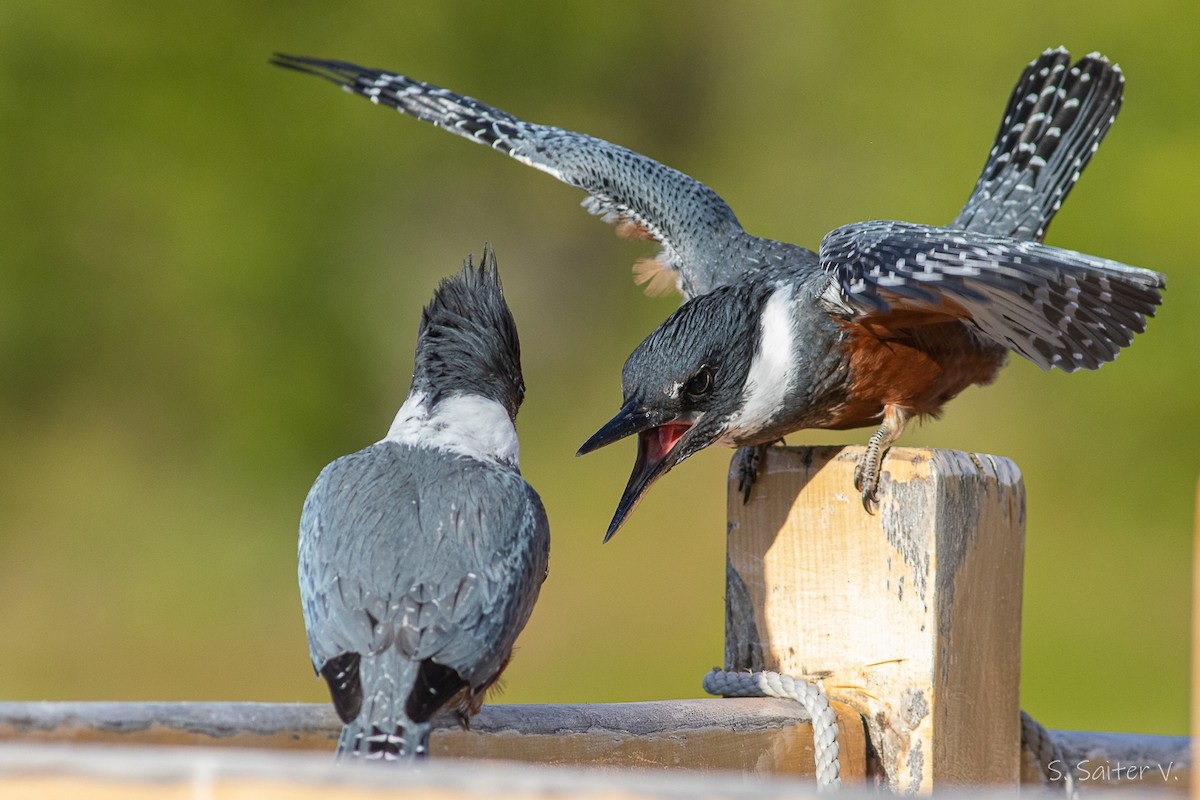
The Ringed Kingfisher is a striking and powerful bird known for its bold presence and unmistakable call. Found across parts of the southern United States, Mexico, Central America, and South America, this large kingfisher is often spotted near rivers, lakes, and coastal waters. With its vibrant blue-gray feathers, broad white collar, and rust-colored belly, it easily catches the eye. The keyword for understanding this bird lies in its unique hunting style—hovering over the water before plunging in to catch fish with incredible precision.
Unlike smaller kingfisher species, the Ringed Kingfisher has a more commanding build, often perched alone on high branches or wires as it surveys the water below. Its loud, rattling call is one of the first things birdwatchers notice, making it a favorite among wildlife enthusiasts. Observing the Ringed Kingfisher in its natural habitat offers a glimpse into the beauty and efficiency of nature’s top avian hunters.
Physical Description
The Ringed Kingfisher stands out as one of the most powerful and easily recognized kingfishers in the Americas. It is a large bird, measuring approximately 15 to 17 inches (38 to 43 cm) in length, with a wingspan reaching up to 29 inches (74 cm). Its body is stocky, and the head is notably large compared to its frame. A sturdy, thick bill extends straight from the face, perfectly adapted for diving and catching fish. This species often perches upright, giving it a confident and watchful posture near rivers and wetlands.
Coloration and Gender Differences
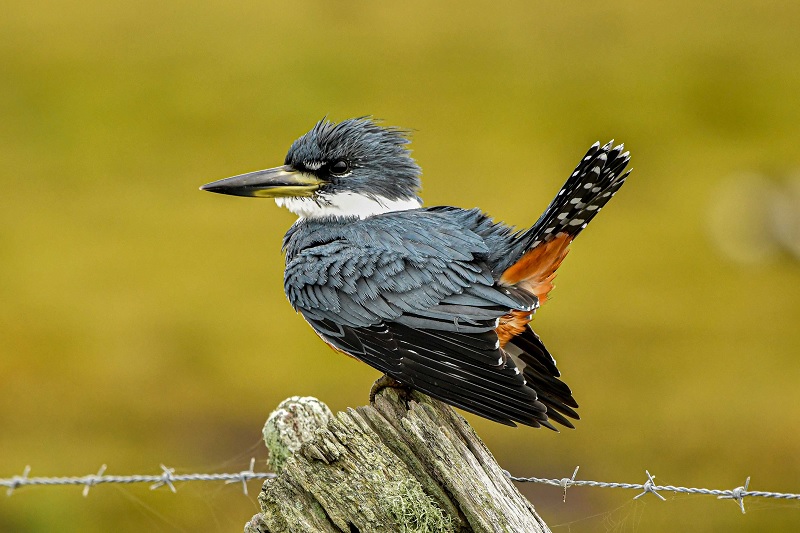
The bird’s upperparts are a rich blue-gray, offering a subtle yet elegant contrast to its white throat and broad white collar. Males feature a chestnut-colored belly and breast, while females display an extra blue-gray band across the upper chest, just above the same rusty belly color. This color difference between the sexes makes it easier to distinguish them in the wild.
Additional Features
The Ringed Kingfisher also has a distinctive crest on top of its head, which often appears shaggy or windblown. Its tail is short and square-shaped, usually marked with dark bars. The legs are small and dark, used mainly for perching rather than walking. These physical traits, along with its strong, direct flight and loud call, make the Ringed Kingfisher a remarkable bird often spotted around open freshwater habitats.
Habitat and Distribution
The Ringed Kingfisher is commonly found near freshwater bodies, where it thrives in warm and tropical climates. It prefers rivers, lakes, streams, estuaries, and even mangrove-lined shorelines. These birds are typically seen perched on exposed branches, wires, or rocks that overlook the water, waiting patiently to spot fish swimming below. Their ideal habitats are open areas with slow-moving or still water and plenty of available prey. The presence of trees or other elevated perches is also important for hunting and nesting activities.
Geographic Range
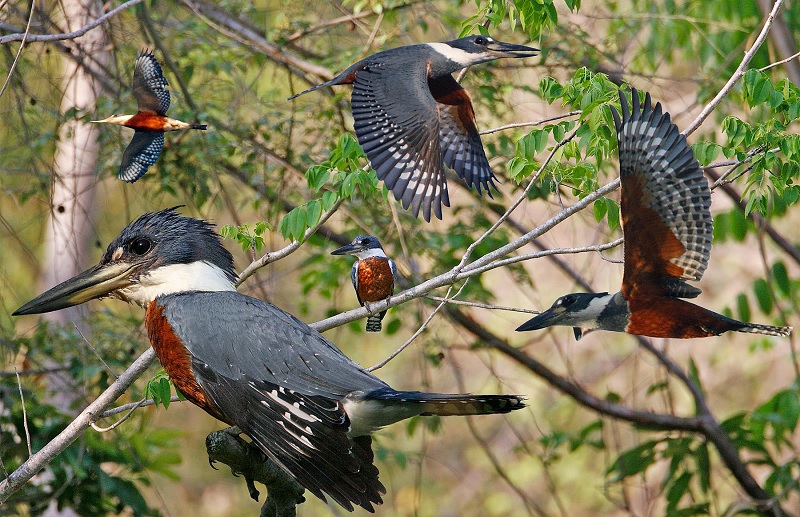
The Ringed Kingfisher’s distribution extends from the southern United States all the way to Argentina. In the U.S., it is most often found in southern Texas but occasionally appears farther north. It is widely distributed throughout Mexico, Central America, and large parts of South America, excluding the high Andes and dense Amazon rainforest interior. Unlike some other kingfisher species, the Ringed Kingfisher can also tolerate brackish environments, such as coastal lagoons and tidal rivers, expanding its range beyond freshwater sources.
Seasonal Movement
This species is mostly non-migratory, though it may shift locally depending on water levels and food availability. In some areas, individuals move short distances during the dry or rainy season, adjusting their range to follow favorable feeding grounds.
Behavior and Diet
The Ringed Kingfisher is known for its bold and solitary behavior. It typically perches silently near water, scanning the surface for movement before diving headfirst to catch prey. This bird is highly territorial and often defends its hunting area from other kingfishers or birds that get too close. Its call is loud and rattling, often heard before the bird is seen. While usually solitary, it may be observed in pairs during the breeding season. Flight is strong and direct, often close to the water’s surface.

Hunting Style and Feeding Habits
The Ringed Kingfisher primarily feeds on fish, making it a skilled and efficient predator. It hunts by flying over the water or sitting quietly on a perch, then plunging down to grab fish with its sharp, heavy bill. After catching prey, it usually returns to the perch to swallow the fish whole, headfirst. Larger prey may be beaten against a branch before consumption.
Additional Diet Items
Although fish make up the majority of its diet, this kingfisher occasionally eats aquatic insects, crabs, frogs, and small reptiles. Its ability to adapt its diet depending on availability helps it survive in a wide range of aquatic environments. Hunting is most active during the early morning and late afternoon hours.
Breeding and Nesting
The breeding behavior of the Ringed Kingfisher is centered around creating safe and hidden nesting sites close to water. Breeding season varies slightly by region but typically occurs during the warmer months when food is abundant. During this time, males and females form monogamous pairs and are often seen calling loudly and performing flight displays to establish territory and attract mates. Both partners share responsibilities throughout the nesting period.

Nest Construction
Unlike many birds, the Ringed Kingfisher does not build a nest out of twigs or leaves. Instead, the pair excavates a horizontal tunnel in a riverbank, usually a few feet above the waterline. These tunnels can be over three feet long and end in a chamber where eggs are laid. The tunnel provides safety from predators and protection from harsh weather.
Egg Laying and Parental Care
The female typically lays between three to six white eggs inside the chamber. Both parents take turns incubating the eggs and later feeding the chicks once they hatch. The young birds remain in the nest for several weeks, cared for and fed by both parents until they are strong enough to fledge. Even after fledging, juveniles may stay nearby as they learn to hunt and survive independently.
Sounds and Communication
The Ringed Kingfisher is a highly vocal bird, often heard before it is seen. Its sounds are loud, sharp, and distinctive, making it easy to identify even from a distance. These calls play an essential role in its daily activities, including defending territory, attracting mates, and maintaining contact between pairs or family members. Unlike many songbirds, its vocalizations are not melodic but are instead functional and consistent.
Common Calls
The most common sound made by the Ringed Kingfisher is a harsh, rattling call that echoes along rivers and lakeshores. This rattling series of notes often increases in speed and pitch, especially when the bird is in flight or feeling threatened. It may also give sharp, single-note calls when perched or when warning off intruders.
Purpose of Vocalizations
These calls are used to mark territory, especially during the breeding season, when both males and females become more vocal. Pairs also use soft calls to communicate at the nest or when hunting nearby. Young birds begin to mimic these calls as they grow, learning how to signal hunger and respond to parental communication. Overall, sound plays a key role in the Ringed Kingfisher’s social and survival behavior.
Conservation Status
The Ringed Kingfisher is currently classified as a species of Least Concern by the International Union for Conservation of Nature (IUCN). This status reflects its wide distribution and stable population across much of its range. It can be found throughout parts of the southern United States, Central America, and large areas of South America. Its adaptability to various freshwater and coastal environments contributes to its overall population resilience.
Population Trends and Threats
While the global population is not declining at an alarming rate, localized threats do exist. Habitat loss due to deforestation, pollution of water bodies, and changes in river flow caused by dams or agriculture can negatively affect local populations. In some areas, human disturbance along waterways may disrupt nesting or reduce prey availability.
Protection and Monitoring
Though not currently considered endangered, the Ringed Kingfisher benefits from general conservation efforts focused on preserving wetlands, rivers, and forested riparian zones. It is protected in several national parks and wildlife reserves across its range. Continued monitoring of its population trends and habitat conditions is important to ensure that environmental changes do not lead to future declines. Supporting clean water initiatives and responsible land use also contributes to the ongoing protection of this remarkable bird.
FAQs
What Is a Ringed Kingfisher?
The Ringed Kingfisher is a large, fish-eating bird known for its blue-gray upperparts, rusty belly, and loud, rattling call. It is native to parts of the southern United States, Mexico, Central America, and South America. It is often seen near rivers, lakes, and coastal waters.
Where Can You Find the Ringed Kingfisher?
You can find the Ringed Kingfisher across a wide range, including southern Texas in the U.S., throughout Mexico, Central America, and much of South America. It typically lives near freshwater sources like rivers, streams, and lakes, and can sometimes be seen in coastal or brackish areas.
What Does the Ringed Kingfisher Eat?
The Ringed Kingfisher mainly feeds on fish, which it catches by diving into the water. It also eats aquatic insects, crabs, frogs, and small reptiles when fish are less available. It hunts from perches and is known for its excellent precision.
How Does the Ringed Kingfisher Nest?
Instead of building a nest, the Ringed Kingfisher digs a tunnel into a riverbank. The tunnel leads to a nesting chamber where the female lays 3 to 6 eggs. Both parents help incubate the eggs and care for the young.
Is the Ringed Kingfisher Endangered?
No, the Ringed Kingfisher is not endangered. It is listed as a species of Least Concern by the IUCN due to its wide range and stable population, although local threats such as water pollution and habitat disturbance can affect specific areas.
Conclusion
The Ringed Kingfisher is a remarkable bird known for its striking appearance, powerful hunting skills, and distinctive calls. Its presence across a wide range of habitats, from rivers and lakes to coastal areas, highlights its adaptability and importance in aquatic ecosystems.
With a stable population and a role as a skilled predator, the Ringed Kingfisher contributes to maintaining the balance of freshwater environments. Protecting its habitats ensures that this impressive bird continues to thrive, offering birdwatchers and nature enthusiasts a chance to witness one of nature’s most efficient fishers in action.