
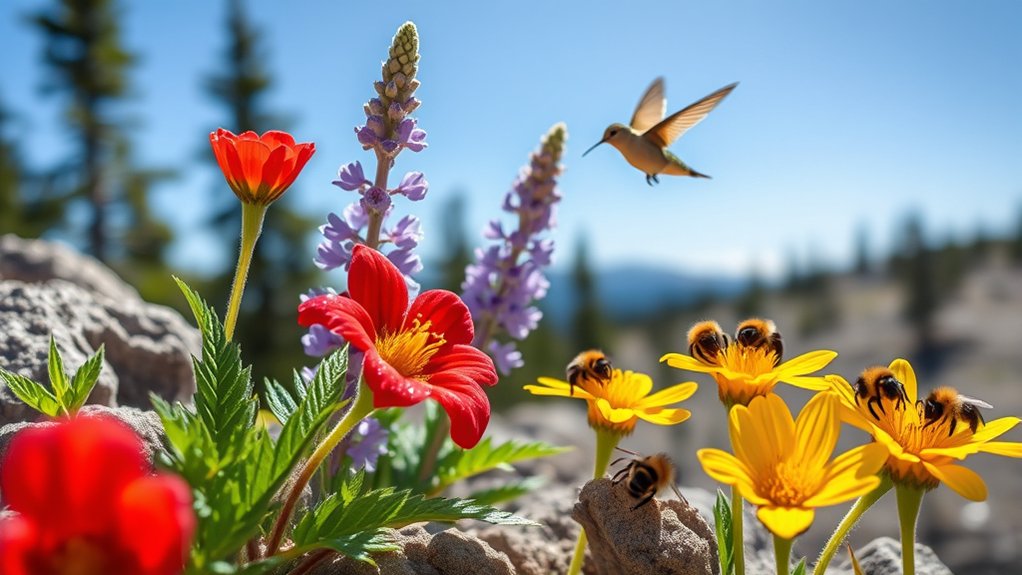
You’ll love planting Bee Balm, Firecracker Penstemon, and Showy Goldeneye to attract both bees and hummingbirds in the Rockies. Bee Balm provides abundant nectar for bees, while Firecracker Penstemon’s tubular flowers draw hummingbirds with their rich nectar.
Showy Goldeneye guarantees pollinators have food late in the season. These native plants thrive in Rocky Mountain conditions and support local ecosystems. Keep exploring to discover how to plan and care for a vibrant pollinator-friendly garden.
Top Native Plants That Bees Love in the Rockies
If you want to support local pollinators, planting native Rocky Mountain species is a great place to start.
Bee Balm and Wild Bergamot, both aromatic and tall, offer abundant nectar that draws numerous bees to your garden.
Littleflower Penstemon, a low-growing native perennial, creates a nectar-rich mat that’s perfect for native bees.
Showy Goldeneye stands out with its bright golden-yellow blooms, acting as a crucial late-season food source for pollinators.
These pollinator plants thrive in the Rocky Mountains’ unique environment, ensuring your garden flourishes while supporting essential local ecosystems.
Best Native Plants to Attract Hummingbirds in the Rockies
Hummingbirds light up Rocky Mountain gardens with their vibrant presence, and you can attract them by planting native species that provide rich nectar.
Native nectar-rich plants bring the vibrant charm of hummingbirds to Rocky Mountain gardens.
These perennials create a welcoming habitat for hummingbirds, especially at lower elevations, ensuring they visit your garden frequently.
Consider adding these native plants that attract hummingbirds in the Rockies:
- Firecracker penstemon: tube-shaped, nectar-rich flowers blooming late spring to early summer
- Sandia coral bells: tiny bell-shaped flowers thriving in shaded, well-drained spots
- Golden columbine: drought-tolerant with showy blooms, ideal for moist soil
- Hummingbird trumpet: vibrant scarlet-orange fast-spreading groundcover for full sun
- Western salvia: long-blooming, nectar-rich flowers perfect for hot, lower-elevation gardens
Planting these will boost your garden’s appeal to hummingbirds and support local ecosystems.
Easy Tips to Choose and Care for Native Pollinator Plants in the Rockies
To create a thriving garden that attracts both bees and hummingbirds, start by choosing native pollinator plants suited to Rocky Mountain conditions.
Focus on perennials that thrive in full sun and well-drained soil, like Penstemon and Bee Balm. These plants are drought-tolerant and low-maintenance.
Group plants by height and color to create a vibrant habitat for butterflies and native bees. This boosts pollinator diversity and makes your garden more lively.
Also, consider your local elevation and soil type to guarantee your plants flourish.
Let some flowers go to seed to support wildlife through winter, and leave stems standing to shelter beneficial insects.
Regularly check your garden’s health and adjust care to keep your native plants strong.
Frequently Asked Questions
Can These Plants Survive Harsh Rocky Mountain Winters?
Yes, these native species show excellent winter hardiness, surviving harsh Rocky Mountain winters when you meet their soil requirements and manage moisture levels properly.
You’ll want to plant them in well-drained soil with adequate sunlight exposure to boost resilience.
Seasonal care, like mulching, helps protect roots during freezing temperatures. Plus, using companion planting enhances their survival by creating a microclimate.
With the right attention, these plants will thrive year after year.
How Do I Prevent Pests Without Harming Pollinators?
You can prevent pests without harming pollinators by using natural pest control and organic gardening methods.
Introduce beneficial insects like ladybugs to keep pests in check.
Practice companion planting with pest resistant varieties to naturally repel unwanted bugs.
Use eco friendly repellents such as neem oil, and prioritize habitat preservation to support pollinator health.
Regularly monitoring plants helps you act early, reducing the need for harsh treatments that could harm bees and hummingbirds.
Are These Plants Suitable for Container Gardening?
Back in the days of knights and castles, you’d still find these Rocky Mountain plants thriving in containers! Yes, they’re perfect for container gardening.
Use container gardening tips like choosing pots with good drainage and materials that retain moisture yet breathe.
Consider plant size—pick containers 12-18 inches wide for deep roots.
Match soil requirements with well-drained mixes, monitor watering needs carefully, provide ample sunlight exposure, and plan seasonal planting strategies to keep them thriving year-round.
What Time of Day Are Bees and Hummingbirds Most Active?
You’ll notice bees activity patterns peak from mid-morning to late afternoon, especially when temperatures climb above 60°F.
Hummingbirds feeding times tend to be early morning and late afternoon, enjoying cooler hours.
Seasonal variations and weather influence their visits. Cloudy or rainy days reduce activity.
Flower blooming schedules align with these times, so plan your garden maintenance tips accordingly.
For best observation times, focus on sunny afternoons when both pollinators are most active.
Can These Plants Be Used in Urban Rocky Mountain Gardens?
Yes, you can definitely use these plants in urban Rocky Mountain gardens.
By applying urban gardening techniques and focusing on plant selection criteria that prioritize native species benefits, you’ll create pollinator-friendly designs.
Pay attention to soil considerations and water management strategies to guarantee your plants thrive.
Following seasonal planting schedules will maximize blooms and attract bees and hummingbirds, helping you build a vibrant, sustainable urban garden that supports local pollinators effectively.
Conclusion
Now that you know the top native Rocky Mountain plants that attract bees and hummingbirds, imagine your garden buzzing and humming with life. But here’s the secret: choosing the right plants and caring for them properly can reveal a vibrant pollinator paradise right outside your door.
Ready to transform your space and witness nature’s magic up close? The next step is easier than you think, and the rewards will surprise you.