
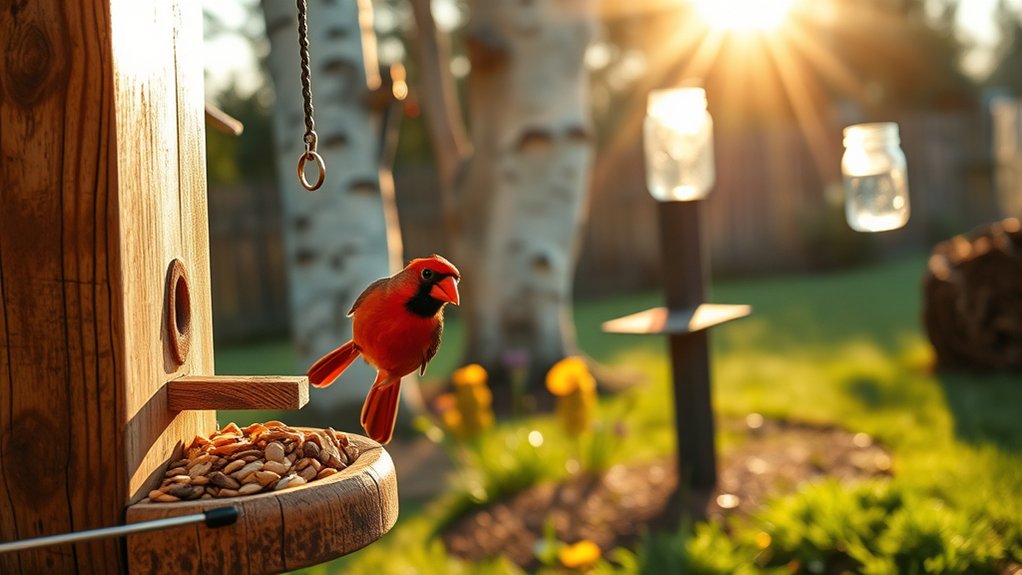
To attract birds to your yard, offer a variety of seeds like black oil sunflower and millet to draw different species. Provide shelter with native plants, birdhouses, and dense shrubs.
Place feeders at various heights, keep them clean, and include fresh, shallow water sources. Manage squirrels with baffles and keep cats indoors for safety.
Incorporate native plants for natural food, and watch for bird health by cleaning feeders. Keep exploring and you’ll discover even more ways to welcome feathered friends.
Choose The Right Food To Attract Different Bird Species
How can you attract a variety of birds to your yard? Start by choosing the right bird seed. Black oil sunflower seed is a favorite among almost all songbirds because of its high oil content and nutritional value.
To appeal to a wider range, include thistle seeds. These attract goldfinches, juncos, and pine siskins. Different species prefer different foods, so offering millet seeds can also bring buntings, towhees, and sparrows. Providing a mix of seeds supports diverse bird species and enhances your birdwatching experience.
Use separate bird feeders to keep these seed types distinct and cater to the unique tastes of each species.
Refill feeders during prime feeding times in the morning and late afternoon to maximize visits.
Choosing seeds compatible with your feeder types ensures better accessibility and attracts more birds.
Create Shelter And Nesting Spots For Birds
Offering a variety of seeds attracts many birds, but creating shelter and nesting spots keeps them coming back year after year. To create shelter and safe nesting environments, focus on providing natural and artificial options that cater to different species’ needs.
Here’s how you can support birds in your yard:
- Plant native plants to supply food, shelter, and nesting materials.
- Install birdhouses at various heights, designed with proper ventilation and drainage.
- Incorporate tall evergreens and dense shrubs to form secure nesting sites.
- Avoid pesticides to protect birds and maintain healthy habitats.
Choose And Place Feeders To Attract Birds
When you choose and place feeders thoughtfully, you’ll attract a wider variety of birds to your yard. Position feeders at different heights and types to appeal to diverse species. Use a mix of seeds like black oil sunflower seeds to attract birds, and keep feeders visible but safe from predators. Using poles with a 5-prong base design can enhance stability and keep your feeders secure in windy conditions.
Clean feeders regularly and consider squirrel-proof designs to protect your investment. Many feeders feature weight-activated perches that close to prevent squirrels from accessing the seed, ensuring more food for the birds. Here’s a quick guide:
| Feeder Type | Bird Species Attracted |
|---|---|
| Ground feeder | Sparrows |
| Tray feeder | Doves |
| Tube feeder | Finches |
| Hopper feeder | Woodpeckers |
| Squirrel-proof | Protects seed from pests |
Provide Clean Water To Attract Birds
Since birds need clean water for drinking and bathing, providing a well-maintained birdbath is essential to attract them to your yard.
You can create an inviting water source by focusing on cleanliness, safety, and movement. Here’s how to make your birdbaths irresistible:
Keep the water source clean by scrubbing and refilling every few days to avoid mold and bacteria.
Regularly clean and refresh birdbath water to prevent mold and harmful bacteria buildup.
Choose shallow birdbaths, no deeper than an inch, so birds can bathe safely.
Place birdbaths in sheltered spots to protect birds from predators and encourage visits.
Add movement with a fountain or dripper, as moving water attracts birds more than still water. Using a water wiggler can help prevent stagnation and keep the water fresh.
Opt for birdbaths made from weather-resistant materials to ensure durability and longevity in your outdoor space.
Create A Natural Buffet With Native Plants
Providing fresh water attracts birds, but food plays an equally important role in keeping them coming back. By planting native plants like beautyberry, viburnum, and Eastern red cedar, you create a natural buffet full of fruits and seeds that local bird species love.
Including a variety of native plants such as hawthorn, serviceberry, and dogwood guarantees food availability across seasons, supporting birds year-round. This diversity not only attracts birds but also promotes biodiversity, benefiting butterflies and caterpillars essential to a balanced ecosystem.
When you focus on native plants, you’re attracting birds adapted to your area, making your yard a thriving bird haven. Creating this natural buffet is key to attracting birds and sustaining their presence in your outdoor space.
Manage Squirrels And Outdoor Predators
Although squirrels and outdoor predators can add charm to your yard, they often interfere with bird feeding and safety.
To keep attracting birds while managing these nuisances, take proactive steps to protect your feeders and the birds themselves. Using a bird feeder pole with a squirrel baffle is an effective way to prevent squirrels from reaching the seed.
Place bird feeders at least 10 feet from tall structures to prevent squirrels from jumping on them.
Use cone-shaped baffles on feeder poles to block squirrels from accessing bird food.
Mount feeders about five feet off the ground to limit squirrel interference and support ground-feeding birds.
Keep your cat indoors to protect vulnerable ground-feeding birds from predation.
Consider using weight-activated squirrel-proof feeders to effectively deter squirrels while allowing birds easy access to seed.
Clean Feeders Regularly And Watch For Bird Illness
To keep your feathered visitors healthy, you’ll need to clean your bird feeders every two weeks to prevent the buildup of harmful bacteria and mold.
Dirty feeders can harbor disease-causing germs, so scrub them thoroughly with a long-handled bottlebrush and dish detergent to remove all seed residue and droppings.
Soak feeders in a 10 percent non-chlorine bleach solution to sterilize, then rinse well. Always watch for bird illness by checking for wet or moldy seed, which can spread sickness.
Empty and clean feeders immediately if seed appears spoiled.
Don’t forget to clean bird baths regularly and rake up spilled seeds and hulls around feeders to deter mold growth and pests.
Using enzyme-based cleaners can enhance the removal of droppings and reduce harmful pathogens effectively.
Frequently Asked Questions
When Is the Best Time of Day to Observe Visiting Birds?
You’ll find the best time to observe birds during morning activity and evening visits when they’re actively feeding.
Birds follow feeding schedules influenced by seasonal patterns, making spring and fall migration times especially lively.
Weather impact also plays a role; overcast or light rain can boost daytime foraging.
How Can I Identify Different Bird Species in My Yard?
You can identify different bird species in your yard by using bird identification tips like observing key features such as bill shape, color patterns, and behaviors.
Start with field guides to recognize common backyard species.
Birdwatching apps like Merlin or Audubon help too, offering visuals and audio of distinguishing bird calls.
Listening closely to these calls sharpens your skills.
Combining these tools with consistent observation makes bird ID easier and more fun for you.
What Are the Signs of a Healthy Bird Population?
You’ll notice a healthy bird population when bird behavior shows variety, like different species feeding and singing.
Habitat diversity attracts many types, supporting nesting success with young fledging regularly.
Food availability is key; consistent visits to feeders indicate your yard meets their needs.
Also, watch migration patterns. An increasing number of seasonal birds returning means your environment supports them well.
These signs together confirm your yard sustains a thriving bird community.
Can Birdwatching Help Control Insect Pests Naturally?
Yes, birdwatching helps natural pest control, promotes ecosystem balance, and supports habitat diversity.
When you observe bird behavior, you’ll notice insect-eating species like wrens and bluebirds actively reduce harmful pests.
By attracting these birds, you encourage them to feed on insects, which lowers pest populations and benefits your garden.
Plus, fostering habitat diversity helps maintain beneficial insects, keeping your yard healthy and thriving naturally.
Should I Provide Supplemental Feeding Year-Round or Seasonally?
You should provide year round feeding to maximize bird feeding benefits, but tailor bird food types seasonally.
Offering high-energy foods like suet in winter helps birds survive cold months, while nectar and fruit attract more species in warmer seasons.
Seasonal feeding meets birds’ changing needs, but consistent year round feeding supports populations better.
Conclusion
So, you want to turn your yard into a five-star bird resort? Just remember: serve the right food, offer cozy digs, and keep the water fresh because birds are apparently way pickier than your in-laws.
Don’t forget to outsmart squirrels and keep feeders spotless, unless you want your feathery guests caught in a soap opera of bird flu and backyard drama.
Follow these rules, and you might just become the neighborhood’s ultimate bird magnet, minus the paparazzi.