
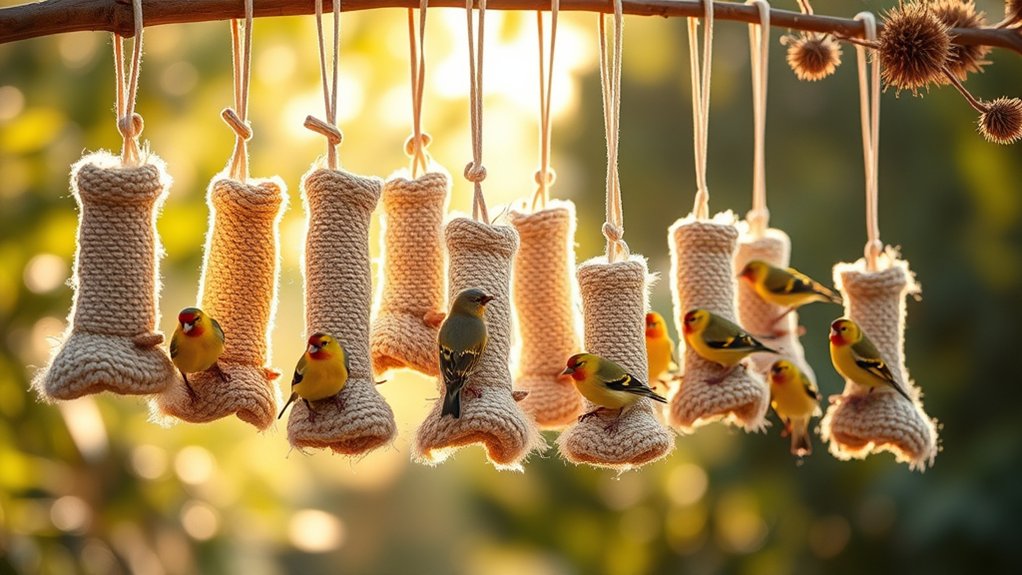
You want sock feeders that attract goldfinches and finches with durable, small-mesh nylon that mimics natural thistle plants. Look for feeders with 1/16 to 1/8 inch holes, good drainage, and secure drawstrings to keep nyjer seeds fresh and dry.
Choose squirrel-resistant designs or place feeders strategically to deter pests. Regular cleaning and fresh seed replacement keep birds coming back. Combine sock feeders with tube types to broaden bird visits.
Keep exploring to find the top options tailored for your backyard birds.
Why Sock Feeders Are Perfect for Goldfinches and Finches
Because sock feeders have small mesh holes that mimic the natural thistle plants Goldfinches cling to, they make feeding easy and enjoyable for these birds.
When you use a sock finch feeder filled with Nyjer seed, you’re offering Goldfinches exactly what they love. This tiny seed is perfect for attracting them in large numbers, especially if you keep it fresh.
You’ll notice these feeders not only welcome goldfinches but can also attract other finch species, making your backyard lively.
Plus, sock feeders are economical and complement other feeder types well. To keep your feathered visitors coming back, always guarantee the Nyjer seed is fresh, because stale seeds can easily deter Goldfinches from feeding at your sock finch feeder.
How Thistle Socks Mimic Natural Finch Feeding Habits
When you use thistle socks, you’re basically giving goldfinches a feeding experience that feels just like what they do in the wild. The small holes let them cling on and pull out seeds just like they’d from natural thistle plants.
It really encourages them to feed actively and naturally.
Plus, this design affects how different birds approach the feeder. It tends to favor finches while keeping larger birds at bay, so the little guys get their fair share.
It’s pretty clever how it mimics their natural habits and keeps the feeding spot just right for them.
Natural Feeding Behavior
Although goldfinches naturally forage on thistle plants, you can attract them to your yard by using thistle socks that replicate this feeding behavior.
Thistle socks are crafted with small holes, allowing finches to cling and pull seeds through just like they do in the wild. This soft mesh material makes it easy for finches to extract seeds, offering a natural and satisfying feeding experience.
Because thistle socks closely mimic their natural habits, finches often prefer them over other feeders, especially where goldfinches are common.
When you choose a well-designed thistle sock, you support the birds’ instinctive feeding behavior, encouraging frequent visits and successful foraging.
Poorly made socks, on the other hand, can deter finches, so quality truly matters in replicating their natural feeding behavior.
Seed Access Mechanics
The key to attracting goldfinches with thistle socks lies in their seed access mechanics.
These socks feature small, properly sized mesh holes that let finches insert their beaks and pull out thistle seed just like they’d in the wild. The soft mesh material offers a comfortable grip, encouraging birds to cling and forage naturally.
When you fill your sock with fresh nyjer seeds, you boost its appeal because goldfinches are picky and avoid stale seeds.
If the sock’s holes are too large or small, birds might get frustrated and look elsewhere for food.
Bird Interaction Patterns
Because thistle socks replicate how goldfinches naturally forage, you’ll notice these birds instinctively cling and pull seeds through the small mesh holes.
Sock feeders mimic the soft, fibrous texture of thistle plants, encouraging finches to engage in their natural feeding behavior.
The carefully sized holes allow the birds to extract nyjer seeds easily, just like in the wild. This interaction pattern makes sock feeders highly attractive to goldfinches, who prefer this hands-on approach over traditional feeders.
When you use fresh, high-quality nyjer seeds, you’ll see finches returning frequently, drawn by the natural experience.
What to Look For When Choosing Sock Feeders
When choosing sock feeders, you’ll want to focus on durability and functionality to attract Goldfinches and other finches effectively.
Look for sock feeders made from strong woven nylon that stand up to outdoor wear and tear. They should have well-sized holes to allow easy access to nyjer seed, the finches’ favorite treat.
Choose sock feeders crafted from durable woven nylon with holes sized perfectly for easy nyjer seed access.
Keep these key features in mind:
- Durable nylon material that resists weather and frequent use
- Properly sized holes for easy seed access
- Good drainage to keep nyjer dry and fresh
Also, select feeders with a convenient drawstring for easy hanging and refilling. This guarantees you can maintain the feeder regularly, encouraging consistent visits from your feathered friends.
Choosing feeders with these qualities helps provide a reliable, attractive food source for Goldfinches and finches alike.
Best Sock Feeders That Keep Squirrels Away
Though sock feeders attract Goldfinches and finches effectively, they can also invite persistent squirrels looking for an easy meal. To keep squirrels away, choose sock feeders designed with durable metal mesh, which resists damage better than plastic alternatives.
The Squirrel Buster Finch Bird Feeder is an excellent example, featuring sturdy construction and a 1.4-quart capacity perfect for Nyjer seed.
You can also place your sock feeders strategically. Elevate them or hang them using wires that limit squirrel access.
Regularly check and maintain your feeders to guarantee they remain intact and don’t become easy targets.
Sock Feeders With the Right Mesh for Nyjer Seeds
You’ll want a sock feeder with mesh holes small enough to hold nyjer seeds securely, but still let goldfinches easily cling and feed.
It’s all about finding that perfect balance.
Plus, choosing a durable material means your feeder will last through all kinds of weather and plenty of use.
This way, your seeds stay fresh and easy for your finch visitors to access.
Optimal Mesh Size
Choosing sock feeders with the right mesh size is essential for attracting goldfinches and other finches to your feeding station. The mesh holes should be small, ideally between 1/16 and 1/8 inch, to allow easy access to nyjer seeds while keeping larger birds away.
This size mimics how goldfinches naturally feed on thistle, enabling them to extract seeds comfortably with their beaks.
To guarantee superior feeding success, focus on:
- Selecting feeders with finely woven mesh suited for nyjer seeds
- Regularly inspecting mesh for wear that could alter hole size
- Replacing feeders when mesh becomes damaged or stretched
Durable Material Choices
The right mesh size sets the foundation, but the material of your sock feeder plays a big role in its durability and effectiveness.
Sock feeders made from durable, woven nylon are perfect for holding nyjer seeds because they last longer and withstand outdoor elements.
This tough material guarantees the mesh keeps its shape, allowing finches and goldfinches easy access to the tiny nyjer seeds while keeping larger birds out.
Plus, a tightly woven fabric mimics natural thistle plants, attracting more birds to your feeder.
Remember, regular cleaning prevents mold and seed spoilage, maintaining the mesh’s functionality and keeping your feathered visitors coming back.
Choosing quality sock feeders with the right nylon mesh assures a reliable, bird-friendly nyjer feeding station.
Affordable Sock Feeders for Attracting Large Finch Flocks
Although attracting large flocks of finches can seem challenging, affordable sock feeders make it easy and effective.
Attracting large finch flocks is simple and affordable with sock feeders designed for Nyjer seed.
These feeders, designed with small holes, let birds cling and pull Nyjer seed naturally, encouraging frequent visits. You don’t need to spend much to support many finches in your backyard.
Consider these budget-friendly sock feeders for your setup:
- Audubon Finch Thistle Sock: holds up to 1 pound of Nyjer seed, perfect for continuous feeding.
- Black Super Jumbo Finch Magic Thistle Sack: offers a larger capacity to attract more finches.
- Regular refills with fresh Nyjer seed: essential to keep birds coming back and avoid stale seeds.
With these options, you can enjoy a lively finch flock without overspending.
How Seed Quality Affects Finch Visits to Sock Feeders
You’ll notice finches really prefer sock feeders filled with fresh, high-quality seeds rather than stale ones.
It makes a big difference when you choose the right seed, like fresh nyjer.
If the seeds start to go bad, finches will quickly avoid your feeder.
Importance Of Freshness
When you keep sock feeders stocked with fresh nyjer seeds, finches and goldfinches are far more likely to visit regularly.
Birds can detect stale or poor-quality seeds and will avoid feeding from your nyjer sock if it isn’t fresh.
To maintain their interest, you need to replenish the feeder often with fresh seeds. This creates a welcoming environment that encourages frequent visits and supports a healthier feeding routine.
Keep these tips in mind for peak freshness:
- Check your sock feeder regularly to remove old or damp seeds
- Store nyjer seeds in a cool, dry place to preserve quality
- Refill with fresh seeds promptly to avoid deterring finches
Seed Selection Impact
Since goldfinches and other finches are highly selective, the quality of seeds you offer plays a major role in attracting them to your sock feeders. Fresh, high-quality seed, especially nyjer, is vital because finches can easily detect stale or low-grade seed and avoid feeding.
Using premium nyjer seeds guarantees your sock feeders remain a favorite spot for these birds, encouraging frequent visits.
| Seed Type | Finch Preference |
|---|---|
| Fresh Nyjer | Highly favored |
| Stale Seed | Largely avoided |
| Mixed Quality | Less attractive |
Regularly refilling your sock feeders with fresh nyjer boosts feeding success and keeps your finch population steady. Choose quality seed to maximize your sock feeder’s appeal.
Effects Of Staleness
Although finches are drawn to sock feeders by the promise of fresh seeds, they quickly lose interest if the seed quality drops.
Staleness in nyjer seeds can deter goldfinches and other finch species, causing them to avoid your feeder altogether.
You’ll notice fewer visits when seeds aren’t fresh because these birds are particularly selective, much like you prefer fresh food.
To keep the finches coming back, regularly check and refill your sock feeders with fresh nyjer.
Remember, birds can detect stale seeds and will seek better options if your feeder isn’t appealing.
Key points to remember:
- Staleness reduces feeder visits by finches.
- Fresh nyjer is essential for attracting goldfinches.
- Regular seed replacement boosts feeding activity and bird presence.
Tips for Cleaning and Maintaining Sock Feeders
To keep your sock feeders inviting and safe for goldfinches and finches, you should clean them regularly with a mild soap and water solution.
Cleaning sock feeders prevents mold and disease, creating a healthy environment for your birds.
When maintaining sock feeders, inspect them often for damage or wear.
Replace any with compromised mesh to guarantee birds can access the seeds easily.
Also, check seed freshness frequently; stale seeds can deter birds and reduce your feeder’s effectiveness.
Store feeders in a dry place during bad weather to avoid seed spoilage and protect the feeder’s material.
Finally, watch local feeding patterns and adjust seed types and refilling schedules accordingly.
These simple steps will keep your sock feeders functional and attractive to goldfinches and finches.
Which Sock Feeders Work Best in Wet or Humid Conditions
When you choose sock feeders for wet or humid conditions, durability and moisture resistance become vital factors. Moisture can cause seeds to spoil quickly and promote mold growth, so selecting the right materials is imperative.
Opt for thistle socks made from woven nylon that feature proper drainage holes to keep seeds dry and allow airflow. A drawstring closure can also help reduce seed exposure to rain, maintaining freshness longer.
Remember to check and replace seeds regularly to guarantee your finches have safe feeding options.
Key features to look for in sock feeders for moist environments include:
- Woven nylon construction with drainage holes
- Drawstring closures to limit moisture exposure
- Easy-to-clean designs for regular maintenance
Combining Sock Feeders With Tube Feeders for More Birds
Ensuring your sock feeders stay dry and fresh sets the stage for attracting even more birds by combining them with tube feeders. This combo creates a diverse feeding environment that appeals to a wider variety of finches, including Goldfinches and House Finches.
Sock feeders excel with Nyjer seed, while tube feeders handle a broader seed range, boosting bird traffic. Placing sock feeders near tube feeders increases visibility and encourages birds to explore both.
| Feature | Benefit |
|---|---|
| Sock Feeders | Ideal for Nyjer seed |
| Tube Feeders | Accommodate mixed seeds |
| Placement | Boosts bird accessibility |
| Observation | Reveals feeding preferences |
Using both lets you cater to different tastes, maximizing your backyard’s feathered visitors. For optimal results, consider feeders with transparent compartments to easily monitor seed levels and maintain freshness.
Frequently Asked Questions
Can Sock Feeders Be Used for Birds Other Than Finches?
Yes, you can use sock feeders for alternative bird species beyond finches.
While they’re designed mainly for finches, their feeder versatility allows smaller birds like chickadees, sparrows, titmice, and nuthatches to visit if they find the seeds appealing.
Keep in mind, larger birds usually don’t use sock feeders, but the mesh design helps deter them.
How Long Do Sock Feeders Typically Last Before Replacement?
Sock feeders typically last from one season up to a few years before you need replacement.
The replacement frequency depends largely on durability factors like the material quality. For example, nylon lasts longer than other materials.
If your feeder faces heavy rain or harsh weather, it’ll wear out faster.
Keep an eye on fraying or mold, and clean it regularly to extend its life.
When you notice significant wear, it’s time to replace it to keep attracting birds.
Are Sock Feeders Safe for Baby Finches and Fledglings?
Yes, sock feeders are safe for baby finches and fledglings.
You’ll find that sock feeder benefits include providing a soft, secure grip that’s gentle on their tiny feet, which supports baby finch safety.
These feeders mimic natural feeding, helping young birds learn to forage alongside adults.
Just make sure you keep the feeders clean to prevent mold and watch for sick birds, so your fledglings stay healthy and confident while feeding.
What Is the Best Way to Hang Sock Feeders Securely?
Think of hanging techniques like anchoring a boat in a storm. You need solid support for feeder stability.
You should use a sturdy hook or branch that can hold the feeder’s weight and resist wind.
Hang the feeder 5 to 6 feet high to keep it safe from predators. Secure it with a strong wire or cable to prevent squirrels from stealing the seeds.
Regularly check and tighten all parts to maintain stability and keep your feeder safe.
Can Sock Feeders Be Painted or Customized Without Harming Birds?
Yes, you can customize sock feeders with custom paint options, but you need to prioritize feeder material safety.
Use only non-toxic, bird-safe paints that won’t harm the birds. Make certain your designs don’t block mesh holes or create sharp edges that could injure them.
Also, avoid sealing moisture drainage points to prevent mold.
Keep checking your feeder’s condition regularly to guarantee it stays safe and functional for your feathered visitors.
Conclusion
Choosing the right sock feeder for your finches and goldfinches means more than just attracting birds. It’s about creating a clean, convenient, and enchanting corner of your garden.
With the perfect mesh, squirrel safeguards, and superior seed support, you’ll spark spectacular sightings. Keep your feeders fresh and functioning in all weather, and combine styles for a bustling bird buffet.
Start selecting smartly, and soon you’ll savor splendid scenes of your feathered friends feeding freely.