
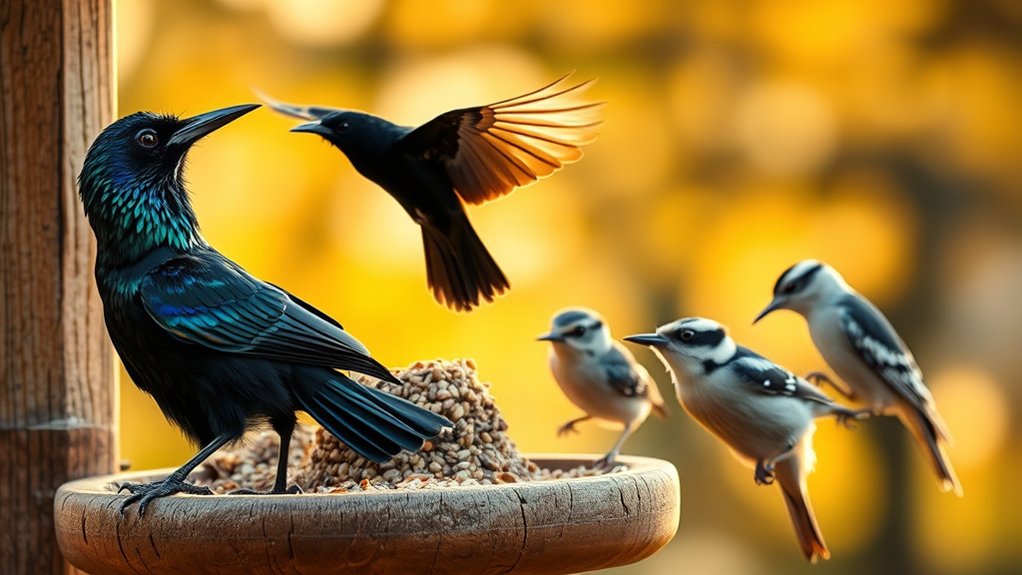
You can stop blackbirds and grackles from taking over your feeders by using cage-style or weight-activated feeders that block larger birds while welcoming smaller ones. Switch to birdseed like safflower or Nyjer, which these big birds dislike.
Remove perches and add baffles to limit landing spots and access. Temporarily taking down feeders can help break their habits.
If you want to create a peaceful feeding space and keep your favorite smaller birds around longer, you can explore more targeted strategies.
Why Blackbirds and Grackles Take Over Feeders
Because blackbirds and grackles are opportunistic feeders, they often overwhelm smaller birds at feeders by quickly consuming available food.
When you set out feeders with cheap wild birdseed mixes, especially those containing cracked corn or millet, you’re basically inviting these birds in big flocks.
Grackles, in particular, are resourceful and messy feeders, gobbling up food fast and leaving less for other species.
Grackles are fast, messy eaters that quickly consume food, leaving little for other birds.
Blackbirds and grackles don’t hesitate to dominate feeding spots, using their numbers and aggressive behavior to intimidate smaller birds.
Since grackles and other non-native species like starlings aren’t protected by law, their populations can grow unchecked, making it even harder for you to keep feeders friendly for all birds.
Understanding this helps you see why they take over feeders so easily.
How Cage-Style Feeders Keep Blackbirds and Grackles Out
If you want to keep blackbirds and grackles from overwhelming your feeders, switching to cage-style feeders can make a big difference.
These feeders feature a metal cage that lets smaller birds in while blocking larger birds like grackles. To get the best results, the cage should have at least four inches of space from the feeder.
Here’s why cage-style feeders work well:
- The cage size restricts access to smaller birds, keeping grackles out. Many cage-style feeders are designed with heavy-duty metal construction to withstand persistent birds and weather conditions.
- They deter other aggressive birds like starlings and house sparrows.
- You save on bird food since larger, messier birds can’t steal seeds meant for smaller birds.
Just remember to clean and check the cage regularly to keep it effective. Using durable materials in the feeder construction can also help maintain its effectiveness against persistent birds and weather conditions.
Using Weight-Activated Feeders to Exclude Larger Birds
You can use weight-activated feeders to keep larger birds like blackbirds and grackles away from your food.
These feeders work by closing their ports whenever a heavy bird lands, so only smaller birds can feed without any interruption. It’s pretty clever because by setting the right weight limit, you’re protecting your favorite songbirds and cutting down on seed waste.
This way, the little guys get their chance to enjoy the food without competition from the bigger birds.
How Weight-Activated Feeders Work
When a heavier bird like a blackbird or grackle lands on a weight-activated feeder, it triggers a mechanism that closes access ports. This keeps the food reserved for smaller birds.
These clever feeders help you keep larger birds away while welcoming desirable birds. Here’s how they work:
- The feeder senses the bird’s weight and activates a cover or barrier if the bird is too heavy.
- This mechanism blocks the food, preventing larger birds from feeding.
- Many feeders let you adjust sensitivity to target specific bird sizes, fine-tuning which visitors get access.
Benefits For Smaller Birds
Weight-activated feeders do more than just keep larger birds like blackbirds and grackles away. They create a welcoming space for smaller birds to feed peacefully.
When these feeders close feeding ports under heavier weight, they prevent aggressive behavior from dominant species. This gives smaller birds like finches and sparrows uninterrupted access to food.
It also reduces food waste caused by larger birds scattering seeds and helps maintain a cleaner feeding area. By using weight-activated feeders, you encourage a diverse range of smaller birds to visit your yard regularly.
This enhances your birdwatching experience. These feeders help balance the feeding environment, ensuring smaller birds can thrive without competing with aggressive larger birds for resources.
Switching to Birdseed Types That Blackbirds and Grackles Avoid
Although blackbirds and grackles often dominate feeders, switching to certain birdseed types can deter them effectively.
You can choose seed types that these aggressive birds tend to avoid, ensuring smaller songbirds get the spotlight. Here are three options to try:
- Safflower seeds have thick shells that blackbirds and grackles dislike, making them a great choice to keep feeders less crowded by these birds. They are also known for their high energy content which benefits smaller birds.
- Nyjer (thistle) seeds attract finches and other small birds but usually repel larger blackbirds and grackles.
- Whole peanuts are harder for grackles to handle because of their softer bills, reducing their access to the feeder.
Switching to these seed types helps you maintain a peaceful feeder environment and enjoy watching your favorite smaller birds without competition. Additionally, using birdseed blends specially formulated to attract specific species can further minimize unwanted visitors.
Removing Perches to Discourage Blackbirds and Grackles
Switching to seed types that blackbirds and grackles avoid can help, but adjusting your feeder’s design plays an important role too.
Removing perches is a simple yet effective way to discourage blackbirds and grackles since these larger birds need stable landing spots to feed.
Feeders designed without perches or with very short ones limit their access while still welcoming smaller birds.
Tube feeders enclosed in wire mesh or cage designs further prevent blackbirds and grackles from landing or reaching food directly.
You can also raise feeders to heights that make it harder for these bigger birds to settle.
Keeping Feeding Areas Clean to Limit Food for Blackbirds and Grackles
When you keep feeding areas clean, you limit leftover seeds that attract blackbirds and grackles. These birds often gather under feeders to scavenge.
Cleaning feeding areas regularly reduces spilled seed that aggressive seed eaters crave.
Regularly cleaning feeding areas helps minimize spilled seed, keeping aggressive birds like grackles at bay.
To discourage grackles and other large birds, try these steps:
- Use trays or seed hoops to catch fallen seeds and prevent ground access.
- Raise feeder heights to discourage blackbirds from feeding underneath.
- Remove old or spilled seed promptly to maintain a tidy environment.
Using Baffles and Physical Deterrents to Keep Blackbirds and Grackles Away
If you want to keep blackbirds and grackles away, picking the right baffle design really helps.
Dome-shaped or pole-mounted baffles are great because they make it hard for those bigger birds to get to your feeders.
Plus, when you put these physical deterrents in smart spots, smaller birds can enjoy the food without any problems.
Effective Baffle Designs
Although blackbirds and grackles can dominate your feeders, you can keep them at bay by installing effective baffles.
These physical deterrents are designed to block larger birds while still welcoming smaller ones like finches and chickadees.
Here are three baffle designs you should consider:
- Dome-shaped baffles placed above feeders prevent blackbirds and starlings from reaching the food, allowing smaller birds easy access.
- Cylindrical baffles installed on feeder poles stop larger birds from landing, reducing their ability to claim your feeders.
- Weight-activated baffles close feeding ports when heavy birds like grackles or blackbirds land, ensuring only lighter birds can feed.
Using these baffles effectively controls the presence of aggressive birds, keeping your feeders for the smaller, friendlier visitors you want to attract.
Placement Tips For Baffles
Since blackbirds and grackles are less likely to fly straight up, positioning baffles 5 to 8 feet above the ground markedly reduces their access to feeders.
Make sure your baffles are at least 18 inches wide to stop larger birds like grackles from flying around them.
Dome-shaped baffles work best above feeders because grackles often dive-bomb from above.
Install baffles on smooth poles without perches, so blackbirds can’t land nearby. This setup forces these aggressive birds to give up and fly away.
By carefully placing your baffles, you create a physical barrier that keeps blackbirds from dominating your feeders and lets smaller birds feed peacefully.
Proper placement is key to making baffles an effective part of your bird-feeding strategy.
Combining Deterrents Strategically
Baffles provide a strong physical barrier, but combining them with other deterrents enhances your success in keeping blackbirds and grackles away.
To maximize effectiveness, consider these strategies:
- Use a dome-shaped baffle above your feeder and install a cage around it. This limits access to larger birds while smaller ones feed freely.
- Choose types of feeders like weight-activated models that close feeding ports when heavy birds land, ensuring only lighter songbirds get food.
- Fill your feeders with safflower seeds, which grackles and blackbirds dislike, reducing their interest in your feeders.
Additionally, incorporating reflective bird deterrent devices such as pinwheels or flash tapes near your feeding area can create visual disturbances that discourage these birds from settling.
Setting Up Separate Feeders Just for Smaller Birds
When you set up separate feeders designed specifically for smaller birds, you can keep larger, more aggressive species like blackbirds and grackles at bay.
Choose bird feeders with small openings or cages that allow small birds like finches and sparrows to feed while blocking bigger intruders. Using feeders mounted on heavy-duty poles with squirrel baffles can also help reduce unwanted visitors.
Fill these feeders with safflower seed, a favorite for small birds but usually ignored by grackles.
Position the feeders in sheltered spots or hang them from branches to limit access from larger birds that prefer open areas.
You might also try upside-down suet feeders, which smaller birds can use but deter blackbirds and starlings.
Regularly check and adjust the seed types to match the preferences of the small birds you want, minimizing competition and keeping your feeders peaceful.
For enhanced birdwatching, consider using a smart bird feeder with AI-powered identification to monitor the types visiting your feeders and adjust your setup accordingly.
Take Feeders Down Temporarily to Break Blackbird and Grackle Habits
If you want to discourage blackbirds and grackles from dominating your feeders, try taking them down for a couple of weeks. This temporary removal breaks their feeding habits and encourages them to find other food sources.
During this break, be sure to clean up any leftover seeds on the ground to avoid attracting these larger birds.
Clean up leftover seeds during the break to prevent attracting blackbirds and grackles back to your yard.
Here’s how to make the most of this strategy:
- Remove all feeders and clean the feeding area thoroughly.
- Wait at least two weeks to let blackbirds and grackles lose interest.
- Reintroduce feeders slowly, monitoring activity and giving smaller birds first access.
Combining Methods for Long-Term Blackbird and Grackle Control
Although single strategies can help reduce blackbird and grackle presence at your feeders, combining multiple methods offers more effective, lasting control.
Use cage-style feeders with at least four inches of clearance, allowing small birds in while blocking larger pests.
Incorporate weight-activated feeders that close ports when heavy birds land, denying blackbirds access.
Offer only safflower seeds in your main feeders since grackles typically avoid them, attracting preferred songbirds instead.
Regularly clean feeding areas and remove fallen seeds to reduce food availability that draws these aggressive birds.
You can also set up a separate feeding station with less desirable foods like cracked corn to divert blackbirds and grackles away from primary feeders.
Using these techniques together helps maintain a healthy, bird-friendly environment long term.
Frequently Asked Questions
Can Blackbirds and Grackles Harm Smaller Birds at Feeders?
Yes, blackbird aggression and grackle competition can definitely harm smaller birds at feeders.
When blackbirds and grackles show feeder dominance, they often outcompete timid species like finches and sparrows, limiting their access to food.
You’ll notice these larger birds quickly consuming seeds and creating a stressful environment for smaller birds.
To protect them, you’ll want to manage feeder setup and seed choices to reduce blackbird aggression and grackle competition.
Do Blackbirds and Grackles Carry Diseases That Affect Backyard Birds?
Yes, blackbirds and grackles can carry diseases that affect backyard birds. You should be aware that disease transmission like avian pox and salmonella is common among these birds.
To protect bird health, you need to prioritize feeder hygiene by cleaning feeders regularly and keeping the feeding area tidy.
This helps reduce the chances of disease spreading and keeps your backyard birds safer and healthier.
What Time of Day Are Blackbirds and Grackles Most Active at Feeders?
Blackbirds and grackles swarm feeders like clockwork during morning feeding and evening activity, making those hours their prime time.
You’ll notice their presence peaks early and late in the day, driven by seasonal patterns that push them to fuel up before and after the sun’s high blaze.
If you want to avoid their takeover, plan your feeding when their hustle wanes, letting smaller birds enjoy the feast without competition.
Are There Natural Predators to Help Control Blackbird and Grackle Populations?
Yes, natural predators play an essential role in bird control and maintaining ecosystem balance. Raptors like hawks, owls, and American kestrels hunt blackbirds and grackles, helping to curb their populations.
Small mammals such as foxes and weasels also target fledglings. By encouraging these predators through habitat adjustments, you support a natural way to manage blackbird and grackle numbers.
Just keep in mind their adaptability means populations can rebound quickly.
How Can I Protect My Garden Plants From Blackbirds and Grackles?
You can protect your garden plants by using garden netting solutions, which block blackbirds and grackles from reaching your crops.
Did you know these birds can consume up to 40% of seeds and fruits in a garden?
Plant repellent plants like marigolds or lavender to keep them away with strong scents.
Combine this with scare tactics, such as reflective objects or noise makers, to create an unfriendly environment they’ll avoid.
Conclusion
If you want to keep blackbirds and grackles from hogging your feeders, it’s best to mix and match these strategies. Don’t put all your eggs in one basket. Try cage-style feeders, weight-activated options, and seed types they don’t like.
Removing perches and using baffles can also help, plus setting up special spots for smaller birds. Sometimes, taking feeders down for a bit breaks their bad habits. With a little patience, you’ll have your feeders back to welcoming the birds you want.