
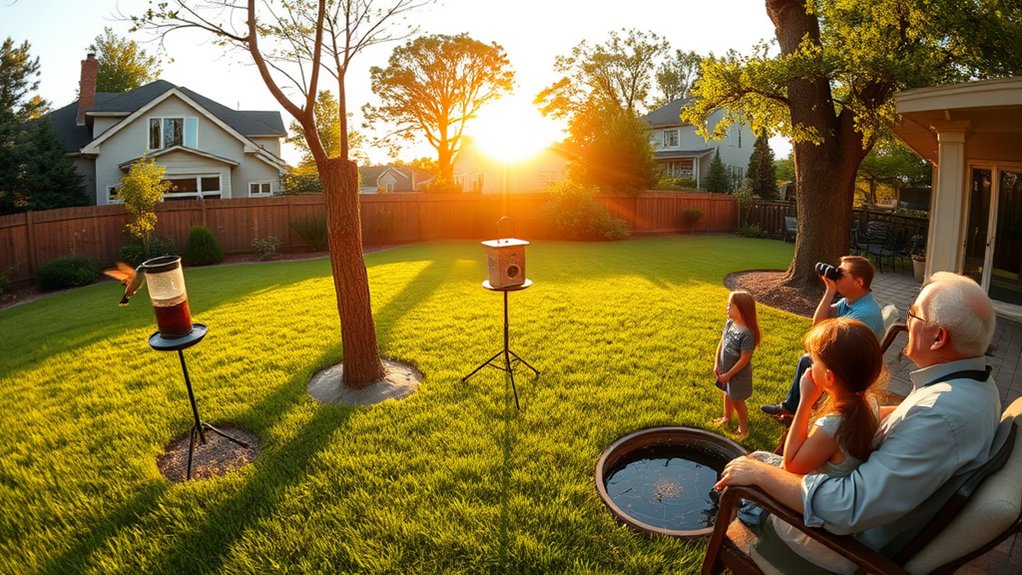
Try boosting your backyard birding this summer with five fun challenges. First, create a bingo card featuring local birds to spot.
Next, join a weekly species counting challenge to track sightings. Then, enter a photo contest to capture unique visitors.
You can also sketch birds using zoom techniques to sharpen your observation. Finally, participate in citizen science projects to help conservation efforts.
Keep exploring these ideas, and you’ll discover even more ways to engage with your feathered friends.
Create a Backyard Bird Identification Bingo Card
If you’re looking for a fun way to engage with local wildlife this summer, create a Backyard Bird Identification Bingo Card by listing common birds in your area.
Start by using field guides or birding apps to identify backyard bird species you’re likely to see. Using a window bird feeder with a clear design can help you observe birds closely while staying indoors.
Use field guides or birding apps to discover the backyard birds you’re most likely to encounter.
Each square on the bingo card can feature a different bird, complete with a small image or description to help you recognize new birds. As you spot these birds, mark them off, turning birdwatching into an exciting game.
This method sharpens your observation skills and deepens your connection with nature. Plus, it’s perfect for birders at any level.
Sharing your completed bingo cards with friends can spark friendly competition and encourage everyone to discover more about the fascinating backyard birds around them.
To attract a wider variety of birds to your yard, consider using hanging bird feeders that accommodate diverse species and feeding habits.
Host a Weekly Backyard Birding Species Counting Challenge
When you host a weekly backyard birding species counting challenge, you actively engage with local wildlife while sharpening your observation skills. This activity encourages you to identify as many birds as possible year round, using a field guide to boost confidence.
Track your sightings on a shared platform to connect with neighbors and spark friendly competition. You can also set weekly themes to keep the challenge fresh and educational.
Here’s how to get started:
- Use a checklist of common local birds for easy reference
- Count and record species weekly to notice seasonal changes
- Focus on different behaviors or migratory patterns each week
- Share results to build a supportive birding community
- Contribute data to citizen science to help track bird populations
This challenge makes backyard birding fun and meaningful.
Host a Backyard Birding Photo Contest to Celebrate Unique Visitors
Anyone can spark excitement in their neighborhood by hosting a backyard birding photo contest that highlights the unique visitors to your yard. This outdoor activity encourages participants to capture images of different species visiting their yards, boosting community engagement and creativity. Many bird photographers use cameras with high-resolution sensors to ensure every detail is captured vividly.
Set clear categories like “Most Colorful Bird,” “Best Action Shot,” or “Cutest Bird” to inspire a variety of photographic styles. Promote the contest through social media or community boards, allowing everyone to share their photos and stories.
Create fun categories like “Best Action Shot” and share entries widely to spark community participation and storytelling.
Encourage participants to include details about the species and behavior observed to deepen everyone’s understanding of local birds.
Offering small prizes like birding books or feeder supplies can motivate your neighbors and celebrate the joy of backyard birding together. Using lenses with manual focus advantages can help photographers capture sharper, more detailed images of fast-moving birds for the contest.
Try Backyard Birding Sketches Using Zoom In and Zoom Out Techniques
Two simple techniques, zooming in and zooming out, can transform your backyard bird sketches by helping you capture both intricate details and the full scene.
When observing the birds around your yard, start by focusing closely on features like feathers or beaks. Then, step back to include the bird’s environment, revealing its place in local wildlife. This approach deepens your observation and artistic skills.
Try these tips to enhance your sketches:
- Highlight textures such as wing patterns or feet.
- Observe bird behavior closely.
- Capture the interaction between yard birds and their habitat.
- Reflect on the diversity and beauty of local species.
- Share your work with #CreativeSummerChallenge24 to inspire others.
Join Backyard Birding Citizen Science to Help Conservation
After sharpening your observation skills through sketching, you can put that attention to work by joining backyard birding citizen science projects.
By participating in initiatives like the Great Backyard Bird Count, you contribute valuable data on local bird populations that helps researchers track trends and changes.
Your observations provide essential insights into how climate change and habitat loss affect wildlife, guiding effective conservation strategies.
Citizen science makes it easy for you to engage in meaningful conservation efforts without needing special training.
Plus, by taking part, you deepen your understanding of local ecosystems and the importance of preserving habitats.
Together, the data collected by backyard birders like you informs organizations and policymakers, leading to stronger actions that protect birds and their environments for future generations.
Frequently Asked Questions
What Types of Bird Feeders Attract the Most Species in Summer?
You’ll attract the most species in summer by using a mix of feeder styles like tube, platform, and suet feeders.
Offering various seed types such as sunflower seeds, nyjer, and millet draws different birds.
Incorporate attracting techniques like adding fresh water nearby and placing feeders near shrubs or trees for cover.
Changing seed types regularly also keeps birds interested.
This combo guarantees a lively, diverse backyard bird scene all summer long.
How Can I Protect Birds From Predators During Backyard Challenges?
You can protect birds from predators by focusing on habitat enhancement.
Plant dense shrubs and trees to provide natural cover.
Use predator deterrents like baffles on poles and reflective objects to scare away cats and hawks.
Installing a sturdy bird shelter gives birds a safe retreat during danger.
What Are the Best Times of Day for Backyard Birding?
The best times for backyard birding are the morning hours and early evening activity. Birds are most active during these cooler parts of the day, making it easier for you to spot a variety of species.
Keep in mind that seasonal patterns affect when birds feed and sing, so adjusting your birding times based on the season will boost your chances.
Early mornings in spring and summer are especially lively for birdwatching.
How Do I Identify Bird Calls and Songs Effectively?
Think of yourself as a Victorian naturalist with a smartphone. Use audio resources like apps or online libraries to learn bird call patterns.
Start by focusing on one bird’s song, then mimic it to sharpen your song recognition skills. Record calls you hear, play them back, and compare with known examples.
With practice, your ears will pick up subtle differences, making bird call identification easier and more enjoyable right in your backyard.
What Equipment Is Recommended for Beginner Bird Photographers?
You’ll want a camera with zoom or telephoto lenses to capture birds without disturbing them.
A sturdy tripod helps keep your shots steady, especially for longer lenses or low light.
For editing, user-friendly software like Lightroom or Snapseed lets you enhance colors and crop images easily.
These tools together make your bird photos sharper and more vibrant, helping you improve quickly as a beginner bird photographer.
Conclusion
Get ready to spot, count, and celebrate your backyard birds like never before. Create your bingo card, join the weekly challenges, snap photos that capture their beauty, sketch their delicate details, and contribute to citizen science.
You’ll connect with nature, sharpen your observation skills, and support conservation, all while having fun. So, grab your binoculars, open your eyes, and let your backyard birding adventure begin today!