
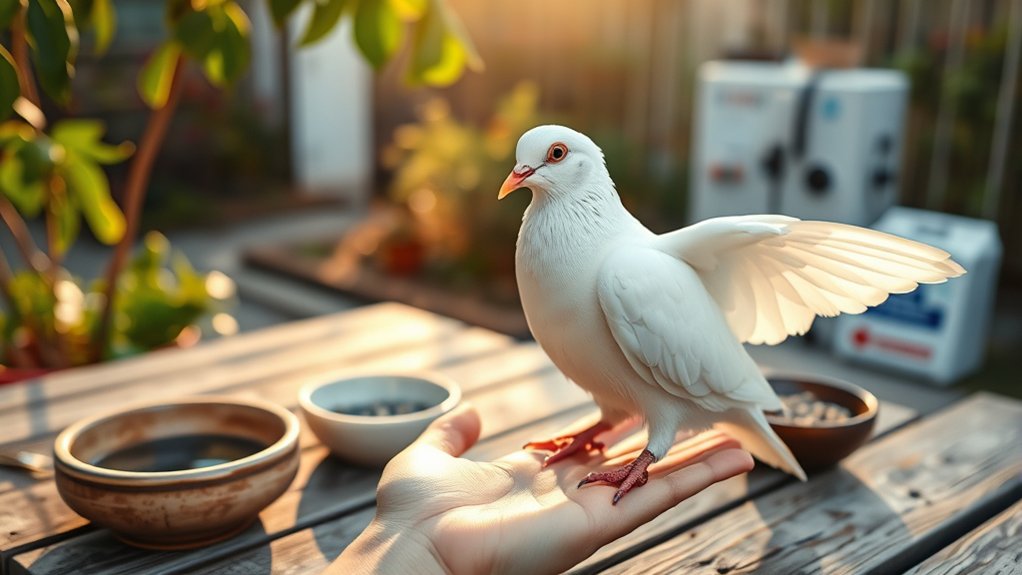
To keep your dove healthy, provide a spacious, safe cage with proper perches in a warm, well-lit spot. Feed a balanced diet of pellets, fresh veggies, and limited seeds.
Monitor their weight and watch for signs of illness. Prevent parasites with regular treatments and keep the cage clean.
Guarantee your dove gets social interaction and mental stimulation with toys and companionship. By following these key steps, you can create a thriving environment to meet all your dove’s needs.
Set Up a Safe, Spacious Habitat for Your Pet Dove
When setting up a habitat for your pet dove, make sure it measures at least 24” long by 36” wide and 24” high, with a height of 30 inches to allow room for flying and exercise.
This habitat size suits a pair of doves comfortably.
Use metal bars spaced no more than ⅜ inch apart, ensuring the cage is free from toxic materials to keep your doves safe.
Choose metal bars with spacing under ⅜ inch and non-toxic materials to ensure dove safety.
Place the habitat in a well-lit, draft-free area with an ambient temperature between 65°F and 80°F.
Provide perches that are at least 5 inches long and ½ inch in diameter to support their foot health.
Regularly clean and disinfect the habitat, using paper liners in trays to keep droppings away from their feet and prevent health issues.
Provide a Balanced Diet With Pellets, Seeds, and Fresh Produce
To keep your pet dove healthy, you’ll want to provide a balanced diet that includes mainly high-quality pelleted food, which should make up about 60-70% of their daily intake.
Pelleted food delivers essential nutrients your dove needs.
Alongside this, offer fresh vegetables like chopped greens, sweet potatoes, squash, and carrots to supply additional vitamins and minerals.
Seeds can be given but should stay under 10% of the diet to avoid nutritional deficiencies.
Always provide clean water for hydration and overall health.
Be cautious to avoid toxic foods such as avocado, chocolate, caffeine, and fruit seeds, which can cause serious health issues.
Keep Your Dove’s Feathers Clean and Healthy
To keep your dove’s feathers clean and healthy, it’s a good idea to encourage regular bathing. You can do this by providing a shallow birdbath or using a mister. These options let your dove freshen up and stay comfortable.
You might also consider adding avian bath salts. They can really improve feather condition and even help prevent parasites.
Just be sure the bathing area is safe and cozy, so your dove can groom without feeling stressed.
Importance of Regular Bathing
Although doves groom themselves regularly, you should provide opportunities for them to bathe often to keep their feathers clean and healthy.
Regular bathing plays an essential role in maintaining feather quality by removing dirt, dust, and parasites that can affect your dove’s health. It also supports healthy skin and helps regulate body temperature, contributing to your bird’s overall well-being.
Incorporating bathing into your dove’s routine guarantees good hygiene and prevents feather-related issues.
Using avian bath salts can enhance this experience by keeping feathers soft and pleasant. Encouraging your dove to bathe regularly not only promotes a vibrant appearance but also helps keep external parasites at bay.
Best Bathing Techniques
Several effective bathing techniques can keep your dove’s feathers clean and healthy. Provide a shallow birdbath filled with fresh water or gently mist your dove with a plant mister to encourage bathing.
Add avian bath salts occasionally to enhance feather quality and keep their plumage soft. Offer bathing opportunities two to three times a week, ensuring the water stays clean to prevent contamination.
Always monitor your dove during bathing to keep them safe and comfortable, as deep water poses drowning risks.
After bathing, dry your dove thoroughly and avoid exposing them to drafts or cold temperatures, which can cause health issues.
Benefits of Avian Bath Salts
Avian bath salts offer a simple way to keep your dove’s feathers soft, clean, and free from parasites. Using them regularly can prevent dry skin and feather problems, boosting your bird’s overall health. These salts encourage more frequent bathing, which promotes better feather maintenance and overall hygiene.
Plus, the bathing experience provides mental stimulation that helps enhance well-being. Always follow the manufacturer’s instructions to guarantee safe use.
| Benefit | Description |
|---|---|
| Feather Care | Keeps feathers clean and soft |
| Health Prevention | Prevents dry skin and parasites |
| Mental Stimulation | Enhances dove’s well-being |
Incorporate avian bath salts into your dove’s routine to maintain clean feathers and promote lasting health.
Monitor Your Dove’s Weight and Health Signs
Because doves can hide illness well, you should regularly monitor their weight and watch for health signs to catch problems early.
Use a gram scale to track weight changes, as sudden loss or gain can signal health issues.
Tracking weight with a gram scale helps detect sudden changes indicating potential health problems.
Observe if your dove remains active, sociable, and maintains normal eating and drinking habits. These are key signs of good health.
Check for bright eyes, dry nares, smooth beaks, clean vents, and well-groomed feathers.
If you notice unformed stool or any respiratory distress, consult a veterinarian promptly.
Staying attentive to these health signs helps you address problems quickly, ensuring your dove stays happy and healthy.
Monitoring weight and behavior regularly is essential for early detection and effective care.
Prevent Parasites and Canker in Your Pet Dove
To keep your pet dove healthy, you need to prevent parasites and canker through regular treatments and a clean environment.
Use Moxidectin Plus three times a year to effectively prevent parasites such as worms, mites, and biting flies, especially if your dove spends time outdoors.
Canker, caused by the protozoan Trichomonas, requires preventive care with Metronidazole or Ronidazole at least twice yearly to avoid resistance.
Monitor your dove’s health closely, as stress factors like molting or egg laying can trigger canker development.
Regularly disinfecting cages and maintaining a clean environment helps control feather lice and other parasites.
Always consult an avian vet to tailor preventive care and treatment frequency to your dove’s specific needs, ensuring its long-term well-being.
Keep Your Dove’s Cage Clean and Hygienic
Preventing parasites and infections like canker starts with more than just medication; maintaining a clean environment plays a big role in your dove’s health.
You should clean the cage at least once a week to remove droppings, uneaten food, and debris to prevent contamination and the spread of bacteria.
Use a metal grate to keep droppings off your dove’s feet and line trays with paper for easy cleaning. Regularly wash food and water dishes with hot, soapy water to maintain hygiene.
Disinfect the cage and accessories monthly using a bird-safe cleaner to guarantee a hygienic environment.
Also, place the cage in a well-ventilated, draft-free area to reduce respiratory issues and promote overall health.
Keeping the habitat clean supports your dove’s wellbeing effectively.
Help Your Dove Stay Happy With Social Time and Toys
You’ll want to keep your dove happy by giving them lots of social time. This can be with another dove or just through gentle interaction with you. It really helps them feel connected and content.
Also, offering a variety of toys—like foraging puzzles and chewable items—keeps their minds busy and stops them from getting bored.
And don’t forget to switch up the toys regularly; that way, their environment stays fresh and interesting.
Importance Of Social Interaction
Because doves are naturally social creatures, keeping them company and providing engaging toys plays an essential role in their happiness.
To support your dove’s emotional well-being and reduce stress, focus on these key social interaction tips:
- Keep doves in pairs to guarantee companionship and prevent loneliness.
- Spend time daily handling and talking to your dove to strengthen your bond.
- Offer a variety of toys that encourage mental stimulation and reduce boredom.
- Allow safe interactions with other social birds or pets for enriched social experiences.
Best Toys For Doves
What toys keep your dove engaged and happy? Choose toys that encourage foraging and exploration, like food-hiding puzzles, to stimulate natural behaviors. Swings and chewable natural wood perches also boost physical activity and mental engagement.
Avoid toys with small parts or toxic materials to prevent health risks. Regularly rotating toys keeps your dove mentally stimulated and prevents boredom. Don’t forget a shallow birdbath where your dove can bathe and groom, supporting their well-being.
| Toy Type | Purpose | Notes |
|---|---|---|
| Food Puzzle | Foraging & exploration | Stimulates natural behavior |
| Swings | Physical activity | Promotes exercise |
| Chewable Perches | Grooming & play | Prevents boredom |
| Shallow Birdbath | Bathing & grooming | Essential for health |
Frequently Asked Questions
Can Doves Be Trained to Respond to Their Names?
Yes, you can train your dove to respond to its name using effective dove training techniques.
Start with name recognition methods, pairing vocalization cues with your bird’s name consistently.
Use positive reinforcement strategies like treats and affection to encourage response.
Patience during training is key, and reward-based learning helps build trust relationships.
Incorporate social interaction benefits and environmental enrichment tips to keep your dove engaged.
Making consistency in commands essential for success.
How Can I Tell if My Dove Is Stressed or Anxious?
Imagine your dove as a delicate ship facing a storm. Signs of stress show as increased vocalizations, like loud cooing or screeching, and behavioral changes such as hiding or aggression.
You might spot feather plucking, excessive preening, or increased pacing. Loss of appetite and changes in sleeping patterns also warn you.
Watch closely; these signs reveal your dove’s anxiety, prompting you to calm the storm and restore peace.
Are Doves Safe to Keep With Other Bird Species?
You can keep doves with other birds, but dove compatibility depends on species interactions and behavioral cues.
Observe territorial behavior closely to avoid conflicts, especially in a mixed aviary.
Provide separate feeding areas to meet different feeding requirements and respect nesting habits.
Focus on bird socialization by choosing species with similar habitat needs.
Watch for health risks and signs of stress to guarantee all birds thrive together safely.
What Is the Best Way to Introduce a New Dove to My Existing Pet?
Imagine you’re introducing a new dove like knights meeting at a round table.
Use socialization techniques with gradual introductions by placing cages nearby but separate. This allows observation periods to watch behavioral cues.
Guarantee safe spaces and use feeding strategies to reduce stress. Gradually move cages closer, promoting bonding activities that encourage your existing pet’s adaptation.
Watch for signs of stress, and adjust cage placement to foster harmony and a smooth, peaceful introduction.
How Do Seasonal Changes Affect My Dove’s Health?
Seasonal changes affect your dove’s health by causing temperature fluctuations that impact their hydration requirements and stress levels.
You’ll need to adjust their seasonal diet to support molting periods and increased exercise needs.
Higher humidity levels can raise disease susceptibility, so watch nesting behavior closely.
Make sure they get enough sunlight exposure to boost immunity.
Keeping an eye on these factors helps you manage stress and maintain your dove’s overall well-being.
Conclusion
Caring for your dove is like nurturing a delicate melody; each note matters. By creating a safe home, offering a colorful diet, and keeping feathers bright, you’re composing a life full of harmony.
Watch for health signs, keep parasites at bay, and maintain a sparkling cage to guarantee your dove sings joyfully. Don’t forget to sprinkle in playtime and affection. Your feathered friend will flourish with your loving touch, turning care into a beautiful song.