
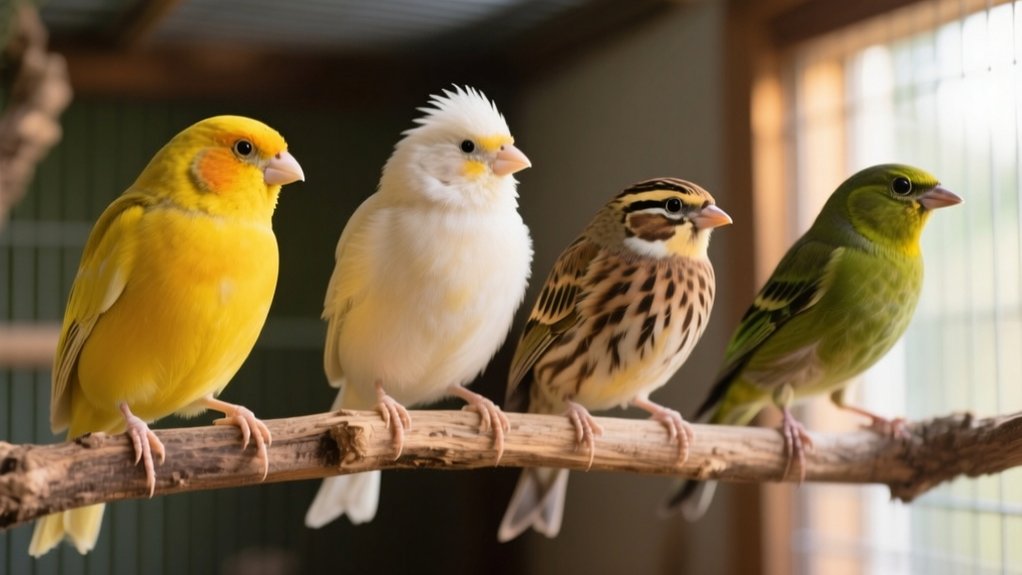
When choosing canaries for your home, consider size, color, and care needs. Smaller breeds like the Fife Fancy suit limited spaces, while the Red Factor needs a carotene-rich diet for vivid plumage.
Male canaries sing complex songs, requiring a quiet environment. Provide cages at least two feet long with narrow bar spacing for flight and safety.
Understanding breed-specific traits and habitat requirements guarantees you pick a canary that fits your lifestyle and space comfortably. Explore further to find the ideal match.
Overview of Popular Canary Varieties
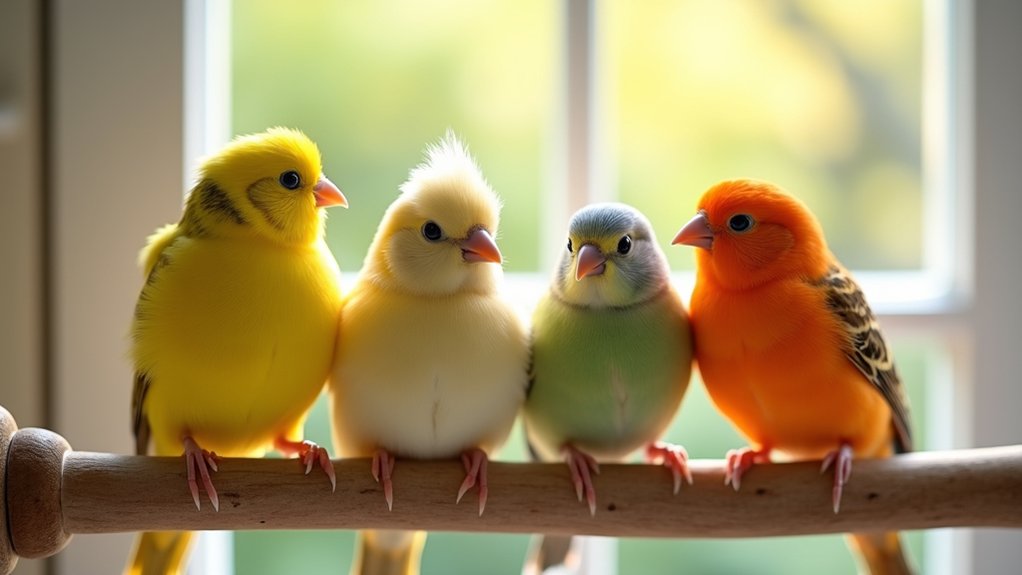
Canary breeds showcase a remarkable diversity in size, feather texture, and coloration, offering options that suit both casual pet owners and serious breeders.
Among popular types, the Border Canary boasts silky smooth feathers and a plump body, while the Fife Fancy, a miniature Border variant measuring just 114mm, appeals to those seeking compact pet birds.
The Crested Canary features a distinctive head crest and averages 170mm in length, providing a striking visual.
Gloster Canaries, known for their short stature and unique feather “wig” called Corona, excel in shows.
The Red Factor Canary, a hybrid of the yellow canary and red siskin, presents vibrant hues from pinky-orange to deep red, making it highly prized among canary varieties.
Each breed offers precise traits suited to your preferences.
Understanding Canary Sizes and Shapes
You’ll notice that canary sizes vary quite a bit. Some, like the compact Fife Fancy, are around 4.5 inches long.
On the other hand, the larger Yorkshire Canary can reach up to 6 inches.
Their body shapes are pretty diverse, too. For example, the Gloster is short and squat, while the Lancashire is tall and slender.
Getting a good grasp of these size and shape differences really helps when you want to identify each breed accurately.
Size Variations Overview
Although these small birds share many characteristics, their sizes and shapes vary considerably across breeds. This impacts their care and habitat requirements.
Canaries’ sizes range from small varieties like the Fife Fancy, measuring around 4.5 inches, to larger breeds such as the Lancashire, which can reach up to 9 inches.
Most breeds fall within the average size of 4.5 to 6 inches, with the Yorkshire Canary commonly measuring 6 inches.
Significantly, the Gloster Canary is a smaller, squat breed under 5 inches, prized for its compact form.
Recognizing these size variations is essential when selecting a habitat, as larger canaries demand more space for flight and movement.
Tailoring the environment to the specific size of your canary guarantees ideal health and well-being.
Distinctive Body Shapes
When examining the diverse breeds, you’ll notice that body shapes vary considerably, influencing both their appearance and care needs. Distinctive body shapes among canary types reflect size, feather texture, and posture, all critical for identifying a healthy bird.
For example, the small bird Fife Fancy measures 114mm, contrasting with the larger, no-neck Yorkshire Canary at 6 inches. The Border Fancy Canary, at 146mm, features silky feathers, while Gloster Canaries are short and squat. The Crested Canary stands out with a prominent crest, averaging 170mm.
| Canary Type | Distinctive Body Shape |
|---|---|
| Fife Fancy | Small, compact (114mm) |
| Border Fancy Canary | Large, silky feathers (146mm) |
| Gloster Canaries | Short and squat (125mm) |
| Crested Canary | Tall, crested (170mm) |
| Yorkshire Canary | Large, no-neck (6 inches) |
Visual Traits to Consider When Choosing a Canary
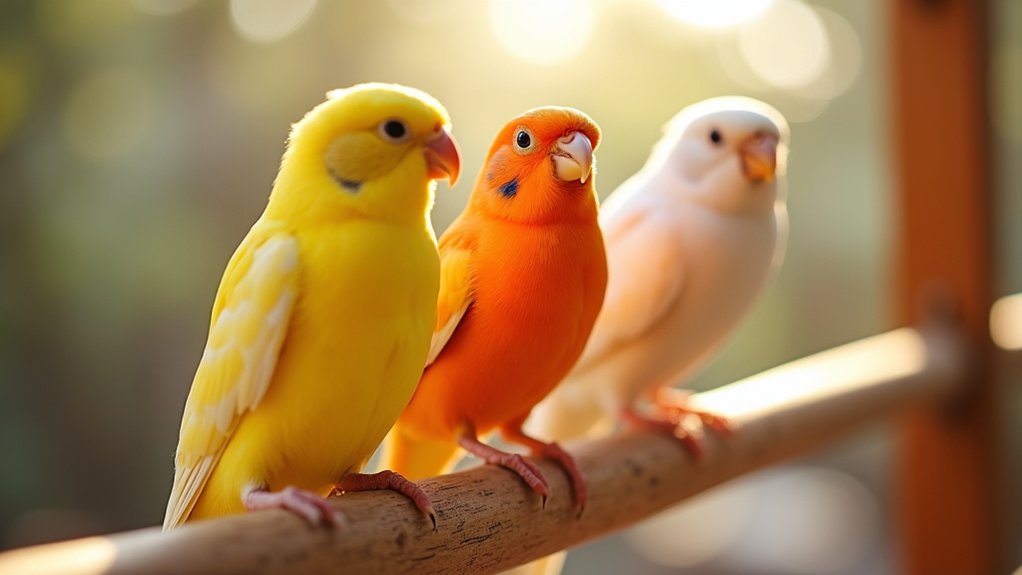
How do you determine which visual traits matter most when selecting a canary? Canaries display a broad spectrum of visual traits, making your choice dependent on specific aesthetic and tactile preferences.
Focus on these key aspects:
Feather texture and patterns: Frilled Canaries showcase curly, mutated feathers, while Crested Canary features a distinctive head crest, adding tactile and visual uniqueness.
Color combinations: Varieties such as the Red Factor present vibrant reds and pinks; Lutino canaries exhibit solid yellow plumage, influencing visual appeal.
Body shapes and sizes: Consider structural differences from the compact Gloster Canary to the erect posture of Irish Fancy, affecting the bird’s silhouette and presence.
These traits, especially prominent in pet bird species from the Border region, guide you in selecting a canary that aligns with your visual and tactile preferences.
Song and Vocal Characteristics of Male and Female Canaries
Since male canaries reach sexual maturity between 8 to 12 months, they develop complex melodies that distinguish them from females, who produce simpler calls such as single notes, chirps, or short whistles.
Male canaries exhibit advanced singing abilities, with vocal characteristics that include varied tonal patterns and intricate sequences. Their song quality often peaks during the breeding season, influenced by genetics and environmental factors such as diet and habitat.
Female canaries, conversely, display less varied vocalizations with distinct vocal qualities primarily consisting of brief calls.
Notable male songbird types like the German Roller, American Singer, and Waterslager demonstrate breed-specific vocal traits. Understanding these differences helps you select a canary that matches your preference for song complexity and vocal performance in your home environment.
Care Requirements for Different Canary Breeds

Although canaries generally require low-maintenance care, you must tailor specific aspects like diet and housing to the breed’s unique needs to guarantee ideal health and well-being. Different breeds demand adjustments in their nutritious diet and environmental conditions.
For example, Red Factor canaries require a diet rich in beta-carotene to maintain feather pigmentation, especially during molting. Proper housing guarantees comfort and safety, with cage dimensions of at least two feet and bar spacing under 1 cm.
Regular veterinary check-ups, preferably twice yearly, are essential to monitor health and prevent disease.
- Provide a balanced, breed-specific nutritious diet, including pellets, fresh vegetables, and seeds.
- Make certain cage size and structure meet species-specific safety requirements.
- Schedule routine veterinary visits to maintain peak health.
Tailoring care to the bird’s breed improves longevity and vitality.
Breeding and Genetic Influences in Canary Varieties
You’ll notice that selective breeding in canaries directly shapes their genetic traits, especially physical features like their color and feather structure.
It’s pretty fascinating how this process can lead to unique mutations—like those frilled feathers or the bright red hues you see in certain varieties.
When you understand these genetic influences, it really helps explain the diversity and specialization found within different canary breeds.
Genetic Traits Impact
When you examine canary breeding, you’ll notice that genetic traits play an essential role in shaping the diverse varieties seen today.
Breeding efforts prioritize aesthetic traits such as feather structure, color variations, and body shape over song quality, causing canaries to make unique appearances.
Genetic mutations, like those producing frilled feathers, reveal how dominant genes influence unique feather patterns.
Selective breeding amplifies these traits, ensuring pet canaries display desired characteristics.
Key genetic impacts include:
- Expression of dominant genes determining feather texture and coloration
- Genetic mutations introducing novel visual traits
- Nutritional influences supporting color retention in breeds like the Red Factor Canary
Understanding these genetic factors helps you select canaries whose traits align with your preferences.
Selective Breeding Effects
Since selective breeding focuses primarily on physical aesthetics rather than song quality, you’ll observe a remarkable diversity in canary breeds characterized by variations in shape, size, and feather types.
Selective breeding has exploited genetic complexities to emphasize traits like the curled feathers of Frill Canaries, resulting from mutations in feather structure.
Among the types of canaries, the Red Factor canary exemplifies color selection, requiring a beta-carotene-rich diet to maintain its vivid plumage.
These genetic manipulations have produced distinct breeds, each with specialized physical features, from feather texture to pigmentation.
Housing and Cage Recommendations for Canaries
A minimum of two feet in length is crucial for canary cages to provide adequate horizontal space for flight and activity.
When selecting housing, choose spacious cages with cage bars spaced no more than 1 cm apart to prevent escapes and injury.
Avoid galvanized metal cages due to zinc toxicity risks.
Confirm the cage includes suitable substrates such as wire grates or paper towels; avoid corn cob and wood shavings to maintain hygiene.
Vertical space is beneficial but prioritize horizontal room for natural behavior.
For ideal nutrition, don’t rely on a seed-only diet; incorporate high-quality pellet bird food supplemented with fresh vegetables.
These housing and care considerations support your canary’s health and well-being.
Use safe cage materials; avoid galvanized metal.
Provide suitable substrates like wire grates.
Confirm cage bars are under 1 cm apart.
Dietary Needs to Maintain Canary Health and Color
Although canaries can consume seeds, relying solely on a seed-based diet deprives them of essential nutrients necessary for ideal health and vibrant coloration.
You should provide a balanced diet centered on high-quality pellet bird food, which delivers thorough nutrition.
Supplement this with fresh vegetables, particularly those rich in beta-carotene like carrots and leafy greens, to support vibrant color and feather regeneration, especially in Red Factor canaries.
Incorporate enrichment treats such as millet, niger, linseed, and rapeseed to promote well-being without unbalancing their diet.
Remember to supply fresh water daily, ensuring the container is clean to prevent contamination.
Maintaining this precise dietary regimen is vital for canary health, longevity, and the preservation of their vivid plumage.
For those considering seed-based supplements, choosing high-quality seeds can help support the dietary needs of various bird species while minimizing waste and attracting unwanted pests.
Selecting a Canary Based on Lifestyle and Space Constraints
How do you determine which canary breed fits your living space and lifestyle? When selecting a canary, consider breeds that make the best use of available room and align with your lifestyle needs. Smaller birds like the Fife Fancy and Irish Fancy are ideal for homes with space constraints.
Furthermore, canaries require individual cages that provide at least two feet of horizontal space to accommodate flight and reduce territorial stress. Male canaries, prized for singing, benefit from quieter environments, whereas females tolerate more social settings.
Canaries need individual cages with at least two feet of horizontal space to ensure comfort and reduce stress.
Keep in mind that canaries are low-maintenance pets, thriving with minimal interaction, which suits busy individuals.
Key factors to weigh include:
- Size of the bird relative to your space
- Cage dimensions ensuring adequate flight room
- Noise tolerance based on male canaries’ vocalization needs
Frequently Asked Question
How Do Canaries Communicate With Other Birds Outside Their Species?
You’ll observe that canaries communicate with birds outside their species primarily through vocal responses to calls, signaling alertness or recognition of environmental cues.
Their ability to respond to different bird calls shows they’re attuned to potential threats or social interactions nearby.
Furthermore, their body language, like puffing feathers or relaxed postures, conveys messages that other birds can interpret.
This facilitates basic interspecies understanding and coexistence.
What Are Common Health Issues Unique to Specific Canary Breeds?
Isn’t it ironic that the charming Gloster Canary’s unique looks can cause respiratory issues?
You’ll also find Frilled Canaries prone to stress-related feather plucking, requiring your careful attention.
Red Factor Canaries demand a beta-carotene-rich diet to keep their color vibrant. Neglect that, and their feathers fade.
Yorkshire Canaries risk obesity if you don’t manage their diet and exercise, while Irish Fancy Canaries’ slender bodies make them vulnerable to respiratory illnesses, so good ventilation’s essential.
Can Canaries Adapt to Outdoor Environments or Only Indoor Settings?
Canaries can adapt to outdoor environments only if you provide controlled conditions. They’re sensitive to temperature fluctuations, direct sunlight, rain, and predators, so you’ll need a secure, well-ventilated aviary with ample shelter.
Sudden environmental changes stress them, risking health issues. You must monitor their behavior closely for signs of distress or illness.
Without these precautions, canaries thrive best indoors in stable, temperate settings.
How Do Seasonal Changes Affect Canary Behavior and Song Patterns?
Seasonal shifts act like a maestro conducting your canary’s symphony.
In spring and summer, longer daylight sparks hormonal surges, making your bird sing louder and more often to attract mates.
During fall and winter, molting slows their melody as feathers regrow, conserving energy.
Cooler temperatures and reduced light levels dampen activity and vocalization, so you’ll notice quieter, less energetic behavior.
Monitoring these changes helps you support your canary’s well-being through the seasons.
Are Canaries Prone to Stress From Household Noises or Activity Levels?
Yes, canaries are prone to stress from household noises and activity levels. You’ll notice that loud sounds or sudden movements can trigger anxiety, altering their behavior and health.
You should provide a calm, quiet environment to prevent stress-induced issues like feather plucking or reduced singing. Monitoring your canary’s response helps you adjust surroundings, ensuring their well-being.
Creating a designated quiet space away from noise sources promotes healthier, happier birds.
Conclusion
Choosing the right canary is like selecting a key to a unique symphony; each breed offers distinct notes in size, color, and song. By understanding their genetic traits, care needs, and vocal qualities, you reveal the full harmony of their presence in your home.
Just as a scientist carefully measures variables in an experiment, you’ll thrive by matching your lifestyle and space with the precise canary breed that sings best to your environment.