

Messenger birds have played a vital role in communication throughout history, especially before the advent of modern technology. Different types of messenger birds have been used to carry messages across long distances, often in challenging conditions. These birds are specially trained for their remarkable homing ability, enabling them to return to their home location from faraway places.
Among the various types of messenger birds, pigeons are the most well-known, but other species have also been utilized depending on the region and purpose. Understanding the types of messenger birds helps us appreciate how humans ingeniously used nature to solve communication challenges.
This introduction explores the key species known for their messenger roles and highlights their unique characteristics and historical significance. By examining the types of messenger birds, we gain insight into an ancient communication system that was reliable, efficient, and, in many ways, ahead of its time.
Historical Use of Messenger Birds
Messenger birds have a rich history dating back thousands of years, serving as reliable carriers of important information across vast distances. Ancient civilizations like the Egyptians, Greeks, and Romans all utilized these birds, especially pigeons, to send messages during times of war and peace. Their ability to navigate home over long distances made them invaluable in military campaigns, where quick communication could mean the difference between victory and defeat.

In more recent history, messenger birds were used in both World Wars to deliver critical messages when other communication methods were compromised. Their speed, accuracy, and resilience made them a trusted part of communication networks before modern technology took over. The historical use of messenger birds highlights humanity’s creativity in harnessing nature to meet its communication needs.
Common Types of Messenger Birds
Messenger birds have fascinated humans for centuries due to their remarkable abilities to carry messages over long distances. While homing pigeons are the most famous among them, various other bird species have also been employed for communication purposes in different cultures and eras. This section explores some of the common types of messenger birds, their unique traits, and their historical significance in message delivery.

Homing Pigeons
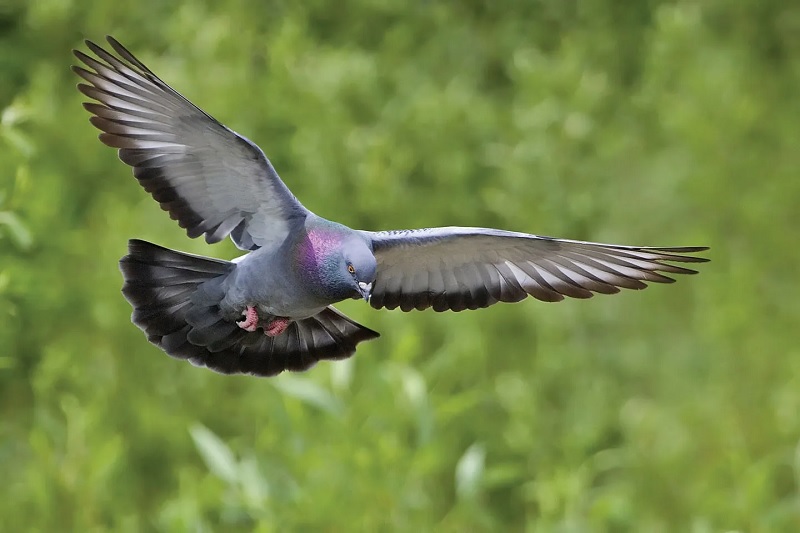
Homing pigeons are perhaps the most renowned messenger birds, celebrated for their extraordinary navigation skills and reliability. These birds have been used extensively for centuries in both civilian and military communication.
Rock Pigeon (Columba livia)
The rock pigeon, scientifically known as Columba livia, is the wild ancestor of the homing pigeon. Native to Europe, North Africa, and parts of Asia, the rock pigeon naturally possesses a strong homing instinct. This means it can find its way back to its nest over vast distances, sometimes covering hundreds of miles.
Historically, humans began selectively breeding rock pigeons for enhanced homing abilities, leading to the domesticated homing pigeon. Their ability to return to a fixed location made them ideal for carrying messages, especially in times when other forms of communication were unreliable or non-existent. Messages were typically written on small slips of paper attached to the pigeon’s leg with a lightweight capsule.
Racing Homer
The racing homer is a specialized breed of homing pigeon developed for speed and endurance. Unlike general homing pigeons, racing homers have been selectively bred to excel in competitive pigeon racing, which indirectly improved their ability to serve as messenger birds.
Their impressive flight speed and stamina allowed messages to be delivered faster and over longer distances. During wars, especially World War I and World War II, racing homers were extensively used to carry critical battlefield information. Their resilience to harsh weather and predators made them invaluable communication tools.
Ravens
Ravens, known for their intelligence and adaptability, have also been used historically as messenger birds, although less commonly than pigeons. These large, black birds possess a remarkable ability to mimic sounds and navigate diverse terrains.
Raven Use in Wartime Communications
One of the most notable uses of ravens in messaging occurred during medieval times and some military campaigns. Their strength and size allowed them to carry small messages or symbolic tokens. Ravens were also believed to be able to recognize landmarks and follow complex routes.
In certain Norse and Celtic traditions, ravens were symbolic messengers of the gods, often associated with battle and prophecy. This cultural significance sometimes extended to practical uses, where ravens were trained to carry messages between camps or fortresses.
Parrots
Parrots are less conventional messenger birds but have intrigued scientists and historians due to their ability to mimic human speech and sounds. While not widely used for carrying physical messages, parrots’ unique vocal abilities led to interesting experiments in communication.
Historical Anecdotes and Experiments
In some ancient cultures, parrots were believed to carry messages through mimicry, effectively “speaking” pre-learned phrases or signals. There are records of attempts to train parrots to convey simple messages verbally, though these efforts were limited and mostly experimental.
The vibrant colors and intelligence of parrots made them more of companions or symbolic messengers rather than practical carriers. Nevertheless, their role in communication history is notable due to their distinctive vocal talents.
Swallows
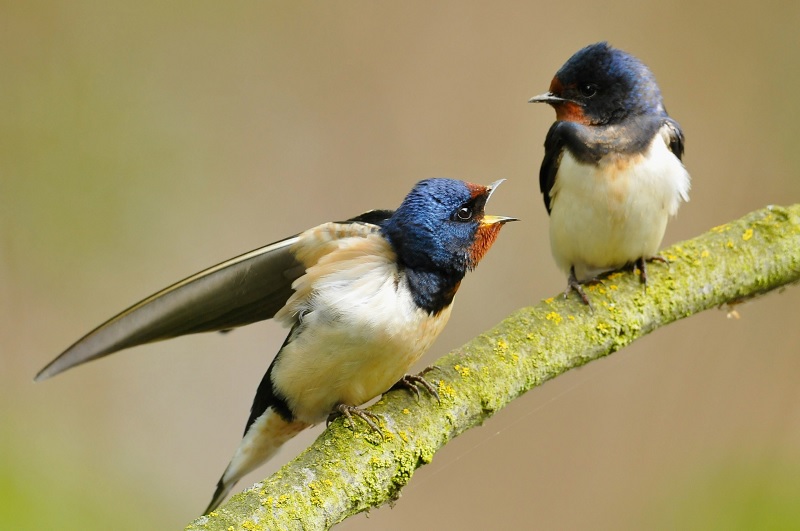
Swallows are small, agile birds known for their speed and aerial acrobatics. Though not as commonly used as pigeons, swallows have been employed regionally for message delivery in some cultures.
Regional Use and Effectiveness
In certain parts of Asia and Europe, swallows were trained to carry lightweight messages between villages or family groups. Their swift flight and ability to navigate complex environments, such as mountainous areas or dense forests, made them useful for short-distance communications.
However, their smaller size limited the weight they could carry, and their homing instincts were less developed compared to pigeons. As a result, swallows were generally used for localized communication rather than long-distance message delivery.
Crows
Crows, members of the corvid family, are highly intelligent birds capable of problem-solving and learning complex tasks. This intelligence has prompted interest in their potential as messenger birds.
Intelligence and Trainability
Crows’ remarkable cognitive skills include memory, tool use, and social learning. These traits have made them candidates for training in message delivery experiments. Their ability to remember faces and landmarks suggests they could be trained to navigate routes reliably.
Historically, crows were not widely used as messengers, largely because of the difficulty in controlling their behavior and the challenges in training them consistently. However, their intelligence means they have been subjects of various studies on animal communication and navigation.
Hawks and Falcons
Hawks and falcons are powerful birds of prey known for their speed and keen eyesight. Their use as messenger birds has been limited, but they hold symbolic significance in communication and messaging.
Limited Use and Symbolic Messaging
Due to their predatory nature, hawks and falcons were not commonly used to carry messages in a practical sense. Their training focused more on hunting and falconry rather than message delivery.
Training Messenger Birds
Training messenger birds is a fascinating process that taps into the natural instincts of these remarkable creatures. Whether for historical use or modern hobbyist purposes, effective training is essential to ensure that messenger birds can reliably carry messages over long distances. This section explores the basic training techniques, the challenges trainers face, and the crucial role of navigation and homing instincts.
Basic Training Techniques
Training messenger birds begins with building trust and familiarity between the bird and its handler. For homing pigeons, the most common messenger birds, this involves conditioning them to recognize a specific “home” location. Birds are usually raised in lofts where they learn that this place provides food, shelter, and safety.
The training process often starts with short-distance releases. The birds are taken away from their loft and then released to fly back home. Gradually, the distance is increased as the bird gains confidence and strengthens its navigational skills. Positive reinforcement, such as food rewards upon return, encourages the birds to complete their journey efficiently.
For other species, such as crows or ravens, training can involve more complex behavioral conditioning, including responses to visual or auditory cues. This kind of training requires patience and repetition to build a reliable communication channel between the bird and trainer.
Challenges in Training
Training messenger birds comes with several challenges. One major difficulty is ensuring the bird’s motivation to return home quickly. Environmental factors like weather, predators, and unfamiliar terrain can distract or endanger the bird during flight.
Another challenge is the individual variation in birds’ natural abilities. Not all birds have the same strength or navigational skills, so trainers must select the most suitable candidates carefully. Additionally, birds may sometimes get lost, injured, or fail to return, which poses risks to message delivery.
Maintaining the birds’ health and well-being throughout the training process is also critical. Stress or poor care can affect their performance and willingness to participate in flights. Trainers must balance discipline with care to keep their birds in optimal condition.
Navigation and Homing Instinct
The success of messenger birds largely depends on their natural homing instinct—the ability to find their way back to a specific location over long distances. This instinct is powered by a combination of factors, including the Earth’s magnetic field, the position of the sun, visual landmarks, and even olfactory cues.
During training, birds learn to strengthen these navigational skills. Homing pigeons, for example, use a map-and-compass system that allows them to orient themselves and correct their flight paths. This remarkable ability makes them exceptional messengers, capable of covering hundreds of miles with impressive accuracy.
Modern Perspectives and Legacy
Messenger birds, once a vital part of human communication, have seen their role evolve dramatically with the rise of modern technology. Although their practical use has declined, their cultural significance and legacy continue to thrive in various ways today. This section explores the decline of messenger birds in the face of technological advances, their enduring symbolic importance, and their place in contemporary ceremonies and recreational activities.
Decline with Technological Advances
The introduction of telegraphs, telephones, radios, and later the internet, marked a turning point for messenger birds. These technologies provided faster, more reliable, and more secure ways to send messages instantly across vast distances. As a result, the practical need for birds to carry messages sharply declined, especially after the mid-20th century.
Despite their historical reliability, messenger birds could not compete with the speed and volume of modern communications. Wars that once relied heavily on pigeon post switched to electronic communications. The physical limitations—such as the risk of losing birds or environmental hazards—made them less favorable compared to technology that could operate in all conditions and deliver messages in seconds.
Cultural and Symbolic Importance
Although messenger birds are no longer essential for communication, their cultural and symbolic importance remains strong. Pigeons, doves, and other messenger birds often symbolize peace, hope, and connection across distances. They feature prominently in art, literature, and religious ceremonies worldwide.
The image of a bird carrying a message has become a powerful metaphor for communication and freedom. Many cultures honor the legacy of messenger birds through stories and symbols, acknowledging their contribution to human history and the development of communication.
Use in Ceremonies and Recreation Today
Today, messenger birds hold a special place in ceremonial events and recreational activities. Releasing doves or pigeons at weddings, memorials, or peace rallies is a popular tradition, symbolizing purity, new beginnings, or remembrance.
In addition, pigeon racing has become a global sport, preserving the training and care techniques developed over centuries. Enthusiasts breed and train racing homers, competing in long-distance races that test the birds’ speed and homing abilities. This hobby keeps alive the skills that made messenger birds famous.
Frequently Asked Questions
What Are The Most Common Types Of Messenger Birds?
The most common types of messenger birds include homing pigeons, ravens, crows, swallows, parrots, and occasionally hawks or falcons. Homing pigeons are by far the most popular due to their exceptional ability to find their way home over long distances. Ravens and crows are known for their intelligence and trainability, while swallows and parrots have been used regionally or experimentally for message delivery. Hawks and falcons, although less commonly used, hold symbolic importance in communication traditions.
How Do Homing Pigeons Navigate Back To Their Home?
Homing pigeons rely on a combination of natural instincts and environmental cues to navigate. They use the Earth’s magnetic field as a compass, visual landmarks for orientation, and the sun’s position to maintain direction. Additionally, some studies suggest pigeons use their sense of smell to help map their routes. This impressive navigation system allows them to return to their home lofts from hundreds of miles away, making them excellent messengers.
Can Other Birds Besides Pigeons Be Trained As Messenger Birds?
Yes, other birds like ravens, crows, swallows, and parrots can be trained to carry messages, though with varying degrees of success. Ravens and crows are particularly intelligent and capable of learning complex tasks, but they are harder to train consistently compared to pigeons. Swallows have been used for short-distance communication in some regions, while parrots’ ability to mimic sounds has inspired experiments in verbal message delivery. However, pigeons remain the most reliable and widely used messenger birds historically.
Why Did The Use Of Messenger Birds Decline Over Time?
The use of messenger birds declined primarily due to advances in communication technology. The invention of the telegraph, telephone, radio, and later the internet provided faster, more secure, and more efficient methods of communication. Unlike birds, these technologies are not affected by weather, predators, or the physical limitations of flight. Although messenger birds played crucial roles in wars and emergencies, modern devices made their practical use largely obsolete.
What Is The Cultural Significance Of Messenger Birds Today?
Messenger birds continue to hold significant cultural and symbolic value today. They often symbolize peace, hope, and connection in art, literature, and religious ceremonies. For example, doves are commonly released at weddings and memorials as symbols of purity and remembrance. In addition, pigeon racing keeps alive the traditions and skills of messenger bird training, while educational programs highlight their historical role in communication. These birds remain enduring icons of human ingenuity and natural partnership.
Conclusion
Messenger birds have been an essential part of human history, bridging distances long before modern communication existed. From the dependable homing pigeons to the intelligent ravens and crows, each type of messenger bird brought unique strengths that helped deliver messages across challenging terrains.
While technology has largely replaced their practical use, the legacy of these birds remains alive through cultural symbolism, recreational pigeon racing, and educational programs. Understanding the different types of messenger birds not only highlights their remarkable natural abilities but also showcases the creative ways humans have worked with nature to connect and communicate. Their story is a fascinating reminder of how intertwined our lives are with the animal kingdom, celebrating both tradition and innovation.