

You’ll recognize the American Robin as the quintessential bird signaling spring in North America. It arrives early, often before other species, marking winter’s end and warmer months ahead.
Robins play key roles in ecosystems by controlling insects and dispersing seeds, showing environmental health. Their adaptable nesting habits and migratory behavior reflect seasonal changes closely.
Understanding these patterns reveals much about the natural world’s rhythms and the robin’s essential presence throughout the year.
The Arrival of the American Robin
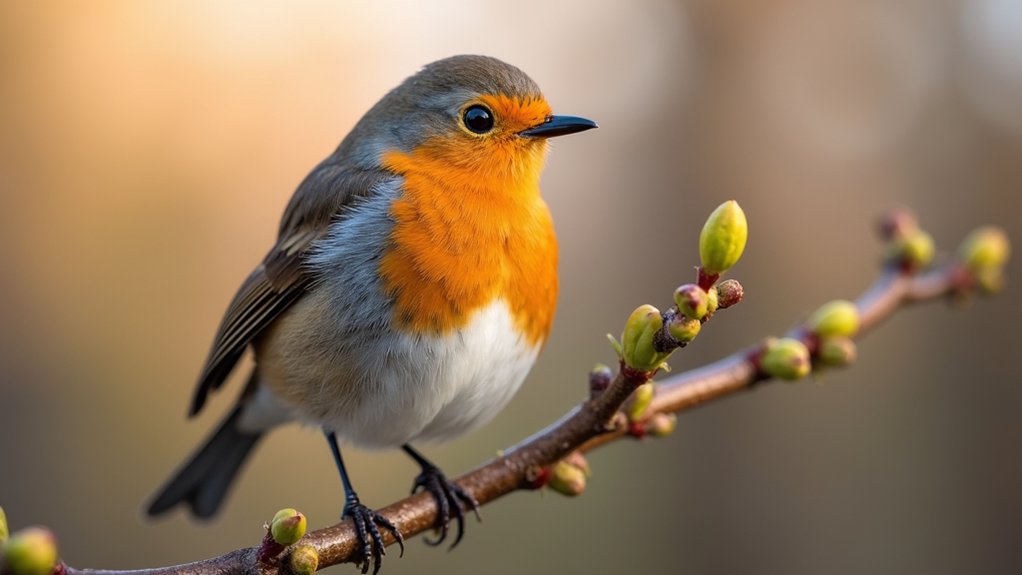
Although many birds signal the change of seasons, the American Robin stands out as one of the earliest and most reliable indicators of spring in North America.
You’ll notice American Robins returning to their breeding grounds in early spring, often before other species.
These birds migrate south during winter to avoid harsh conditions but promptly come back as temperatures rise. Their arrival is a clear sign of spring, signaling the end of winter dormancy.
When you see robins in your yard, it also indicates a healthy ecosystem, since these birds are skilled insectivores that help control pest populations naturally.
Their early presence supports ecosystem balance, reducing the need for pesticides.
Observing American Robins can therefore give you precise insights into seasonal changes and environmental health.
You can distinguish the American Robin from other robin species by its reddish-orange breast and distinctive size, as it is larger and more adaptable than its European or African counterparts.
Cultural Significance and Recognition
When you notice the American robin returning to your neighborhood, you’re witnessing a culturally significant event that marks the arrival of spring across North America. Robins symbolize renewal and the change from winter to warmer months. Their presence in yards signals healthy ecosystems and offers a tangible connection to nature’s cycles.
Children recognize robins early, embedding their cultural significance from a young age. Various traditions honor robins, emphasizing their role as messengers of hope and fresh beginnings.
Many people are also familiar with the story of the dodo bird’s extinction, which serves as a powerful reminder of the importance of protecting the birds and seasonal changes we cherish today.
| Aspect | Cultural Role | Symbolism |
|---|---|---|
| Robins | Widely recognized | Renewal, hope |
| Spring | Marks seasonal change | Fresh beginnings |
| North America | Celebrated in poems, stories | Cyclical nature of life |
| Children | Early nature recognition | Connection to nature |
| Traditions | Embedded in cultural lore | Messenger of spring |
Ecological Role and Benefits
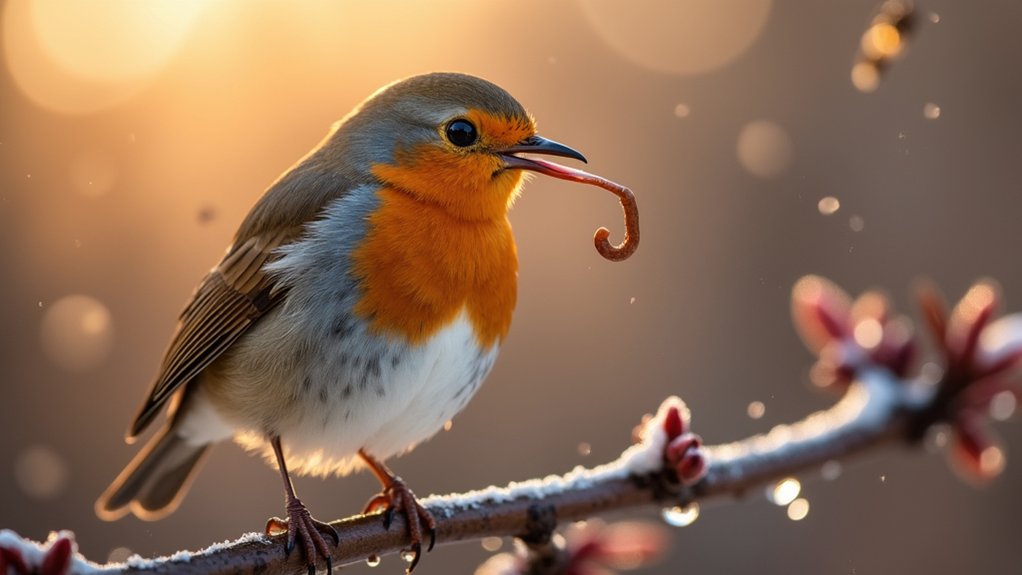
You’ll notice American robins are really good at keeping insect populations in check. This helps keep ecosystems balanced and healthy.
Plus, when you see these birds around, it usually means the environment is doing well—often because there aren’t harmful pesticides nearby.
Robins, like other ground feeders, also help disperse seeds and contribute to plant growth, making them valuable for both agriculture and natural ecosystems.
Insect Control Benefits
Since American robins consume a wide range of insects and invertebrates, they play an essential role in controlling pest populations in both gardens and natural habitats.
When robins start foraging, their impact as insectivores contributes greatly to ecological balance by reducing harmful insect numbers.
This natural solution to pest control benefits agricultural and residential areas alike.
Here’s how robins aid you in managing insects:
- Consume diverse insect species, including beetles and caterpillars.
- Minimize need for chemical pesticides, promoting eco-friendly gardening.
- Help maintain plant health by controlling herbivorous pests.
- Support a balanced ecosystem by linking food webs effectively.
Additionally, robins may be especially active during migration seasons, which can lead to temporary increases in insect control as they pass through your yard.
Ecosystem Health Indicators
Although often overlooked, American robins serve as crucial indicators of ecosystem health by reflecting the balance and liveliness of their habitats.
As skilled insectivores, robins regulate insect populations, contributing directly to a balanced environment. Their presence signals robust ecosystem health, often reducing reliance on chemical pesticides in gardens and urban settings.
You can observe robins foraging for worms and fruits, which highlights their adaptability and role in various habitats.
Because robins function as bioindicators, shifts in their population or behavior can alert you to ecological disturbances or environmental degradation.
Monitoring robins therefore provides valuable insights into local ecosystem conditions, helping you understand and maintain the integrity of your natural surroundings effectively and scientifically. In fact, scientists often rely on bird deaths and changes in populations to assess environmental threats and guide conservation efforts.
Nesting Habits and Adaptability
You’ll notice American robins often pick some pretty unexpected spots to build their nests—like porches and garden centers.
It’s really impressive how well they adapt to living around humans. Their nests are built from things like grass, twigs, and mud, making a sturdy little home that keeps their eggs and babies safe while they’re incubating.
People often try to protect these nesting spots by keeping disturbances to a minimum. It just goes to show how important the connection is between us and these tough little birds.
Like many frequent breeders, American robins can raise multiple broods in a single season when conditions are favorable.
Unusual Nesting Locations
When you observe American robins during spring, you’ll notice they often choose nesting sites in surprising places like porches, decks, and even garden centers. This behavior highlights their adaptable nesting habits, allowing them to thrive in suburban settings.
During the breeding season, robins construct nests from grass, twigs, and mud, forming sturdy structures suited for varied locations.
Consider these unusual nesting locations:
- Under porch railings, protected from predators and weather.
- On deck beams, offering heightened safety.
- Within garden centers, where plant coverage provides camouflage.
- Near windowsills, close to human activity yet relatively undisturbed.
This adaptability in nesting sites is a hallmark of perching bird behavior, allowing robins and other passerines to exploit both natural and human-made environments successfully.
Human Environments Adaptation
American robins demonstrate remarkable adaptability by selecting nesting sites within human environments, such as porches, decks, and garden centers. Their nesting behaviors reveal significant resourcefulness, allowing them to thrive in urban areas where traditional natural sites are limited.
You’ll notice that robins use mud, grass, and twigs to construct durable nests in these atypical locations. This adaptability guarantees their reproductive success despite human activity.
Cardinals, including the Northern Cardinal, also exhibit adaptability to human environments by nesting near backyards and urban gardens throughout North America.
| Nesting Site | Common Materials Used |
|---|---|
| Porches | Mud, grass, twigs |
| Decks | Grass, mud, small sticks |
| Garden Centers | Twigs, mud, dry grass |
Nest Protection Efforts
Several strategies help protect robin nests, reflecting the species’ strong nesting instincts and adaptability. Understanding their nesting habits is key to efforts that protect nesting robins effectively. You can:
- Identify nests built from grass and mud in trees, shrubs, or ledges.
- Place physical barriers or signs around nesting areas to deter predators and human disturbance.
- Monitor nests carefully without touching them, ensuring minimal disruption to the birds.
- Observe feeding their chicks to learn about the robins’ life cycle and development stages.
Robins’ adaptability allows them to nest even in human environments like porches and gardens. Their aggressive defense of nests highlights their instinct to protect offspring. If you ever encounter a situation where a robin’s nest might need to be moved, it’s important to be aware of wildlife protection laws that regulate handling or relocating bird nests.
Migration Patterns and Behavior
Although robins are widely recognized for their seasonal movements, their migration patterns and behaviors exhibit considerable variability across North America. Most robins migrate at least 60 miles between summer and winter habitats, but some travel over 3,000 miles.
You’ll notice that not all robins migrate south; some remain within 60 miles of their summer range. This variability depends largely on environmental conditions and food availability, which fluctuate annually.
In regions like southern Florida and Texas, robin presence during winter is inconsistent, reflecting local climate influences on migration.
By the second week of March, robins typically return to northern areas, signaling spring’s arrival.
Understanding these migration patterns helps you appreciate how robins adapt their behavior to survive changing seasonal environments. Historically, just as messenger birds played important roles in signaling changes and delivering news, robins’ return each spring has served as a natural signal of seasonal transition across North America.
Observational Patterns Throughout the Year
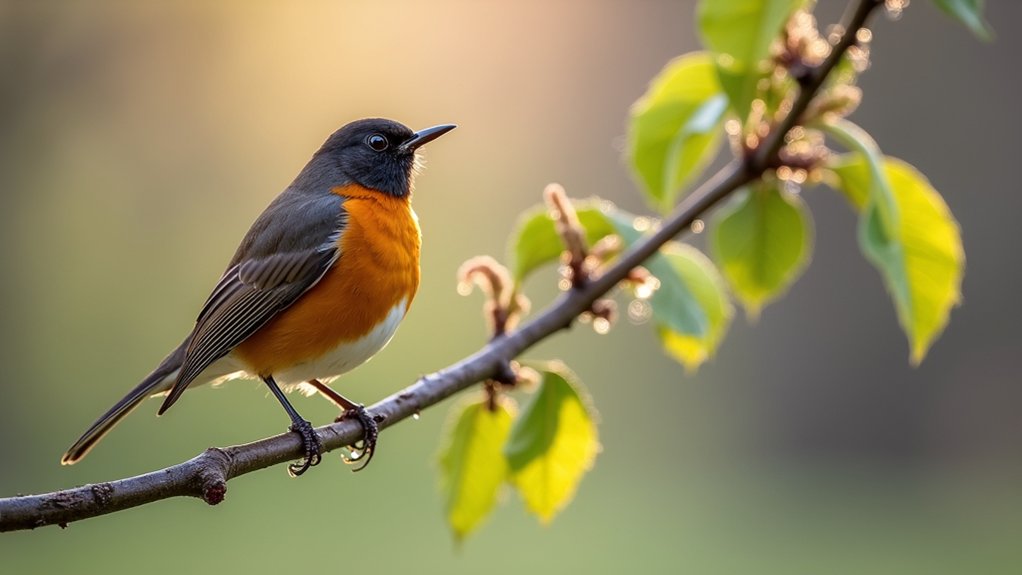
Observational Patterns Throughout the Year
When you observe robins throughout the year, you’ll notice distinct patterns linked to seasonal changes. These observational patterns provide insight into how robins respond to climate and seasonal cues:
- The First Robin of Spring typically appears around mid-March, signaling spring’s arrival in many North American backyards.
- Late spring and early summer see active robin nests, especially in regions like Ohio.
- In September and October, robins form irregular flocks, gathering in wildlife refuges as they prepare for potential migration.
- Winter sightings become sporadic. Some robins remain within 60 miles of their summer territory, while others migrate farther south.
Tracking these patterns helps you understand robins’ adaptive behavior and their role as a spring indicator against varying climatic conditions.
Frequently Asked Question
What Do American Robins Eat During Spring?
During spring, you’ll find American Robins primarily eating insects and invertebrates, which provide essential protein for their nesting and raising young.
As the season advances, they shift to consuming more fruits, especially berries that become available.
You might see them foraging for earthworms and grubs in moist soil while adapting their diet based on food availability.
This helps maintain a balanced ecosystem and controls garden pests naturally.
How Long Do American Robins Live?
American robins typically live about 2 years in the wild, but some can reach up to 5 years or more under ideal conditions.
The oldest recorded wild robin lived 13 years, demonstrating their potential longevity.
You’ll find their lifespan influenced by factors like predation, habitat quality, food availability, and environmental conditions.
In urban areas, challenges such as vehicle collisions and habitat fragmentation can shorten their life expectancy considerably.
Do American Robins Sing Year-Round?
Yes, American robins do sing year-round, but their singing behavior varies seasonally.
During spring and summer, males actively sing to establish territories and attract mates, producing a cheerful, melodious phrase.
In winter, you’ll hear less frequent songs, mainly in the early morning, especially from those robins that remain in northern areas.
Environmental factors like daylight and food availability influence their singing patterns, showcasing their adaptation to changing seasonal conditions.
Are American Robins Territorial Birds?
Yes, American robins are territorial birds. During breeding season, males actively defend territories, often ranging from 0.5 to 2 acres, depending on resources.
You’ll notice males singing and displaying to mark boundaries, starting as early as late winter before females arrive.
They engage aggressively with intruders to protect nesting sites and food sources.
This territorial behavior guarantees their reproductive success and resource control within their habitats.
How Can I Attract Robins to My Yard?
You can attract robins by offering diverse food sources, especially fruits like berries, which make up over 90% of their diet in fall and winter.
Install a shallow birdbath for drinking and bathing during warmer months.
Provide safe nesting sites with shrubs and trees, and avoid pesticides to protect their insect food supply.
Plant native flora and maintain landscape diversity to create shelter and consistent food, encouraging robins to visit and remain in your yard year-round.
Conclusion
You’ll find the American Robin is a reliable herald of spring in North America, often arriving as early as March. Notably, robins can consume up to 14,000 insects and berries per season, greatly benefiting local ecosystems by controlling pests and dispersing seeds.
Their adaptable nesting habits and distinct migration patterns make them a captivating subject for observation year-round. Recognizing these behaviors improves your appreciation of their crucial ecological role during seasonal changes.