

Indigo Buntings primarily eat white proso millet and black oil sunflower seeds, along with insects and fruits seasonally.
To attract them, choose feeders tailored to small birds, like finch or tray feeders with perches. Place these near shrubs or hedgerows for cover. Squirrel-proof feeders help preserve seed supply and reduce competition.
You can also scatter some seeds on the ground to mimic natural foraging. Understanding these preferences lets you create an inviting feeding setup and optimize your chances of observing these vibrant songbirds up close.
Feeding Preferences of Indigo Buntings
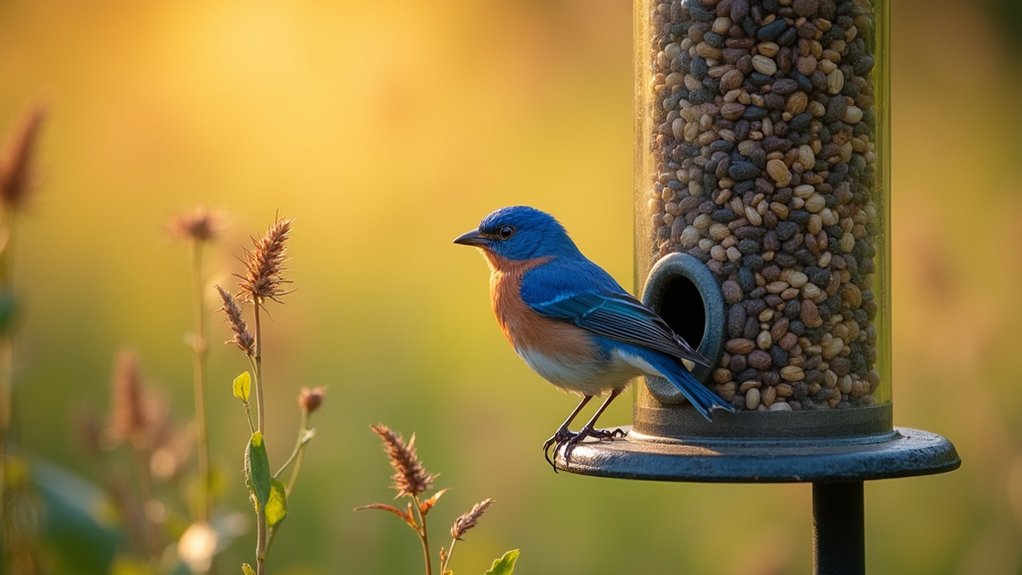
Although Indigo Buntings consume a varied diet of insects, spiders, fruits, and seeds, they show a marked preference for white proso millet and black oil sunflower seeds when visiting feeders.
Indigo Buntings favor white proso millet and black oil sunflower seeds at feeders despite their varied diet.
You’ll notice their feeding habits shift seasonally. During migration in spring and fall, they frequent bird feeders more often, while in breeding season, feeder visits decline.
To accommodate their ground feeding habits, you should scatter white proso millet on the ground or use tray feeders with perches, which provide ideal access.
Finch feeders and squirrel-proof feeders can also attract them effectively, yet tray feeders remain beneficial to their natural feeding behavior.
Understanding these preferences allows you to tailor your bird feeders, optimizing your chances to observe Indigo Buntings up close while supporting their dietary needs.
Many bird seed mixes designed for attracting a variety of feathered friends include white proso millet and black oil sunflower seeds, making them an excellent choice for supporting Indigo Buntings in your backyard.
Best Seeds to Attract Indigo Buntings
If you want to attract Indigo Buntings, the best seeds to offer are white proso millet and black oil sunflower seeds. These are their favorites and will definitely get their attention.
Another tip is to make feeding easier for them by scattering some seeds right on the ground. Indigo Buntings often feed on the ground, so this can really increase your chances of seeing them.
Also, try changing up your seed mix depending on the season. During migration times, for example, it’s good to put more emphasis on millet since their diet shifts a bit.
This way, you’re meeting their needs all year round.
Preferred Seed Types
When you want to attract Indigo Buntings to your feeders, offering white proso millet is essential, as it serves as their preferred seed. This seed’s small size and nutritional content align well with the feeding habits of Indigo Buntings.
In addition to white proso millet, black oil sunflower seeds rank high among preferred seed types due to their high oil content and ease of consumption. You can also provide hulled sunflower seeds, which facilitate easier feeding by removing tough shells.
Nyjer seeds may prove beneficial during migration periods, further diversifying your feeder offerings.
Ground Feeding Options
Since Indigo Buntings naturally forage on the ground, providing white proso millet and nyjer seeds scattered directly on the soil or in low tray feeders effectively mimics their feeding behavior.
This ground feeding approach boosts attraction by replicating natural conditions.
When setting up tray feeders, verify they’ve perches for comfortable access.
For ideal results, focus on these key factors:
- Use white proso millet as the primary seed, as it’s highly preferred by Indigo Buntings.
- Scatter nyjer seeds alongside millet on the ground to increase visitation.
- Choose tray feeders positioned low to the ground to facilitate feeding and natural foraging.
Seasonal Seed Selection
Although Indigo Buntings show consistent preferences throughout the year, seasonal variations influence their seed choices, especially during migration and breeding periods.
During the migratory period, white proso millet is their preferred seed, particularly in spring when they return to breeding grounds.
Offering white proso millet on the ground effectively attracts these buntings along with other species. In addition, sunflower seeds, both black oil and hulled varieties, serve as valuable supplemental food sources, providing essential fats and proteins.
Incorporating a mix of white proso millet, sunflower seeds, and nyjer seeds into your feeders improves attractiveness, especially during migration when energy demands peak.
Tailoring your seed selection seasonally increases the likelihood of attracting Indigo Buntings, supporting their nutritional needs throughout critical life stages.
If you want to expand your feeder offerings, consider adding raw, unsalted almonds, as these provide significant nutritional benefits for birds—especially larger species—during times of increased energy demand.
Suitable Feeder Types for Indigo Buntings
Because Indigo Buntings prefer smaller seeds and have delicate feeding habits, selecting feeders that accommodate these traits is essential.
When choosing suitable feeder types for Indigo Buntings, focus on designs that allow easy access to tiny seeds while supporting their natural feeding posture.
As a backyard bird enthusiast, consider these feeder options:
- Finch feeders: Their small ports enable Indigo Buntings to extract seeds efficiently without competition from larger birds.
- Tray feeders with perches: Provide ample space and comfort, allowing multiple Indigo Buntings to feed simultaneously.
- Squirrel-proof feeders: Prevent seed theft by squirrels, ensuring continuous availability of preferred seeds for Indigo Buntings.
Choosing feeders made from durable materials will help withstand weather and deter squirrels, ensuring a safe and long-lasting feeding station for these beautiful birds.
Creating a Bunting-Friendly Habitat

When you create a habitat rich in native plants and dense thickets, you provide Indigo Buntings with crucial resources for feeding and nesting.
To create a bunting-friendly habitat, incorporate berry-producing shrubs like blackberries and blueberries, which serve as natural food sources. Dense undergrowth near yard edges offers sheltered nesting sites, preferred by Buntings.
Supplying nesting material such as Alpaca fleece or natural fibers encourages Buntings to build nests in your yard, boosting their presence.
Furthermore, planting flowering species attracts insects, essential for feeding hatchlings during breeding.
Maintain shallow water sources or bird baths for hydration and bathing.
Seasonal Feeding Strategies
Supporting Indigo Buntings throughout the year requires adjusting your feeding approach to match their seasonal behaviors and dietary needs.
During migration in spring and fall, offer seeds like white proso millet and black oil sunflower seeds to attract Indigo Buntings. However, during breeding season, their feeder visits decline as they rely more on natural food sources such as insects and berries.
Consider these feeding strategies to optimize your efforts:
- Provide preferred seeds during migration periods and scatter some on the ground to mimic natural foraging.
- Reduce feeder offerings in breeding season, focusing on enhancing insect-friendly plants in your yard.
- Monitor local bird activity to time your feeding precisely and support Indigo Buntings when they need it most during migration.
Because Indigo Buntings are ground feeders during some parts of the year, it’s important to avoid foods like cornmeal for birds that can pose risks if not offered correctly and in moderation.
Adapting feeding strategies based on seasonal migration patterns guarantees consistent support for these vibrant birds.
Enhancing Your Feeder Setup for Indigo Buntings

If you want to attract Indigo Buntings, try using tray feeders with perches or finch feeders filled with white proso millet or sunflower seeds. These types of feeders really appeal to them.
You can also scatter some seeds on the ground—this mimics their natural foraging habits and gives them more chances to feed.
It helps to place your feeders near shrubs, as these provide good cover and make the birds feel safer.
And don’t forget to make sure your feeders are squirrel-proof. That way, you reduce competition and keep the seeds available for your buntings.
Providing a consistent food source is one of the main reasons Indigo Buntings and other birds are drawn to your yard, so keeping your feeders well stocked will help them return regularly.
Feeder Types Suitable
Three feeder types stand out as particularly effective for attracting Indigo Buntings: finch feeders, tray feeders with perches, and squirrel-proof models.
Selecting feeder types that align with the feeding habits and size of Indigo Buntings improves your chances of regular visits.
Finch feeders accommodate their small size, allowing easy seed access.
Tray feeders with perches promote comfortable feeding and can attract multiple individuals simultaneously.
Squirrel-proof feeders minimize food competition from squirrels, ensuring uninterrupted feeding opportunities.
For the best results, pair these feeders with a heavy-duty bird feeder pole to ensure stability and durability in outdoor conditions.
Seed Placement Strategies
Choosing the right feeder types sets the foundation, but where and how you place the seeds can greatly influence Indigo Buntings’ feeding behavior.
Employing effective seed placement strategies involves scattering white proso millet on the ground, as Indigo Buntings prefer ground feeding, which also attracts other species.
Use tray feeders with perches sized appropriately for these sparrow-sized birds to provide comfort during bird feeding. Position feeders near natural cover like bushes or hedgerows, enhancing safety and encouraging visits.
Regularly monitor seed placement and adjust according to seasonal activity, especially during spring migration when Indigo Buntings are more active.
Strategic seed placement tailored to their behavior not only improves feeder use but also supports your goal of attracting and sustaining Indigo Buntings in your backyard environment.
Frequently Asked Question
How Do Indigo Buntings Communicate With Each Other?
You’ll notice Indigo Buntings communicate primarily through distinct songs, especially males who sing from high perches to mark territory and attract mates.
Their songs include sweet, bouncy notes with a “chewy” quality.
During migration, they use chirps and calls to maintain flock cohesion.
Moreover, you’ll see visual signals like puffed feathers and bright blue plumage displays during mating rituals, which serve as important non-vocal communication forms.
What Is the Typical Lifespan of an Indigo Bunting?
Life for an Indigo Bunting is a brief but vibrant spark, typically lasting 3 to 4 years in the wild.
You’ll notice that while some buntings face threats like predation and habitat loss, a few can live up to 13 years under ideal conditions.
Males often have shorter lifespans due to territorial risks.
Understanding these factors helps you appreciate their resilience and the delicate balance they maintain in nature.
Do Indigo Buntings Migrate, and if So, When?
Yes, indigo buntings migrate twice a year.
You’ll notice them arriving in late spring, usually around May, as they head to their North American breeding grounds.
Then, in the fall, typically September or October, they set out on a long journey south to winter in areas from southern Florida down to northern South America.
They navigate these extensive travels primarily at night, using stars as their guide.
How Can I Identify a Male Versus a Female Indigo Bunting?
Picture a brilliant sapphire perched boldly in sunlight. That’s the male Indigo Bunting during breeding season, showcasing deep blue hues, especially on his head.
In contrast, the female wears a muted, earthy brown cloak with subtle blue hints, blending seamlessly with foliage.
Non-breeding males show patchy blue and brown, complicating ID.
You can precisely distinguish genders by noting the male’s vibrant, uniform blue versus the female’s subdued, camouflaging tones.
What Natural Predators Threaten Indigo Buntings?
You’ll find Indigo Buntings threatened by hawks, cats, snakes, raccoons, and opossums.
Hawks like Cooper’s and Sharp-shinned prey on them during migration.
Mammals such as raccoons target nests, especially harming females and young.
Ground and aerial predators take advantage of their open habitat.
To help protect them, providing dense shrubs or thickets is vital since these offer significant shelter and reduce predation risk effectively.
Conclusion
You’ll find that indigo buntings prefer small seeds like millet and nyjer, which make up over 60% of their diet in the wild. Choosing tube or hopper feeders with small perches mimics their natural foraging habits, increasing your chances of attracting them.
By understanding these specific preferences and adjusting your feeder type and seed selection accordingly, you create an efficient, scientifically informed setup. This supports their nutritional needs and encourages regular visits throughout the year.