
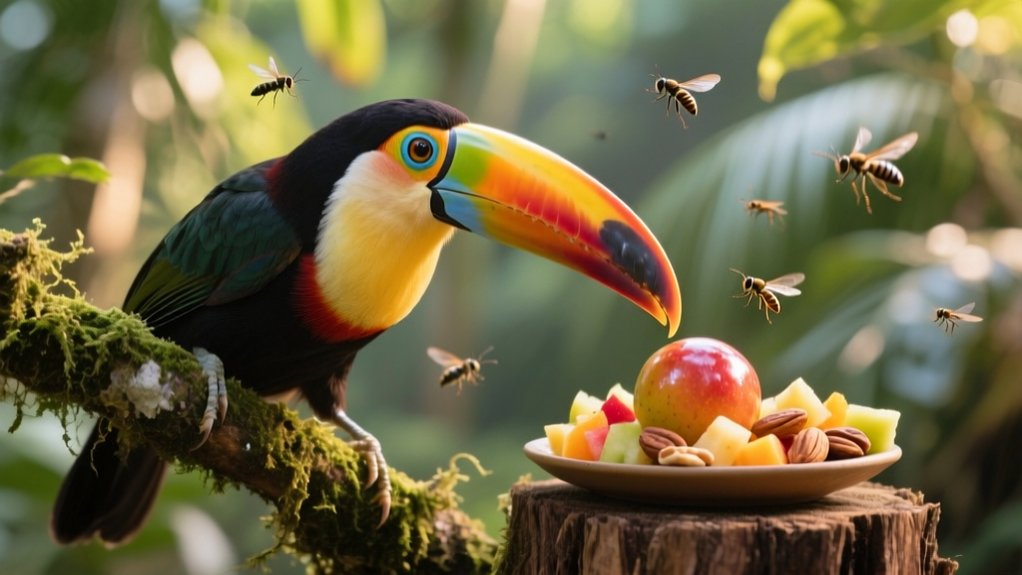
You’ll find toucans mainly feast on a variety of fruits like figs, berries, and palm nuts in the wild, complemented by insects and small animals for protein. In captivity, their diet shifts toward low-iron pellets and fresh fruits, avoiding citrus to prevent iron absorption issues.
They eat frequently to balance energy and nutrients, adapting seasonally from more fruit to increased insects. Understanding their feeding habits reveals critical insights into their health, growth, and ecological role in rainforest ecosystems.
Overview of Toucan Dietary Habits
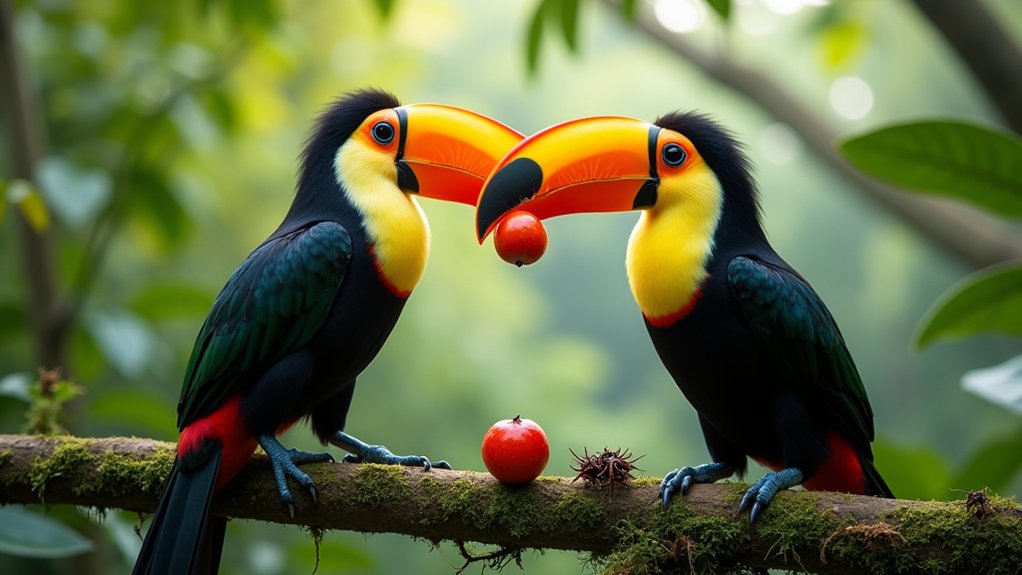
Toucan dietary habits revolve primarily around a diverse range of fruits and animal matter, reflecting their adaptability in tropical rainforest ecosystems. You’ll find toucans consuming over 100 fruit species, including berries, figs, and palm nuts, with fruit availability peaking in the rainy season. They avoid citrus fruits to prevent vitamin C’s effect on iron absorption. Toucans are mainly forest species reliant on primary forests with large old trees, which provide the essential habitat for their feeding and nesting needs.
Protein intake comes from insects like beetles and ants, small vertebrates, and seasonal nest raiding of bird eggs. This protein is especially vital for juveniles. You’ll observe their dietary flexibility increases during dry months when fruits decline, shifting to more animal prey.
In captivity, you must provide low-iron pellets and fresh fruits like papaya and melon, avoiding standard parrot diets that risk iron storage disease. Their diet balances carbohydrates, proteins, fats, vitamins, and minerals efficiently.
Classification as Frugivores and Omnivores
Although primarily frugivorous, these birds exhibit omnivorous tendencies that improve their nutritional intake and ecological resilience. You’ll find fruit makes up about 87% of their diet, with over 100 plant species identified in stomach contents.
Yet, toucans actively supplement this with animal protein, consuming insects like beetles and caterpillars, as well as small vertebrates and eggs. This omnivory distinguishes them from strict frugivores, ensuring they obtain essential fats and nutrients absent in fruit alone. They forage mostly in treetops where both fruit and insects are abundant, using their large bills to reach and grasp food efficiently, aided by serrated edges. arboreal foraging adaptations
In captivity, toucans continue insect hunting, evidencing innate omnivorous behavior. This dietary flexibility supports growth, especially in juveniles, and adapts to seasonal or habitat-driven food availability.
Understanding this dual classification clarifies toucans’ complex feeding ecology and their role as both seed dispersers and opportunistic predators.
Daily Food Intake and Nutritional Needs
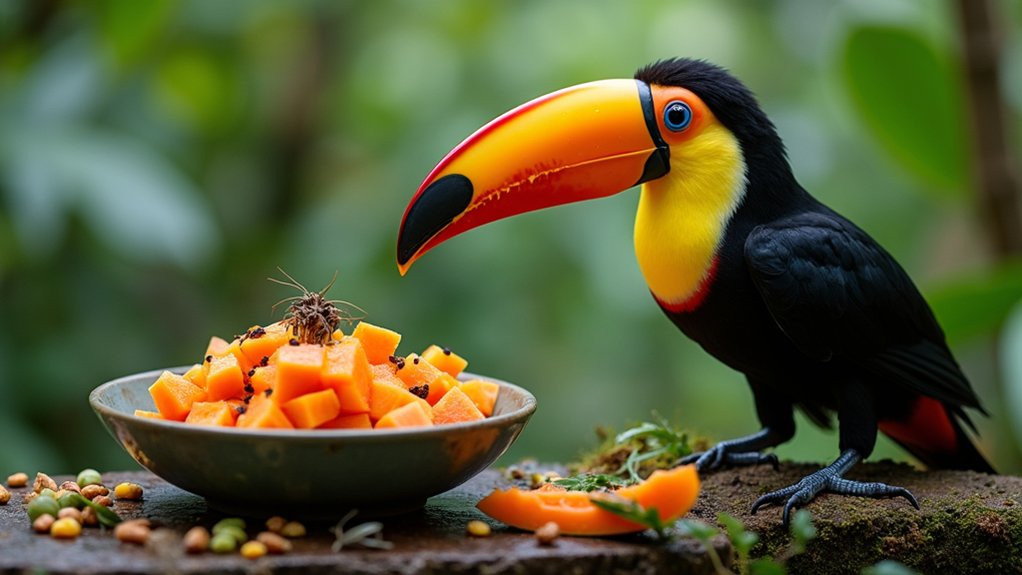
Because of their high metabolic demands and short digestive tracts, these birds consume large quantities of food daily, typically between 300 to 400 grams, amounting to up to 20% of their body weight.
You’ll observe that toucans feed frequently throughout the day, maintaining energy via multiple meals aligned with environmental availability.
Their diet must balance carbohydrates, proteins, fats, vitamins, minerals, and water. Since fruit alone lacks sufficient protein, they supplement with insects, small animals, and eggs to meet amino acid needs, especially during growth phases.
Moisture-rich foods support physiological functions, while rapid gastric transit mandates continuous searching behavior. Frequent, loose droppings are common due to their digestive physiology.
In captivity, you should replicate this balance by combining low-iron pellets and diverse fruits, avoiding live insects due to parasite risks.
This precise intake pattern sustains their active metabolism and overall health.
Key Fruit Sources in the Wild
When exploring the diet of toucans in their natural habitat, you’ll notice they rely heavily on a variety of native rainforest fruits. These fruits provide essential nutrients, supporting their frugivorous lifestyle. Key sources include species that offer year-round availability and high nutritional value.
Toucans thrive on diverse native rainforest fruits, gaining vital nutrients for their frugivorous lifestyle.
- Fig trees: Preferred for their consistent fruiting and protein content, figs form a significant portion of toucans’ intake.
- Cecropia and Miconia fruits: These native species deliver crucial vitamins and minerals, frequently consumed across diverse rainforest zones.
- Virola, Protium, and Casearia: Complement the diet by broadening fruit diversity, ensuring nutritional balance.
This diverse fruit consumption allows toucans to plunge efficiently to their environment, maintaining energy and health throughout varying fruit availabilities. Additionally, toucans supplement their primarily fruit diet with insects and small animals to meet their protein needs.
Seasonal Changes in Wild Diets
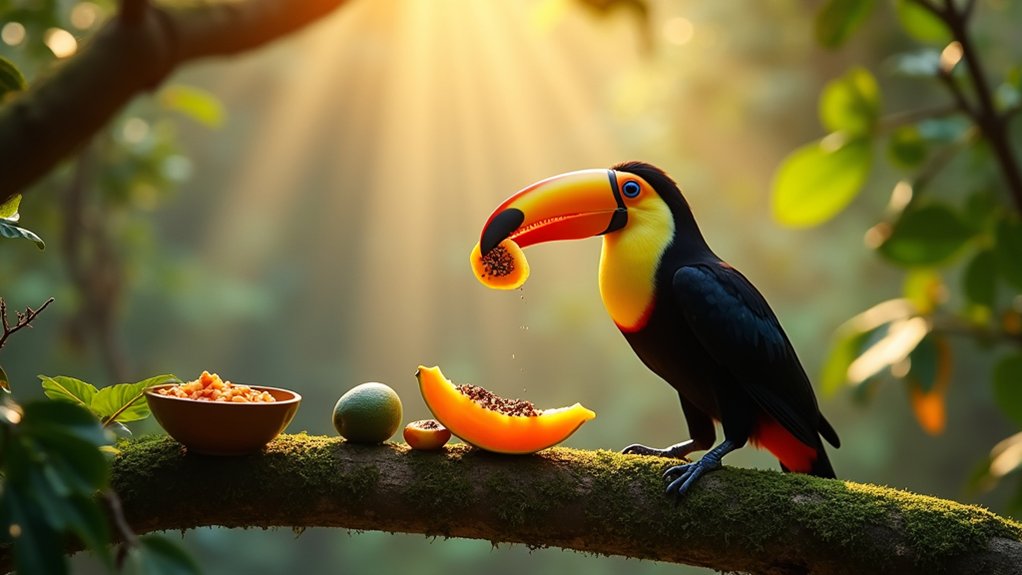
You’ll notice that during the rainy season, toucans eat a lot more fruit because many fruiting plants are at their peak.
Then, when the dry season comes and fruit is harder to find, they switch things up by eating more insects like beetles and ants to get the protein they need.
This change in their diet depending on the season is really important—it helps them survive in the ever-changing rainforest environment.
In captivity, however, toucans like Ripley have diets carefully controlled to avoid health problems associated with feeding wild insects, emphasizing the importance of dietary management.
Rainy Season Fruit Increase
Although fruit availability fluctuates seasonally, toucan birds capitalize on the rainy season‘s peak abundance of fleshy, lipid-rich fruits to meet their dietary energy demands.
During this period, the rainforest offers ideal feeding conditions with high metabolizable energy from fruits containing up to 28.9% fat and 3,107.5 kcal/g.
You’ll notice toucans intensify foraging in upper and middle canopies, often in flocks of 10-20, efficiently exploiting these resources.
Key observations include:
- Lipid-rich fruit species flourish from September to November, supplying essential fats.
- Fruits sustain energy needs, reducing the necessity for ground foraging or predation.
- Nest-robbing and insect hunting behaviors decline due to ample fruit availability.
- This seasonal fruit availability coincides with a decrease in predatory behaviors such as nest-robbing, which tend to increase during dry seasons when fruit is scarce nest-robbing behavior.
This seasonal fruit increase directly supports toucans’ energetic and nutritional requirements, minimizing reliance on alternative protein sources.
Insect Intake Fluctuations
As fruit availability declines during the dry season, toucan birds increase their insect consumption to meet nutritional needs. This dietary flexibility helps them adapt to fluctuating food resources in rainforest environments. Insects provide essential protein and amino acids, especially during breeding when chicks require heightened nutritional support. You’ll notice toucans targeting beetles, caterpillars, ants, and termites more frequently, supplementing their diet with small reptiles and bird eggs opportunistically. It is important to note that in the wild, toucans consume a variety of foods including fruits, berries, lizards, rodents, small birds, and insects, reflecting their omnivorous diet.
| Season | Primary Insect Types | Nutritional Role |
|---|---|---|
| Dry | Beetles, Ants | Protein for survival |
| Breeding | Caterpillars, Eggs | Amino acids for chicks |
| Juvenile | Soft insects | Growth and development |
| Opportunistic | Small reptiles | Supplemental protein |
| Rainy | Fewer insects | Fruit-focused intake |
Seasonal Food Availability
When fruit becomes abundant during the rainy season, toucans shift their diet to focus heavily on a wide variety of tropical fruits, including berries, figs, and palm nuts.
This fruit-rich period allows them to maximize frugivory, reducing reliance on protein sources like insects or small animals.
During the dry season, however, toucans increase their intake of beetles, caterpillars, and even small reptiles to meet nutritional needs when fruits are scarce.
You’ll notice these seasonal adjustments clearly:
- Over 100 fruit species consumed during rainy months, enhancing vitamin and mineral intake
- Protein sources rise from 10-20% to 30-40% of diet in drier times
- Foraging shifts between canopy layers and times of day to optimize food access
This dietary flexibility guarantees toucans thrive despite fluctuating rainforest resource availability.
Insect Consumption and Protein Intake
Since toucans rely primarily on fruit for energy, they supplement their diet with a variety of insects and small invertebrates to obtain essential proteins and nutrients.
Toucans primarily eat fruit but depend on insects for vital proteins and nutrients.
You’ll observe toucans feeding on beetles, caterpillars, ants, termites, spiders, and larvae, mainly collected from leaves and branches in the upper and middle canopy.
This insect intake provides critical proteins, fats, and micronutrients that fruit alone can’t supply, especially crucial for young toucans’ growth and muscle development. Due to the lack of comprehensive research on toucan nutrition, understanding their natural protein sources is vital for informing captive care limitations.
During breeding, insect consumption increases markedly as parents feed protein-rich insects to chicks via direct feeding or regurgitation.
In the wild, this strategic insect consumption balances their frugivorous diet, supporting dietary completeness and physiological needs.
You’ll also notice that daily food intake includes up to 20% of body weight, with insects playing a key role in meeting protein demands.
Animal-Based Foods: Reptiles, Amphibians, and Rodents
You’ll notice toucans rely on small reptiles, amphibians, and rodents as crucial protein sources, especially during breeding and growth phases.
It’s pretty interesting how their opportunistic predation shows just how adaptable they’re to the ever-changing conditions and resources in the rainforest.
This animal-based intake actually supplements their mainly fruit-eating diet, making sure they get the essential nutrients needed for development and survival.
Protein Sources in Diet
Three primary categories of animal-based protein—reptiles, amphibians, and rodents—play essential roles in the diet of toucan species inhabiting Central and South American rainforests.
You’ll observe that toucans actively pursue small lizards from branches, exploiting their abundance and nutritional value for growth.
Frogs supplement their fruit-based diet seasonally, providing moisture and dense protein. Rodents serve as energy-rich prey, sometimes making up to 20% of a toucan’s body weight in daily intake.
- Lizards: Opportunistically hunted; support development
- Amphibians: Seasonal inclusion; high protein and moisture
- Rodents: Regular prey; concentrated energy source
This diverse protein consumption supports the metabolic and developmental needs of toucans, illustrating their adaptive foraging strategies within complex rainforest ecosystems.
Opportunistic Predation Behavior
Although toucans primarily consume fruit, their opportunistic predation behavior on reptiles, amphibians, and rodents plays an important role in meeting their protein requirements.
You’ll notice toucans target small to medium-sized lizards within canopy habitats during routine foraging, especially increasing intake during breeding.
Frogs are hunted less systematically but opportunistically in accessible canopy zones, reflecting seasonal protein demands and habitat availability.
Young rodents, particularly rats, serve as vital protein sources; you’ll observe heightened predation during chick-rearing seasons, both in the wild and captivity.
This active hunting occurs mostly in upper and middle canopy levels, often involving groups exceeding 20 individuals to improve prey detection.
Their dynamic predation strategies adjust to local food availability, ensuring they fulfill protein needs essential for survival and reproduction.
Additionally, toucans have been observed consuming eggs from ground nests, indicating a previously unrecognized feeding behavior that highlights their adaptability in disturbed habitats.
Nutritional Importance for Growth
The opportunistic predation behavior of toucans on reptiles, amphibians, and rodents directly supports their nutritional needs for growth, particularly during early life stages.
Young toucans depend heavily on animal protein to obtain essential amino acids absent from fruit.
Insects like beetles and termites provide critical fats and nutrients for nestling development.
In the wild, supplementing diet with small vertebrates and bird eggs improves protein intake.
In captivity, controlled insect feeding and specially formulated low-iron pellets prevent iron overload while ensuring adequate nutrition.
Key points to reflect on: Animal proteins supply essential amino acids crucial for healthy growth.
Insects offer lower iron levels, reducing risk of toxicity in captivity.
Dietary adjustments guided by growth monitoring maintain toucan health.
This balanced approach supports peak development and long-term well-being.
Nest Raiding and Opportunistic Feeding Behavior
When food resources become scarce, toucans actively raid nests of other bird species, using their large, lightweight bills to reach eggs and nestlings deep within tree cavities or suspended nests. This behavior, more pronounced in larger species like the Toco toucan, supplements their frugivorous diet with crucial proteins, especially when feeding chicks.
You’ll notice toucans forage primarily in upper and middle canopies where nesting is dense. Occasionally, they expand to ground nests under disturbed conditions. Research has shown that toucans prey on eggs of ground-nesting birds, particularly in disturbed habitats. Their bill structure provides mechanical advantage, allowing efficient plundering and intimidation of smaller birds.
| Behavior Aspect | Target Prey Types | Ecological Significance |
|---|---|---|
| Nest Raiding | Eggs, nestlings | Protein supplementation |
| Opportunistic Feeding | Insects, lizards | Dietary flexibility |
| Ground Nest Predation | Eggs | Novel food web interaction |
| Social Foraging | Collective raiding | Improved prey detection |
| Habitat Influence | Fragmented forests | Increased predation frequency |
Role of Fruits Like Papaya, Melon, and Berries
Because toucans rely heavily on fruit in captivity, understanding the specific roles of papaya, melon, and berries is essential for maintaining their health.
Papaya serves as the main dietary component, providing digestive enzymes and crucial vitamins that support metabolic functions.
Melons, including cantaloupe and honeydew, offer hydration through their high moisture content and deliver low-calorie nutrients.
Berries, especially blueberries, contribute fiber and antioxidants while maintaining low iron levels, mitigating risks of iron storage disease.
Key roles of these fruits include:
Papaya and melon supply low-iron nutrition critical for preventing hemochromatosis.
Berries add consistent hydration and essential dietary fiber.
The soft texture of these fruits matches toucan physiology, reducing dependence on hard seeds.
This combination mirrors natural foraging and supports captive toucan well-being.
Captive Diet Composition and Management
You should offer toucans a varied selection of fresh fruits, but it’s important to keep low-iron pellets as the main part of their diet. This helps prevent iron overload, which can be a serious health issue. Providing a balanced diet is crucial to prevent nutritional deficiencies and support overall health.
Now, when it comes to fruits, avoid citrus fruits altogether. That’s because their vitamin C and citric acid content can increase the risk of iron absorption, which we want to steer clear of.
Also, try to keep the pellets and fruit separate during feeding times. This not only helps maintain the integrity of the pellets but also encourages ideal nutrient uptake.
Fruit Variety Offered
Although toucans thrive on a fruit-rich diet in captivity, you must offer a diverse selection daily to meet their nutritional needs and prevent selective feeding.
Providing a mixed fruit salad mimics natural foraging and balances nutrient intake. This is especially important given their susceptibility to iron storage disease. Many frugivorous birds, including toucans, naturally consume seasonal fruit varieties in the wild, which helps them obtain a balanced diet.
Carefully avoid citrus, tomatoes, and avocado due to toxicity or iron-binding effects.
Focus on these fruit varieties for ideal health:
- Staple fruits: apples, bananas, blueberries, cantaloupe, cherries
- Rotation options: mango, papaya, grapes, melons, strawberries
- Preparation: wash thoroughly, dice to suitable size, serve separately from pellets
Monitor consumption closely, offering new fruits for several days to assess acceptance.
This variety supports their frugivorous nature while preventing nutritional imbalances common in captivity.
Low-Iron Pellet Use
While providing a varied fruit selection addresses many nutritional needs of captive toucans, relying solely on fruit can lead to imbalances, particularly concerning iron intake.
You must incorporate low-iron pellets that contain no more than 85 to 100 ppm iron, as exceeding these levels risks iron storage disease. These pellets are formulated with cereal grains and derived products and include beneficial ingredients like dehydrated apple pulp and dried brewer’s yeast to meet nutritional requirements.
Pellets like Mazuri Softbill Diet or Versele-Laga T20 provide balanced protein (around 21%), fat (9%), fiber (5.1%), and tannins to reduce iron absorption.
Aim for pellets to constitute about 70% of the daily ration, crushing large pellets or mixing small ones with fruit to guarantee consumption.
Regular batch analysis is critical due to iron content variability.
Moreover, controlling dietary vitamin C and environmental iron exposure helps prevent excess absorption, safeguarding toucan health in captivity.
Citrus Fruit Restrictions
Because citrus fruits contain high levels of vitamin C and citric acid, they greatly accelerate iron absorption in captive toucans, increasing the risk of iron storage disease.
Citric acid binds chemically to dietary iron, enhancing its bioavailability and preventing natural excretion processes. This cumulative iron accumulation can damage organs over time, a condition known as hemochromatosis, prevalent in captive populations.
To manage these risks, you should:
- Eliminate all citrus fruits like oranges, lemons, and limes from toucan diets entirely.
- Avoid tomatoes and processed fruits containing citric acid as preservatives.
- Prefer fresh, non-citrus fruits such as papaya, blueberries, and melons to maintain nutritional balance, ensuring the diet consists of fresh fruits that provide essential vitamins, minerals, and hydration.
Importance of Low-Iron Pellets for Captive Toucans
When managing captive toucans, you must prioritize low-iron pellets to prevent iron storage disease, a critical health threat caused by excessive iron accumulation in their livers. Toucans distinctly absorb and retain dietary iron at levels toxic to them, making pellets with less than 100 ppm iron vital. These specialized pellets, like Mazuri low-iron softbill formulations, undergo rigorous batch testing to guarantee safety. Incorporating tannins in pellets reduces iron bioavailability, while limiting vitamin C prevents increased iron absorption. You should administer pellets as the primary diet base, supplementing with fresh fruit to maintain nutritional balance and encourage consumption. Consistent use of low-iron pellets considerably lowers hemochromatosis risk, supporting better health, longevity, and reproductive success in captivity. Providing a balanced diet is essential for overall toucan health and well-being. This targeted dietary management remains the most effective preventive measure against iron toxicity.
Foods to Avoid in Captivity and Reasons
Although toucans thrive on carefully controlled diets in captivity, you must avoid certain foods that pose serious health risks.
Seeds and nuts, for example, contain high iron levels that toucans can’t digest. This leads to toxic accumulation and intestinal complications.
Citrus fruits and other high citric acid foods increase iron absorption, escalating the risk of dangerous iron overload.
Furthermore, high-iron content produce grown in temperate soils contrasts with their natural tropical diet, causing harmful iron buildup in organs.
Seeds and nuts: undigestible and iron-toxic
Citrus fruits: raise iron absorption dangerously
Temperate-grown produce: leads to iron overload
Additionally, toucans require a diet low in iron to prevent iron storage disease, which is a common health issue in captivity.
Iron Storage Disease and Health Considerations
You should know that toucans are really prone to iron storage disease because they don’t regulate iron absorption in their intestines very well.
It’s important to manage their diet carefully by providing low-iron pellets and keeping an eye on how much vitamin C they get.
Why vitamin C? Well, it can increase iron absorption, which isn’t good in this case.
By controlling these factors, you can help prevent toxic iron buildup that can damage their organs.
Also, keeping tabs on any environmental sources of iron and tweaking their feeding routines can make a big difference.
Liver biopsy is the best method to evaluate iron status antemortem in these birds.
Doing all this can greatly lower the chances of this serious and often deadly condition.
Iron Sensitivity Risks
Because excessive iron accumulates as hemosiderin in tissues like the liver, spleen, and heart, toucans and related species face significant risks of iron storage disease. This condition causes oxidative damage when hepatic lysosomes release ionic iron, leading to fibrosis and organ failure.
Early stages show no symptoms, but advanced disease manifests as anorexia, dyspnea, and ascites. You should be aware of these risks because affected birds often collapse suddenly.
Key iron sensitivity risks include:
- Lack of regulation in dietary iron absorption, especially in toucans and mynahs
- Progressive damage primarily in the liver, with secondary heart and spleen involvement
- Diagnostic challenges requiring hepatic biopsy and specialized staining for confirmation
Additionally, foods high in vitamin C, like citrus fruits, can increase iron absorption and exacerbate the condition, so dietary management is crucial to prevent iron overload in these species vitamin C impact.
Understanding these factors helps you recognize and anticipate iron overload complications in toucan care.
Dietary Management Strategies
When managing iron storage disease in toucans, establishing a diet low in bioavailable iron is essential to prevent toxic accumulation and organ damage. You’ll rely on low-iron pellets (under 100 ppm), specifically formulated for toucans, ensuring iron content is analyzed batch-wise due to variability. Toucans require a high moisture diet due to a short digestive tract, so hydration from fresh fruits is particularly important. Mixing crushed pellets with ripe, non-citrus fruits like papaya or berries improves intake while avoiding vitamin C-rich citrus, which increases iron absorption. Incorporate high-tannin foods, such as tamarind, to bind dietary iron and reduce bioavailability. Protein sources should be controlled insects or iron-sensitive commercial supplements. Monitor water iron levels rigorously and use non-rusting materials for feeders. Regular health assessments and hepatic biopsies guide individualized dietary adjustments, accounting for species needs and seasonal fruit availability, to mitigate iron overload and maintain toucan health effectively.
Adaptability to Food Availability in Natural Habitats
Although toucans primarily depend on fruit, they adjust their diet in response to seasonal fluctuations in food availability within their natural habitats. You’ll notice that during rainy seasons, they consume more fruit due to its abundance.
In drier months, they shift toward insects and small animals to meet protein needs. This opportunistic feeding behavior enables them to survive in fluctuating environments.
Key adaptations include:
- Increasing insect predation and small animal consumption when fruit is scarce
- Consuming approximately 300-400 grams daily, varying intake throughout the day
- Exploiting alternative food sources such as eggs and agricultural fruits when natural resources decline
Ecological Impact of Toucan Feeding Patterns
The adaptability toucans show in their diet directly influences the ecosystems they inhabit. By dispersing seeds from over 100 fruit species, they promote forest regeneration and maintain biodiversity. Their insect predation controls invertebrate populations, supporting ecological balance.
However, habitat loss diminishes these functions, threatening ecosystem health. You can observe their multifaceted impact in the following table:
| Ecological Function | Impact Description |
|---|---|
| Seed Dispersal | Promotes forest regeneration over wide areas |
| Insect Population Control | Regulates beetle, ant, and termite numbers |
| Dominant Frugivore Role | Supports tropical rainforest diversity |
| Habitat Loss Impact | Reduces food resources, affecting survival |
| Predation on Birds | Controls smaller bird populations via nest raiding |
Understanding these roles clarifies toucans’ essential contribution to rainforest dynamics.
Frequently Asked Question
How Do Toucans Use Their Large Bills to Eat Different Foods?
You use the toucan’s large bill to grasp and manipulate diverse foods efficiently. Its serrated edges help you catch and hold slippery fruits or insects, while you toss food toward the throat for swallowing.
You pluck fruits with quick head tilts, crack seeds, and pick apart prey held by your feet.
The bill’s length lets you reach distant food without moving much, conserving energy and allowing safe foraging on fragile branches.
What Time of Day Do Toucans Typically Forage for Food?
You’ll notice toucans forage most actively during early morning and late afternoon. They start at dawn, targeting fruiting trees in their home range when fruits are freshest and temperatures ideal.
A secondary foraging peak occurs late afternoon, as they seek new fruit sites and prepare for roosting.
Throughout the day, toucans feed continuously but avoid nighttime activity, adjusting foraging based on temperature, food availability, and seasonal changes.
How Do Juvenile Toucans Learn What Foods to Eat?
Think of juvenile toucans as apprentices in a grand culinary school, where parents serve as master chefs.
You’ll observe that young toucans learn their diet by watching and mimicking parental foraging and feeding behaviors.
They rely on regurgitated, pre-digested food to develop their digestive systems.
Through repeated exposure to diverse fruits and insects, plus hands-on bill manipulation practice, they acquire dietary flexibility and essential nutrition, ensuring healthy growth and survival.
Do Toucans Store Food for Later Consumption?
You won’t find evidence that toucans store food for later consumption.
Observations show they typically eat fruits, insects, and small animals soon after foraging. Their feeding behavior is opportunistic and immediate, likely due to their high metabolism and the perishable nature of their food.
Unlike some birds that cache, toucans focus on rapid intake rather than storage.
How Does Toucan Feeding Behavior Differ Between Males and Females?
You won’t find documented differences in feeding behavior between male and female toucans.
Both sexes consume comparable diets, focusing on fruits and protein sources to meet nutritional needs.
Observations indicate they forage and feed alike, without distinct roles or preferences tied to gender.
Instead, feeding strategies depend more on availability and environmental factors than on sex-based behavioral divergence.
Conclusion
You’ll find it fascinating that toucans consume up to 80% fruit in the wild, highlighting their role as key seed dispersers in tropical ecosystems. By understanding their frugivorous and omnivorous diet, you can better appreciate how seasonal changes and nutritional needs shape their feeding behavior.
In captivity, avoiding iron-rich foods is essential to prevent iron storage disease. Overall, toucans’ dietary adaptability underscores their ecological importance and the need for informed care.