
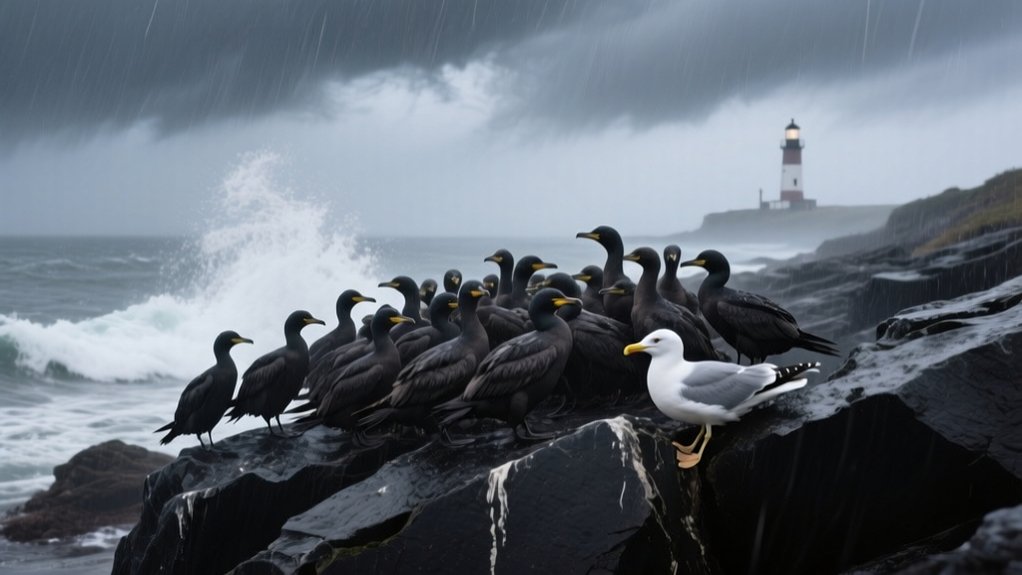
When a storm approaches, you’ll notice birds detect subtle changes in air pressure and temperature. This prompts them to seek shelter quickly.
Perching birds cling to thick branches near tree trunks or retreat into dense foliage to stay protected from wind and rain. Cavity nesters hide inside tree holes or roost boxes, while water birds shift to sheltered edges or dense vegetation. These instinctive behaviors maximize their survival chances.
If you investigate further, you’ll uncover how plants and humans also play crucial roles in helping birds withstand storms.
How Birds Detect Approaching Storms
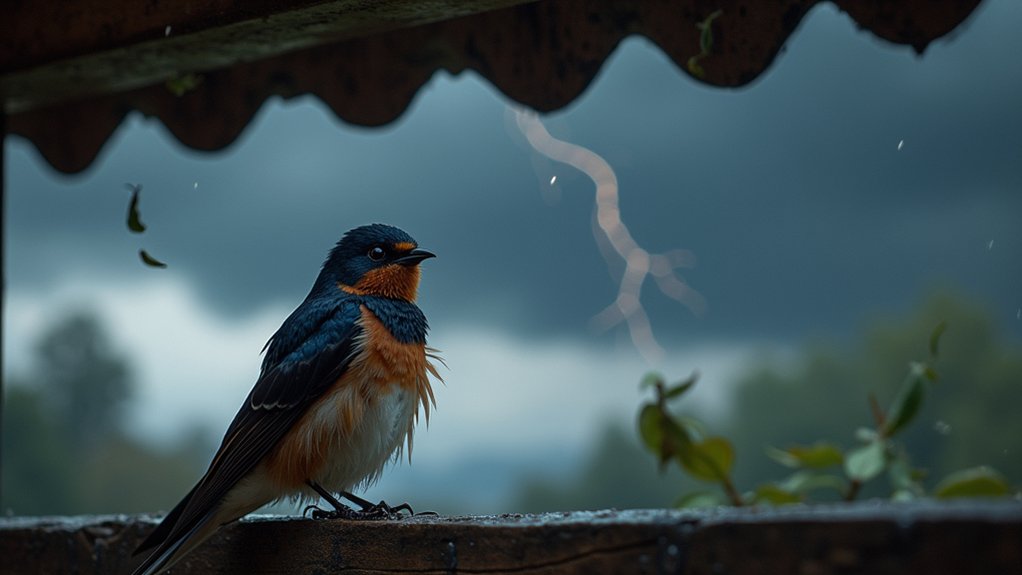
Although storms can catch many by surprise, birds detect their approach through subtle shifts in air pressure, temperature, and humidity.
You’ll notice that birds have keen senses finely tuned to these environmental changes, allowing them to detect an impending storm well before it arrives.
As these shifts occur, birds often increase their foraging activity, gathering extra food to prepare for the challenging conditions ahead.
You might observe birds flocking together or venturing into less frequented areas, maximizing their energy reserves.
This heightened awareness helps them anticipate the need for shelter and safety.
Some species even sense storm indicators from afar, prompting early evacuation.
Understanding these behaviors reveals how birds rely on their sensory abilities to respond adaptively to changing weather patterns.
Common Shelter Choices for Perching Birds
Shelter plays a crucial role in how perching birds, like Blue Jays, withstand storm conditions. These birds use their specialized feet to grasp thick branches firmly, often positioning themselves close to tree trunks where wind and rain are less severe. Thick branches provide stable perches that reduce the risk of being dislodged during a storm.
Moreover, perching birds frequently seek refuge within dense foliage, which offers protection from harsh elements and helps conserve body heat.
Dense foliage shelters perching birds from harsh weather and aids in conserving their body heat.
Beyond natural options, many also roost in cavities or utilize roost boxes, which provide extra shelter and warmth in severe weather.
Understanding these common shelter choices highlights how perching birds adapt their behavior and habitat use to survive the challenges posed by storms.
Cavity Nesting Birds and Their Storm Refuge
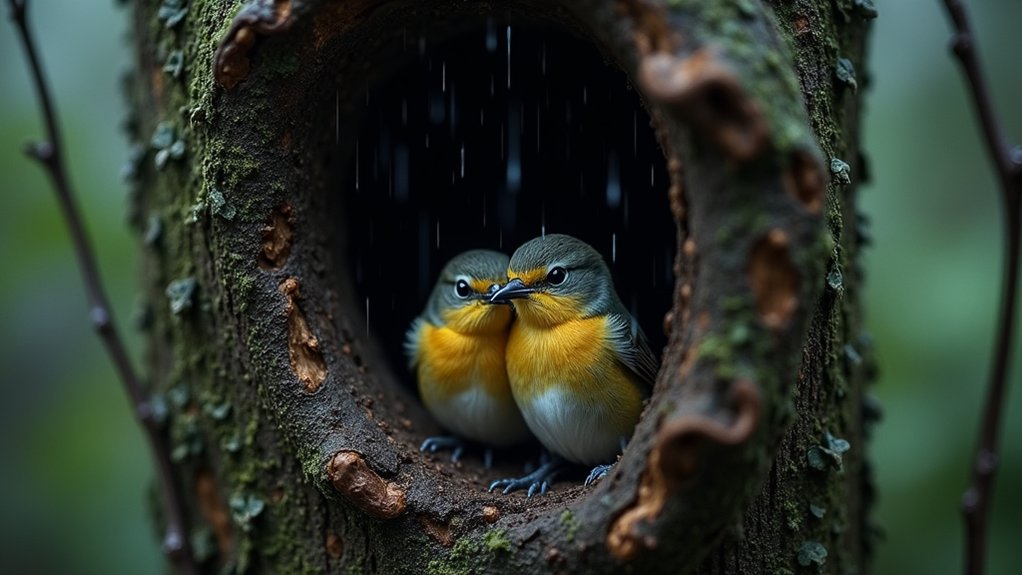
When storms roll in, you’ll often see cavity-nesting birds like chickadees retreating into tree cavities or roost boxes. They do this to escape the wind and rain.
These little shelters act like a secure barrier against the harsh weather outside.
And here’s something cool — inside these cozy spots, the birds often huddle together. By sharing their body heat, they stay warmer than if they were alone.
Roosting in Tree Cavities
Because cavity-nesting birds like chickadees and woodpeckers rely on tree cavities for protection, you’ll often find them retreating to these natural shelters during storms.
These birds seek refuge in tree cavities that provide effective shelter from harsh weather, shielding them from wind and rain. The enclosed space improves safety by minimizing exposure to predators and environmental stressors.
Furthermore, cavity-nesting birds frequently utilize roost boxes, artificial cavities that mimic natural shelters, to roost during inclement weather.
The design of both natural and artificial cavities helps conserve warmth, allowing birds to maintain body heat efficiently.
As the storm passes, these birds emerge from their safe havens, having endured the harsh conditions within the protective confines of tree cavities and roost boxes.
For bird enthusiasts considering aviaries, understanding species compatibility is crucial, as some birds—like cavity nesters—require specific shelter types to stay safe during extreme weather.
Sharing Warmth in Boxes
Natural tree cavities and roost boxes serve not only as physical shields from storms but also as communal spaces where cavity-nesting birds, like chickadees and woodpeckers, gather closely to share body heat. This behavior improves warmth and helps birds survive harsh weather.
Roost boxes, designed to retain heat and offer shelter, provide security during storms. Multiple birds often crowd into a single cavity, maximizing heat conservation.
In some species, this communal roosting continues even after fledglings leave the nest, as young birds may briefly share shelter with family members before becoming fully independent.
| Species | Shelter Type | Group Behavior |
|---|---|---|
| Chickadees | Natural cavity | Huddle tightly to share warmth |
| Woodpeckers | Roost box | Cluster in familiar spaces |
| Nuthatches | Roost box | Cooperative roosting for survival |
Protection From Wind and Rain
Several cavity-nesting bird species, including chickadees, small owls, and woodpeckers, rely on natural cavities or roost boxes as storm refuges to shield themselves from wind and rain.
These cavity-nesting birds instinctively seek shelter in these secure refuges, which provide maximum protection against harsh elements. The structural integrity of cavities markedly resists storm impacts better than open nests, enhancing survival chances.
You’ll notice they often return to familiar roost boxes, ensuring a reliable shelter during severe weather. Furthermore, sharing these spaces helps maintain warmth, further boosting their resilience.
Water Birds’ Strategies for Storm Protection
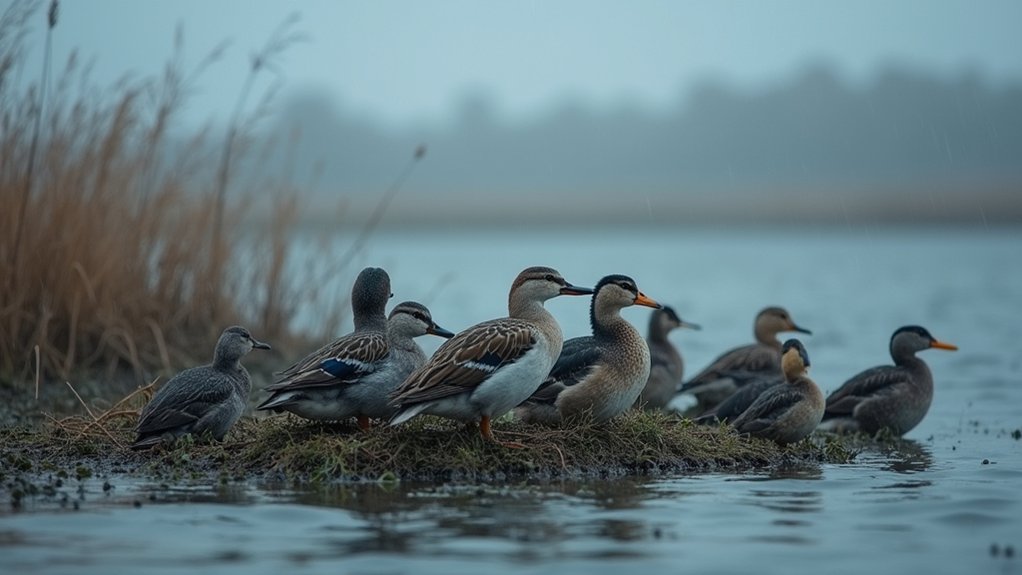
When a storm is on its way, water birds tend to look for spots that offer some shelter, usually near the water’s edge or tucked away in thick vegetation.
This helps them stay protected from the wind and rain. You might even see some of them moving quickly to safer places as the weather gets rougher.
These clever little moves really help them avoid too much exposure and keep steady when things get stormy.
Seeking Sheltered Water Areas
Although storms present significant challenges, water birds have developed targeted strategies to minimize exposure to harsh weather. When storms approach, you’ll notice birds actively seek sheltered water areas, such as coves or riverbanks, where natural features reduce wind and rain impact.
Ducks and herons often adapt by positioning themselves near dense vegetation or debris, providing critical protection from the storm’s severity. While some aquatic species prefer open water, relying on buoyancy, many waders choose these sheltered spots to reduce energy expenditure and avoid injury.
You can observe birds using their knowledge of local geography, selecting ideal locations that balance safety and access to water. This adaptive behavior guarantees they withstand storms more effectively, highlighting how water birds integrate environmental cues to improve their survival during harsh weather conditions.
Adaptive Location Changes
Three key adaptive location changes water birds make during storms help them balance safety and sustenance.
First, many water birds seek sheltered spots near water, allowing them to stay protected while maintaining access to food. You’ll observe wading birds clustering near debris or dense vegetation, which acts as natural shelter against wind and rain.
Second, some swimmers remain in open water, using their buoyancy to withstand rough waves.
Third, as storms intensify, birds rapidly adapt by relocating to safer habitats, often guided by their knowledge of the local geography.
This dynamic shifting guarantees they avoid the storm’s direct impact while preserving access to essential resources.
The Role of Native Plants in Providing Shelter
Native plants play an essential role in providing shelter for birds during storms by forming dense thickets that reduce their exposure to harsh weather.
You’ll notice evergreens, in particular, maintain foliage year-round, offering consistent protection and habitat for birds regardless of season.
The diverse plantings create layered habitats, so birds can find refuge and nearby foraging opportunities even in severe weather.
This diversity improves protection by supplying multiple shelter options and sustaining food sources crucial for survival.
Dense native plantings also act as windbreaks, helping to retain soil moisture and support the broader ecosystem birds depend on.
Additionally, native plants are critical for maintaining healthy bird populations by offering essential resources such as nesting sites and food, especially important during periods of habitat loss.
Creating Brush Piles to Support Wildlife During Storms
When storms approach, creating brush piles can greatly improve your backyard’s habitat complexity and provide vital shelter for birds and other wildlife. A well-constructed brush pile mimics natural debris, offering a refuge that protects birds from wind and rain during severe storms.
To build one, layer smaller branches over parallel logs, forming dense, sheltered spaces where birds like chickadees and sparrows can hide. These structures not only increase available shelter but also boost storm survival strategies by supplying reliable protection.
The Use of Roosting Boxes as Safe Havens
While brush piles offer natural shelter, roosting boxes provide an immediate, controlled refuge for birds during storms. These structures are designed with entry holes that trap heat, offering essential warmth and protection from harsh weather.
You can install roosting boxes in backyards, creating safe habitats that accommodate multiple birds simultaneously. Inside, perches improve comfort and reduce stress during turbulent conditions.
Songbirds and other species actively seek these shelters when storms approach, relying on the boxes as dependable refuge. By modifying existing nest boxes into roosting boxes, you can further support local bird populations.
The strategic placement of roosting boxes guarantees birds gain effective protection from wind, rain, and cold, increasing their survival chances during severe weather events and contributing to healthier backyard ecosystems.
Behavioral Changes Birds Exhibit Before Storms
You can actually notice birds picking up on small changes in barometric pressure and wind patterns that hint a storm is coming.
Before things get rough, they usually go into a bit of a feeding frenzy to stock up on energy.
Then, they tend to gather in sheltered spots, like thick shrubs, to keep safe.
It’s pretty fascinating how these behaviors show their natural instincts kicking in to help them survive tough weather.
Detecting Weather Changes
Although storms can seem sudden to us, birds detect subtle environmental cues that signal impending weather changes. They sense shifts in barometric pressure, wind patterns, and humidity, prompting immediate behavioral adjustments.
You’ll notice birds intensify foraging to boost energy stores, a vital preparation for storms. As weather conditions deteriorate, they move toward safe locations, such as dense vegetation or cavities, minimizing exposure to harsh elements.
This instinctive behavior guarantees they find adequate shelter before the storm arrives. By detecting these weather changes early, birds optimize their chances of survival, balancing energy acquisition with the need to seek protection.
Observing these patterns reveals how finely tuned their responses are to the environment, allowing them to respond swiftly and effectively to approaching storms.
Pre-Storm Foraging Frenzy
Because birds sense shifts in environmental factors like barometric pressure and wind patterns, they trigger a pre-storm foraging frenzy to build essential energy reserves. This behavioral change is a critical survival strategy, enabling birds to withstand severe weather by meeting increased energy demands.
During this period, you’ll observe birds amplifying their feeding habits and gathering in larger flocks to find food rapidly.
Key aspects include:
- Detecting barometric pressure drops and other environmental changes that signal an approaching storm.
- Increasing foraging activity to accumulate sufficient energy reserves needed for the storm’s impact.
- Gathering in larger flocks, which improves efficiency in locating food sources before conditions worsen.
This coordinated response guarantees birds maximize caloric intake, strengthening resilience against the harsh conditions ahead.
Gathering in Safe Areas
When storms approach, birds actively seek out safe areas to minimize exposure to harsh weather conditions. You’ll notice them gathering in places like dense shrubs, thickets, or on the downwind side of forests. Here, tree cover provides shelter to stay away from strong winds and rain.
Cavity-nesting species like chickadees and woodpeckers often retreat into roost boxes or natural nest cavities to weather severe storms. Before this, their foraging behavior intensifies to build energy reserves essential for survival during limited activity periods.
Some birds even evacuate open foraging sites, moving inland to more sheltered habitats.
These behavioral changes show how birds instinctively seek shelter, balancing energy intake and safety to endure the challenges posed by approaching storms.
Flight Strategies: Going Around or Into the Storm
While storms present formidable challenges, birds actively adjust their flight paths by either circumventing the storm’s core or, in rare cases, flying into the eye where conditions are unexpectedly calm.
Birds will seek safer routes, going around the storm to avoid flight challenges posed by high winds and turbulence.
This avoidance behavior is evident during events like Hurricane Helene, where bird presence sharply declined in affected zones.
Consider these key strategies:
- Going around: Birds reroute to safer habitats, minimizing risk during storm hits and preserving energy for migration patterns.
- Entering the eye: Some species exploit calm conditions but risk accidental displacement to unfamiliar areas.
- Foraging flocks: Groups, such as brown pelicans, gather in deeper waters pre-storm to build reserves.
These adaptive strategies balance survival against environmental hazards.
Human Actions That Help Birds Survive Storm Conditions
Birds adapt their behaviors to withstand storms, but human intervention can greatly improve their chances of survival. You can help by providing a nutritious food source at backyard feeders, allowing birds to build energy reserves critical for storm survival strategies.
Installing roost boxes and creating natural shelters like brush piles offer essential protection from wind and rain. Participating in habitat cleanups supports safe environments, especially after storms damage natural habitats.
Roost boxes and brush piles provide vital shelter, while habitat cleanups restore safe spaces after storms.
Monitoring birds post-storm and contacting a wildlife rehabilitator for injured individuals aids recovery efforts. Furthermore, engaging in community efforts to raise awareness about bird safety during severe weather fosters collective action, enhancing overall protection.
Your involvement directly supports bird populations traversing the challenges posed by storm conditions. Providing insulated shelters and high-energy foods during cold or stormy weather further increases birds’ chances of survival.
Frequently Asked Question
Do Birds Communicate Storm Warnings to Each Other?
Birds don’t explicitly communicate storm warnings, but you’ll notice changes in their behavior that hint at increased awareness. They often make alarm calls and flock together more tightly, which can serve as indirect signals.
For example, species like American Robins increase vocal activity and foraging before severe weather, possibly alerting others.
While direct storm warnings aren’t proven, you can observe these collective behaviors as adaptive responses to environmental threats.
How Do Migratory Birds Adjust Their Routes for Storms?
Imagine you’re maneuvering through a maze where walls shift with every gust of wind.
Migratory birds adjust their routes in a comparable manner. They detect subtle changes in barometric pressure and veer away from stormy corridors.
You’d notice them forming larger flocks, pooling knowledge like a living GPS, choosing safer detours through inland vegetation.
Their guidance isn’t random; it’s a precise, dynamic response to environmental cues ensuring survival amid unpredictable atmospheric upheavals.
Can Storms Impact Bird Migration Timing Significantly?
Yes, storms can greatly impact bird migration timing. You’ll notice that birds often adjust their schedules in response to approaching storms, sometimes departing earlier or delaying migration.
These weather events disrupt food availability and habitats, forcing birds to adapt. Over time, repeated storms can cause long-term shifts in migratory patterns, altering population distributions.
Do Baby Birds Survive Storms as Effectively as Adults?
Baby birds don’t survive storms as effectively as adults because they lack flight ability and mobility, leaving them vulnerable.
You’ll notice they rely heavily on adults for protection and shelter. Their survival depends on nest safety and parental care.
In cavity nests, protection improves, but exposed nestlings risk hypothermia or drowning.
You should understand that adult birds’ preparedness and nest integrity critically influence baby birds’ chances during harsh weather.
Are Certain Bird Species More Vulnerable to Storm Damage?
Yes, certain bird species are more vulnerable to storm damage.
You’ll notice smaller birds like songbirds rely on foliage that storms can easily strip away. Ground-nesting species risk nest flooding or destruction.
Birds with limited mobility or habitat-specific needs, such as shorebirds, struggle more during storms. Migratory birds face disrupted routes and exhaustion.
Conversely, cavity-nesting birds, like woodpeckers, find better protection due to secure tree cavities shielding them from wind and rain.
Conclusion
When storms approach, birds act with precision, seeking shelter like sailors steering through rough seas. You’ll notice them choosing dense native plants, cavities, or roosting boxes to shield themselves from harsh winds and rain.
Their behavior shifts. Flight patterns adjust, and they conserve energy to endure. By understanding these strategies, you can help provide safe habitats, ensuring birds withstand storms more effectively and maintain the delicate balance of their ecosystems.