
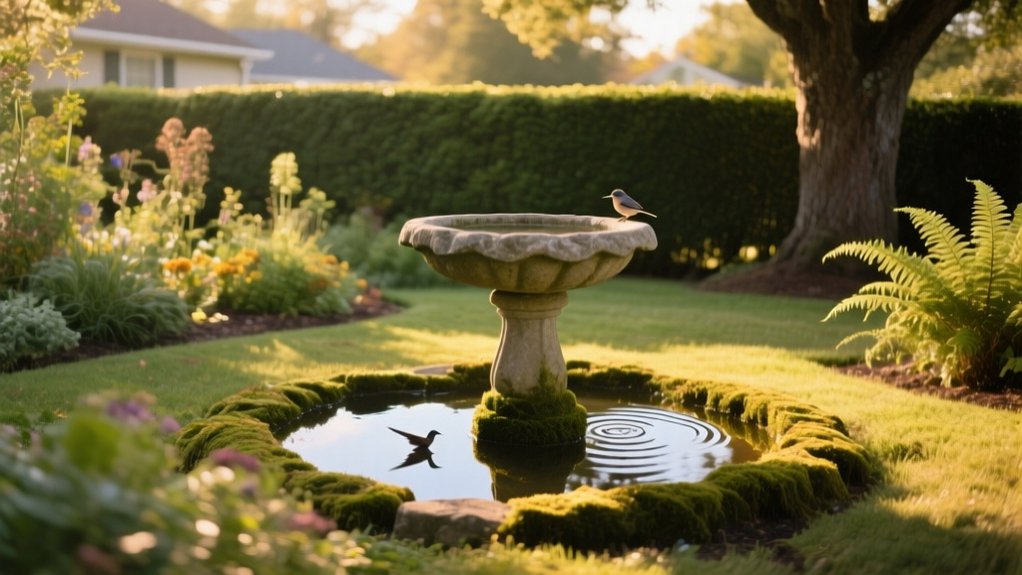
Place your birdbath in a shaded, level spot near natural cover like shrubs or trees to offer birds safety and cooler water. Keep it at least 10 feet away from feeders and windows to avoid contamination and collisions.
Adjust its position seasonally, moving it to sunnier spots in winter and shadier ones in summer for year-round appeal. Avoid direct sunlight, pet areas, and open ground.
Adding accessories can further improve its attractiveness. Investigate these details to perfect your bird-friendly oasis.
Key Takeaways
- Place the birdbath in a shaded area to keep water cool and reduce evaporation.
- Position near shrubs or trees for shelter and predator cover.
- Maintain at least 10 feet distance from bird feeders to keep water clean.
- Choose level ground for stability and ease of maintenance.
- Avoid placing too close to windows to reduce bird collision risks.
Factors to Consider When Choosing a Location

When selecting a spot for your birdbath, prioritize shaded areas to keep the water cool and slow evaporation, especially during hot summer days.
Position your bird bath in a shady spot near natural cover like shrubs or trees, providing birds with shelter and security.
Maintain at least a 10-foot distance from bird feeders to keep the water clean and reduce exposure to feces, which can contaminate this crucial water source.
Consider seasonal changes and the local climate to guarantee consistent usage throughout the year.
Place the birdbath on level ground to assure stability, prevent tipping, and facilitate maintenance.
Ideal Placement for Safety and Visibility
Selecting the right location for your birdbath involves balancing comfort and safety for visiting birds. To place your bird bath effectively, position it near shrubs or trees, providing cover from predators while keeping it visible from your home to improve your birdwatching experience.
Make sure the birdbath sits on level ground to provide a safe, stable area and avoid placing it directly under feeders to keep the water fresh and uncontaminated. A shaded spot helps reduce evaporation, maintaining cooler water. Clean water is crucial for safe bathing; birds prefer shallow, fresh sources to support their feather maintenance and overall health.
| Placement Factor | Reason |
|---|---|
| Near shrubs or trees | Offers predator cover |
| Visible from your home | Improves birdwatching |
| Level ground | Guarantees stability and safety |
| Avoid under feeders | Prevents water contamination |
Seasonal Adjustments for Optimal Use
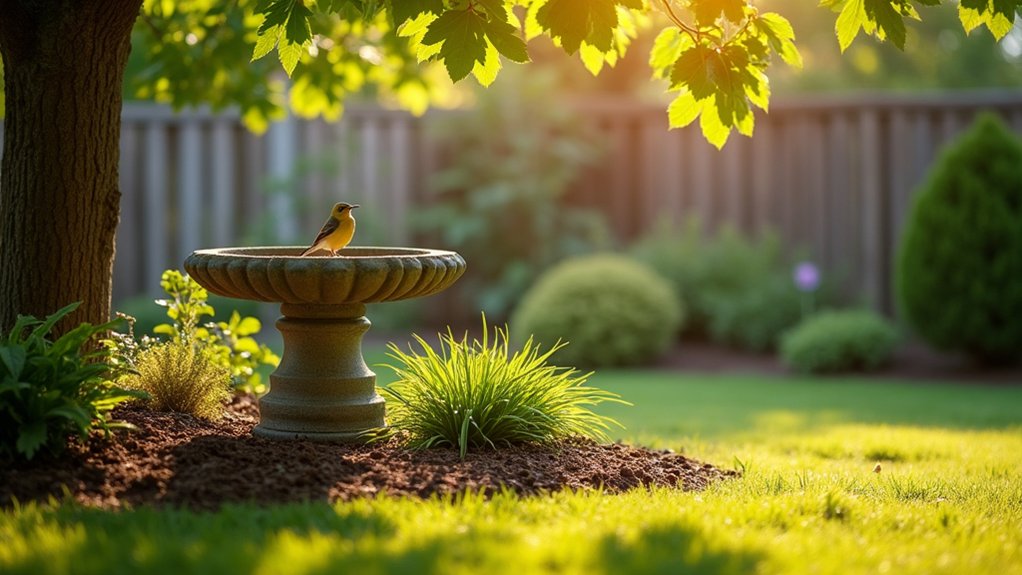
Although birdbaths serve as an essential resource year-round, adjusting their placement and maintenance according to seasonal conditions guarantees ideal usability and bird safety.
In winter, position your bird bath in a sunnier spot to minimize ice formation, ensuring birds access clean, liquid water.
During summer, relocate it to shaded areas to keep water temperature cool, reduce evaporation, and maintain consistent water depth with shallower edges for safety.
Seasonal adjustments also involve monitoring water movement to prevent stagnation and frequent refilling during extreme temperatures.
Moreover, consider seasonal shifts in bird species visiting your area. Repositioning the bird bath to the right location accommodates new arrivals during migration.
These precise, seasonal strategies optimize your bird bath’s function, promoting healthy hydration and safety for diverse bird populations throughout the year.
Common Placement Mistakes to Avoid
Proper placement plays a significant role in your birdbath’s effectiveness and the safety of visiting birds.
To optimize your bird bath’s location, avoid these common mistakes:
- Placing it directly under feeders, which causes contamination from droppings and debris.
- Situating it too close to windows, increasing collision risks for birds.
- Positioning it where pets or children can easily disturb the birds, compromising their safety and comfort.
- Leaving it in direct sunlight or open areas without cover, leading to overheating water and exposure to predators.
Enhancing Birdbath Appeal With Accessories
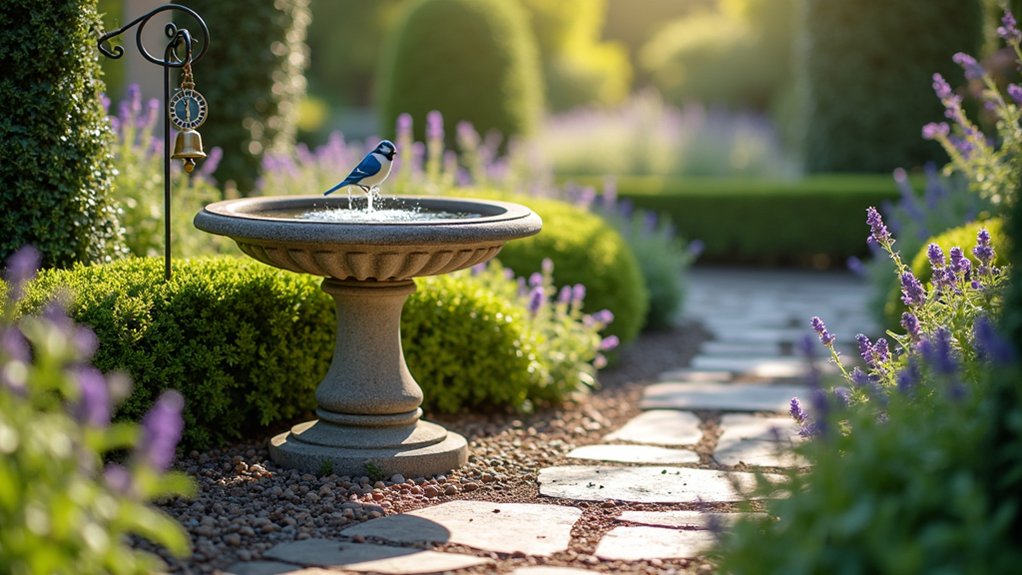
Improving your birdbath with carefully chosen accessories can greatly increase its attractiveness to birds. Adding stones or branches around the edges provides safe perching spots, facilitating easier access to the water.
Incorporate decorative elements like a small fountain or dripper to introduce moving water, which effectively attracts birds more than still water.
Make certain the bird bath has a shallow design, sloping from one inch at the edges to two inches in the center, to accommodate different needs of various species.
Surround your birdbath with native flowering plants and situate it near trees or shrubs to supply additional food sources and shelter.
Maintaining a clean bird bath and installing multiple birdbaths of varied sizes further improve appeal, creating an inviting habitat that caters precisely to diverse bird populations.
For best results, select accessories and bird baths made from weather-resistant materials to ensure durability and long-term enjoyment in your garden.
Frequently Asked Questions
How Often Should I Change the Birdbath Water?
You should change your birdbath water every single day, yes, daily!
Stale water invites unwanted guests like mosquitoes and deters birds from visiting.
In hotter weather, you might need to refresh it even more often to combat evaporation and algae growth.
Regularly breaking ice in winter is crucial, too.
What Type of Birdbath Material Is Best?
You’ll want to choose ceramic or stone for your birdbath, as they balance durability with temperature comfort for birds.
These materials provide stability and a natural aesthetic, resisting extreme heat or cold.
Avoid metal or plastic if you want longevity and minimal maintenance.
Glass looks elegant but lacks resilience.
Concrete is tough but can overheat or chill.
Can I Use a Heated Birdbath in Winter?
Can you provide birds with liquid water during freezing winter days? Yes, you can use a heated birdbath to keep water ice-free, ensuring birds stay hydrated.
Just remember to plug it into a safe circuit to avoid hazards.
Avoid adding harmful chemicals like antifreeze, and if you use immersion heaters, monitor them closely to prevent damage.
This method combines functionality and safety, delivering essential hydration when nature’s sources freeze over.
How Deep Should the Water Be?
You should keep the water depth between 1 inch at the edges and no more than 2 inches in the center. This shallow range mimics natural puddles, inviting various songbirds to safely drink and bathe without risk.
Adding small rocks or pebbles creates perches and varying depths, enhancing accessibility.
Regularly check the water level, as evaporation can reduce it, and adjust accordingly to maintain this ideal depth for your feathered visitors.
What Birds Are Attracted to Birdbaths?
You’ll attract a variety of birds like bluebirds, jays, doves, and finches to your birdbath.
Songbirds favor shallow water, about 1-2 inches deep, making it ideal for their drinking and bathing needs.
Migratory species often visit during their seasonal travels, increasing the diversity you’ll observe.
Even birds that don’t usually visit feeders appreciate the water source.
Adding perches nearby encourages more frequent stops, enhancing your birdbath’s appeal.
Conclusion
When placing your birdbath, you’ll want to balance safety, visibility, and seasonal needs with precision. Avoid common mistakes like placing it too close to predators or in direct, harsh sunlight.
Think of it as setting a sundial in the garden; timing and position matter. With thoughtful placement and tasteful accessories, you’ll create a haven that attracts birds effortlessly, blending function with natural elegance in your outdoor space.