
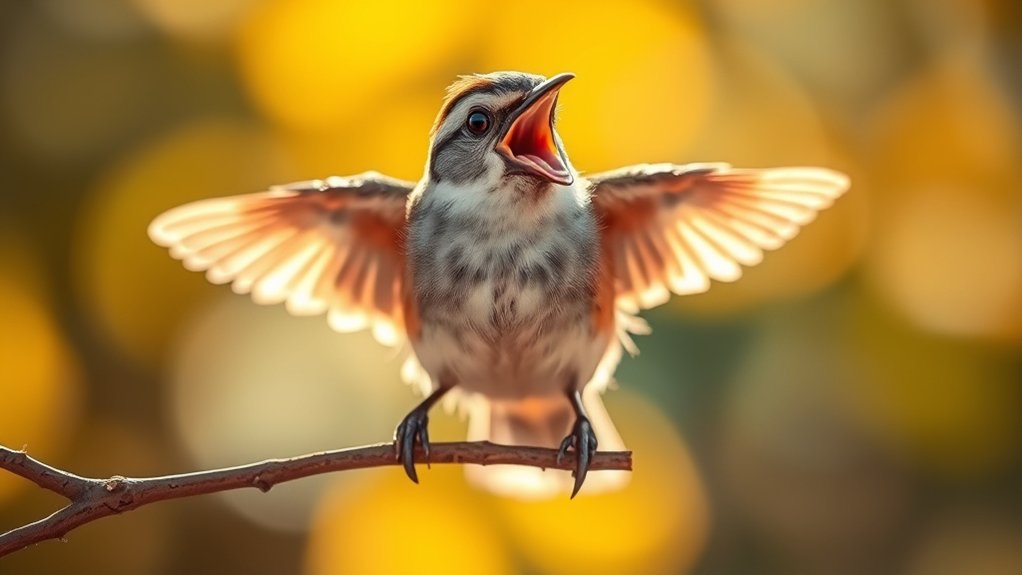
You see birds keeping their mouths open in hot weather because they’re panting and using gular fluttering. This is a rapid throat vibration that helps cool their bodies since they don’t have sweat glands like you do.
This open-mouth breathing boosts evaporation and heat loss through their respiratory system. Birds also seek shade and water to stay cool and reduce heat stress.
Discovering these clever ways birds beat the heat reveals how essential their behavior and habitat are during hot days.
How Do Birds Regulate Heat Without Sweat Glands?
When you see a bird opening its mouth wide in the heat, it’s not panting like a dog but using a clever cooling method called gular fluttering.
Birds open their mouths wide in heat, using gular fluttering—a smart cooling technique—not panting like dogs.
Since birds don’t have sweat glands, they rely on respiratory cooling to regulate their body temperature.
You’ll notice them engaging in open-mouth breathing, which triggers gular fluttering—rapid throat vibrations that boost airflow and evaporation.
This process helps them shed excess heat efficiently, especially during hot weather.
Their specialized respiratory system supports this by maximizing heat transfer, which is essential because birds maintain high body temperatures.
What Is Panting and Gular Fluttering in Birds?
When birds get too hot, you’ll often see them panting. This helps cool them down by speeding up evaporation.
Some species take this a step further with gular fluttering. That’s when they rapidly vibrate their throat membranes to boost cooling. You can spot this behavior in birds like nighthawks, cormorants, and mourning doves when temperatures soar.
Panting As Cooling Mechanism
Although birds can’t sweat like mammals, they rely on panting, also known as gular fluttering, to cool down in hot weather.
When you see a bird with its mouth open, rapidly breathing, it’s panting to lose heat. This rapid breathing causes the membranes in their throat to vibrate, increasing evaporation as air passes over moist surfaces.
Since birds lack sweat glands, panting becomes their primary way to regulate body temperature and prevent overheating.
You’ll often notice this behavior in species like nighthawks, whip-poor-wills, cormorants, and mourning doves.
When a bird is panting, it shows thermal stress, signaling that it’s actively working to cool down and manage heat exposure in its environment.
Gular Fluttering Explained
Because birds don’t have sweat glands, they rely on gular fluttering, a rapid throat vibration combined with open-mouth breathing, to cool down efficiently.
When you see a bird with its mouth open and throat rapidly vibrating, it’s using gular fluttering to dissipate heat.
This technique helps evaporate moisture from the respiratory tract, which cools the bird’s body without wasting energy.
Gular fluttering differs from regular panting by the throat membrane’s quick vibrations, making it a highly effective cooling mechanism.
You’ll notice this behavior especially in species active during warm conditions.
Combined with other cooling strategies like seeking shade or bathing, gular fluttering allows birds to maintain a safe body temperature even when it’s scorching outside.
Species Exhibiting Gular Flutter
Many bird species use gular fluttering as a key way to stay cool in hot weather.
If you watch birds like nighthawks, whip-poor-wills, cormorants, owls, or mourning doves, you’ll notice they often open their mouths and rapidly vibrate their throat membranes.
This behavior speeds up airflow over moist throat surfaces, boosting evaporative cooling. When temperatures climb or these birds exert themselves, gular fluttering helps regulate their body heat efficiently.
You’ll see it especially in dry conditions, where the cooling effect is stronger.
How Does Panting Help Birds Cool Their Bodies?
When temperatures rise, you’ll notice birds opening their mouths wide and panting to cool down. Panting helps birds regulate their body temperature by speeding up respiration, which increases evaporative cooling.
Since birds don’t have sweat glands like mammals, panting becomes their primary way to release excess heat. When they pant, they rapidly expel warm air and inhale cooler air, lowering their core temperature.
You might also see gular fluttering, a fast throat movement that boosts airflow and evaporation even more efficiently. This behavior is especially common during the hottest parts of the day when birds face thermal stress.
What Behaviors Do Birds Show to Cope With Heat?
When birds get too hot, you’ll often see them panting with their mouths open.
Sometimes, they even flutter the skin on their throats to cool down faster.
They also look for shade and water to help lower their body temperature.
Panting And Gular Flutter
Several bird species rely on panting and gular fluttering to cope with high temperatures. When you see birds with their mouth open, they’re increasing airflow to cool down. Unlike mammals, birds don’t sweat. They use rapid open-mouth breathing to evaporate heat.
This panting, especially gular fluttering, which is vibrating the throat skin, helps them regulate temperature efficiently.
| Behavior | Purpose |
|---|---|
| Mouth open | Increase airflow |
| Panting | Evaporative cooling |
| Gular fluttering | Rapid throat vibrations |
| Peak heat timing | Maximize cooling effect |
| Species | Nighthawks, doves, cormorants |
Seeking Shade And Water
Although birds can’t sweat like humans, they actively seek shade and water to beat the heat. You’ll often see birds resting in trees or shrubs, where shade helps them lower their body temperature by up to 10 degrees.
Many birds limit their activity during the hottest parts of the day, choosing to forage in cooler mornings or evenings to conserve energy and avoid overheating.
When you spot birds near bird baths or natural water sources, they’re not just drinking; they’re bathing to cool off through evaporation.
You’ll notice some spread their wings or fluff their feathers to boost air circulation.
What Kinds of Birds Open Their Mouths to Cool Off?
Which birds open their mouths to cool off? Many species use this open-mouth behavior to beat the heat. Birds like nighthawks and whip-poor-wills perform gular fluttering, rapidly moving their open mouths to increase airflow and promote evaporative cooling.
You’ll also notice cormorants, owls, and mourning doves keeping their mouths open as they regulate their body temperature. Since birds don’t have sweat glands, panting through an open mouth becomes essential for cooling.
Shorebirds and gulls often show open-mouth panting during extreme heat, signaling thermal stress.
When you see birds with open mouths on a hot day, you’re witnessing their natural way of maintaining thermal balance and protecting themselves from overheating.
How Do Water and Bathing Help Birds Stay Cool?
You’ve probably noticed birds heading straight for water on hot days, not just to drink but to cool down. Bathing or swimming in water helps birds shed body heat by transferring it to the cooler water around them. Using a water wiggler in bird baths can help maintain fresh and clean water, enhancing this cooling effect.
After a revitalizing dip, they fluff their feathers to speed drying and maximize cooling. You might see them opening their wings to catch a breeze, boosting air circulation and enhancing the cooling effect.
Clean, shallow water sources like bird baths are essential for this natural cooling process, providing both hydration and a way to beat the heat.
When temperatures rise, birds become more active near water, splashing and bathing frequently to regulate their body temperature effectively.
Choosing bird baths with shallow water depth of 1-2 inches is ideal, as it ensures safety and encourages frequent visits from birds during hot weather.
How Do Shade and Habitat Help Birds Manage Heat?
Shade offers birds a significant refuge from the scorching sun, often lowering temperatures by up to 10 degrees and making a big difference in their comfort.
When you see birds resting in shaded trees or low shrubs, they’re not just escaping heat. They’re conserving energy and avoiding the stress of direct sunlight.
Many species build their nests in these cool spots, helping incubating birds maintain a stable environment.
Nesting in shaded areas helps incubating birds keep their eggs at a steady, safe temperature.
You’ll also notice native plants create dense foliage that provides essential shade and supports local ecosystems, offering food and shelter.
By seeking shaded habitats, birds effectively manage heat and boost their chances of survival during hot weather.
How Can You Help Birds Stay Cool During Summer?
How can you make a real difference for birds during scorching summer days? Start by providing a shallow bird bath with 1-2 inches of clean water, changing it twice daily in extreme heat. Plant trees and dense shrubs to offer natural shade and cool resting spots.
You can also offer fresh fruits like grapes and apples to keep birds hydrated and nourished. Finally, keep outdoor cats indoors to protect birds from predators and heat stress.
| What to Do | Why It Helps |
|---|---|
| Provide shallow bird bath | Enables cooling and hydration |
| Plant shade trees | Lowers temperature, offers shelter |
| Offer fresh fruits | Hydrates and nourishes birds |
Why Is Bird Thermoregulation Important for Conservation?
You need to understand that birds rely on thermoregulation to survive extreme heat, keeping their body temperature near 40°C.
So, protecting and managing habitats with plenty of shade and water really helps support these essential cooling processes.
Thermoregulation and Survival
Because birds maintain a high body temperature around 40°C, they rely on specialized behaviors like panting and gular fluttering to avoid overheating, especially in hot weather. You’ll notice birds keeping their mouths open to cool down since they lack sweat glands. This evaporative cooling is essential for survival.
Birds also reduce activity and seek shade to conserve energy and protect themselves from heat stress.
| Behavior | Purpose | Survival Benefit |
|---|---|---|
| Panting | Evaporative cooling | Lowers body temperature |
| Gular fluttering | Enhances heat loss | Prevents overheating |
| Shade seeking | Reduces heat exposure | Conserves energy |
| Water access | Hydration and cooling | Maintains body functions |
Understanding these helps you appreciate how birds adapt to heat, which is critical for their conservation.
Conservation Through Habitat Management
Birds rely on behaviors like panting and seeking shade to manage heat, but these strategies depend heavily on their environment. That’s why habitat management is essential for conservation.
When you create or maintain habitats with ample shade and water, you help birds regulate their body temperature more effectively. This boosts their survival and reproductive success, especially during extreme heat.
Without proper habitat management, birds may struggle to cool down, leading to decreased activity, less feeding, and higher mortality.
By understanding avian thermoregulation, you can identify and protect critical areas that support these needs.
Prioritizing diverse, well-managed habitats guarantees healthier bird populations and strengthens their resilience in a warming world.
What Challenges Do Birds Face During Extreme Heat?
Although birds can’t sweat like humans, they’ve to work hard to stay cool during extreme heat. When high temperatures hit, you’ll notice birds panting with open mouths to release heat since they lack sweat glands.
This thermal stress forces them to limit activity and seek shade, but it also comes with downsides. You mightn’t realize, but birds’ reduced appetite during hot spells makes it tough for them to maintain energy and hydration.
Finding food becomes a challenge because they avoid foraging during peak heat, which can weaken them.
These combined struggles during extreme heatwaves can seriously impact their health and survival, making it essential for you to understand the challenges birds face in soaring temperatures.
Frequently Asked Questions
Do Birds Open Their Mouths to Communicate or Signal During Hot Weather?
You might think birds open their mouths to communicate, but in hot weather, mouth communication isn’t their main goal.
They keep their mouths open primarily to pant and cool down, not to send signals.
While this open-mouth behavior can unintentionally signal distress or discomfort to others, it’s really about thermoregulation.
Can Birds Suffer From Heatstroke if They Keep Their Mouths Open Too Long?
Yes, keeping their mouths open helps birds cool down, but it’s a double-edged sword.
While panting fights heat stress, if you notice a bird panting excessively for too long, it could be on the brink of heatstroke.
You’ve got to realize that this prolonged effort can exhaust them instead of helping, especially without water or shade.
Are There Specific Times of Day When Birds Are More Likely to Pant?
You’ll notice panting patterns in birds mostly during the hottest parts of the day, typically late morning to early afternoon when temperatures peak.
Birds pant to cool down, so you’ll see them open their mouths more then.
They usually avoid heavy activity during peak heat, sticking to cooler times like early morning or late evening.
How Does Open-Mouth Breathing Affect a Bird’s Energy Levels?
Think of open-mouth breathing like revving a car engine too high; it boosts energy expenditure rapidly.
When birds pant, they use up more energy to cool down, which can leave them feeling drained if it goes on too long.
You’ll notice their stamina drops, making it harder for them to forage or stay active.
Do Juvenile Birds Use the Same Cooling Methods as Adults?
Yes, juvenile birds use the same cooling methods as adults. Your juvenile adaptation includes panting and gular fluttering to cool down efficiently.
They also seek shade and limit activity during the hottest parts of the day, just like adults.
You’ll notice they focus on staying hydrated to support their growing bodies and prevent heat stress.
Their nesting spots usually offer shade to provide extra protection from the heat, mirroring adult behaviors.
Conclusion
Now that you know birds keep their mouths open to pant and use gular fluttering to cool down without sweat glands, you might wonder how else you can help them beat the heat.
By providing shade, fresh water, and safe habitats, you play a crucial role in their survival during scorching days.
So, next time it’s hot outside, remember: helping birds stay cool isn’t just kind; it’s fundamental for their future.