
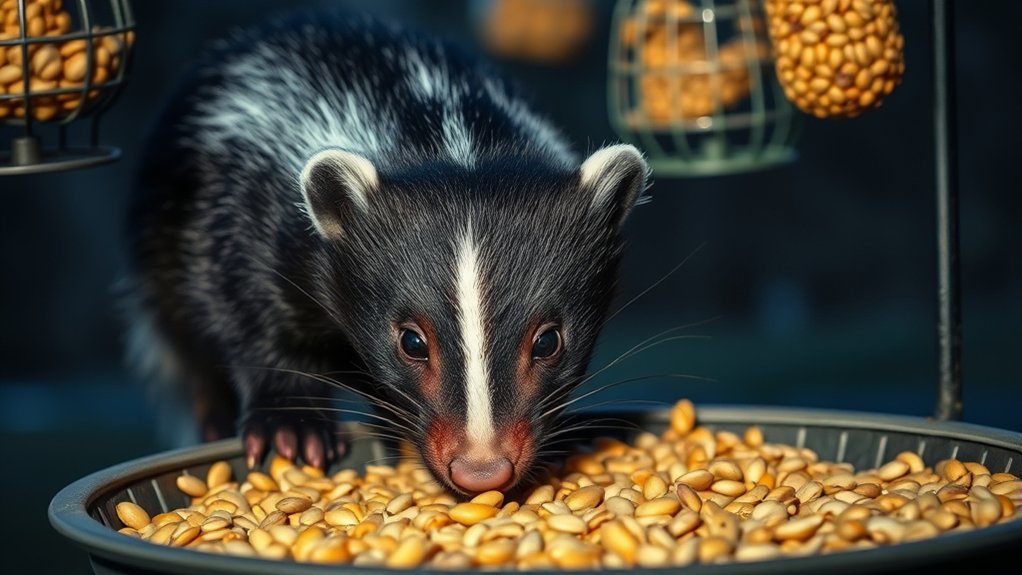
Yes, skunks will eat bird seed, especially if it spills on the ground. They’re drawn to high-protein, calorie-rich seeds like sunflower and peanuts, which make easy meals at night.
If your feeders aren’t clean or seed falls below, skunks will come sniffing around your yard. You can reduce visits by cleaning spills and using feeder designs that limit seed drops.
Keep going to discover how to better protect your yard and prevent skunk troubles.
Why Skunks Are Attracted to Bird Seed
Although skunks are opportunistic feeders, they’re especially drawn to bird seed because it offers a high-protein, calorie-rich food source that’s easy to find.
When bird seed spills from your bird feeder onto the ground, it creates an inviting buffet for skunks, particularly in colder months when other food sources are scarce.
If your bird feeder is placed low to the ground, skunks have easier access to fallen seeds, increasing their visits.
Skunks are naturally scavengers, so they’ll take advantage of these readily available meals without much effort.
To reduce their attraction, you should regularly clean around your bird feeder and minimize seed spillage.
Managing these food sources helps keep skunks from turning your yard into their dining spot.
How Skunks Find and Eat Bird Seed in Your Yard
You’ll notice skunks are drawn to your yard because of spilled bird seed that’s easy to find and eat. Their sharp sense of smell helps them locate feeders.
Plus, their natural foraging behavior means they’ll pick through seeds right on the ground.
So, if you want to keep skunks away, it’s a good idea to regularly clean up any seed spills.
Also, try using feeders designed to minimize ground access. That way, you can enjoy feeding the birds without inviting unwanted visitors!
Skunks Attracted To Seed
Because skunks have a keen sense of smell, they can easily find bird seed scattered beneath your feeders. Skunks in your yard are drawn to these seeds as a reliable food source, especially when spills accumulate on the ground.
Besides bird seed, they also scavenge for food scraps and insects around your feeding area, making the spot even more attractive. When food is abundant, skunks may visit frequently, competing with local birds for resources.
To reduce skunk visits, you should clean up any spilled seed and consider feeders that minimize seed loss. Managing these factors helps limit the appeal of your yard to skunks, keeping both your bird visitors and unwanted guests happier.
Foraging Behavior Explained
When skunks forage in your yard, they rely on their keen sense of smell to locate spilled bird seed beneath feeders, especially during the quiet nighttime hours.
Their foraging behavior involves rummaging through seed piles and digging in the soil to find easy meals like sunflower seeds included in many birdseed mixes.
Because skunks are omnivores, bird seed offers a convenient food source, especially when other options are scarce.
This behavior can lead to noticeable disturbances in your garden as they search for food.
If you want to reduce what might attract skunks, understanding their foraging behavior is key.
Preventing Seed Spillage
Skunks are drawn to spilled birdseed as an easy, high-calorie meal, especially during colder months. Preventing seed spillage is key to keeping skunks away from your yard.
You can start by using covered bird feeders that limit how much seed falls to the ground. Regularly clean your feeders and promptly sweep up any spilled seed to remove easy food sources.
Positioning feeders away from low branches or areas accessible to ground animals also helps reduce seed scatter.
By staying vigilant about preventing seed spillage, you’ll discourage skunks from visiting and foraging around your bird feeders.
This protects both your seed supply and your yard’s wildlife balance. Taking these steps makes a big difference in keeping skunks away effectively.
Which Bird Seeds Do Skunks Prefer to Eat?
High-calorie bird seeds like sunflower seeds and peanuts draw skunks because they offer a rich source of energy. If you’re feeding birds, you’ll notice skunks prefer these seeds, often foraging under feeders where spills happen.
Seed mixes with dried fruits and nuts also attract skunks, thanks to their enticing scent and taste. Understanding which bird seed skunks favor helps you implement effective wildlife control strategies.
By knowing their preferences, you can adjust your bird feeding habits or take precautions to minimize seed access. Skunks supplement their natural diet with bird seed, especially in colder months when other food is scarce.
Managing seed types and promptly cleaning spills can reduce skunk visits and help maintain a balanced backyard ecosystem.
How Seed Spills Attract Skunks
Because bird seed spills offer an easy meal, they often attract skunks looking for a quick food source. Skunks are omnivores with a strong sense of smell, so they can detect spilled seed from a distance.
When seeds scatter on the ground, especially during colder months when natural food is scarce, skunks see a valuable foraging opportunity. This easy access encourages them to return regularly, which can increase their dependence on this human-provided food.
To reduce skunk visits, you need to take control by keeping bird feeders clean and promptly cleaning up any spilled seed. Managing these spills is essential to prevent attracting skunks and other wildlife, helping you maintain a skunk-free yard without compromising your enjoyment of feeding birds.
Signs That Skunks Are Eating Your Bird Seed
If you notice small, cone-shaped holes dug near your bird feeders or overturned seed containers, chances are skunks have been rummaging for an easy meal.
Skunks are nocturnal, so you might find disturbed seed scattered on the ground by morning.
Another clear sign is skunk pet waste near the feeding area. These droppings can be up to 1.5 inches in diameter and sometimes contain leftover seeds.
Skunk droppings, often up to 1.5 inches wide, may include leftover seeds near feeders.
You might also detect a musty odor or the unmistakable skunk spray scent close to your feeders, signaling their presence.
These clues indicate that skunks are taking advantage of spilled bird seed and making your feeding station part of their nightly routine.
Keeping an eye out for these signs can help you confirm if skunks are the culprits.
Easy Tips to Keep Skunks Out of Your Bird Feeders
While skunks are drawn to spilled bird seed, you can take simple steps to keep them away from your feeders.
First, make sure you clean up any seed that falls to the ground regularly to remove an easy food source. Elevate your feeders off the ground to reduce skunks’ access.
Bringing feeders inside at night also helps since skunks are nocturnal. Installing motion-activated lights or noise devices near feeders can startle skunks and discourage visits.
Furthermore, secure garbage bins tightly to prevent skunks from scavenging nearby, as unsecured trash attracts them.
Best Bird Feeder Designs to Stop Skunks
Managing spilled seed and securing your feeders are important steps, but choosing the right bird feeder design can make a big difference in keeping skunks away.
Opt for bird feeders with weight-sensitive perches that close when heavier animals like skunks try to feed, effectively blocking access.
Tube feeders with small openings also protect your yard by making it tough for skunks to reach the seed while still welcoming smaller birds.
Feeders surrounded by protective cages deter larger animals from reaching the food.
Moreover, hang feeders high off the ground or mount them on poles equipped with squirrel baffles to prevent skunks from climbing.
Selecting feeders made with durable materials ensures they withstand persistent attempts by skunks and other animals to access the seed.
How Cleaning Up Seed Spills Helps Keep Skunks Away
Because spilled birdseed offers an easy meal, skunks are drawn to yards where seed accumulates on the ground.
Spilled birdseed attracts skunks by providing an easy and accessible food source on the ground.
You can reduce unwanted skunk visits by promptly cleaning up birdseed spills. This simple habit makes your yard less inviting and supports effective skunk removal efforts without harsh measures.
To keep your feeding area tidy and skunks at bay, you should:
- Sweep or rake up fallen seeds daily
- Use trays beneath feeders to catch spills
- Store birdseed in sealed containers
- Elevate feeders to minimize ground drops
Alternatives to Traditional Bird Feeding for Skunk Safety
Keeping your feeding area clean helps, but you can also choose bird feeding methods that naturally reduce skunk attraction.
Opt for bird feeders designed to prevent seed spillage, like those with trays or baffles that catch falling seeds. Different seed types work with various feeder styles, including hopper feeders, which can reduce mess and spillage.
You can also offer suet cakes or nectar instead of traditional birdseed, which attracts birds but is less appealing to skunks.
Placing feeders on poles or hanging them from trees keeps them out of reach of skunks.
Furthermore, avoid leaving pet food outside, as it can draw skunks near your feeding area.
Using seed blends with ingredients skunks dislike, such as safflower seeds, further deters them.
These alternatives help you enjoy birdwatching while keeping skunks safely away from your yard.
Consider investing in squirrel-proof bird feeders that feature weight-activated perches to further reduce unwanted animal access.
When to Call Professionals for Skunk Control
How do you know when it’s time to call in professionals for skunk control? If skunks are causing ongoing issues around your property, it’s best to get help from control experts.
You should consider contacting them when skunks consistently raid bird feeders or damage your yard.
Or if you notice multiple skunks visiting regularly.
Also, if they dig holes in your lawn or garden searching for food.
And if persistent odors or signs of nesting appear under decks or structures.
Control experts can handle these situations safely and humanely, especially if skunks pose risks to your pets or family.
Don’t wait until the problem escalates. Early intervention helps protect your home and keeps skunks at a manageable distance.
Frequently Asked Questions
Can Skunks Carry Diseases Harmful to Humans or Pets?
Yes, skunks can carry skunk diseases that pose zoonotic risks to you and your pets.
They’re known carriers of rabies, a serious viral infection that affects the nervous system, and leptospirosis, a bacterial disease spread through contaminated water or soil.
Their feces might also contain parasites like roundworms.
To protect yourself and your pets, you should avoid contact with skunks and keep vaccinations up to date, reducing the risk of disease transmission.
Do Skunks Eat Other Types of Pet Food Left Outside?
Yes, skunks do eat other types of pet food left outside. Their feeding habits show they’re especially drawn to dry kibble because of its high protein and calorie content.
If you leave pet food or spills accessible, you’re likely encouraging frequent visits. To discourage skunks, you should clean up spills promptly and bring pet food bowls indoors after feeding.
Understanding their pet food preferences helps you manage skunk activity effectively.
Are There Natural Predators That Keep Skunk Populations in Check?
Yes, natural predators like coyotes, bobcats, and great horned owls help keep the skunk population in check.
Since skunks are mostly active at night, these predators can target them during their foraging.
You’ll also find that dogs deter skunks from certain areas, indirectly controlling their numbers.
However, habitat loss has reduced predator numbers, which might let skunk populations grow unchecked in some urban spots.
How Often Do Skunks Typically Visit a Yard With Bird Feeders?
Like a shadowy character in a nighttime play, skunks often visit your yard under the moon’s watchful eye.
You’ll notice their yard activity mostly at night, thanks to skunk behavior favoring darkness.
If you leave birdseed spilled, they might drop by nightly, turning your yard into their personal buffet.
But if you clean up regularly, their visits become less frequent, keeping your yard quieter and skunk-free.
Can Skunks Damage Bird Feeders or Other Garden Equipment?
Yes, skunks can definitely damage bird feeders and garden equipment. Skunk behavior includes scavenging for spilled seeds, which often leads them to overturn feeders or chew on parts of garden tools and structures.
To protect your feeders, focus on feeder protection by securing them firmly and regularly cleaning up seed spills.
This way, you reduce skunks’ attraction and minimize damage to your garden and equipment.
Conclusion
Now that you know skunks are attracted to bird seed and how they find it, isn’t it worth adjusting your feeding habits? By choosing the right feeders, cleaning up spills, and knowing which seeds to avoid, you can enjoy watching birds without inviting skunks.
Remember, keeping your yard less appealing to skunks not only protects your seed but also keeps your home safe. When things get out of hand, don’t hesitate to call in professionals.