
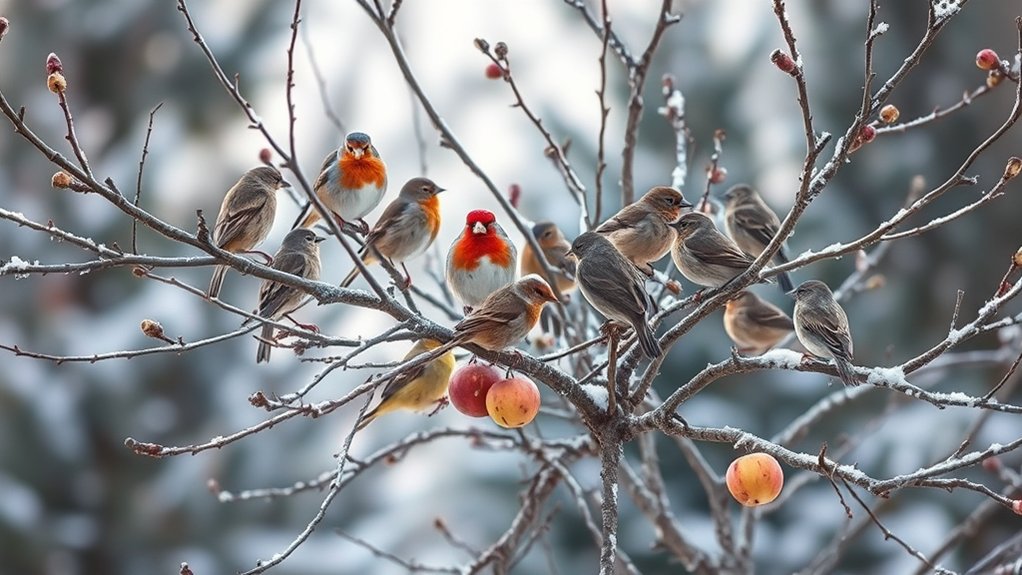
You’ll spot at least 10 winter birds in your apple tree, including house finches, American robins, cedar waxwings, yellow-rumped warblers, and more. These birds rely on leftover apples as a vital food source when other options are scarce.
Leaving apples on your tree supports their survival and invites colorful flocks to your yard. If you want to attract more feathered friends and discover effective ways to boost their winter habitat, keep exploring these helpful tips.
Key Winter Birds Feeding on Your Apple Tree’s Fruit
When winter leaves food scarce, your apple tree becomes an important dining spot for birds like house finches, American robins, and warblers. These birds that eat the leftover apples, even the rotten ones, rely on your tree when other food is hard to find.
House finches are often seen pecking at the fruit, while robins and warblers flock to the tree as temperatures rise above freezing. Starlings and scrub jays also join in, turning your apple tree into a bustling winter buffet.
By leaving apples on the branches, you provide a crucial food source that supports these birds and encourages biodiversity.
Leaving apples on your tree offers vital nourishment for birds and helps sustain local biodiversity.
Your apple tree truly serves as a lifeline for many winter songbirds in your backyard.
Why Apple Trees Are Vital for Winter Birds
You’ll notice apple trees become important hubs for birds during winter. They offer a key food source when other options are scarce.
By preserving these trees, you’re supporting essential bird habitats that encourage seasonal activity and survival.
It’s pretty amazing to watch birds gather around your apple tree and see just how significant these trees are for their winter behavior and community.
Winter Food Source
Because food becomes scarce in winter, apple trees play an essential role in sustaining backyard birds. This old apple tree, especially when it produces a bumper crop, serves as an important winter food source for many species.
You’ll notice house finches, American robins, and warblers feasting on the apples left high in the branches, those that are too out of reach for you to pick.
As temperatures rise in late February, bird activity increases, with house finches feeding daily on the remaining apples.
Leaving these fruits on the tree not only nourishes birds but also attracts diverse wildlife. By keeping your apple tree and its fruit, you support local bird populations naturally, making your backyard a bustling winter feeding ground.
Bird Habitat Importance
Apple trees serve as critical winter habitats by providing essential food and shelter for birds when resources are scarce. Their bird habitat importance is clear, especially during harsh months when natural food dwindles.
The old apple tree in your backyard, for instance, offers a bumper crop of apples that sustain species like house finches, American robins, and warblers. These fruit trees become crucial gathering spots, supporting local bird populations and fostering a sense of community among songbirds.
By preserving apple trees, you actively contribute to creating habitats that nurture diverse bird species and maintain ecological balance.
Seasonal Bird Behavior
When winter’s chill limits available food, birds flock to old apple trees that still bear fruit. You’ll notice species like house finches, American robins, and warblers keenly eat the leftover apples, especially as late winter temperatures rise above freezing.
These birds rely on apples that remain out of reach for you, turning them into significant sustenance rather than waste. This seasonal behavior highlights how apple trees become important feeding stations, supporting bird populations when other sources are scarce.
By leaving apples on the tree, you help maintain local biodiversity and encourage increased bird activity in your backyard.
House Finches Feeding on Leftover Apples in Winter
You’ll often spot house finches munching on leftover apples when winter food is scarce.
They really depend on those apples still hanging on the trees. It turns out, these apples become a key food source during the cold months.
Watching how these birds feed gives you a real sense of how important apple trees are to their survival in winter.
House Finch Winter Diet
House finches take advantage of leftover apples clinging to branches during winter, showcasing their adaptability when food is scarce. You’ll notice these birds prefer rotten apples, especially when temperatures rise above freezing. This makes the fruit softer and easier to digest.
House finches mainly eat plant matter, so these apples provide essential nutrition throughout late winter. Watching them feed daily highlights how important this food source is during harsh months. Other birds like robins and warblers also benefit, but house finches remain the primary consumers.
| Food Source | Preference | Feeding Behavior |
|---|---|---|
| Leftover Apples | Rotten, soft | Daily feeding in late winter |
| Plant Matter | Primary diet | Consumed year-round |
| Temperature | Above freezing | Increases feeding activity |
Apple Tree Food Source
Though food can be scarce during winter, leftover apples on old apple trees provide an important food source for house finches.
You’ll notice these backyard birds feeding on both fresh and rotten apples when other options run low. Their resourcefulness helps them survive the cold months, especially in late February when rising temperatures encourage more activity around the trees.
Not only do house finches benefit, but other birds like American robins and warblers are also attracted to these apple feeders.
By leaving apples to rot on your trees, you support local bird populations with vital nutrition during tough winter conditions.
American Robins: Seasonal Visitors to Apple Trees
When winter arrives and food becomes scarce, American robins flock to apple trees, foraging for leftover fruit to sustain themselves. You can attract birds like robins by maintaining apple trees with fruit left on the branches.
Here’s what you might observe:
- Groups of robins hopping among branches, pecking at ripe or slightly frozen apples.
- Robins sharing the fruit, showcasing their flocking behavior in search of food.
- Their bright orange breasts contrasting against the snow and bare branches.
These seasonal visitors rely on apples to provide essential nutrients and energy during cold months.
You’ll notice robins particularly active when temperatures rise above freezing, taking advantage of the available fruit. Their presence signals seasonal change and a well-maintained winter garden that can attract birds year after year.
Cedar Waxwings Feeding on Apples and Winter Berries
Several cedar waxwings often gather in flocks to feast on overripe apples and winter berries. You’ll notice their striking yellow-tipped wings and tail feathers as they flit through your apple tree, consuming fruit in impressive numbers.
These social birds rely heavily on berries year-round. During winter, overripe or rotten apples become an essential food source when other options dwindle.
Cedar waxwings have a unique ability to digest the waxy coating on certain berries, which lets them thrive where other birds might avoid.
Watching these flocks can be a fascinating sight, but keep in mind their feeding can quickly reduce apple availability for other wildlife and orchardists.
Still, their presence adds lively charm to your winter backyard.
Northern Cardinals Feeding in Apple Trees
If you spot vibrant red birds in your apple trees this winter, you’re likely watching Northern Cardinals enjoying the bright fruit. These striking birds stand out with their vivid red plumage against the snowy backdrop.
Northern Cardinals primarily eat seeds but don’t miss the chance to nibble on the bright apples during colder months.
When you observe them, you might notice:
- Pairs or small groups foraging together amid the branches.
- Their bold red feathers contrasting sharply with the green leaves and red apples.
- Their quick, deliberate pecks at the fruit as they feed.
Seeing Northern Cardinals in your apple trees not only adds color to winter but shows how important natural food sources are for wildlife survival in harsh seasons.
Yellow-Rumped Warblers and Their Unique Berry Diet
While Northern Cardinals enjoy apples in your backyard, Yellow-rumped Warblers rely on a very different food source to power through winter.
These warblers uniquely eat the berries of myrtle, juniper, poison ivy, and Virginia creeper. They digest the waxy coating of myrtle berries to convert it into fat for energy.
This ability lets them thrive as the most widely wintering wood warbler in North America. When you spot a sharp chip call near berry-laden shrubs, you’re likely hearing these birds communicating as they forage.
You might also notice them feeding socially, often alongside tree swallows.
Townsend’s Solitaire: The Lone Feeder on Juniper and Apples
You’ll notice Townsend’s Solitaire often feeds alone, fiercely guarding its patch of juniper berries all winter.
They really stick to their favorite food, those juniper berries. But hey, if apples are around, you might catch them picking at those too.
Watching how they hang out solo and choose their fruit gives you a cool peek into how these birds make it through the cold months.
Solitary Winter Feeding
One Townsend’s Solitaire can dominate an entire juniper tree, fiercely guarding its winter food supply. Unlike American robins, which often feed in flocks, solitaires are solitary feeders, staking claim to berry-rich trees.
You’ll notice them defending:
- Juniper berries, their top high-fat winter fuel.
- Leftover apples, a backup when berries run low.
- Mistletoe berries, another energy-dense treat.
This territorial behavior guarantees they’ve steady access to the calories needed to survive cold months.
When you spot a lone solitaire perched on a branch, it’s not just resting; it’s guarding its critical food source.
Their solitary feeding contrasts sharply with other birds’ social habits, making the solitaire a unique winter visitor in your backyard apple tree.
Juniper Berry Preference
Townsend’s Solitaires stake out juniper trees as their prime feeding spots during winter, aggressively guarding the berry-rich branches against other birds.
If you want to keep birds like the Solitaire visiting your yard, providing access to juniper berries is key.
These birds rely heavily on the high-fat juniper berries for energy when other food is scarce. They’re solitary feeders, so you won’t see them flocking like other species, but their loyalty to juniper trees is strong.
In years when juniper berries are scarce, Solitaires adapt by eating mistletoe berries, but they always prefer juniper.
Apple Tree Visits
Although they primarily feast on juniper berries, these solitary birds often visit apple trees during winter. They take advantage of the fruit when other food is scarce.
In late winter, you might spot Townsend’s Solitaire perched quietly, guarding its chosen apple tree from relatives.
Watching them, you’ll notice:
- A lone bird scanning the branches for ripe apples.
- Precise pecks as it devours the fruit, supplementing its diet.
- A vigilant stance, protecting this valuable food source.
Their territorial nature means you won’t see many at once, but their presence adds a unique charm to your winter birdwatching.
Thrushes and Songbirds Feeding on Apples in Winter
When food becomes scarce in winter, thrushes like American robins and varied thrushes flock to leftover apples as an important energy source.
You’ll notice house finches also nibbling on both fresh and rotten apples, showing their adaptability during cold months.
Warblers and starlings join this feast, creating a lively scene around your apple tree.
Warblers and starlings gather around the apple tree, adding vibrant life to the winter feeding frenzy.
The fruit acts as a crucial lifeline, especially in late winter when temperatures rise above freezing and other food sources remain limited.
If you try to shoo these birds away, you might miss the chance to witness this diverse group thriving on your tree’s bounty.
Watching thrushes and songbirds feeding on apples offers a unique glimpse into how wildlife endures winter’s challenges.
Tips for Encouraging Winter Backyard Birds in Your Apple Tree
Leaving apples on your tree through winter invites a variety of birds to visit and feed, turning your backyard into a lively refuge.
To promote these feathered friends, try these tips:
- Preserve old apple trees to maintain a steady supply of fruit even after frost, attracting species like house finches and robins.
- Supplement their diet by scattering black-oil sunflower seeds nearby, increasing bird diversity.
- Plant native shrubs and install birdhouses to create a welcoming habitat.
Use birdwatching techniques such as quietly observing from a distance and noting feeding behaviors to learn about local bird populations.
Providing a mix of food types, including high-energy seeds, supports various dietary needs and enhances bird activity throughout winter.
Frequently Asked Questions
How Do Winter Birds Survive Harsh Cold in Apple Trees?
You can see winter birds survive harsh cold by adapting their bird behavior to find reliable food sources like apples.
They actively seek out leftover fruit on apple trees when insects and seeds are scarce.
This daily feeding helps them maintain energy and body heat.
By using apple trees for both nourishment and shelter, they cleverly endure freezing temperatures.
Watching their behavior shows how they maximize limited resources to survive winter’s challenges.
What Are the Best Apple Tree Varieties for Attracting Winter Birds?
You’ll want to choose Bird Friendly Varieties like ‘Honeycrisp’ and ‘Granny Smith’ because they produce abundant fruit that attracts house finches and American robins.
Late-season types such as ‘Fuji’ and ‘Gala’ supply food when other sources dwindle.
Don’t forget ‘Arkansas Black’, its persistent fruit is a lifeline in winter.
For easier access, dwarf trees work well, drawing starlings and scrub jays.
Planting these guarantees your backyard stays lively through winter.
Can Feeding Birds Apple Slices Harm Them in Winter?
Feeding birds apple slices in winter won’t harm them if you’re careful about their bird diets.
You shouldn’t offer apples treated with pesticides or any that are rotten or moldy, as these can cause health issues.
Fresh, untreated apple slices can actually support birds’ energy needs when insects are scarce.
Just keep an eye on the fruit’s freshness to make sure you’re providing a safe, nutritious snack for your feathered friends.
How Do Winter Birds Impact Apple Tree Health?
Bird behavior boosts your apple tree’s health by balancing bugs and pests.
When winter birds like bluebirds and house finches feast on leftover fruit, they reduce harmful insects that damage your apples.
You’ll notice beneficial bird activity promotes pest control, encouraging a healthier harvest.
While some birds might nibble on buds, their overall presence supports a thriving ecosystem, making your apple tree stronger through natural, feathered fighters.
Do Winter Birds Help Control Pests in Apple Trees?
Yes, winter birds do help control pests in apple trees.
By observing bird behavior, you’ll notice species like thrushes and cardinals actively forage for insects and larvae, reducing harmful pest populations.
Their daily feeding habits keep pests like snails and grubs in check, promoting tree health.
Encouraging these insect-eating birds supports natural pest control, so you won’t need to rely as much on chemicals to protect your apple trees.
Conclusion
As winter’s hush settles over your yard, picture vibrant finches and robins pecking at ruby apples, their feathers glowing against the frosty branches. By welcoming these birds to your apple tree, you’re not just offering food—you’re inviting life and color into the cold months.
So, hang those feeders and leave some fruit; you’ll watch a lively, feathered dance unfold, turning your winter backyard into a warm, bustling refuge filled with nature’s quiet magic.