
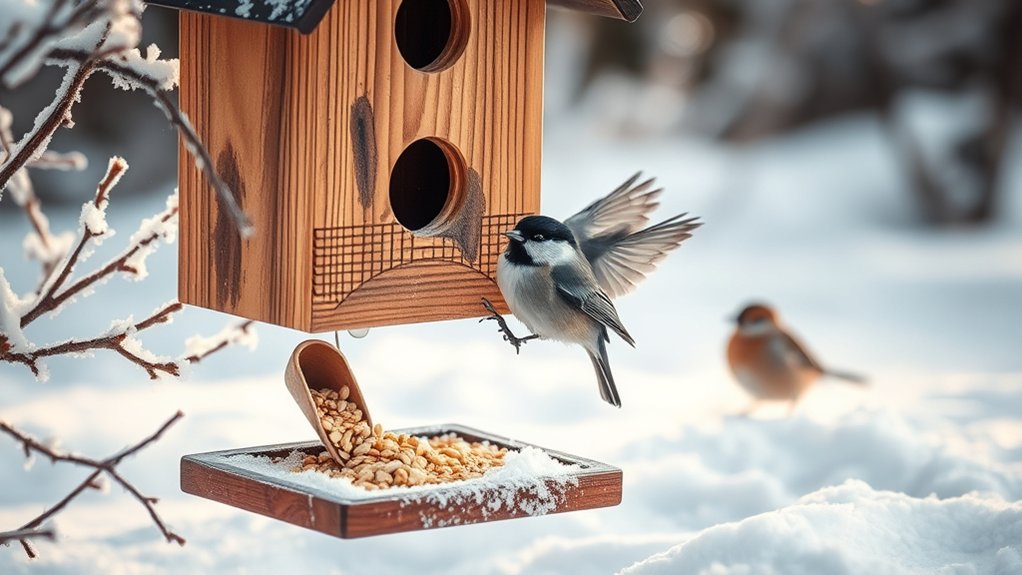
To feed birds safely this winter, choose high-energy seeds like black oil sunflower and suet to keep them nourished. Place feeders near sheltering trees and hang them at least six feet off the ground to protect birds.
Clean feeders every two weeks with a bleach solution to prevent disease. Provide fresh, unfrozen water using heated baths, and offer cozy nearby shelters.
Follow these steps, and you’ll soon attract a vibrant, healthy bird community all season long.
Why Safe Winter Bird Feeding Matters
Although winter limits natural food sources, feeding birds safely is crucial to help nonmigratory species survive harsh conditions. During this season, snow and frozen ground make finding food difficult, so your feeding efforts provide important nutrition. Using high-energy seed blends can further enhance the nutritional support you offer.
You’ll want to offer a variety of high-energy foods like suet and sunflower seeds to support different species. Clean feeders play a significant role in preventing disease, so regular maintenance is a must.
Don’t forget to provide fresh water. Heated birdbaths can keep it from freezing and help birds stay hydrated.
Proper feeder placement also matters; keeping feeders away from windows and predators guarantees the birds’ safety.
Including black oil sunflower seeds in your feeding mix attracts a wide range of songbirds and provides essential nutrients during winter.
Pick the Best Feeders and Seeds for Winter Bird Feeding
When you choose the right feeders and seeds, you make your winter bird feeding efforts much more effective.
Black oil sunflower seeds work great in tube bird feeders, attracting a wide variety of birds thanks to their high oil content.
Hopper feeders are perfect for mixed seed or safflower, welcoming larger birds like cardinals and jays while shielding the seeds from harsh weather. Choosing feeders with weight-activated mechanisms can also help keep squirrels away during winter.
Suet feeders provide essential high-fat nutrition for energy-demanding species such as woodpeckers and nuthatches.
Incorporating platform feeders alongside these types lets you appeal to different bird sizes and feeding habits, reducing competition.
Always opt for a quality seed mix that will attract birds, and keep feeders fresh by refilling regularly.
This strategy guarantees your winter bird feeding setup stays inviting and supports diverse bird populations.
Choosing feeders with weather-resistant features ensures durability and reliable seed protection throughout the winter months.
Set Up Winter Bird Feeders Where Birds Feel Safe
Place your feeders near shrubs or trees—that way, birds have some shelter and feel safe while they’re eating.
It’s a good idea to hang your feeders at least six feet off the ground. This helps keep bigger animals away and lowers the chances of predators getting too close.
Also, try to keep feeders a good distance from windows so birds don’t accidentally fly into them.
Don’t forget to check where you’ve put the feeders every now and then to make sure there aren’t any new hazards nearby.
Using a squirrel baffle can also help protect your feeders from unwanted visitors like squirrels, ensuring birds can feed in peace.
Shelter Near Feeders
To help birds feel secure at your winter feeders, set them up within 8 to 10 feet of shrubs or evergreens. This way, they can quickly find shelter from predators. These natural covers provide essential protection and comfort in the feeding area.
To create a safe environment, you should:
- Position feeders near shrubs or evergreens to provide cover from predators.
- Use brush piles or trees around feeders to offer additional hiding spots.
- Elevate feeders at least 6 feet off the ground to deter larger animals like cats.
- Maintain the area by clearing debris and minimizing predator hiding places.
Also, reduce window strikes by placing feeders at least 3 feet from windows. This setup helps birds feed safely while feeling protected.
Safe Feeder Placement
Setting up feeders where birds feel safe goes hand in hand with providing nearby shelter. For effective feeder placement, position your feeding station at least 8-10 feet away from shrubs or trees. This gives birds enough space for approach and reduces predator activity risks.
To avoid window strikes, follow the 3-30 rule: place feeders at least 3 feet from windows or 30 feet for better visibility. Choose a sunny area that offers warmth and shields feeders from harsh winds.
Surround your feeding station with natural cover, like brush piles or dense shrubs, so birds have quick escape routes.
Regularly monitor the site for predator activity and adjust placement if needed to maintain a safe environment. Thoughtful feeder placement guarantees birds feed peacefully and return often.
Keep Winter Bird Feeders Clean to Prevent Disease
Keeping your winter bird feeders clean is crucial to protect visiting birds from disease. To maintain a hygienic feeding environment and guarantee healthy birds, follow these key steps:
- Regularly clean feeders every two weeks using a bleach solution (9 parts water, 1 part bleach). This helps prevent disease by eliminating harmful bacteria and mold.
- Scrub feeders thoroughly before refilling to remove debris and old seed residue.
- Monitor bird baths and clean them with a vinegar solution (9 parts water, 1 part vinegar) to prevent algae growth.
- Allow feeders to dry completely after cleaning, and remove debris around feeding areas to reduce waste buildup and pest attraction.
Make Sure Birds Have Fresh, Unfrozen Water All Winter
Although natural water sources often freeze during winter, you can help birds stay hydrated by providing fresh, unfrozen water.
Winter birds rely on this essential resource for drinking and bathing, especially when natural food sources and water are scarce. Heated birdbaths are an excellent solution to prevent freezing, ensuring a constant supply of liquid water. Many solar heated bird baths use solar-powered systems to maintain water temperature efficiently.
During winter, birds depend on fresh water for drinking and bathing when natural supplies dwindle.
Placing birdbaths in sunny areas helps maintain warmer temperatures, and painting them flat black can further absorb heat to keep water unfrozen longer.
To promote hydration and cleanliness, make sure you refresh the water regularly, ideally every other day, to prevent algae growth and maintain a healthy environment.
Using a heated birdbath with thermostatically controlled heating can ensure water remains unfrozen efficiently throughout the cold months.
Give Birds Cozy Shelter Near Feeders and Watch Their Visits
When you place cozy shelters like brush piles or nest boxes near your feeders, you create a safe haven that attracts more birds during winter.
These shelter structures protect birds from winter storms and predators, encouraging diverse bird species to visit.
To maximize comfort and safety:
- Position your bird feeder within 8-10 feet of shrubs or evergreens for quick escapes.
- Provide food for birds like cracked corn and sunflower seeds to lure different species.
- Guarantee cozy shelter areas are free from hazards to keep birds safe.
- Regularly check and maintain shelter structures to sustain their effectiveness.
Frequently Asked Questions
Can Feeding Birds in Winter Attract Unwanted Wildlife?
Yes, feeding birds in winter can attract unwanted wildlife like squirrels and raccoons.
To manage wildlife interactions, you need to carefully choose your feeder location and use bird feeder designs that limit access to larger animals.
Selecting specific seed types helps reduce attracting squirrels, while proper feeder maintenance and pest control measures improve safety.
Implementing safety measures and staying aware of neighborhood wildlife keeps your feeding area safe and enjoyable for birds only.
How Often Should I Refill Bird Feeders During Extreme Cold?
You should refill your bird feeders daily during extreme cold to support winter bird species’ increased energy needs.
Stick to bird feeding schedules that match their activity patterns, and use the best bird food like suet or black oil sunflower seeds.
Maintain bird feeder maintenance by cleaning feeders regularly and storing seeds properly to prevent spoilage.
Follow feeder placement tips to attract specific birds, enhancing your birdwatching activities while understanding bird behavior for ideal feeding.
Are There Specific Seeds to Avoid Feeding Birds in Winter?
Yes, you should avoid seeds like moldy ones and processed seeds with artificial additives because they can harm birds.
Steer clear of unsuitable grains such as dried corn or popcorn, which are hard to digest.
High-fat seeds like peanut butter can be risky in winter, and low-quality seed mixes often contain fillers birds won’t eat.
Although sunflower seeds are popular, make sure they’re fresh and not moldy to keep birds healthy.
Can Homemade Bird Food Supplements Help Birds in Harsh Winter?
Yes, homemade bird food supplements like suet and seed cakes can really help birds in harsh winter.
You’ll want to focus on nutritional balance by including fat sources such as peanut butter and fruit mixtures in your winter recipes.
Remember to guarantee ingredient safety and maintain consistent feeding frequency.
Adding these treats near birdhouse additions encourages visits and supports energy needs during cold months, helping birds thrive when natural food is scarce.
Should I Feed Birds Differently During Snowfall Versus Clear Days?
Yes, you should adjust feed types during snowfall versus clear days.
Snowfall means birds need high-fat seeds for energy and more frequent feeding since natural food is scarce.
On clear days, bird behavior shifts because they may visit feeders less due to seed preferences outside.
Make sure to place feeders near shelter and provide fresh water sources year-round.
Balancing nutrition supports winter survival and meets changing shelter needs, helping birds thrive despite weather changes.
Conclusion
Feeding birds in winter is like lighting a small lantern in the cold darkness. Your care becomes their warmth and hope. By choosing the right feeders and seeds, keeping water fresh, and offering safe shelter, you create a sanctuary where birds can thrive despite the chill.
So, as you fill your feeders, remember you’re not just providing food. You’re kindling life and kindness in the heart of winter’s quiet embrace.