
Using a cheap or unsuitable pair of binoculars for sailing often means struggling with fogged lenses, a shaky view, or difficulty focusing on distant markers. The best binoculars for sailing provide a clear, stable image that can handle the damp, salt air without fogging or corrosion. These are crucial either spotting buoys, landmarks, or other vessels in open water, where precision and reliability matter most.
Good sailing binoculars typically have waterproof and fog-proof construction, often with nitrogen or argon gas filling. A magnification of 7x to 10x strikes a balance between detail and stability, as higher magnifications can be too shaky without a tripod.
They should be compact enough to hold comfortably for long periods and have a wide objective lens, usually around 40mm or more, to gather enough light in varying weather conditions. Durable materials and easy-to-clean lens coatings help maintain performance over time at sea.
Need a Quick Check?
| Image | Product | Price |
|---|---|---|
Our Top Picks 1  | USCAMEL 10×50 Marine | Check Price |
Our Top Picks 2 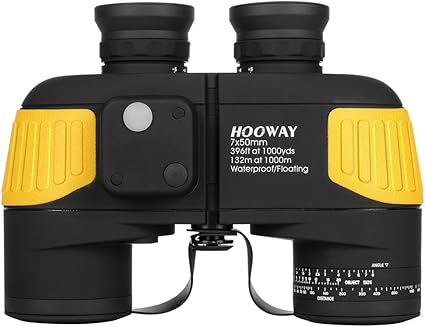 | Hooway 7×50 Marine | Check Price |
Our Top Picks 3  | Steiner 7×50 Marine | Check Price |
Our Selected Top 15 Binoculars for Sailing You Can Trust
This list features carefully chosen binoculars designed specifically for sailing, highlighting their performance on the water. Each review explains who the binoculars are best suited for and outlines their strengths and weaknesses to help you make an informed decision.
1. USCAMEL 10×50 Marine Binoculars
10x magnification delivers clear viewing with a wide 396 feet field of view, great for spotting distant boats or landmarks while sailing. Adults wearing glasses benefit from foldable eyecups that make long viewing comfortable. Its best feature is the built-in compass and rangefinder, handy for navigation and distance assessment on the water.
Setup is straightforward with manual focus and individual diopter adjustment allowing tailored sharpness. Lightweight enough to hold steady without tiring your arms over extended use. Includes batteries to power the illuminated compass, making it easier to read even in dim light.
The binoculars can fit on a tripod for stability during longer observations.
Performance shows clear and bright images thanks to fully multi-coated lenses and a 50 millimeter objective lens. Waterproof design means moisture or splashes won’t disrupt your vision.
Strong build quality balances durability and portability, though some users note the compass can be tricky to read accurately in rough waters.
Clear optics and large objective lens deliver satisfying brightness and detail, appreciated during low light or long distance viewing. Some users find the compass less reliable in rough seas, which may require extra attention. Battery-powered illumination helps the compass stay visible but adds a small maintenance task.
Sailing enthusiasts needing both magnification and navigation tools will find useful features here. Those prioritizing quick auto-focus or a simpler compass may want to explore other options better suited for fast-changing conditions.
Pros
- Bright, clear images with fully multi-coated lenses
- Built-in compass and rangefinder for navigation
- Waterproof design suitable for marine conditions
- Foldable eyecups fit users with glasses comfortably
Cons
- Compass can be difficult to read on choppy water
- Manual focus requires adjustment for each use
| Specification | Details |
|---|---|
| Magnification Maximum | 10 x |
| Objective Lens Diameter | 50 millimeters |
| Field of View | 396 feet |
| Water Resistance Level | Waterproof |
| Focus Type | Individual Focus |
| Eye Relief | 7.1 millimeters |
2. Hooway 7×50 Marine Binoculars
Anyone spending time on the water will find these binoculars really useful, especially sailors who need clear distance views and a handy compass. The single biggest strength is the built-in illuminated compass combined with waterproof design that can float, making it great for marine use.
Setting up requires just adjusting the focus manually and dialing in your diopter setting for sharpness. The 7x magnification and 50mm lenses give a wide, bright view that stays clear even in fog thanks to nitrogen purging.
They’re comfortable to hold with good eye relief, and you can use a tripod because they have a mount. The rangefinder is handy to figure out distances on the water easily.
Images come through clear and bright, supported by fully multi-coated optics and BAK4 prisms, which help you see details at a distance. The build is solid with waterproofing that protects it against harsh marine conditions, plus the binoculars float if dropped in water. A common complaint is the weight, as these are a bit heavier than some alternatives, which might feel tiring during long use.
Brightness and image clarity are consistently praised thanks to the fully multi-coated BAK4 prisms, but weight is a common downside, making longer use tiring for some. Waterproofing and floating capability add security for marine conditions.
Those needing a dependable, bright, and sturdy marine binocular with compass and rangefinder will appreciate these. Anyone looking for extremely light or quick-focusing binoculars might want to consider other options.
Pros
- Waterproof and floats in water
- Built-in illuminated compass
- Fully multi-coated BAK4 optics for clarity
- Includes internal rangefinder for distances
Cons
- Heavier than some other marine binoculars
- Manual focus can be slow in some situations
| Specification | Details |
|---|---|
| Magnification Maximum | 7 x |
| Objective Lens Diameter | 50 millimeters |
| Eye Relief | 22 millimeters |
| Field of View | 396 feet at 1000 yards |
| Water Resistance Level | Waterproof |
| Prism Type | Porro Prism |
3. Steiner 7×50 Marine Binoculars
Perfect for anyone who spends time on the water, these binoculars deliver bright, sharp images with 7x magnification and a wide 50 mm objective lens. The standout feature is the Sports Auto Focus that keeps everything from close up to distant views crisp without any manual refocusing.
Setting them up is straightforward, with no need to fuss over focus after the initial shot thanks to the autofocus system. The rubber armor gives a comfortable, secure grip even when wet, which is ideal for boating. Their waterproof design means you don’t have to worry about splashes or sudden rain ruining your view.
Using the diopter adjustment lets you fine-tune the clarity to your eyesight easily.
For spotting landmarks, other vessels, or wildlife, these binoculars offer a clear and lifelike image with high contrast and multi-coated lenses. Built tough with a floating prism system that absorbs shocks and impacts, they handle rough conditions well.
Most users praise the constant sharp focus without needing adjustments, but a common note is that they can feel a bit bulky compared to lighter models.
The strongest praise revolves around the Sports Auto Focus system providing crystal-clear images without constant refocusing, which is perfect for active use. The most common complaint is about the binoculars’ weight and bulk, making them less comfortable for long periods of hand-held observation.
People who want a durable, reliable, and sharp image binocular for boating will appreciate this model. Those seeking a lighter, more compact pair for all-day handheld use should consider other options that prioritize weight savings over ruggedness.
Pros
- Sharp focus from 20 yards to infinity
- Waterproof with rubber armored grip
- Bright, high-contrast images
- Shock-absorbing floating prism system
Cons
- Heavier than some other marine binoculars
- May feel bulky for extended handheld use
| Specification | Details |
|---|---|
| Magnification Maximum | 7 x |
| Objective Lens Diameter | 50 millimeters |
| Focus Type | Auto Focus |
| Water Resistance Level | Waterproof |
| Eye Relief | 20 millimeters |
| Field of View | 7.2 degrees |
4. 10×50 Marine Binoculars

10×50 Marine Binoculars focuses on clear marine navigation with features that sailors will find handy. These binoculars excel at combining powerful optics with practical tools like a built-in compass and rangefinder. Ideal for anyone needing accurate readings and strong magnification out on open water.
Setting them up involves folding the design for easy storage and adjusting the individual focus on each eyepiece to suit eyesight. The large 50mm objective lenses and 23mm eyepieces provide bright views, especially useful during low-light conditions like dawn and dusk thanks to the built-in low-light illumination.
Handling is steady with the tripod mount option, making day-to-day use convenient and comfortable.
Performance shines through the FMC BAK4 Porro prism optics that deliver sharp, bright images with 10x magnification. The waterproof build ensures durability in marine environments, and the illuminated compass and rangefinder add real value for navigation needs.
Most praise highlights the clarity of the optics and ease of reading the compass. Some note that the binoculars can be a bit bulky during long periods of handheld use.
The most praised feature is the clear, bright optics combined with the useful compass and rangefinder, making navigation straightforward. A common complaint concerns the bulkiness and weight, which can make holding the binoculars by hand tiring over longer periods.
Sailors who value precise bearing and distance measurement will find these binoculars very helpful. Those who prioritize lightweight, compact devices might want to consider alternatives better suited for extended handheld use.
Pros
- Built-in illuminated compass for precise bearings
- Optical reticle rangefinder for distance calculation
- Fully Multi-coated large lenses ensure bright images
- Waterproof design for marine use
Cons
- Relatively heavy for extended handheld use
- Bulky size may require tripod for comfort
| Specification | Details |
|---|---|
| Magnification Maximum | 10 x |
| Objective Lens Diameter | 50 millimeters |
| Built-In Compass & Rangefinder | Yes |
| Water Resistance Level | Waterproof |
| Focus Type | Individual Focus |
| Field of View | 341 |
5. Vortex Triumph HD 12×50 Binoculars

Powerful and clear vision comes naturally with these binoculars, designed for anyone needing strong magnification and durability on the water. They shine most through sharp, vivid images even in tricky lighting, making them a great pick for sailing adventures where spotting detail matters.
Setting up involves straightforward manual focus with a center knob, letting you zero in quickly on distant markers or boats. The grip feels secure thanks to full rubber armor, and the body stays lightweight enough to handle for long stretches without fatigue. Waterproof and fog proof features ensure reliable use even when conditions turn wet or misty offshore.
Image quality really stands out with edge-to-edge sharpness and natural color thanks to HD optics and fully multi-coated lenses. The construction uses a polycarbonate chassis that absorbs shocks well, offering durability against knocks and bumps. Most praise highlights the crisp visuals and sturdy feel, while some mention the 12x magnification needing a steady hand or tripod to avoid shake.
Visual clarity and color accuracy earn strong praise, with the multi-coated HD optical system delivering vivid, sharp images. Most mention the binoculars’ magnification demands keeping the device steady, sometimes necessitating a tripod for the best experience.
Sailors seeking powerful, durable optics will appreciate this pair, especially when navigating or spotting far away. Those needing quicker focus or lighter magnification might prefer different models that favor speed over maximum detail.
Pros
- Exceptional color fidelity and edge-to-edge sharpness
- Waterproof and fog proof for rough conditions
- Shock-resistant polycarbonate body with rubber armor
- Tripod mountable for stable viewing
Cons
- 12x magnification requires steady hands or tripod
- Manual focus might take adjustment time
| Specification | Details |
|---|---|
| Magnification Maximum | 12 x |
| Objective Lens Diameter | 50 millimeters |
| Water Resistance Level | Waterproof |
| Focus Type | Manual Focus |
| Eye Relief | 16 millimeters |
| Exit-Pupil Diameter | 4.17 millimeters |
6. 20×50 High Powered Binoculars

High-powered 20×50 binoculars deliver sharp, detailed views for sailing enthusiasts who want to spot distant landmarks and boats with precision. Their standout feature is the 20x magnification combined with a wide 168-yard field of view at 1000 yards, making them well-suited for anyone needing long-range clarity on the water.
Using these binoculars on deck is straightforward. The compact design keeps them portable without bulk, and the center focus allows quick manual adjustment.
The anti-reflective coating helps reduce glare, a useful trait under bright sun or reflections from the water. Waterproof and shock resistant, they hold up well in the wet and sometimes rough sailing environment.
Performance excels in delivering clear, stable views over long distances thanks to the Porro prism design. The waterproof build and shock resistance underline their durability for outdoor use. Most praise praises the detail seen at 20x zoom, while complaints occasionally mention the relatively narrow exit pupil, which can make low-light viewing a bit harder.
Users find the detailed, sharp images at 20x magnification impressive for spotting distant objects, but some notice the small exit pupil size can limit comfort when light dims. Setup on the water benefits from added stability using a tripod mount due to the high zoom level.
People who need detailed long-range views and don’t mind using a tripod will appreciate these binoculars. Those seeking easier handheld low-light use might want to consider models with larger exit pupils or lower magnifications.
Pros
- Clear view with 20x magnification
- Compact and portable design
- Strong build with waterproof and shock resistance
- Anti-reflective lens coating reduces glare
Cons
- Small exit pupil makes low-light challenging
- Requires tripod for steady long-distance viewing
| Specification | Details |
|---|---|
| Magnification Maximum | 20 x |
| Objective Lens Diameter | 50 millimeters |
| Field of View | 1000 yard |
| Water Resistance Level | Waterproof |
| Focus Type | Center Focus |
| Eye Relief | 26 millimeters |
7. Barska 7×50 Marine Binoculars

Rugged and buoyant, the Barska 7×50 Marine Binoculars suit sailors who need reliable optics that won’t sink or fog up. Its waterproof and nitrogen-purged design keeps it safe from water damage, while the 7x magnification offers steady views of distant objects on the water.
Handling is straightforward with an ergonomic rubber exterior that’s easy to grip, even when wet. The included neck strap and carrying case make transport simple. Focusing is done via a center focus knob, and the binoculars stay clear with fully multi-coated lenses that catch the light well throughout the day.
Using the 7x magnification and 50mm lenses delivers bright, clear images suitable for navigation or spotting landmarks. The rugged build stands up to rough seas, and the binoculars float if dropped overboard.
Common praise highlights the clear optics and buoyant feature, while some note the size can feel a bit bulky for extended handheld use.
Clear views from fully multi-coated lenses and flotation if dropped overboard are the biggest strengths. The binoculars are fogproof and waterproof, but may feel a bit bulky when holding for long periods and some find the focus knob stiff initially.
Those who value durability and buoyancy in marine conditions will appreciate these binoculars. Sailors looking for a lighter, more compact option might want to explore alternatives better suited for extended handheld use.
Pros
- Floats on water
- Fully multi-coated optics for clarity
- Fogproof and waterproof design
- Ergonomic rubber exterior for grip
Cons
- Feels bulky during long handheld use
- Center focus knob can be stiff at first
| Specification | Details |
|---|---|
| Magnification Maximum | 7 x |
| Objective Lens Diameter | 50 millimeters |
| Water Resistance Level | Waterproof |
| Field of View | 367 feet |
| Exit-Pupil Diameter | 7 millimeters |
| Eye Relief | 23 millimeters |
8. 10×50 Waterproof Marine Binoculars

Powerful and clear, these binoculars suit anyone who needs reliable marine optics on the water. Their built-in illuminated compass and internal rangefinder stand out, making them especially useful for sailing and navigation where direction and distance matter most.
Setup involves adjusting the foldable eyecups for comfort, whether you wear glasses or not. Focusing is precise thanks to the fine focus knob, with the 10x magnification and 50mm objective lens bringing distant objects sharply into view.
The diopter ring helps fine-tune vision on the left eyepiece, while the waterproof and fog-proof design handles the wet, salty marine environment easily.
Images appear large and crisp across the field of view, supporting steady viewing even on rough waters thanks to the anti-shake feature. Construction feels solid, and nitrogen filling prevents fogging inside the lenses. Most note the excellent clarity and durability, while a few mention that the weight could feel a bit heavy during extended use.
The bright compass display is a helpful navigation aid.
The brightest point of praise lies in the binoculars’ clear image quality combined with the practical compass and rangefinder, making it a valuable tool for open water navigation. The most frequent complaint concerns how weight may cause fatigue during long sessions and that measuring object size on the rangefinder is not immediate.
These binoculars will suit sailors and marine enthusiasts who prioritize navigation features and durability over lightness. Heavy use on extended trips or users seeking a more compact option might look elsewhere for lighter models.
Pros
- Bright, clear images with 10x magnification
- Illuminated compass and rangefinder built in
- Waterproof, fog-proof, and anti-shake design
- Foldable eyecups comfortable with glasses
Cons
- Heavier than some other marine binoculars
- Rangefinder size readings can take time to interpret
| Specification | Details |
|---|---|
| Objective Lens Diameter | 50 millimeters |
| Magnification Maximum | 10 x |
| Eye Relief | 24 millimeters |
| Prism Type | Porro Prism |
| Waterproof Rating | IPX7 |
| Field of View | 396 feet at 1000 yards |
9. Bushnell Marine 7×50 Binoculars

Perfect for marine adventures, these binoculars stand out with a built-in compass and rangefinder that make navigation smoother. Ideal for sailors who value clear vision and reliable direction tools, they combine bright optics with waterproof toughness to keep you on course in demanding sea conditions.
Setup is straightforward thanks to the center focus design. The 7x magnification and 50mm lenses offer bright, clear views even in low light.
The non-slip rubber armor feels secure in wet hands, and the nitrogen-purged body prevents fogging, so you don’t need to constantly adjust or worry about moisture inside the lenses.
Viewing through the Porro prisms delivers sharp images with fully multi-coated optics enhancing clarity. The analog compass and illuminated reticle provide useful navigation info right in your sightline, even though some find the compass illumination uneven in certain light.
Built tough to resist saltwater and shocks, its most common complaint revolves around the overall weight, which can feel bulky during long use.
The brightest points are the sharp, clear images combined with the reliable, waterproof design that resists saltwater and fog. The main drawback lies in the binoculars’ weight, which users notice during extended use, along with some unevenness in the compass illumination.
Those sailing regularly who need reliable navigation tools built into their optics will appreciate this model. It suits anyone prioritizing durability and clarity over lightweight convenience. Casual or short-term users might prefer a simpler, lighter option instead.
Pros
- Built-in illuminated compass and rangefinder
- 100% waterproof and fogproof design
- Large objective lens for bright imagery
- Non-slip rubber armor for secure grip
Cons
- Heavier than typical binoculars for long sessions
- Compass illumination uneven in some lighting
| Specification | Details |
|---|---|
| Magnification Maximum | 7 x |
| Objective Lens Diameter | 50 millimeters |
| Water Resistance Level | Waterproof |
| Focus Type | Center Focus |
| Prism Type | Porro Prism |
| Eye Relief | 18 millimeters |
10. 10×50 Marine Binoculars

Being out on the water means spotting distant landmarks and boats clearly is a must, especially when sailing. These offer 10x magnification with large 50mm lenses, making distant objects popping into view easy for sailors who need strong clarity and good light gathering in a compact design.
Adjusting these binoculars is straightforward thanks to the diopter rings on both sides, allowing focus tweaks without taking your glasses off. The foldable eyecups are convenient to switch between wearing glasses and going without. The fixed and individual focusing lets you lock in sharp views without constant fiddling, ideal during long sails when steady observing matters.
The clarity is impressive thanks to BAK4 prisms and green FMC coating, reducing glare and improving brightness for sharp, colorful images. The waterproof build means accidental splashes won’t ruin your view or the optics. A common downside is that at 50mm objective lens size, they can be a bit bulky to hold for hours.
Some find the eye relief of 7.1mm tight with certain glasses too.
Optics provide vivid, bright views with excellent color accuracy due to the high-quality BAK4 prisms and multi-coating. Waterproof construction stands up well to marine exposure. The main complaint is that the size and eye relief make them less comfortable for long wears with glasses.
Those wanting crisp, bright viewing on the water will be satisfied, especially if you don’t mind holding heavier binoculars. Sailors needing longer eye relief or super lightweight gear might want to consider other options better suited for all-day comfort.
Pros
- Bright, sharp images with minimal stray light
- Waterproof for marine conditions
- Adjustable diopter rings for precise focus
- Foldable eyecups suit glasses wearers
Cons
- Bulky to hold for extended periods
- 7.1mm eye relief can feel tight with glasses
| Specification | Details |
|---|---|
| Magnification Maximum | 10 x |
| Objective Lens Diameter | 50 millimeters |
| Water Resistance Level | Waterproof |
| Eye Relief | 7.1 millimeters |
| Field of View | 396 feet at 1000 yards |
| Coating | Fully Multi-Coated |
11. Nikon 7×50 OceanPro Marine Binoculars

7×50 magnification combined with a built-in illuminated global compass makes this binocular ideal for navigating on open water. Best suited for sailors needing clear sightlines and reliable directional info.
Its standout feature is the integral scale that helps estimate distance and size, a serious advantage out at sea.
Setup requires just a quick manual focus adjustment thanks to the center focus mechanism. The rubber-armored polycarbonate body feels solid in hand and grips well, even when wet. Eye relief of 22.7 millimeters makes it comfortable during long watches.
The waterproof and fog proof design means no worries about sudden weather changes. Tripod mounting is available for extended stability during use from a boat.
Multicoated Eco-glass lenses deliver bright, crisp views that really cut through marine haze. The Porro prism design supports good image quality and depth perception out at sea.
The build quality handles rough marine environments, but some users notice the binoculars can feel a bit bulky. Praise usually goes to the compass accuracy; critiques mention the weight during long hauls.
The compass feature gets high marks for accuracy and usefulness in marine navigation. Brightness and clarity remain consistent despite fog or spray. Most complaints focus on the binoculars’ weight, which can tire hands during extended use.
Those who spend time on a boat and value accurate directional tools will appreciate this model. It may be less suited for casual landwatchers or anyone needing lightweight equipment for frequent handheld use.
Pros
- Bright multicoated Eco-glass lenses
- Built-in illuminated global compass
- Rubber armored and waterproof
- Tripod mountable for stable viewing
Cons
- Relatively bulky and heavy to hold long
- Manual focus may require adjustment in rough seas
| Specification | Details |
|---|---|
| Magnification Maximum | 7 |
| Objective Lens Diameter | 50 millimeters |
| Built-In Illuminated Global Compass | Yes |
| Water Resistance Level | Waterproof |
| Eye Relief | 22.7 millimeters |
| Focus Type | Manual Focus |
12. 10×50 Marine Binoculars

Sailors and boating enthusiasts looking for clear, reliable long-range viewing will find this a solid option. Its biggest strength lies in combining powerful 10x magnification with a 50mm lens, making it easy to see details even at a distance. The built-in compass adds real value for navigation on open water.
Setting it up is straightforward, and day-to-day use feels natural thanks to foldable eyecups and 23mm eye relief, which makes it comfortable during long periods of observation. The waterproof and fogproof build means it holds up in wet or misty conditions, so you don’t have to worry about weather ruining your view.
The tripod mount is a handy feature for stable long sessions.
It performs well by delivering bright and detailed images thanks to BAK4 Porro prisms and FMC multi-coated lenses. Most people appreciate the clarity and solid feel of the binoculars. Some mention that the size and weight can be a bit much for continuous hand-holding.
The compass and rangefinder provide useful extra info but require a bit of practice to use precisely.
The 10×50 marine binoculars provide clear, bright viewing at long distances, which is important for activities like boating and fishing. The built-in compass and rangefinder are practical tools that help with estimating distances on the water. Some find the binoculars a bit heavy for extended use, though the image quality and functionality often make up for that.
People who spend time on the water and need a reliable, sturdy pair of binoculars will appreciate these. The compass and rangefinder add value for navigation tasks. Those needing lighter, more compact devices for hiking or casual use might want to look for alternatives with less weight and bulk.
Pros
- Bright images with 50mm objective lenses
- Built-in compass and rangefinder scale
- Waterproof and fogproof for marine conditions
- Tripod mount included for stability
Cons
- Heavier than some handheld models
- Rangefinder requires practice to use accurately
| Specification | Details |
|---|---|
| Magnification Maximum | 10 x |
| Objective Lens Diameter | 50 millimeters |
| Eye Relief | 23 millimeters |
| Prism Type | BAK4 Porro Prism |
| Coating | FMC multi-coated |
| Waterproof & Fogproof | IPX7 |
13. 7×50 Marine Binoculars

Bright 7×50 Marine Binoculars stand out with their large 50mm lenses and built-in illuminated compass, making them a solid choice for serious sailors. They provide sharp views across open water and help with orientation through handy rangefinder and compass features.
Setup involves adjusting each eyepiece individually with the diopter control, and the large exit pupil keeps viewing comfortable during long spotting sessions. The switchable illumination for the compass and rangefinder is easy to activate at dawn or dusk when light fades. Floating design and waterproof seals give confidence near water, avoiding worry about drops or wet conditions.
These binoculars deliver bright, wide views thanks to multi-coated lenses and BAK4 Porro prisms that cut down glare. The build feels durable with an O-ring seal to repel water and dust. Most praise points to the clarity and useful compass, while complaints usually focus on the relatively bulky size and weight compared to smaller models.
Clear and sharp images combined with the illuminated compass have been praised for practical navigation. Most people find the binoculars a bit large and weighty for extended handheld use.
Sailors who value durability and navigation aids will appreciate these binoculars, especially in variable light. Those who want a lightweight, compact option might look for smaller models instead.
Pros
- Bright views with 7x magnification
- Built-in illuminated compass and rangefinder
- Waterproof and floats if dropped overboard
- Large exit pupil for comfortable viewing
Cons
- Relatively bulky and heavy to carry
- Individual focus might be slow for quick scans
| Specification | Details |
|---|---|
| Objective Lens Diameter | 50 millimeters |
| Magnification Maximum | 7 x |
| Field of View | 396 feet |
| Water Resistance Level | Waterproof |
| Eye Relief | 22 millimeters |
14. Bushnell Marine 7×50 Binoculars

Bushnell Marine 7×50 Binoculars offer crystal-clear marine optics designed for sailors who need reliable, sharp views on the water. Their biggest strength lies in providing HD clarity with a 7x magnification and wide field of view, ideal for spotting buoys, landmarks, and other boats during sailing trips.
Setting up these binoculars is straightforward with manual center focus and diopter adjustment to fine-tune the image. The 7×50 combination means bright images even in low light, while the 18 millimeters eye relief keeps you comfortable during long observation sessions. The waterproof, corrosion-resistant design ensures they stand up to salty, wet conditions commonly faced at sea.
Performance-wise, the premium BaK-4 prisms and fully multi-coated optics deliver consistently sharp, vivid views that sailors appreciate. Built with durable, non-slip rubber armor, they feel sturdy and secure in wet hands.
Most praise highlights their clarity and durability on the water, though some find the Porro prism design bulkier than roof prism models.
Users praise the clear and bright optics with excellent durability suited for the marine environment. A common drawback is that the binoculars feel a bit bulky due to the Porro prism design, which some expect to be heavier than roof prism alternatives.
Those who prioritize clear, bright images and durability on the water will appreciate these binoculars. People wanting a lighter, more compact unit might consider smaller roof prism models instead.
Pros
- Coast Guard recommended 7x magnification
- Waterproof and corrosion resistant design
- Wide field of view from Porro prism system
- Non-slip, non-skid rubber armor
Cons
- Porro prism adds bulk compared to compact models
- Fixed focus may require some manual tuning
| Specification | Details |
|---|---|
| Magnification Maximum | 8 |
| Objective Lens Diameter | 50 |
| Field of View | 127 |
| Eye Relief | 18 millimeters |
| Prism Type | Porro Prism |
| Water Resistance Level | Waterproof |
15. Bushnell H2O Xtreme 10×42 Binoculars

Feels solid and trustworthy in your hands, made to handle wet conditions without worry. Ideal for boating or sailing, it stands out with bright, clear views that don’t disappoint when the weather changes. Its most notable feature is the waterproof and fogproof design that keeps vision sharp no matter what’s going on around you.
Setting it up is straightforward with the center focus making quick adjustments easy even when the sea is rough. The rugged rubber design ensures it won’t slip, and the O-ring seal means no water sneaks inside. Wearing them for long periods doesn’t strain your eyes thanks to the 17-millimeter eye relief, so scanning the horizon stays comfortable.
It delivers sharp images thanks to BaK-4 prisms and fully multi-coated lenses that brighten and clarify your view. The build is tough, able to survive drops in water without damage.
Strong praise highlights its watertight and fogproof qualities, while some find the 10x magnification challenging to stabilize on rolling waves.
Reviews frequently highlight how the binoculars keep water out and never fog up, making them reliable on wet sails. The common downside is the challenge in holding 10x magnification steady when the boat is moving, which affects clarity sometimes.
Ideal for those needing waterproof optics with bright views and comfort for long marine trips. Not the best pick for anyone wanting a very lightweight option or who prefers lower magnification for easier handling in choppy conditions.
Pros
- 100% waterproof and fogproof design
- Fully multi-coated glass for bright images
- Rugged rubber body for secure grip
- Comfortable eye relief for extended use
Cons
- 10x magnification can be hard to steady
- Some find it heavier than other models
| Specification | Details |
|---|---|
| Magnification Maximum | 10 |
| Objective Lens Diameter | 42 |
| Water Resistance Level | Waterproof |
| Eye Relief | 17 millimeters |
| Focus Type | Center Focus |
| Prism Type | Roof Prism |
Best Binoculars for Sailing Comparison Table
| Product | Magnification | Objective Lens Diameter | Waterproof | Special Features |
|---|---|---|---|---|
| USCAMEL 10×50 Marine | 10x | 50mm | Yes | Fully Multi-Coated |
| Hooway 7×50 Marine | 7x | 50mm | Yes | Fully Multi-Coated |
| Steiner 7×50 Marine | 7x | 50mm | Yes | Multi-Coated |
| Generic 10×50 Marine | 10x | 50mm | – | Built-In Compass & Rangefinder |
| Vortex Triumph HD 12×50 | 12x | 50mm | – | Fog Proof, Shock Resistant |
| Generic 20×50 High Power | 20x | 50mm | – | Shock Resistant |
| Barska 7×50 Marine | 7x | 50mm | – | Floating, Fog Proof |
| Waterproof 10×50 Marine | 10x | 50mm | Yes (IPX7) | Illuminated Compass, Rangefinder |
| Bushnell Marine 7×50 | 7x | 50mm | Yes | Built-in Rangefinder, Compass |
| Standard 10×50 Marine | 10x | 50mm | Yes | Fully Multi-Coated |
| Nikon OceanPro 7×50 | 7x | 50mm | – | Illuminated Global Compass |
| Basic 10×50 Marine | 10x | 50mm | Yes (IPX7) | Foldable, Built-In Compass |
| Generic 7×50 Marine | 7x | 50mm | – | Built-In Compass, Fog Proof |
| Bushnell Marine 7×50 2 | 8x | 50mm | – | Multi-Coated |
| Bushnell H2O Xtreme 10×42 | 10x | 42mm | Yes | Fully Multi-Coated Lens |
- Magnification10x
- Objective Lens Diameter50mm
- WaterproofYes
- Special FeaturesFully Multi-Coated
- Magnification7x
- Objective Lens Diameter50mm
- WaterproofYes
- Special FeaturesFully Multi-Coated
- Magnification7x
- Objective Lens Diameter50mm
- WaterproofYes
- Special FeaturesMulti-Coated
- Magnification10x
- Objective Lens Diameter50mm
- Waterproof–
- Special FeaturesBuilt-In Compass & Rangefinder
- Magnification12x
- Objective Lens Diameter50mm
- Waterproof–
- Special FeaturesFog Proof, Shock Resistant
- Magnification20x
- Objective Lens Diameter50mm
- Waterproof–
- Special FeaturesShock Resistant
- Magnification7x
- Objective Lens Diameter50mm
- Waterproof–
- Special FeaturesFloating, Fog Proof
- Magnification10x
- Objective Lens Diameter50mm
- WaterproofYes (IPX7)
- Special FeaturesIlluminated Compass, Rangefinder
- Magnification7x
- Objective Lens Diameter50mm
- WaterproofYes
- Special FeaturesBuilt-in Rangefinder, Compass
- Magnification10x
- Objective Lens Diameter50mm
- WaterproofYes
- Special FeaturesFully Multi-Coated
- Magnification7x
- Objective Lens Diameter50mm
- Waterproof–
- Special FeaturesIlluminated Global Compass
- Magnification10x
- Objective Lens Diameter50mm
- WaterproofYes (IPX7)
- Special FeaturesFoldable, Built-In Compass
- Magnification7x
- Objective Lens Diameter50mm
- Waterproof–
- Special FeaturesBuilt-In Compass, Fog Proof
- Magnification8x
- Objective Lens Diameter50mm
- Waterproof–
- Special FeaturesMulti-Coated
- Magnification10x
- Objective Lens Diameter42mm
- WaterproofYes
- Special FeaturesFully Multi-Coated Lens
How to Choose the Best Binoculars for Sailing
Choosing binoculars with the right magnification, waterproofing, and durability is essential for sailing. These features ensure clear, reliable vision in various weather conditions and rough waters, preventing costly replacements and frustrating experiences while out on the water.
Durability and Build Quality
Boats constantly encounter spray, rain, and humid conditions, so binoculars without proper waterproofing and fogproofing can quickly fill with moisture, obscuring the view. Models rated at least IPX7 or higher stand up to submersion and prevent fog buildup inside the lenses, making them reliable during sudden weather changes.
I found that shock resistance is crucial when moving on a rocking deck; even a minor drop can misalign optics unless the binoculars have rubber armor or shock-absorbent materials.
Saltwater corrodes metals fast; binoculars made with corrosion-resistant coatings or marine-grade materials last noticeably longer. Stainless steel hinges and seals prevent rust spots and keep adjustments smooth. Staying away from cheaper plastics means better durability in demanding marine use.
Size and Weight
Sailing gear often needs to fit in cramped storage lockers, so a compact size makes binoculars easier to stow and quicker to grab. I preferred models around 7 to 8 inches long with a diameter small enough to hold comfortably in one hand while wearing sailing gloves. Bulkier pairs caused more arm strain during long watches and felt awkward on a pitching boat.
Lightweight construction under 25 ounces lets you track distant markers for hours without fatigue. The shape matters too; ergonomic designs with textured grips or rubber sleeves help maintain a stable hold on slippery, shaking decks.
Round barrels without grips often slipped from my hands.
Ease of Use and Comfort
Fine focus adjustment is essential for quickly changing clarity in moving conditions. Smooth focus knobs work best when you can operate them easily with gloves or wet fingers.
Some cheaper models have stiff or jerky mechanisms that cost valuable seconds during navigation.
Adjustable eyecups and sufficient eye relief of about 15mm help accommodate users wearing glasses, avoiding dark circles blocking the field of view. Binoculars that accept neck straps or harness attachments prevent losing them overboard, an expensive and frustrating problem I faced firsthand.
Additional Features
Having a built-in compass or rangefinder is handy for keeping course or estimating distances to buoys without extra gadgets. These features add practical value, especially in open waters. Low-light performance is beneficial around dawn or dusk; look for instruments with high-quality, fully multi-coated lenses to capture more light.
Warranty coverage and accessible customer support make a difference when repairs or replacements are needed after rough use. Opt for brands known to back their products for at least a few years, avoiding headaches with failures or defects during extended voyages.
Tips for Using Binoculars Effectively While Sailing
Keeping your binoculars steady on a moving boat is crucial for clear vision. Use a neck strap or secure mount to prevent shaking and reduce fatigue during long viewing sessions.
Adjust the focus carefully for each eye to avoid blurry edges, as uneven focus is a common issue that hampers sighting.
Waterproof and fog-proof models perform better in marine environments, resisting moisture that often accumulates from waves and spray. It’s wise to choose binoculars with a wide field of view to more easily track objects like buoys or other vessels that move quickly across the horizon.
- Hold binoculars with both hands and tuck elbows close to your body for better stability
- Use a compass built into some binoculars to assist with navigation
- Keep the lenses clean with a soft cloth to maintain image clarity
Essential Maintenance and Care for Marine Binoculars
Saltwater exposure can quickly degrade binoculars not designed for marine use. Rinse the binoculars with fresh water after every trip to remove salt and prevent corrosion.
Avoid pressing or twisting the lenses during cleaning; instead, gently dab with a microfiber cloth or lens tissue.
Store binoculars in a dry, cool place with a silica gel pack included to reduce moisture buildup inside the case. Regularly check the seals and eyecups for damage to ensure they remain watertight and comfortable to use.
- Do not use household cleaners on lenses
- Perform routine inspections for loose parts or scrapes
- Lubricate moving rings sparingly with manufacturer-recommended products
Common Mistakes to Avoid When Choosing Sailing Binoculars
Assuming that bigger magnification always means better performance leads to issues like image shakiness and narrow fields of view, which are problematic on a boat. A magnification between 7x and 10x strikes a good balance between zoom and stability for sailing purposes.
Ignoring the importance of waterproofing or fog resistance often results in binoculars that fog up easily or suffer water damage.
- Choosing binoculars without a good grip can make handling difficult in wet conditions
- Overlooking lens quality can lead to dim, distorted images, especially in low light
- Buying cheap models without marine-specific features might save money upfront but cost more in replacements
People Also Asked
How Do I Choose the Right Size Binoculars for Sailing?
Choose binoculars with a compact but sturdy build, typically around 7×50 size for good light and stability. Look for models that balance field of view and weight so they don’t become tiring over long periods on deck.
What Is the Proper Way to Clean and Care for Sailing Binoculars?
Clean lenses with a microfiber cloth and lens cleaner designed for optics, avoiding paper products that can scratch. Rinse binoculars with fresh water after exposure to salt spray to prevent buildup and corrosion.
Are Sailing Binoculars Safe to Use in Wet or Salty Conditions?
True sailing binoculars are built with waterproof seals and anti-corrosion coatings, making them safe for use in salty and wet conditions. Floating straps or cases help prevent loss if dropped overboard.
How Long Do High-Quality Sailing Binoculars Typically Last with Regular Use?
High-quality sailing binoculars often last many years when cared for properly due to durable materials and waterproofing. Regular cleaning and storage in a dry place extend their functional life.
What Are Common Problems Sailors Face with Binoculars on the Water?
Common problems include lens fogging inside the barrels, salt buildup on lenses, and looseness in focusing mechanisms from rough handling or exposure. Using protective cases and cautious handling reduces these issues.
Conclusion
Choosing binoculars for sailing means focusing on a few key features: water resistance to handle splashes and rain, good magnification that balances detail with a stable view, and a sturdy build that stands up to the elements. Bright lenses also help during early mornings or cloudy days on the water. These points matter most to make sure you get clear, reliable sight on the horizon without worrying about damage from the marine environment.
Think about how much space you have on board and how often you’ll use the binoculars before making a decision. A smaller, lighter pair might be better for occasional trips, while more rugged models suit regular sailing. Budget matters too, so pick what fits your needs without overspending.
Check the comparison table above to match features to your situation and review the detailed picks to find the set that feels right for your sails.