
Struggling with a cheap bipod while aiming can turn a calm hunting moment into a frustrating one. The best bipods for hunting keep your rifle steady on uneven terrain without wobbling or shifting. A poorly chosen bipod often bends, slips, or is too heavy to carry comfortably over long distances.
Good bipods for hunting are built from sturdy materials like aircraft-grade aluminum or carbon fiber, balancing durability with weight. Adjustable leg lengths between 6 to 9 inches offer flexibility on different shooting positions and terrains. Quick deployment and secure locking mechanisms ensure your rifle stays stable, while ease of cleaning helps maintain performance after exposure to dirt and moisture in the field.
Need a Quick Check?
| Image | Product | Price |
|---|---|---|
Our Top Picks 1  | BOG DeathGrip Tripod | Check Price |
Our Top Picks 2  | Spartan Pro Hunt Bipod | Check Price |
Our Top Picks 3  | UL Ultralight Bipod | Check Price |
Our Selected Top 15 Bipods for Hunting Worth Your Money
This list covers a range of bipods designed for various hunting conditions and preferences. Each review explains how well a bipod functions, who might find it useful, and points out its main advantages and any downsides to consider.
1. BOG DeathGrip Hunting Tripod
Offers a stable shooting platform for hunters who need versatility and control in different terrain conditions. Ideal for those carrying rifles, shotguns, or crossbows up to 40 pounds.
Its main advantage is the adjustable Clamping Head combined with an extensive height range for varied shooting positions.
Setting up is straightforward thanks to large-diameter legs and quiet lever locks that don’t draw attention. Adjust height from 7 to 59 inches easily to switch between prone, kneeling, or standing shots. The DeathGrip clamp secures firearms firmly without damaging the finish.
Changing angles feels natural with 25 degrees tilt and a full 360-degree pan, useful for tracking moving targets.
Strong aluminum construction feels durable, yet lightweight enough to carry without fatigue. The high-density foam grip improves handling during tactical moves or transport.
Performance is stable on uneven surfaces. The clamp holds weapons tight but some mention the leg locks can occasionally be stiff during quick adjustments. Rubber inserts protect gear and add grip, a feature appreciated for preventing damage.
Durability and grip stand out as the DeathGrip hold keeps weapons steady without surface damage. Silent lever locks and foam grip add to ease of use under pressure. Some find leg locks less smooth when making fast position changes, which can interrupt quick shots.
Hunting enthusiasts who need multiple shooting positions and steady firearm support will find plenty to like. Those needing ultra-fast deployment might prefer a different model with smoother leg locking. Best suited for anyone who wants versatile height and angle control in a lightweight package.
Pros
- Adjusts from prone to standing shooters easily
- Clamping head protects and holds various firearms securely
- 360-degree pan and 25-degree tilt for target tracking
- Lightweight yet sturdy aluminum frame
Cons
- Leg locks sometimes stiff during quick adjustments
- Clamp may require careful positioning to avoid firearm slip
| Specification | Details |
|---|---|
| Brand Name | BOG |
| Model Number | 1099442 |
| Adjustable Height | 7″ to 59″ |
| Weight Capacity | Up to 40 pounds |
| Materials | Lightweight aluminum |
2. Spartan Precision Pro Hunt Tac Bipod
Forged from sturdy materials with modular design, Spartan Precision Pro Hunt Tac Bipod suits hunters who need adaptable support on uneven terrain. Its biggest strength lies in adjustable height and cant facility, which allow quick setup and steady shooting, even on rough ground.
Adjusting height between 8.9 and 12.2 takes just one hand thanks to spring assistance, speeding up positioning. Adjustable legs lock open securely, and canting helps level the rifle on slopes.
The classic rifle adapter and three rubber adapters make fitting most rifles straightforward. Traversing or locked target modes give flexibility when tracking moving targets or holding steady.
Stability while shooting matches the well-built feel of the bipod. Components seem durable and able to take field wear.
The modular legs system allows swapping out for different setups, adding versatility. Most praise focuses on quick height adjustment and rugged reliability. Some complaints mention rubber adapters wearing out with frequent use.
Fast, reliable height adjustment wins praise for saving time in the field. Rubber adapters often show wear with regular use, requiring replacement to keep grip effective on rifle. The design balances ruggedness with flexibility, but some parts need maintenance over time.
Hunters needing quick setup and adaptability across uneven surfaces benefit from this bipod. Those prioritizing low-weight or minimal parts might look elsewhere since modular legs and adapters add some bulk and complexity in transport.
Pros
- One-handed spring-assisted height adjustment
- Legs lock open for secure positioning
- Compatible with multiple rifle adapters
- Modular design for different leg setups
Cons
- Rubber adapters wear down after long use
- Cant mechanism may need occasional tightening
| Specification | Details |
|---|---|
| Adjustable Height (Long Size) | 8.9″ – 12.2″ |
| Adjustable Height (Standard Size) | 7″ – 9.1″ |
| Included Components | 1 Classic Rifle Adapter, 1 Spartan Tac Bipod, 3 Rubber Adapters, 6 Mounting Screws |
| Cant Facility | Yes |
| Mount Compatibility | 12mm Spartan Rifle Adapters |
| Warranty | 1 Year |
3. UL Ultralight Hunting Bipod
Ultralight Hunting Bipod by Tricer offers quiet stability without extra weight for serious backcountry shooters. Its titanium and carbon fiber build keeps it remarkably light while supporting rifles with accuracy. The quick-attach Picatinny mount suits hunters needing a fast setup that won’t weigh them down during long hikes.
Setting up the bipod is straightforward, thanks to the Picatinny-compatible mount that clicks securely into place on most rail systems. The tilt locking lever adjusts easily to uneven ground, letting you level your rifle quickly without extra tools. Carbon fiber legs fold compactly, making it convenient to stow away in your pack or rifle case when trekking through rugged terrain.
Strong materials like titanium for the head and inverted carbon fiber legs provide excellent strength and durability under backcountry conditions. It holds shots steady without shifting, crucial for precision hunting.
The main complaint revolves around the small size, which can feel less solid on heavier rifles, especially in rough use or thick brush. However, the lightweight design remains its biggest asset.
Durability and weight balance receive praise from those prioritizing minimal bulk alongside solid shot support. The quick tilt lever is commonly highlighted for speeding up setup on uneven terrain. Some find the bipod not ideal for larger or heavier firearms where extra strength or size is preferred, noting it is best suited for lighter hunting rifles.
Hunters who value carrying light packs and need rapid, stable adjustments will appreciate the bipod’s design and materials. Those using heavier rifles or requiring a larger footprint for stability under vigorous conditions might want to consider a bipod with a bigger frame and heavier build for their needs.
Pros
- Extremely lightweight titanium and carbon fiber build
- Quick attachment with picatinny rail compatibility
- Tilt locking lever for fast, secure rifle leveling
- Compact legs fold neatly for transport
Cons
- May feel less sturdy on heavier rifles
- Small size can be tricky in dense brush
| Specification | Details |
|---|---|
| Material Head | Titanium |
| Legs | Inverted Carbon Fiber |
| Mount Type | Picatinny Compatible |
| Tilt Lock | Yes, lever style |
| Unit Count | 1 Count |
4. CVLIFE Adjustable Hunting Bipod

Adjustable leg length and quick deployment make this bipod a solid choice for hunters needing flexible support. It fits rifles with a sling swivel stud and suits those who want a durable, lightweight bipod that adapts easily to terrain.
The main appeal is its simple adjustment system combined with sturdy materials.
Setting up involves pressing a button to eject the legs automatically for fast deployment. Legs adjust between 6 and 9 inches across five settings, allowing you to adapt to different shooting positions without fuss. Attaching it requires a sling swivel stud since the adapter is not included, which is standard for many hunting rifles.
Made from hardened steel and aluminum with a black anodized finish, the bipod resists rust and holds up in rough weather. It provides stable and solid support while hunting. Praise often focuses on its lightweight yet durable design, but the absence of an adapter requires extra purchase or pre-existing setup.
Strong points include reliable stability and quick leg extension, which helps save time setting up in the field. The most frequent drawback involves the missing adapter, making it less convenient for rifles without the correct swivel stud. The small adjustment range may restrict some shooting positions but fits many common needs.
Hunters with rifles already equipped with the right sling swivel stud will find this bipod offers good support and ease of use. Those needing a wider range of leg adjustments or an included adapter should consider other options. Its lightweight build will appeal to those prioritizing carry comfort during long hunts.
Pros
- Fast leg deployment with button press
- Adjusts to five different leg lengths
- Rust-resistant black anodized finish
- Lightweight yet durable construction
Cons
- No adapter included for sling swivel stud
- Limited leg length range from 6 to 9 inches
| Specification | Details |
|---|---|
| Leg Length | 6 to 9 inches, adjustable in 5 steps |
| Material | Hardened steel and aluminum, black anodized finish |
| Mount Type | Sling swivel stud (adapter not included) |
| Weight | Lightweight construction |
| Mounting Style | Foldable and adjustable for easy storage |
5. BOG Deadshot Sitting to Standing Bipod

Settling into a stable shooting position quickly can be a challenge, especially when moving between kneeling and standing. The BOG Deadshot Sitting to Standing Bipod suits hunters who need fast transitions and solid support.
Its adjustable height range from 25 to 39 makes it handy for various shooting stances, putting stability right where it counts.
Setting up takes just seconds thanks to cable-style, rigid-locking legs that snap into place easily. Switching between shooting angles doesn’t require extra gear; just adjust the legs to your desired height.
Fixed rubber feet grip well on dirt, grass, or rocky ground, and the rubberized yoke holds the rifle steady without slipping or scratching. The bipod weighs under 2 pounds, so it won’t add much bulk to your pack during long hunts.
The aluminum construction stands firm even on rough terrain without bending or wobbling. The main strength lies in quick deployment and solid balance for hunting rifles and crossbows.
One common gripe is the height range might not suit very tall or very short shooters, limiting comfort in some situations. The bipod keeps your aim steady in varied environments but requires checking leg locks occasionally for security.
Stability and quick setup rank as the strongest features, making transitions between sitting and standing straightforward. The leg locking system works well but can loosen if not checked regularly during use. Rubberized yoke provides solid grip for different weapon types without damage. However, limited height adjustment might not accommodate every shooter’s preference perfectly.
Hunters who value fast repositioning and solid support will find this bipod useful. It’s especially good for those who carry lightweight gear and need something that performs well in varied environments. Those needing extra height adjustment or different mount styles should consider alternatives that match those specific needs better.
Pros
- Adjustable height fits multiple shooting positions
- Lightweight yet durable aluminum build
- Fast, reliable leg locking mechanism
- Rubber feet provide good traction on varied terrain
Cons
- Height range may not suit very tall or short shooters
- Leg locks need occasional checking for secure hold
| Specification | Details |
|---|---|
| Height Range | 25″ to 39″ |
| Weight | Less than 2 pounds |
| Material | Lightweight aluminum |
| Shooting Stick Type | Cable-style rigid-locking legs |
| Included Components | Lanyard, Shooting Sticks |
| Compatibility | Hunting rifles, shotguns, crossbows |
6. BOG Adrenaline Switcheroo Shooting Rests

Height adjusts from 22 to 62 inches, making this bipod a fit for sitting, kneeling, or standing shooting positions. Anyone needing a reliable, portable shooting rest that adapts well to different terrains will find the adjustable height and 360-degree head rotation its biggest advantages.
Setting up involves extending the legs to the desired height between 22 and 62 inches, which is straightforward given the tripod design. The retractable steel spikes lock firmly into ground like dirt or gravel, giving stable footing.
The foam grip on the stock support keeps a solid hold, so you don’t have to readjust constantly during practice or hunting.
Strong aluminum construction keeps the bipod durable but still light at 2.49 pounds. The patented USR mechanism minimizes rifle movement, offering stable aiming.
The most common issue reported involves the head rotation being freer than some prefer, which can cause minor adjustments under recoil.
The stability from the patented USR and the firm grip provided by the foam-covered rest receive high marks for steady shots. A few reports note that the head can move freely enough to require occasional readjustment, especially after repeated firing. Users appreciate the lightweight feel and easy terrain anchoring, making it practical for varied conditions.
Ideal for those who shoot in multiple positions and carry gear for long walks due to the bipod’s light weight and quick height adjustment. Not the best choice if absolute head lock under heavy recoil is a priority. Those needing longer warranty coverage might consider alternatives with extended guarantees.
Pros
- Adjusts for sitting, kneeling, standing positions
- Steel spikes firmly anchor on various terrain
- Lightweight aluminum construction at 2.49 lbs
- 360-degree rotating head for versatile aiming
Cons
- Head rotation can shift slightly under recoil
- Limited 1-year warranty may be short for heavy users
| Specification | Details |
|---|---|
| Height Adjustment | 22″ – 62″ |
| Weight | 2.49 lbs |
| Material | Heavy-duty aluminum |
| Head Rotation | 360 degrees |
| Spikes | Retractable steel |
| Warranty | Limited 1-Year |
7. Adjustable Aluminum Rifle Tripod Stand

Hunters and target shooters needing a steady shooting position outdoors will find this Adjustable Aluminum Rifle Tripod Stand useful. It suits those looking for a lightweight but sturdy support that adapts to various stances, offering the biggest advantage of height adjustability for standing, kneeling, or uneven ground shooting.
Setting up the tripod takes just a few moments thanks to the adjustable legs and included ground spikes that dig into dirt or gravel, improving grip on outdoor surfaces. The V yoke gun rest holds the rifle firmly without scratching it.
Camo straps help secure it when carrying or adapting to tricky terrain. Its lightweight aluminum frame keeps it portable for long days in the field.
It performs well by providing reliable stability, which improves shooting consistency. The aluminum frame is durable enough for repeated outdoor use without bending or rusting.
The V yoke rest protects rifles during setup and shooting. Some have noted the tripod can feel a bit tall for use on very low shooting positions. The ground spikes add solid grip but need clear ground to be effective.
Height adjustability earns praise for handling different shooting postures comfortably. Stability improves thanks to ground spikes and solid build. A common complaint relates to the tripod’s height making it less suitable for prone or very low angles. The aluminum frame holds up well even with repeated outdoor exposure.
This stand fits shooters who switch between standing and kneeling positions on varied outdoor terrain. It also works well for target practice in fields and ranges where surface grip matters. Those who mainly shoot prone or need a very low support might prefer a different model with shorter height options.
Pros
- Height adjusts to fit various shooting positions
- Lightweight aluminum frame resists outdoor wear
- Six spikes improve stability on soft ground
- Includes V yoke rest to protect rifle
Cons
- Too tall for some low shooting setups
- Ground spikes require clear surface to grip
| Specification | Details |
|---|---|
| Height | 74 inches adjustable |
| Material | Aluminum |
| Ground support | 6 ground spikes included |
| Components | V yoke rest |
| Manufacturer | Superflash Photographic Equipment Co., Ltd |
| Warranty | 1 year |
8. Shooting Bipod Hunting Stick Rest

Designed for hunters who need a stable rest that adapts to different shooting positions, the Shooting Bipod Hunting Stick Rest stands out with its 360-degree rotatable V yoke. It suits people who want a lightweight and adjustable bipod that protects their rifle from scratches while offering versatile placement options.
Setup involves twisting the lock to adjust a height range from 24.8 to 47.2 across three sections, which works well for standing, sitting, or kneeling stances. The foam handle offers a comfortable grip for carrying, and the lock bar secures the legs during transport.
Rubber caps on the feet prevent slipping on smooth surfaces, while the hidden spike inside adds grip on soft ground without being sharp.
The bipod handles its main job of providing rifle stability outdoors consistently. Constructed from heavy-duty aluminum, it weighs only 1.34 lbs, making it easy to carry on hunts in forests or fields. The rubber yoke protects the rifle’s finish during adjustment.
One downside noted is the absence of any warranty, which may concern some users.
The strongest praise centers on the quiet and smooth transition of height adjustments combined with reliable rotation that does not damage the rifle. A frequent complaint involves the spike feet being less effective on tougher or uneven ground due to their mild sharpness. The foam handle and lightweight build improve handling during lengthy treks.
A good match for those who prioritize portability and flexible shooting positions without risking scratches on their rifle. Hunters venturing into particularly rough terrains might want to consider bipods with sharper spikes or additional stability features. Lightweight design makes it a practical choice for extended outdoor use.
Pros
- Adjusts height quickly without noise
- 360-degree smooth rotation for aiming
- Lightweight for easy carrying on long hunts
- Foam handle improves grip and comfort
Cons
- No warranty included to cover defects
- Spike inside feet not very sharp for some terrains
| Specification | Details |
|---|---|
| Height Adjustment | 24.8″ – 47.2″ |
| Weight | 1.34 lbs |
| Material | Heavy-duty aluminum |
| Rotation | 360° rotatable V yoke |
| Feet | Rubber caps with removable spike |
| Included Components | Head, legs |
9. Hunting Rifle Tripod with V Yoke Rest

Lusweimi Hunting Rifle Tripod with V Yoke Rest suits hunters needing steady, adjustable support outdoors. Its biggest strength lies in adapting height quickly for various terrain and shooting positions, making it practical for field use and observation.
Setting up involves adjusting the tripod legs and the V yoke rest height between low and tall positions. Six ground spikes offer firm grip on soil or rough ground, preventing slipping.
Two included camo straps add convenience for securing gear or blending in during extended outings. The lightweight aluminum frame makes carrying manageable across changing environments.
Stability is solid thanks to the V yoke design supporting rifles and crossbows well during shoots. The aluminum frame holds up against rugged conditions without adding cumbersome weight. Six spikes maintain steady footing on uneven surfaces.
One common complaint concerns the setup time needed for repositioning in fast-moving scenarios, which requires some practice to speed up.
The tripod’s main strength lies in steady support on uneven ground, aided by its six ground spikes and adjustable height. The most frequent drawback noted is the extra time needed to set up and reposition, which slows down fast-paced hunting or shooting situations. Carrying it is straightforward due to its reasonably light aluminum frame.
Those requiring reliable stability across multiple shooting angles will appreciate this tripod’s adaptability. It works well for hunters moving through rugged terrain who can afford some time to set up carefully. People needing instant repositioning or ultralight gear for long treks may want to consider lighter or quicker deployment options instead.
Pros
- Height adjusts quickly for varied shooting positions
- Lightweight aluminum frame eases transportation
- Six ground spikes ensure strong grip on rough terrain
- V yoke rest fits rifles and crossbows securely
Cons
- Setup and repositioning take practice to do quickly
- Camo straps could be more durable
| Specification | Details |
|---|---|
| Brand Name | Lusweimi |
| Maximum Height | 74 inches |
| Material | Aluminum frame |
| Ground Spikes | 6 included |
| Included Components | V yoke rest, 2 camo straps |
| Warranty | 1 year |
10. Adjustable Shooting Tripod for Rifles

Adjustable Shooting Tripod for Rifles suits anyone needing a versatile support for shooting in different outdoor conditions. It stands out for converting easily between a tripod, monopod, and bipod, making adjustments quick and stable. This flexibility fits various hunting scenarios without carrying multiple stands.
Setting it up involves unfolding the aluminum legs and adjusting the height using the Level-Lock mechanism, which works smoothly and quickly. The rubberized handles provide a good grip even in wet weather. Folding it compactly and slipping it into the included carrying bag makes long hikes less taxing on your shoulders.
The tripod handles heavy rifles well thanks to thick aluminum alloy tubing. It stays firmly in place on uneven ground thanks to removable rubber feet and a rotating V Yake rest. The strongest praise appreciates its lightweight design combined with stability, while some note the height adjustments can feel slightly stiff at first.
The support maintains good stability for heavy rifles and adapts well to different hunting environments, praised for its solid build and compact carrying features. Complaints mainly focus on the adjustment mechanism feeling tight or slow at first, needing some effort and practice to operate smoothly during outings.
Hunters and outdoor enthusiasts who require flexibility between shooting positions and lightweight gear will appreciate this tripod. Those looking for instant height changes or those prioritizing single-mode bipods might prefer a simpler, fixed-leg model instead.
Pros
- Converts among tripod, bipod, monopod modes
- Lightweight at just 2.6 pounds
- Anti-corrosion aluminum alloy frame
- Includes carrying bag and removable rubber feet
Cons
- Height adjustments can feel stiff initially
- Setup takes a moment to get used to
| Specification | Details |
|---|---|
| Height Range (Tripod) | 22.8″-61″ |
| Height Range (Monopod) | 17.3″-62.6″ |
| Weight | 2.6 lbs |
| Material | Aluminum Alloy |
| Included Components | Carrying Bag, Tripod Rest |
| Model Number | Adjustable Black Tripod-Level Lock |
11. CVLIFE Shooting Bipod with V Yoke Rest

Lightweight and sturdy, this bipod suits hunters who cover long distances and need dependable gear without extra bulk. Its strongest feature is the rotating V-Yoke, which allows smooth tracking of moving targets without repositioning the rifle.
Setting it up is straightforward with lever locks adjusting height from 33.4 to 63.9. Legs can be adjusted independently to handle uneven terrain or different shooting positions like sitting and kneeling.
When folded, it stays compact with a snap joint that clips easily to hunting packs.
The bipod holds rifles up to 33 lbs securely, and the aluminum build balances weight and durability well. Rubber feet prevent slipping on hard surfaces, while metal spikes grip in mud or snow. A common drawback is the manual, which some find unclear, but the overall build quality meets expectations for outdoor use.
The smooth 360° tracking receives consistent praise for helping keep steady aim on moving targets. Rubber and spiked feet effectively maintain stability on various surfaces. The manual’s lack of clarity stands out as a frequent complaint complicating first-time setup.
Those who hike into remote spots will appreciate the bipod’s compactness and weight. Shooters needing quick adjustments and reliable grip on diverse terrain will find it usable. People requiring an extremely simple setup or very heavy rifles might consider other models.
Pros
- Lightweight at just under 2 pounds
- Adjusts quickly with lever locks
- V-Yoke allows 360° movement
- Spiked feet secure on soft ground
Cons
- User manual can be confusing
- Leg locking mechanism may loosen over time
| Specification | Details |
|---|---|
| Weight | 1.87 lbs (0.85 kg) |
| Load Capacity | 33 lbs (15 kg) |
| Height Adjustment | 33.4″ to 63.9″ |
| Material | Heavy-duty aluminum |
| Feet Type | Rubber pads and metal spikes |
| Included Components | User manual |
12. Magpul Rifle Bipod

Hard anodized 6061 T-6 aluminum forms the basis of a bipod designed for hunters who value low weight and quick adjustments. Its low-profile design keeps mechanisms out of the way, suited for anyone needing a stable shooting platform without bulk getting in their way.
Weight at just over 11 ounces stands out as a real advantage in the field.
Setting it up is straightforward with spring-tension legs that snap open and lock using just one hand. Leg extensions adjust easily by sliding and clicking into one of seven half-inch spaced positions.
The bipod attaches securely to a 1913 Picatinny rail, and forward tension stabilizes the rifle firmly without risk of warping. A textured locking knob between the legs lets you tilt and pan the rifle smoothly during use.
It holds steady under forward tension and the construction feels solid thanks to the combination of anodized aluminum and polymer parts. The one-handed deployment and fine adjustment range help maintain accuracy in varied terrain.
Some find the pan-and-tilt knob a bit stiff and wish for slightly smoother operation. The lightweight nature doesn’t come at the cost of toughness or rigidity.
Quick, quiet adjustment and light weight stand out during regular use. The one-handed locking makes repositioning easy on the move. Some users find the pan-and-tilt control a bit resistant, which can slow down aiming adjustments in fast situations.
Hunters who carry their gear long distances will appreciate the low weight and rapid setup. Those prioritizing the smoothest possible tilt controls or fully metal components might look toward alternative bipods that focus more on those features.
Pros
- Lightweight at just over 11 ounces
- One-handed deployment and adjustments
- Wide tilt and pan adjustment range
- Low-profile design resists snagging
Cons
- Pan-and-tilt knob can be stiff at times
- Polymer parts may feel less durable to some
| Specification | Details |
|---|---|
| Material | Hard anodized 6061 T-6 Aluminum and injection-molded polymer |
| Weight | 11 oz |
| Leg Length | 6.3″ to 10.3″ |
| Rail Compatibility | 1913 Picatinny Rail |
| Tilt Range | 50° total tilt |
| Pan Range | 40° total pan |
13. UTG Big Bore Stability Bipod

Matte black aircraft aluminum and steel parts give the UTG Big Bore Stability Bipod a solid, rugged feel suited for rifles chambered up to .50 BMG. Hunters who need extra stability for big bore calibers will appreciate how this bipod manages heavy recoil while providing adjustable height and strong grip on uneven terrain.
Setting it up is straightforward thanks to the lockable, height-adjustable legs that extend from 9 to 14. The oversized serrated steel foot pads rotate to grip different surfaces without slipping.
Push buttons with a large surface area make folding or adjusting easy, even when wearing gloves during cold hunts. The wide 70° angle keeps the stance steady on varied ground.
The bipod performs well under big bore recoil, maintaining stability and holding position during shots. Its aircraft aluminum construction reinforced with steel components resists wear and adds durability. Frequently mentioned praise highlights the easy-to-use adjustable legs and solid footing.
Some complaints focus on the bipod’s weight making it less ideal for ultralight setups.
High marks come from users appreciating how the bipod handles the heavy recoil of big bore rifles without bending or slipping. The lockable legs and wide angle contribute strongly to stability. On the downside, the weight and initial stiffness in the foot pad rotation can be drawbacks for those prioritizing lightweight gear or fast adjustment.
Hunters requiring dependable support for large caliber rifles will find this bipod reliable and rugged enough to endure rough conditions. Those focused on lightweight setups or quick, noise-sensitive moves may want to consider alternatives with less bulk and easier foot adjustments.
Pros
- Supports large calibers up to .50 BMG
- Sturdy construction with airplane aluminum and steel
- Oversized serrated feet for solid ground grip
- Easy height adjustment with lockable legs
Cons
- Relatively heavy for long-distance carry
- Some find foot pad rotation stiff initially
| Specification | Details |
|---|---|
| Material | Matte Black Anodized Aircraft Aluminum with Reinforced Steel |
| Caliber Support | Up to .50 BMG |
| Leg Adjustment | Lockable, Height Adjustable 9″ to 14″ |
| Foot Pads | Oversized, Serrated, Rotatable Steel |
| Leg Angle | Wide 70° Open Angle |
| Included Accessories | T15 Torx Wrench, User Manual |
14. UTG Recon 360 TL Bipod

Ideal for hunters who want solid stability with flexible positioning, the UTG Recon 360 TL Bipod stands out for its 360-degree panning and multi-angle tilt. It suits shooters needing quick adjustments without compromising firmness on uneven ground.
Its biggest strength lies in precise tension control for smooth, reliable movement.
Setting up involves attaching the low-profile Picatinny mount using the knurled thumb nut and reinforced steel cross bolt, which holds tight. The legs fold into three positions and extend lockably between 8 and 12 inches, letting you adapt to varied terrain easily. Rubberized foot pads add grip on different surfaces, making daily use steady and confident.
The aircraft aluminum frame feels durable but light enough for field carry. Adjusting tension for panning and tilting works well, allowing fine control without slack. One common praise is the solid mount and stable platform it provides.
The main complaint involves occasional difficulty in reaching the tension adjustment lever comfortably during use.
Most praise centers on the stable mount and smooth panning under tension, making long waits comfortable. Complaints cluster around the tension lever’s accessibility, which sometimes hinders quick adjustments during hunting. The leg locks require a firm push initially but hold well once set.
Hunters valuing fine control and strong, stable shooting platforms find this well suited for diverse terrain and shooting positions. Those who want ultra-light gear or faster leg deployment might look elsewhere. The bipod’s durability and fine tension tuning lean toward serious shooters rather than casual users.
Pros
- Adjustable leg height from 8 to 12 inches
- 360° swivel with 15° tilt in all directions
- Strong grip from rubberized foot pads
- Durable aluminum with matte black finish
Cons
- Tension lever position can be hard to reach
- Locking mechanism feels stiff at first
| Specification | Details |
|---|---|
| Center Height | 8″-12″ |
| Mount Type | Low Profile Offset Picatinny |
| Legs | 3 Position Folding with Lockable Extensions |
| Foot Pads | Non-slip Rubberized |
| Material | Aircraft Aluminum, Matte Black Anodized |
| Tension Adjustment | 360° Panning & 15° Tilt, User Serviceable |
15. Atlas BT69 Cal Tall Bipod
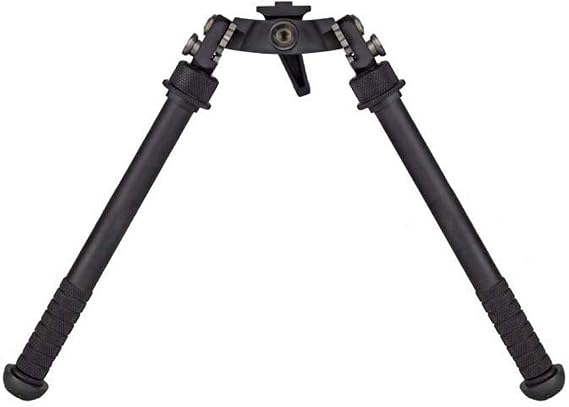
Setting up a stable shooting platform can be tricky in uneven terrain. Hunters needing adjustable height and firm support benefit from a bipod able to adapt on the spot.
The Atlas BT69 Cal Tall Bipod answers this with height versatility and multiple leg positions, making it simple to stay steady across varied conditions.
Adjusting the bipod between 6.1 and 12.3 accommodates prone or sitting positions without hassle. The preloaded 45-degree cant helps keep the rifle level on slopes.
Changing leg angles to 0, 45, 90, 135, or 180 degrees allows fine-tuning for awkward spots. Weighing only 14.2 ounces, it stays light in a pack and avoids adding bulk during movement through the field.
Its construction holds steady during shots, contributing to better accuracy. The durable design matches well with popular models like BT19 and ARMS 17S. Positive notes mention solid build quality and stable positioning.
Occasional mentions note difficulty securing on some mounts or minor play after extended use but these do not undermine overall reliability.
The bipod provides dependable support through adjustable height and leg angles, making it solid for steady shots across terrain types. Reports show the unit stays tough but mounting can require patience, and users must ensure tight attachment to avoid looseness over time.
Those needing a lightweight, highly adjustable bipod matched to common hunting rifle models find this a suitable choice. Alternatives might suit those wanting quicker mounting systems or absolute zero play in nonstop, rough field conditions.
Pros
- Adjustable height between 6.1″ and 12.3″
- Lightweight for easy carrying at 14.2 ounces
- Multiple leg angles for flexible positioning
- Preloaded 45-degree cant for added stability
Cons
- May have minor play after prolonged use
- Some difficulty attaching to certain mounts
| Specification | Details |
|---|---|
| Height Adjustability | 6.1″ to 12.3″ |
| Weight | 14.2 ounces |
| Leg Positions | 0, 45, 90, 135, 180 degrees |
| Compatibility | BT19, BT70, ADM-170-S, ARMS 17S, TRAMP, LT171 |
| Manufacturer Part Number | BT69-NC |
Best Bipods for Hunting Comparison Table
| Product | Brand | Type | Warranty | Included Components |
|---|---|---|---|---|
| BOG DeathGrip Tripod | BOG | Tripod | 1 Year Manufacturer | Tripod |
| Spartan Pro Hunt Bipod | Spartan Precision Equipment | Rifle Bipod | 1 Year | Rifle Adapter, Bipod, Adapters, Screws |
| UL Ultralight Bipod | Tricer | Bipod | See Manufacturer Website | Bipod |
| CVLIFE Adjustable Bipod | CVLIFE | Bipod | – | Bipod |
| BOG Deadshot Bipod | BOG | Bipod | Limited Lifetime | Lanyard, Shooting Sticks |
| BOG Adrenaline Rests | BOG | Bipod | Limited 1-Year Warranty | Bipod |
| Aluminum Rifle Tripod | Lusweimi | Tripod | 1 Year | V yoke rest |
| Shooting Hunting Bipod | Trakiom | Bipod | No Warranty | Head, Legs |
| Hunting Tripod V Yoke | Lusweimi | Tripod | 1 Year | V yoke rest |
| Adjustable Shooting Tripod | Jalarox | Tripod | Three months | Carrying Bag, Tripod Rest |
| CVLIFE Bipod V Yoke | CVLIFE | Shooting Stick | – | User manual |
| Magpul Rifle Bipod | Magpul | Bipod | – | Bipod |
| UTG Big Bore Bipod | UTG | Bipod | Lifetime Warranty | Torx Wrench, Manual |
| UTG Recon 360 Bipod | UTG | Picatinny Bipod | Lifetime | Swivel Stud Adaptor, Manual |
| Atlas BT69 Tall Bipod | Atlas | Bipod | See Manufacturer Website | 1 item |
- BrandBOG
- TypeTripod
- Warranty1 Year Manufacturer
- Included ComponentsTripod
- BrandSpartan Precision Equipment
- TypeRifle Bipod
- Warranty1 Year
- Included ComponentsRifle Adapter, Bipod, Adapters, Screws
- BrandTricer
- TypeBipod
- WarrantySee Manufacturer Website
- Included ComponentsBipod
- BrandCVLIFE
- TypeBipod
- Warranty–
- Included ComponentsBipod
- BrandBOG
- TypeBipod
- WarrantyLimited Lifetime
- Included ComponentsLanyard, Shooting Sticks
- BrandBOG
- TypeBipod
- WarrantyLimited 1-Year Warranty
- Included ComponentsBipod
- BrandLusweimi
- TypeTripod
- Warranty1 Year
- Included ComponentsV yoke rest
- BrandTrakiom
- TypeBipod
- WarrantyNo Warranty
- Included ComponentsHead, Legs
- BrandLusweimi
- TypeTripod
- Warranty1 Year
- Included ComponentsV yoke rest
- BrandJalarox
- TypeTripod
- WarrantyThree months
- Included ComponentsCarrying Bag, Tripod Rest
- BrandCVLIFE
- TypeShooting Stick
- Warranty–
- Included ComponentsUser manual
- BrandMagpul
- TypeBipod
- Warranty–
- Included ComponentsBipod
- BrandUTG
- TypeBipod
- WarrantyLifetime Warranty
- Included ComponentsTorx Wrench, Manual
- BrandUTG
- TypePicatinny Bipod
- WarrantyLifetime
- Included ComponentsSwivel Stud Adaptor, Manual
- BrandAtlas
- TypeBipod
- WarrantySee Manufacturer Website
- Included Components1 item
How to Choose the Best Hunting Bipod
Stability, adjustability, and weight are key factors when selecting a hunting bipod. Choosing the right size and material ensures better balance and easier transport during long outings. A well-suited bipod reduces fatigue and prevents damage to your equipment over time.
Build Material and Durability
After spending a few seasons in wet and dusty conditions, it became clear that a bipod made from aluminum or stainless steel lasts much longer without showing rust or wear. Non-corrosion materials keep the mechanism smooth and prevent parts from seizing up, especially important when packing up gear quickly in the field. Models with an anodized finish or coated steel legs tend to resist scratches and dings better, extending the life of the equipment beyond just one hunting season.
The weight of the bipod really impacts how often it ends up in your pack. A sturdy carbon fiber frame can cut down the weight to around 12-15 ounces, much easier to carry over long hikes compared to bulkier steel designs pushing 1.5 pounds or more.
Using a lightweight but durable construction also means the legs don’t wobble under recoil, providing steady shots without adding unnecessary bulk. Look for solid locking mechanisms and thick leg tubing, these usually mean the bipod won’t bend or loosen over time, even on rough terrain.
Adjustability and Height Range
Trying to take a steady shot from uneven ground can quickly turn frustrating without adjustable legs on your equipment. Legs that extend or retract smoothly allow a shooter to adapt quickly to sitting, kneeling, or prone positions.
A setup that only locks in a few heights forces awkward posture, leading to shaky aim and fatigue after a short period. Look for units offering at least 6 to 9 inches of leg adjustment per side, made from durable materials like anodized aluminum or carbon fiber for stability.
Quick and precise adjustments in the field mean you don’t miss critical moments while fumbling with tools or complicated locks. Models with spring-assisted leg releases or tactile clicks at set intervals help get the perfect height on varied terrain, rocky hillsides, dense woods, or flat meadows. Good design also includes rubber or spiked feet options to prevent slipping or sinking, essential when switching environments rapidly.
Attachment and Compatibility
Mounting systems vary widely between quick detach levers, sling swivel studs, and Picatinny rails. A poorly fitting attachment can cause wobble or shift after the first few shots, which throws off accuracy. Good models snap into place with minimal effort while holding tight enough to prevent any forward or side-to-side movement.
On average, acceptable clamping force ranges from 15 to 25 lb-ft torque, and using materials like hardened steel or aircraft-grade aluminum ensures the mount won’t deform over time.
Compatibility with the rifle’s specific rail type is crucial for a secure fit. Many bipods fit 20mm Picatinny or Weaver rails, but others may require adapters for sling studs or proprietary mounts, which add complexity to the setup.
Expect to check the rail width and mounting hole spacing before purchase. Secure attachment mechanisms guarantee stability during repeated use, holding the bipod steady even on rough terrain or heavy recoil. Insights from hands-on experience show that a tight, rattle-free connection consistently improves shot grouping and confidence during long hunts.
Stability and Support
Firing a rifle from a shaky rest can throw off your shot more than expected. Designs that absorb recoil by spreading the force through the frame and legs help keep the firearm steady.
Stronger materials like aluminum or steel combined with shock-absorbing joints prevent the stand from jolting. Legs with adjustable tension knobs allow for fine-tuning the firmness, reducing bounce and shifting during repeated shots.
Leg structure matters a great deal. Thin or flexible legs often result in wobble, especially on uneven terrain.
Thick, reinforced legs over 10mm in diameter resist bending. Rubber or spiked feet stop slipping on surfaces like rock, dirt, or wet grass. These feet either grip without scoring the ground or dig in slightly for stability.
Look out for units with interchangeable tips to match different environments. Some models include:
- Rubber pads for hard, flat surfaces
- Steel spikes for soft or muddy soil
- Wide footplates to prevent sinking in sand or snow
Weight and Portability
Carrying extra weight on a long hunting day quickly adds up, especially after several miles of walking or climbing with gear. A device tipping the scales under a pound can feel almost invisible in your pack, while heavier units start to wear on your shoulders and reduce overall endurance. Materials like aircraft-grade aluminum offer a sweet spot, light enough to reduce fatigue but sturdy enough to keep the setup rock solid during a shot.
Ease of folding or collapsing directly affects how you move through tight spots or store gear before a shot opportunity. Models that fold compactly into 7 to 9 inches make slipping the equipment into a side pouch or rifle case very easy.
Clunky designs that don’t easily collapse or lock in place become a constant source of frustration during quick transitions or when stowing your gear behind trees or rocks. A streamlined mechanism with fewer small parts also lowers the chances of it jamming or breaking in the field.
Proper Setup and Adjustment Techniques for Hunting Bipods
Most hunting bipods include adjustable legs that can be locked at different lengths. Start by extending both legs evenly to achieve a stable shooting position. Adjust the leg length so your rifle is level with your line of sight, which reduces strain and improves accuracy during long waits.
Tip: Use the quick-release levers or twist locks on the legs to fine-tune the height without disturbing your setup. Doing this helps adapt quickly to uneven terrain, whether you’re on a hillside or a forest floor.
Rotating the bipod base is another useful feature to consider. Many models allow 360-degree swivel or limited canting, which keeps your rifle steady even on sloped surfaces.
This prevents the need to reposition your entire body messily in the field, saving time and avoiding noise.
- Extend legs evenly and lock firmly
- Adjust to keep rifle level with your eye line
- Use swivel or cant features for uneven ground
Essential Maintenance Tips to Extend the Life of Your Bipod
Regularly cleaning your bipod after each hunt can prevent dirt and moisture from causing rust or damage. Use a soft brush or cloth to remove mud, dust, and debris from joints and moving parts. Avoid soaking metal components; instead, dampen the cloth slightly with water or a mild cleaning solution.
Lubrication is another critical step. Applying a light coat of grease or specialized gun oil to pivot points ensures smooth adjustments and helps prevent wear. Wipe off any excess lubricant to avoid attracting dirt.
Check screws and mounting hardware frequently. Tighten any loose parts to maintain stability during use. Carrying a compact multi-tool in the field is practical for quick adjustments.
- Store your bipod in a dry place to prevent corrosion.
- Avoid mechanical shocks by handling the bipod carefully during transport.
- Inspect rubber feet for wear and replace them if they no longer provide good traction.
Comparing Bipods to Other Stability Accessories for Hunters
Bipods provide a distinct advantage for hunters who prioritize portability and quick setup over bulkier support systems. Unlike shooting sticks, which may require adjustment of two or more legs and can be cumbersome in dense brush, bipods attach directly to the rifle and can be folded away when not in use.
Compared to sandbags, bipods offer consistent elevation without the need for a flat surface or external support, making them useful on uneven terrain. However, sandbags absorb recoil better and allow more flexibility in positioning.
Tripods offer superior stability with three points of contact and adjustable height, but they are heavier and slower to deploy. Bipods strike a balance between stability and mobility, often weighing less than two pounds and allowing rapid adjustments in leg length.
- Portability: Bipods attach firmly to the rifle, minimizing extra gear.
- Setup Speed: Quick deployment compared to tripods and shooting sticks.
- Terrain Adaptability: Effective on uneven ground but less so on soft surfaces like sandbags.
People Also Asked
How Do I Properly Size a Bipod for My Rifle?
The proper size for a bipod depends on your rifle’s length and shooting position. Check the height range of the bipod to ensure it matches your usual shooting stance, whether prone or seated. Trying the bipod attached to your rifle before long trips helps confirm it offers comfortable stability.
What Is the Best Way to Maintain and Clean a Bipod?
Regularly wipe down the bipod with a dry cloth after use and apply a small amount of lubricant to moving parts. Avoid harsh chemicals as they can damage finishes and lubricants. Periodically check screws and tightening knobs to keep everything secure and functioning smoothly.
Are Bipods Compatible with All Hunting Rifle Models?
Bipods usually attach via a Picatinny rail, swivel stud, or M-LOK mount, so compatibility depends on your rifle’s mounting options. Measure the mount on your rifle and pick a bipod designed to fit that system. Some adapters can help if your bipod doesn’t directly fit the rifle.
How Long Does a Typical Hunting Bipod Last with Regular Use?
A good quality bipod typically lasts several hunting seasons with normal use. Materials like steel or aluminum offer durability, though frequent exposure to dirt and moisture may require more care. Lubrication and cleaning after each outing help extend the bipod’s working life.
What Common Problems Should I Watch for with Bipods?
Common issues include loosened screws, worn pivot points, and corrosion in metal joints. Also, the legs may get stuck if dirt or sand enters the mechanism. Regular inspection and cleaning of the pivot areas prevent most problems before they affect your hunting setup.
Conclusion
When choosing a bipod for hunting, focus on stability, adjustability, and weight. Stability keeps your shot steady on uneven terrain.
Adjustable height helps maintain comfort and accuracy across different shooting positions. Weight matters for how much gear you want to carry without feeling burdened during long hikes.
Match the bipod to your typical hunting conditions and how often you use it. A durable model makes sense for frequent trips, while a lighter option works for shorter outings.
Check the comparison table and detailed picks above to find the right balance between features and cost for your needs.