
Missing your target or having a broadhead fail mid-shot can turn a promising hunt into a frustrating day. Choosing the best broadheads for compound bow matters because a poorly made one might not fly true, could break on impact, or won’t create a sufficient wound channel for a quick, ethical harvest.
Precision and durability are critical, especially when dealing with varying distances and tough game.
The quality of broadheads often comes down to blade design, material, and weight. Good models typically use hardened steel or stainless steel blades around 1.5 to 2 inches in cutting diameter, offering a balance between penetration and tissue damage.
Weight matching with your arrow setup, usually 100 to 125 grains, affects flight stability. Ease of sharpening and cleaning are practical considerations, as broadheads need maintenance after every hunt to maintain sharpness and safety. A secure fit to your arrow shaft prevents wobble and ensures accurate shots.
Need a Quick Check?
| Image | Product | Price |
|---|---|---|
Our Top Picks 1 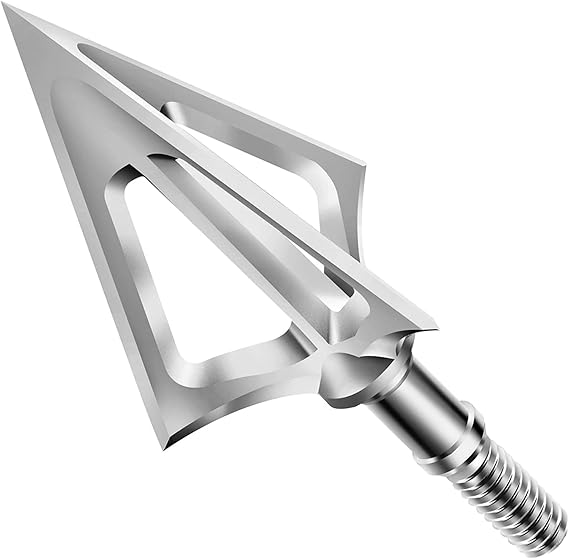 | Hunting 100 Grain Broadhead | Check Price |
Our Top Picks 2  | Swhacker #207 Broadhead | Check Price |
Our Top Picks 3 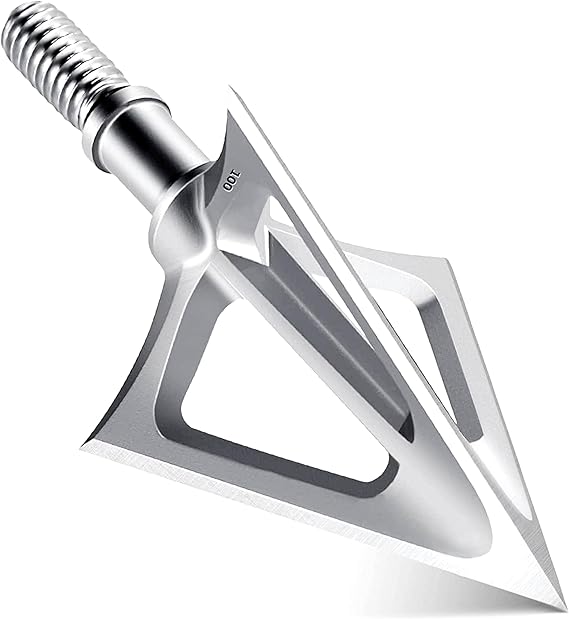 | Fixed Blade 420 Stainless Steel | Check Price |
Our Selected Top 15 Broadheads for Compound Bow Worth Considering
These 15 broadheads cover a range of designs suited for different hunting needs and shooting styles. Each review explains how well it flies, how reliable it is on impact, and which type of archer or animal it works best for, along with any drawbacks to consider.
1. Hunting Broadhead 100 Grain Fixed Blade Broadhead
Hunting at varying distances and conditions demands a broadhead built for precision and toughness. A good fixed blade head suits archers who want consistent sharpness and dependable penetration. The Hunting Broadhead 100 Grain Fixed Blade Broadhead stands out with its solid construction and balance that helps keep shots accurate.
Setting up involves screwing the broadhead onto standard 8-32 threaded arrows, compatible with most compound, crossbows, and recurves. Its one-piece metal injection molding construction feels sturdy in hand and simplifies cleaning.
The vented design reduces wind resistance, which may help in maintaining flight stability during varied hunting environments.
Performance excels with a 1-1/8 inch cut on 420 stainless steel blades. The three fixed blades hold their edge well and are easy to resharpen. Spin-tested for balance, it offers accuracy in each shot.
A common drawback includes occasional blade dulling after prolonged use, which needs addressing through sharpening.
Balance and flight accuracy receive praise, thanks to spin-test quality control. Sharpness holds for a reasonable time, although resharpening is necessary after multiple uses. The sturdy build reassures in rough hunting conditions. Some find the fixed blades less adaptable compared to replaceable designs.
Archers seeking straightforward, no-fuss broadheads for varied bows will appreciate this product. Those wanting adjustable cutting diameters or different blade styles may want to explore other options.
Pros
- Durable 420 stainless steel blades
- One-piece injection molding prevents loosening
- Vented design reduces wind resistance
- Wide compatibility with bows and crossbows
Cons
- Blades dull with extended use
- Fixed blade limits cutting diameter adjustments
| Specification | Details |
|---|---|
| Blade Material | 420 Stainless Steel |
| Weight | 100 Grain |
| Blade Type | Fixed, 3 Blades |
| Cut Diameter | 1-1/8 Inch |
| Thread Size | 8-32 Screw-in |
| Pack Count | 6 Pack |
2. Swhacker #207 Mechanical Broadhead 100 Grain
Expanding to a 2.0-inch cutting diameter, the Swhacker #207 Mechanical Broadhead suits hunters wanting a wide wound channel without sacrificing accuracy. Its patented Two-Slice Technology focuses on protecting the main blades until impact, making it reliable for controlled deployment on compound bows or crossbows.
Setting these broadheads up is straightforward since they’re designed to fly like field points, maintaining consistent shooting from practice to the stand. Assembly isn’t complicated, and their 100-grain weight matches many common arrow setups.
Carrying the 3-pack green broadheads is convenient, and the option to buy replacement blades separately helps keep them ready without a full swap.
The performance holds up with reliable penetration thanks to the hardened steel tip and sharp stainless blades. The aircraft-grade aluminum ferrule offers durable support under high-velocity shots. Positive feedback highlights accuracy consistency, while some find the mechanical blades can require checking to ensure they deploy properly every time.
Broadheads produce consistent accuracy and penetration in typical use, with a solid build combining aluminum ferrule and stainless steel blades. Mechanical blades sometimes require double-checking before each shot to confirm deployment will happen correctly, which adds a step during field preparation.
Hunters wanting a broadhead that shoots true like field points and provides a wide cut benefit from this design. Those preferring fixed blade broadheads or wanting all components included at once might look toward other options. The product fits well with compound bows and crossbows requiring a 100-grain head.
Pros
- Wide 2-inch cutting diameter for larger wound channels
- Field-point flight for consistent accuracy
- Durable aluminum ferrule and steel tip
- Three-pack with replaceable blades available
Cons
- Mechanical blades need careful pre-shot inspection
- Replacement blades sold separately
| Specification | Details |
|---|---|
| Cutting Diameter | 2.0 inches |
| Blade Material | Stainless Steel |
| Ferrule Material | Aircraft-Grade Aluminum |
| Broadhead Weight | 100 grains |
| Package Contents | 3 broadheads |
| Item Weight | 3.2 ounces |
3. Fixed Blade Broadhead 100 Grain 420 Stainless Steel
Hunters who rely on a solid, straightforward fixed blade broadhead will appreciate this 100 Grain 420 Stainless Steel model. It suits anyone using compound bows, crossbows, or recurve setups and values a durable blade that holds up through multiple uses.
Its biggest strength lies in the strong, scratch-resistant steel that performs well over time.
Setup involves screwing the broadhead onto any bow with a standard 8-32 thread, which covers nearly all compound and crossbows. The vented design helps with wind resistance, so the arrow flies truer in breezy conditions.
Carrying six in a pack means you can keep spares ready or swap out heads without fuss when sharpening is needed. The blades sharpen easily, maintaining edge sharpness between outings.
Cutting 1-1/8 inch wide, these broadheads deliver solid penetration and cutting power across different game sizes. The material choice of 420 stainless steel ensures a tough blade that resists bends or breaks during use.
Reports show the blades stay sharp after several uses, though some point out the cutting edge can dull after extensive contact with bone. The screw-in fitting holds tight, avoiding looseness during flights and shots.
Repeated use shows the blade maintains sharpness fairly well, though taking on heavy bone contact accelerates dulling. The screw-in attachment stays secure while in use, avoiding rattling or loosening mid-shot. The vented design contributes noticeably to better arrow flight in windy situations.
Bow hunters wanting a reliable, tough fixed blade for general use will find these broadheads meet those needs. Those needing ultra-sharp blades that can be swapped quickly or upgraded frequently might want to consider replaceable blade options instead.
Pros
- Strong stainless steel resists bending and breaks
- Vented design reduces wind drag during flight
- Fits all crossbows, compound, and recurve bows
- Blades sharpen easily after repeated use
Cons
- Blade edges dull with prolonged bone contact
- Not suitable if you need replaceable blades
| Specification | Details |
|---|---|
| Blade Material | 420 Stainless Steel |
| Grain Weight | 100 Grain |
| Cut Diameter | 1-1/8 Inch |
| Thread Size | 8-32 Standard Screw-In |
| Package Quantity | 6 Pieces |
| Package Weight | 0.06 kg |
4. Magnus MASS100-4 Stinger 4 Blade Broadhead

Magnus MASS100-4 Stinger 4 Blade Broadhead stands out with its patented four-blade design, delivering consistent and precise flight for compound bow hunters who need reliable accuracy. It suits both experienced and new hunters aiming for high-speed performance in deer or elk hunting where sharp penetration matters.
Setting up these broadheads is straightforward. Fixed blades reduce the worry about moving parts failing during a hunt.
Sharpening or blade replacement is simple, which helps maintain sharpness without professional tools. The broadhead’s weight of 100 grains fits well with many compound bows, and the durable aluminum and steel build feels solid in hand without unnecessary bulk.
Penetration remains strong thanks to the aggressive blade angle and sturdy construction. The black finish limits glare in the field. It handles speeds from modern bows well, maintaining stable flight patterns.
Some users note blades need frequent sharpening to stay in peak condition, but replacement blades help manage this issue. The lifetime replacement guarantee adds confidence for long-term use.
Reliable precision and stable flight performance earn solid praise in reviews, while the need for frequent blade maintenance stands out as a regular point of concern. The lifetime replacement offer reassures about durability but does not eliminate routine upkeep. Blacked-out broadheads reduce glare under varied lighting during hunts.
Hunters with modern compound bows seeking dependable blades for deer or elk will appreciate this broadhead. Those looking for a less maintenance-heavy or lighter option might prefer other models. The four-blade design particularly fits situations where penetration and stable flight are priorities over compactness.
Pros
- Consistent flight accuracy with field-tip precision
- Durable aluminum and steel construction
- Easy blade sharpening or replacement
- Lifetime replacement guarantee
Cons
- Blades require regular sharpening to maintain sharpness
- Weight and size may not suit every bow setup
| Specification | Details |
|---|---|
| Weight | 100 Grain |
| Blade Count | 4 Blades |
| Material | Aluminum, Steel |
| Package Contents | 3 Broadheads |
| Item Weight | 1.6 ounces |
| Dimensions | 8 x 5.13 x 1 inches |
5. Screw-In Broadhead 100 Grain 3 Blade Archery Tips

AREYCVK Screw-in Broadhead 100 Grain 3 Blade Archery Tips provide sharp and durable arrowheads for compound bow hunters focused on accuracy and reliability. Best suited for serious archers who value precision and ease of maintenance, these broadheads offer consistent weight and a secure fit that keeps arrows flying straight.
Setting up these broadheads is straightforward thanks to the standard screw-in design that fits most compound bow arrows. Each package comes with 12 broadheads and a case, making storage and transport simple. The anodized aluminum shafts keep the weight balanced, while three fixed stainless steel blades stay sharp and maintain their edge after repeated use and targets.
Broader performance focuses on steady, precise flight due to the consistent 100 grain weight and tight blade tightness that limits arrow wobble. The blades’ stainless steel materials are solid and well manufactured; however, a frequent remark is the relatively short warranty period of 3 months.
Sharpness holds well but regular inspection is advisable to prevent loosening over extended use.
Sharpness and tight fit are praised for delivering precise hits, but complaints arise about blades loosening over time. Most users confirm the broadheads perform reliably, yet the short warranty period leaves questions about durability during prolonged use.
Those who prize simplicity, quick blade replacement, and consistent arrow balance will appreciate this set. Archers seeking longer warranty coverage or who want adjustable blades may prefer options with more features or extended guarantees.
Pros
- Hard stainless steel blades stay sharp longer
- Standard screw-in fit for quick installation
- Consistent weight ensures accurate arrow flight
- Compact case included for easy storage
Cons
- 3-month warranty may not cover long-term use
- Blade tightness can loosen without regular checks
| Specification | Details |
|---|---|
| Material | Anodized aluminum shaft, stainless steel blades |
| Blade Count | 3 fixed blades |
| Weight | 100 grains |
| Package Includes | 12 broadheads with 1 carrying case |
| Warranty | 3 months |
| Color | Black |
6. G5 Megameat Crossbow Broadhead Stainless Steel
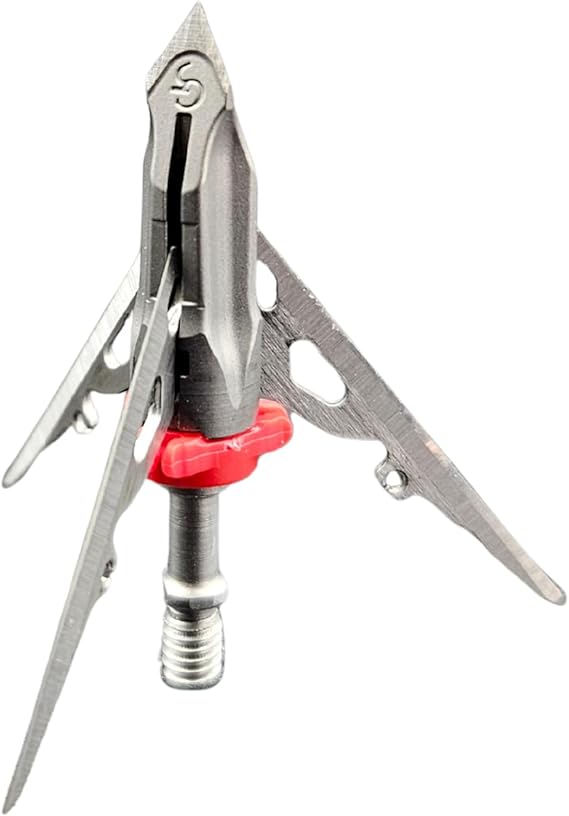
Feels solid in hand and cuts deep, ideal for hunters who want reliability and power from their broadhead. Its standout feature lies in the blade design, offering a wide 2-inch cutting diameter that makes tracking a wounded animal easier and increases the chances for a clean hit.
Setting it up involves attaching the SnapLock collar that keeps blades locked tight during flight, preventing any blade pre-deployment. This means less worry about accuracy loss or damage before the shot.
Changing blades is straightforward using the Replacement Blade Kit so you can keep the gear ready without hassle. It fits well on most compound bows in either 100 or 125 grain, giving choice based on your draw weight and hunting situation.
The chisel tip punches through bone effectively, and the three machined steel blades create larger wound channels. The stainless steel build feels durable and ready for repeated use, standing up to tough conditions. Sharp blades maintain cutting power but replacement is needed after a few hits.
Some mention that blade alignment needs checking to avoid wobble in flight.
Precise cutting diameter and locked blades provide confidence in flight accuracy. Sharpness is consistent but depends on blade replacement to keep top performance. Some issues with blades shifting have been reported, requiring adjustment before use. The replaceable components add convenience but also a recurring maintenance step.
Hunters seeking a durable crossbow broadhead with solid penetration will find this fits well, especially with the option to choose grain weight. Those who prefer fixed blades with minimal upkeep might want to consider alternatives to avoid frequent blade checks or replacements during extended hunts.
Pros
- 2-inch cutting diameter for bigger wound channels
- SnapLock collar secures blades until impact
- Chisel tip designed to break bone efficiently
- Replaceable blades and collars extend blade life
Cons
- Blades require occasional realignment to maintain accuracy
- Replacement blades needed after several uses
| Specification | Details |
|---|---|
| Blade Diameter | 2″ |
| Blade Count | 3 machined solid steel blades |
| Weight Options | 100 & 125 grain |
| Tip Type | Chisel tip |
| Included Components | 3-pack of 100 grain broadheads |
7. Mechanical Broadhead 100 Grain 2 Blade

Mechanical Broadhead 100 Grain 2 Blade offers a durable and sharp option for bow hunters who want a large cutting surface combined with reliable blade deployment. It suits those looking for a straightforward broadhead that holds together well in flight and opens effectively on impact.
Setting up these broadheads is straightforward since no O-rings or rubber bands are needed to keep the blades closed. The 2-inch cutting diameter and 0.43-inch leading edge blade promise a good wound channel. The blades retract smoothly on impact due to the retention system, which also helps maintain stability during flight.
You get six broadheads per pack, adding convenience for multiple outings.
Constructed with 420 stainless steel blades and aluminum alloy ferrules, these broadheads offer solid penetration and durability. The aerodynamic design keeps the blades closed until impact, promoting accuracy. Feedback highlights that blade deployment is generally reliable, but a few have noted occasional issues with blade opening.
The build holds up well under typical hunting conditions.
Reliable blade retention during flight gets a lot of praise due to the innovative design that keeps blades securely closed until impact. Frequent comments mention the blades open sharply upon hitting the target, improving cutting performance. On the downside, some hunters mention the rear retractable blades do not deploy every time, requiring attention to ensure proper function.
Those who want a mechanical broadhead with easy setup and solid cutting performance will appreciate this model. Hunters seeking maximum reliability in blade deployment might consider alternatives or perform regular checks on deployment mechanisms to avoid surprises in the field.
Pros
- Large 2-inch cutting diameter for effective wounds
- No O-rings needed; retention system secures blades
- Durable 420 stainless steel and aluminum alloy build
- Includes six broadheads per pack
Cons
- Blade deployment can occasionally be inconsistent
- May require careful handling to maintain blade sharpness
| Specification | Details |
|---|---|
| Cutting Diameter | 2 inches |
| Blade Thickness | 0.035 inch |
| Blade Material | 420 Stainless Steel |
| Ferrule Material | Aluminum Alloy |
| Package Quantity | 6 broadheads |
| Package Dimensions | 8.54 x 5.04 x 0.67 inches |
8. G5 Montec Fixed Blade Broadhead Pink 3 Pack

All-steel construction and one-piece metal injection molding define this broadhead’s durability. Designed for compound bow hunters seeking precision and strength, it excels in maintaining balance with spin testing, ensuring consistent accuracy shot after shot.
Setting up includes choosing between 85, 100, or 125 grain weights, allowing weight customization for different draws and flight preferences. Its cut-on-contact design is ready to penetrate immediately, and the solid build means it stands up to repeated use without worrying about weak points. Handling and packing the three-pack is simple thanks to its compact dimensions.
With a cutting diameter from 1 to 1 1/8 inch, it creates a wide wound channel ideal for effective takedowns. The diamond-cut edges stay sharp, providing clean cuts, while the MIM construction ensures balance for flight precision. Reviews say the blades maintain sharpness over time but note that aluminum material sometimes raises durability concerns under extreme impacts.
The construction guarantees solid durability with a balanced flight path from testing, but aluminum blades may not hold up against the hardest targets as well as steel alternatives. The cutting diameter creates an effective wound channel, delivering clean penetration every time.
Hunters looking for reliable accuracy and a choice in grain weights will find it suitable. Those needing longer-lasting blades under heavy use or extra quantity in a pack might prefer other options that offer tougher materials or larger bundles.
Pros
- Strong one-piece metal injection molding design
- Multiple grain weights for flexible use
- Diamond-cut sharpness for clean cuts
- 100% spin-tested for perfect flight balance
Cons
- Aluminum blades may dent on tough impacts
- Only a 3-pack, not ideal for extended trips
| Specification | Details |
|---|---|
| Material | Aluminum |
| Weight Options | 85, 100, 125 grains |
| Cutting Diameter | 1″ to 1 1/8″ |
| Item Weight (each) | 1.1 ounces |
| Item Dimensions | 1.97 x 1.57 x 1.57 inches |
9. Mechanical Broadhead 100 Grain 2 Blade

Mechanical Broadhead 100 Grain 2 Blade stands out with a large 2-inch cutting diameter, ideal for hunters who need wide wound channels. It suits archers using compound bows who want reliable mechanical broadheads delivering accuracy with strong cutting power.
Setting it up is straightforward thanks to the no collar blade retention system, which locks the blades securely by gasket without extra parts like collars or O-rings. The 420 stainless steel blades expand only on impact, so carrying them in a quiver feels safer with less risk of early deployment. Its aircraft aluminum ferrule adds to steady flight and field point accuracy, making daily use practical in brushy terrain.
Performance leans heavily on a rear-deploying, cut-on-contact design that provides a solid, reliable opening on impact. The broadheads are well built with durable 420 stainless blades and a 7075-T6 aluminum ferrule that balances strength and lightweight. A notable positive is the sharp cutting edges that stay intact, but some find the one-month warranty a bit short for testing durability thoroughly.
Many praise the broadhead’s solid lock system that prevents blades from opening early, reducing arrow flight issues. The cutting diameter makes it a strong performer at impact. Complaints commonly focus on the short 1-month warranty, which limits confidence in long-term durability and replacement options.
Those prioritizing wide wound channels and mechanical reliability will find this broadhead meets their needs. Archers wanting a longer warranty or thicker blades might consider alternatives. It fits well for hunters comfortable with the rear-deploy design and who control arrow care to avoid premature blade wear.
Pros
- Large 2” cutting diameter for greater tissue damage
- Secure blade lock without collars or O-rings
- Accurate flight thanks to aircraft aluminum ferrule
- Blades stay sharp and durable after shots
Cons
- Warranty lasts only 1 month
- Some users may prefer more blade thickness
| Specification | Details |
|---|---|
| Cutting Diameter | 2 inches plus 0.35 inch leading-edge |
| Blade Material | 420 Stainless Steel |
| Blade Thickness | 0.035 inch |
| Ferrule Material | 7075-T6 Aircraft Aluminum |
| Package Weight | 0.06 kg |
| Package Dimensions | 5.55 x 3.19 x 0.67 inches |
10. TenPoint Nemesis Broadhead

Nemesis Broadhead suits hunters aiming for precision and deadly impact with compound bows. Its 100-grain weight and four-blade design focus on delivering maximum penetration on game.
Picking this model means prioritizing deep, clean cuts and a reliable mechanical deployment that stays true to the aim point.
Setting up each broadhead is straightforward since they come in a pack of three and are compatible with most compound bows and crossbows. The four-blade mechanism opens on impact to create large wound channels, which helps with bleeding and tracking.
The 2-inch entry and 2 by 1.75 exit holes require steady shooting but offer clear, effective performance on target.
Constructed for durability and precision, the broadhead handles speeds up to 900 FPS without veering off target. It replicates the trajectory of field points, reducing guesswork during shooting sessions.
Consistent penetration with large exit wounds is its highlight. A noted drawback involves some mechanical complexity compared to fixed-blade types, which might require more checks before the hunt.
The broadhead gets praised for maintaining shot accuracy comparable to field points even at speeds reaching 900 FPS. Many highlight the large exit wounds that improve blood trails. However, regular checks are necessary to ensure the mechanical blades function properly before use, discouraging some from choosing it due to the extra maintenance.
Hunters prioritizing precise cuts and predictable flight paths will find this broadhead well suited. Those preferring simpler, fixed-blade models with fewer moving parts should consider other options. Its strengths show most during serious hunts where precision and penetration are critical for quick recoveries.
Pros
- Consistent point-of-impact duplication at high speeds
- Large 3.75″ total cutting diameter
- Mechanical blades harness energy effectively
- Pack of three suits multiple outings
Cons
- Mechanical complexity requires careful inspection
- Some may prefer fixed blades for durability
| Specification | Details |
|---|---|
| Model Name | Nemesis |
| Weight | 100-Grain |
| Blade Count | Four-Blade |
| Pack Size | 3 Count |
| Speed Tested Up To | 900 FPS |
11. Mechanical Broadhead 100 Grain 2 Blade

Hunting requires sharp and reliable broadheads for clean, effective strikes, especially with a compound bow. Mechanical Broadhead 100 Grain 2 Blade suits archers who want a broadhead that flies straight and offers a large cutting surface. Its biggest strength lies in a 2 cutting diameter paired with a sharp retractable blade, designed to improve penetration and tracking.
Setting these broadheads onto your arrows is straightforward thanks to their design, which avoids fiddly O-rings or rubber bands. The innovative retention system keeps blades securely closed in flight, reducing the risk of damage or blade opening prematurely. When you reach the target, a new retention structure ensures the rear blades deploy reliably for a clean cut.
Each package includes six broadheads, which makes it easy to have spares ready for multiple hunts.
The broadheads perform well with their durable 420 stainless steel blades and strong alloy ferrules, providing excellent penetration and toughness. The main praise comes from their dependable blade deployment upon impact, which improves cutting efficiency.
A common complaint involves the slightly thin blade thickness of 0.035, which some worry might compromise durability over repeated use, but the stainless steel helps offset that concern.
Most praise highlights the broadhead’s dependable blade release mechanism improving cutting on contact, while repeated concerns involve the thin blades that may wear out faster than thicker alternatives. The no O-ring design is a definite advantage for reducing maintenance during long hunts.
Archers prioritizing large cutting diameter and reliable blade deployment will find this broadhead meets those needs. Those seeking extra blade thickness for rougher conditions or extended use may want to consider options with heavier gauge blades. The included six-pack also makes it practical for multiple trips or training.
Pros
- Large 2″ cutting surface increases hit area
- Durable 420 stainless steel blades for penetration
- Retention system keeps blades closed in flight
- Reliable blade deployment upon impact
Cons
- Blades are thin at 0.035″ thickness
- Some concern over blade durability after heavy use
| Specification | Details |
|---|---|
| Cutting Diameter | 2 inches |
| Blade Thickness | 0.035 inches |
| Blade Material | 420 Stainless Steel |
| Weight | 6.48 grams |
| Package Quantity | 6 broadheads |
| Retention System | No O-rings or rubber bands |
12. Mechanical Broadhead 100/125 Grain 2 Blade

Offering a 2-inch cutting diameter with 420 stainless steel blades, this mechanical broadhead suits compound bow hunters who want sharpness and penetration. Its standout feature is the no-collar design, which streamlines blade replacement without disassembly of the shaft connection.
Setup is straightforward because there is no collar to remove or replace, saving time in the field or at the range. The blades lock into place directly, making blade swaps quicker.
Using the broadheads repeatedly is practical since the stainless steel blades maintain a razor-sharp edge after multiple uses, helping maintain consistency shot after shot. The 2-blade design keeps the cutting profile clean and efficient.
The one-piece steel ferrule holds everything sturdily in place for deep penetration, backed by .035-inch thick blades that resist bending. The broadhead performs reliably in penetration through tough materials, delivering clean cuts.
One issue noted is a short 1-month manufacturer warranty, which provides limited coverage for damage or defects. Some users have also found blade replacement requires careful handling but not full shaft removal.
The broadheads combine durability and sharpness that hold up across seasons, which many appreciate for reliability and value. Some find the blade replacement step fiddly, needing steady hands and patience due to the direct attachment without a collar.
Hunters valuing repeat use and easy blade swaps will like this choice. Those preferring longer warranty coverage or simpler blade changes might look at other options with extended assurances or different attachment mechanisms.
Pros
- Direct blade attachment with no collar needed
- Reusable with razor-sharp blades
- Strong one-piece steel ferrule
- Two-blade design cuts clean and wide
Cons
- Only a 1-month manufacturer warranty
- Blade replacement requires careful handling
| Specification | Details |
|---|---|
| Blade Material | 420 stainless steel |
| Blade Thickness | 0.035 inches |
| Cutting Diameter | 2 inches |
| Pack Quantity | 6 mechanical broadheads |
| Weight | 100 grains |
| Package Dimensions | 5.51 x 3.15 x 0.67 inches |
13. Fixed Blade Broadhead 100/125 Grain 420 Stainless Steel

Archers who prefer fixed blade broadheads for their compound bows will appreciate these 100/125 grain points made from 420 stainless steel. The standout feature is their precision spin-tested accuracy combined with strong penetration, suited for serious hunting and practice alike.
Setting up the broadheads is straightforward with the included cut-resistant installation tool and standard screw-in 8-32 thread. They fit most arrows across compound, crossbow, and recurve types. Daily use involves minimal fuss thanks to their durable one-piece injection molding and the option to re-sharpen the blades as needed.
Their vented design helps reduce wind resistance during flight.
Sharpness and penetration are consistent, delivering reliable results on target. Constructed entirely from 420 stainless steel, these broadheads hold up well against impacts. Some note the blades stay sharp but require careful handling during installation due to their high cutting edge.
The screw-in mechanism ensures they stay firm but occasionally needs tightening after multiple shots.
These broadheads deliver strong penetration and maintain sharpness over multiple uses, praised for accuracy and durability. The installation tool helps with safety but handling sharp fixed blades can feel tricky at times. Tightening threads after several shots is a minor but reported inconvenience.
Hunters who want a hard-wearing, no-frills fixed blade broadhead for varied bow types can rely on these. Those who want quicker blade replacement or less blade maintenance might prefer mechanical broadheads instead. Ideal for users that value blade strength and long-term usability on a budget.
Pros
- High precision spin-tested accuracy
- Durable one-piece injection molding
- Easily re-sharpened blades
- Includes installation tool for safety and ease
Cons
- Sharp blades require careful handling during installation
- Occasional need to re-tighten after repeated use
| Specification | Details |
|---|---|
| Material | 420 stainless steel |
| Weight | 100 Grains/125 Grains (+/- 2 grain) |
| Cutting Diameter | 1″ to 1 1/8″ |
| Number of Pieces | 18 |
| Thread Type | Standard screw-in 8-32 |
| Package Dimensions | 4.69 x 3.35 x 2.6 inches |
14. RAGE Hypodermic Broadhead
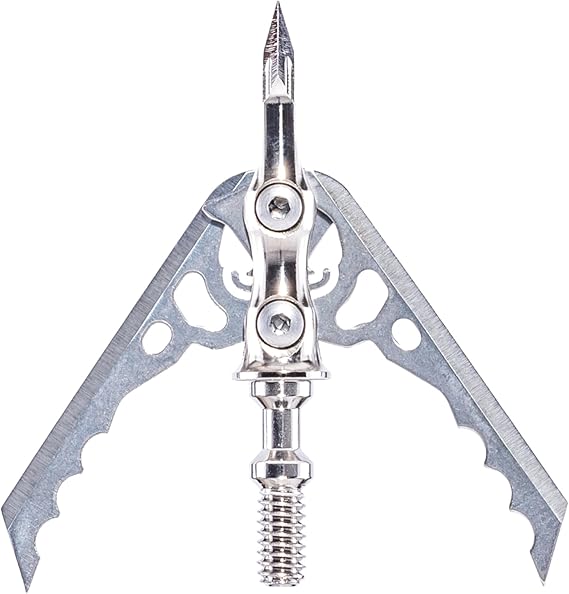
RAGE Hypodermic Broadhead offers a two-blade design with a hybrid hypodermic tip, aimed at compound bow hunters who prefer a simple, sharp option for reliable penetration. Its machined stainless steel ferrule adds strength to the 100-grain broadhead, making it a solid choice for those prioritizing durability and precision.
Setting up involves attaching one of the three broadheads included in the pack to your compound bow. The consistent 100-grain weight helps maintain arrow balance and flight accuracy. Since the blades are fixed and steel-built, they hold an edge well and require minimal post-shot maintenance compared to mechanical types.
Cleaning is straightforward thanks to the stainless steel ferrule resisting corrosion.
Performance-wise, this broadhead delivers clean, deep cuts thanks to the sharp two-blade layout and hypodermic tip design. Its build quality stands out because of the machined stainless steel, which resists bending or warping after impact.
The most common complaint concerns the blade count, as some prefer three or more blades for bigger wound channels. The broadhead works well for hunters wanting a combination of sharpness and durability without added complexity.
The sharpness and build quality of the broadhead receive praise for delivering consistent penetration and holding up well against impact. A common drawback is the two-blade design, which some find less effective for creating large blood trails compared to multi-blade models.
Hunters who value a reliable, easy-to-maintain head with clean cuts will like this broadhead. Those wanting larger cutting diameters or mechanical blades for wider wound channels should consider other options.
Pros
- Sharp hybrid tip penetrates deeply
- Durable stainless steel ferrule resists damage
- Lightweight 100-grain maintains arrow flight
- Comes in convenient 3-pack
Cons
- Only 2 blades may limit wound size
- Requires manual sharpening after multiple shots
| Specification | Details |
|---|---|
| Blade count | 2 |
| Weight | 100 grain |
| Tip type | Hybrid hypodermic |
| Ferrule material | Machined stainless steel |
| Items per pack | 3 |
15. Magnus Hornet 4 Blade Broadhead 3 Pack

Magnus Hornet 4 Blade Broadhead 3 Pack offers solid performance for hunters who use compound bows and need reliable cutting power with good accuracy. Its main strength lies in the heavy-duty single bevel blades, which handle impact well and stay sharp through tough conditions.
Setting these broadheads up is straightforward as they come fixed at 125 grains, matching common bow setups easily. The replaceable main blades allow you to sharpen or swap parts without buying new heads altogether. The extra bleeder blades widen the cutting area, which can help in tracking wounded game.
Three broadheads in a pack provide spares for multiple hunts or extended use.
Magnus Hornet broadheads perform with good penetration and deliver consistent field-point-like accuracy, useful for longer shots. Made from aluminum and steel, the build feels sturdy, especially with the .059-inch thick main blades.
Some reports indicate the blades hold edges well but can require touching up after repeated hits on bone. A few note the extra blades add minor wind drag, which could affect arrow flight in some setups.
Most praise goes to how well the thick main blades hold up through tough hits without bending or dulling quickly. Regular sharpening keeps them effective. The broadheads’ additional bleeder blades provide better blood trails but some find this can slightly disrupt arrow flight under windy conditions. Longevity combined with replaceable parts supports repeated hunts.
Hunters who prioritize durability and cutting surface size will appreciate this model’s balance of features. Those using very fast bows or shooting long distances in windy areas may want to test arrow flight first or consider simpler designs with fewer blades. The set suits repeated, reliable use in various field conditions thanks to solid build and included extras.
Pros
- Strong single bevel main blades resist damage
- Bleeder blades improve bleeding for tracking
- Field-point accuracy at longer distances
- Lifetime replacement guarantee included
Cons
- Extra blades may affect arrow flight in wind
- Main blades can need resharpening after bone hits
| Specification | Details |
|---|---|
| Blade Thickness Main Blade | 0.059 inch |
| Bleeder Blade Thickness | 0.040 inch |
| Weight | 125 Grain |
| Package Quantity | 3 Broadheads |
| Material | Aluminum, Steel |
| Item Weight | 2.08 ounces |
Best Broadheads for Compound Bow Comparison Table
| Product | Size | Material | Number of Items | Warranty |
|---|---|---|---|---|
| Hunting 100 Grain Broadhead | 100 Grain | – | 6 | – |
| Swhacker #207 Broadhead | 2 | Aluminum | 3 | Manufacturer warranty |
| Fixed Blade 420 Stainless Steel | – | 420 Stainless Steel | – | – |
| Magnus MASS100-4 Stinger | 100 Gra | Aluminum, Steel | 3 | Lifetime Replacement Guarantee |
| Screw-in 3 Blade Broadhead | – | Aluminum | 12 pcs | 3 months |
| G5 Megameat Crossbow | 100 Gra | – | 3 | Warranty |
| Mechanical 2 Blade 100 Grain | 100 Grain | 420 Stainless Steel | 6 | 1 YEAR |
| G5 Montec Fixed Pink | 100 Grain | Aluminum | 1 | Manufacture Warranty |
| Mechanical 2 Blade 100 Grain | 100 Grian | Steel | – | 1 month |
| TenPoint Nemesis Broadhead | 100-Gra | – | 3 | – |
| Mechanical 2 Blade 100 Grain | 100 Gra | 420 Stainless Steel | 6 | 1 years |
| Mechanical 2 Blade 100/125 Grain | 100 Gra | 420 stainless steel | 6 Pack | 1 month manufacturer |
| Fixed Blade 420 Stainless Steel | 100Grain | 420 stainless steel | 18 | 1 |
| RAGE Hypodermic Broadhead | 100 Grain | Blend | 3 | Limited Warranty |
| Magnus Hornet 4 Blade Pack | 125 Grain | Aluminum, Steel | 3 | Lifetime Replacement Guarantee |
- Size100 Grain
- Material–
- Number of Items6
- Warranty–
- Size2
- MaterialAluminum
- Number of Items3
- WarrantyManufacturer warranty
- Size–
- Material420 Stainless Steel
- Number of Items–
- Warranty–
- Size100 Gra
- MaterialAluminum, Steel
- Number of Items3
- WarrantyLifetime Replacement Guarantee
- Size–
- MaterialAluminum
- Number of Items12 pcs
- Warranty3 months
- Size100 Gra
- Material–
- Number of Items3
- WarrantyWarranty
- Size100 Grain
- Material420 Stainless Steel
- Number of Items6
- Warranty1 YEAR
- Size100 Grain
- MaterialAluminum
- Number of Items1
- WarrantyManufacture Warranty
- Size100 Grian
- MaterialSteel
- Number of Items–
- Warranty1 month
- Size100-Gra
- Material–
- Number of Items3
- Warranty–
- Size100 Gra
- Material420 Stainless Steel
- Number of Items6
- Warranty1 years
- Size100 Gra
- Material420 stainless steel
- Number of Items6 Pack
- Warranty1 month manufacturer
- Size100Grain
- Material420 stainless steel
- Number of Items18
- Warranty1
- Size100 Grain
- MaterialBlend
- Number of Items3
- WarrantyLimited Warranty
- Size125 Grain
- MaterialAluminum, Steel
- Number of Items3
- WarrantyLifetime Replacement Guarantee
How to Choose the Right Broadhead for Compound Bow
Choosing the right broadhead depends on factors like blade design, material strength, and compatibility with your bow’s draw weight. Picking the right type ensures better accuracy and durability, which helps avoid wasted arrows and saves money on replacements or repairs later.
Blade Design and Sharpness
Many hunters notice the difference blade design makes from the first shot. A wider blade creates a larger wound channel, improving blood trails, but can also increase drag and affect flight.
Thin, razor-sharp blades cut cleanly with less resistance, enhancing penetration. On average, blades sized between 1.5 to 2 inches strike a balance between cutting diameter and aerodynamic stability. Using dull blades makes recovery difficult since they tear tissues instead of slicing, and the arrow may lose speed or veer off course.
Blade sharpness plays a crucial role in performance. Properly sharpened edges penetrate deeper and offer more consistent accuracy.
Sharpening to a fine bevel with a 20 to 28-degree angle usually works best for these products. Fixed blades provide reliable, predictable flight because they don’t move, but can be bulkier and harder to store. Mechanical blades stay streamlined in flight and open on impact for a wider cut but require checks to avoid misfires or blade failures.
Material Quality and Durability
Broadheads made from stainless steel or titanium alloys stand up better to repeated impact on bone and dense wood. Cheaper aluminum options might feel lighter but tend to bend or chip after just a few shots.
This affects accuracy since a bent blade disrupts balance, causing inconsistent flight. Heavy stainless steel broadheads usually weigh between 100 and 125 grains, which matches well with most compound bow setups, maintaining good trajectory and penetration without throwing off your setup.
Corrosion can ruin a broadhead that sits in a damp quiver or gets exposed to rain in the field. Opting for materials with corrosion resistance like coated steel or titanium helps avoid rust spots that weaken metal over time. Reliable models often feature a protective finish like black oxide or nickel plating.
These finishes prevent pitting and keep blades razor-sharp longer. The difference shows up after just a few outings in wet conditions, blades stay smooth and clean instead of dull and rough.
Compatibility with Compound Bow
Mounting broadheads with the wrong shank size or threading can cause frustration during setup and affect accuracy. Arrow shafts usually accept 8-32 or 5/16”-24 threaded inserts, so using broadheads with matching threading is essential for a snug, secure fit.
Loose or mismatched threads can lead to wobbling, reducing precision and possibly losing the broadhead in flight. Checking these specs on both arrow and broadhead packaging saves a lot of trial and error in the field.
The weight of the broadhead directly influences arrow flight and requires adjustments in bow tuning. For example, switching to 125-grain tips from standard field points means recalibrating your rest and sight, as the arrow will fly slower and drop more. Pairing broadhead weights too heavy or too light with your bow’s draw weight and shooting speed can throw off trajectory and penetration.
Matching broadhead design to your bow’s characteristics avoids these quirks. A general guideline is to keep broadheads close to your hunting arrows’ field point weight, often in the 100-150 grain range for compound bows with draw weights between 50-70 lbs.
Accuracy and Flight Stability
Flying off target despite a perfect draw can trace back to poor aerodynamics. Quiet, predictable flight depends heavily on design elements like blade shape and profile. Broadheads with streamlined, low-profile blades tend to cut through the air cleaner, minimizing wobble and spin.
Small departures here make a big difference on shots over 30 yards, where instability causes frustrating vertical or horizontal misses. Look for aerodynamic ratings or manufacturers emphasizing slim front profiles.
Balance and weight distribution dramatically affect shot precision. Heads with weight centered just ahead of the blade’s pivot point offer a more controlled trajectory.
This means grouping arrows tighter at longer distances without extra tuning. Weight often falls between 100 and 125 grains; matching your arrow spine and bow setup helps maintain consistent arrow flight. Uneven or front-heavy designs tend to cause veering or tip oscillation.
Blade deployment method also impacts consistency. Fixed blades remain in position throughout flight, offering predictable drag and easier tuning. Mechanical types open mid-flight to increase cutting diameter but add a slight delay and varied air resistance.
This can complicate accuracy, especially in windy conditions or at greater ranges. Choosing between fixed or mechanical depends on whether repeatable grouping or larger wound channels matter more to you.
Safety and Handling Features
Handling sharp blades around the house or outdoors always carries the risk of accidental cuts, especially during installation or removal. Many broadheads come with protective sleeves or locking collars designed to shield the blades until securely attached to the arrow shaft. Without these features, there’s a high chance of injuring your fingers during the setup process or while adjusting the blade angle.
A solid choice often includes blades made from stainless steel with precise tolerances, which slide in and out cleanly without requiring excessive force.
Transport safety also plays a major role. Cases with foam inserts or dedicated compartments prevent blades from rubbing against one another, cutting through fabric or causing dulling. Blade retention systems that lock blades in the open position reduce the risk of malfunction or blade folding mid-shot.
Daily use improves when the broadhead feels secure on the arrow and doesn’t loosen over multiple shots, which can lead to inaccurate flights or blade damage. Look for models with hex wrench or threaded locking mechanisms rated for repeated assembly and disassembly sessions.
Maximizing Accuracy: Tips for Tuning Broadheads to Your Compound Bow
Broadhead tuning plays a critical role in improving arrow flight and hitting your target consistently. Begin by ensuring your arrows fly straight with field points before switching to broadheads.
Differences in shape and weight can cause unexpected flight paths. Use a tuning jig or shoot at close range to identify inconsistencies.
Follow these practical steps:
- Check for proper spine stiffness matching your bow’s draw weight; too flexible arrows can veer off.
- Balance the broadhead weight with your arrows to maintain consistent trajectory.
- Tighten broadhead blades and secure inserts to avoid wobbling during flight.
- Adjust your rest and nocking point based on test shots with broadheads attached.
- Consider using a broadhead-specific insert if your arrows have field-point inserts initially.
Taking the time to fine-tune these elements can reduce grouping size and improve shot placement, which directly impacts your hunting or target practice success.
Essential Maintenance Practices to Prolong the Life of Your Broadheads
Keeping your broadheads sharp is crucial for consistent performance and accurate shots. After each use, carefully inspect the blades for nicks or bends that could affect flight.
A small sharpening stone can easily fix minor dull spots, maintaining cutting efficiency without removing too much metal.
Cleaning your broadheads promptly with warm water and mild soap removes debris and blood, which can cause rust or corrosion over time. Dry them thoroughly before storage to prevent moisture damage.
Storage conditions also play a big role. Store broadheads in a protective case designed to keep the blades separated and secure, avoiding contact that can cause dulling or chipping.
Avoid leaving them exposed to extreme temperatures or humidity.
- Regularly check and tighten any screws or blades that can become loose.
- Use a blade guard or sheath during transport to prevent accidental cuts and blade damage.
- Replace damaged or excessively worn blades promptly to maintain safe and effective performance.
Comparing Fixed-Blade and Mechanical Broadheads: Which Suits Your Hunting Style?
Fixed-blade broadheads are known for their durability and reliability. They have blades that remain rigid and exposed, making them tough enough to handle hard, dense game or rough terrain without the risk of mechanical failure.
These broadheads usually require more precise tuning because the extra surface area can affect arrow flight, but once set up, they fly consistently well.
Mechanical broadheads, on the other hand, offer a larger cutting diameter upon impact as their blades deploy. This design improves blood trails, which can be crucial for tracking wounded animals. They tend to fly more like field points, helping with accuracy during longer shots.
However, their moving parts can be susceptible to damage or malfunction if they hit hard objects before impact.
- Fixed-blade: Strong, simpler design, suited for rugged environments.
- Mechanical: Larger cutting area, better aerodynamics, but potentially less durable.
Choosing between the two depends largely on the type of hunting and the conditions encountered in the field.
People Also Asked
How Do I Properly Care for Broadheads After Using Them?
Clean broadheads after every use with warm soapy water to remove blood and debris. Dry them thoroughly to prevent rust, then apply a light coat of oil to the blades for protection. Store broadheads in a secure case to keep blades sharp and avoid damage.
What Size Broadhead Should I Choose for My Compound Bow?
Choose a broadhead size based on your hunting needs and bow setup; a common blade diameter ranges from 1 to 1.5 inches. Larger blades create bigger wound channels but require more kinetic energy. Confirm your bow’s draw weight can handle the broadhead size without sacrificing accuracy.
Are Broadheads Compatible with All Compound Bow Models?
Most broadheads work with standard compound bows, but some designs require specific inserts or adapters. Check thread sizes carefully, as 8-32 and 5/16 are common but not universal. Matching the broadhead to your arrow spine and point weight helps maintain flight stability.
How Long Do Broadheads Typically Last Before Needing Replacement?
Broadheads last until the blades dull, bend, or the ferrule is damaged. Regularly inspect for nicks or bends before each use. If hunting frequently, sharpen blades with a fine stone or replace every few trips to ensure clean, ethical kills.
What Are Common Problems to Watch for with Broadheads?
Loose blades, bent ferrules, and dull edges are frequent issues with broadheads. Always tighten screws before shooting and inspect blades for damage after every shot. Proper storage prevents accidental blade dulling or deformation during transport.
Conclusion
The key factors to focus on when choosing a broadhead for a compound bow are blade durability, sharpness retention, and penetration capability. These features determine how well the broadhead performs in hunting scenarios, affecting accuracy and stopping power.
Material quality and design also impact how consistent the broadhead flies and how much maintenance it requires after use.
Consider your typical hunting environment and how often you use your bow when selecting a broadhead. A durable option may cost more but could save money over time if you shoot frequently or in tough conditions. For more details on specific models and how they compare, check the table and product summaries above to find the right fit for your needs and budget.