
Many who have tried using a cheap clay bird thrower know the frustration of clays breaking too close or flinging unevenly. The best clay bird thrower delivers consistent throws without wobbling or jamming, making practice more productive and less irritating.
Poorly made throwers often struggle with power or durability, leaving beginners stranded after a few sessions.
The materials build the foundation, metal arms with fiberglass bases provide enough strength without adding excessive weight, which typically ranges between 15 to 25 pounds. Power depends on spring tension or counterweight size, influencing how far and fast clays fly; a thrower capable of reaching 40 to 60 yards covers most target shooting needs. Safety features, like adjustable throwing angles and secure clay holders, keep each session smooth.
Easy-to-clean surfaces and simple assembly also make a significant difference during regular use.
Need a Quick Check?
| Image | Product | Price |
|---|---|---|
Our Top Picks 1  | VEVOR Clay Thrower | Check Price |
Our Top Picks 2  | Caldwell Claymore Solo | Check Price |
Our Top Picks 3  | Caldwell ClayCopter Electric | Check Price |
Our Selected Top 15 Clay Bird Thrower Worth Considering
This list includes various clay bird throwers designed for different skill levels and budgets. Each review covers how well the thrower performs, who it fits best, and highlights both its strengths and potential drawbacks to help you decide which one suits your needs.
1. VEVOR Clay Pigeon Thrower
VEVOR Clay Pigeon Thrower suits shooters who need continuous clay launches without frequent reloading. It stands out by automating shooting with a hands-free foot pedal that triggers automatic launches every two seconds, making practice more efficient and consistent for serious training sessions.
Setup requires connecting to a 12V deep cycle battery, which is sold separately. The foot pedal is extended 9.84 feet, allowing easy activation while standing at a safe distance.
It holds up to 28 clays at once, cutting down interruptions. Anchoring spikes and a ground stake keep it steady on grass or soil during use.
Launching distance adjusts through an angle control knob, which can send clays beyond 45 yards. The frame uses carbon steel and aluminum alloy, offering good durability outdoors. Reviews highlight reliable automatic shooting and good stability.
Complaints mention the battery must be purchased separately and that it weighs over 27 pounds, which can make transport less convenient.
Hands-free launching with a foot pedal allows continuous shooting every two seconds, which speeds up training and reduces manual effort. The strong metal legs and ground stake prevent movement during firing, increasing accuracy. The most frequent downside noted is the need to buy a suitable battery separately. Portability suffers somewhat due to the machine’s weight.
Ideal for shooting ranges and training programs requiring steady, repetitive target launches. It suits users who can provide their own 12V battery and want minimal interruption in practice. Those seeking a lightweight or fully battery-included unit should consider other models.
Pros
- Automatic shooting activated by foot pedal
- Holds 28 clays for extended use
- Adjustable launch angle up to 45+ yards
- Sturdy metal spikes for firm ground anchoring
Cons
- Battery needed is sold separately
- Heavy at 27 pounds, not easy to carry
| Specification | Details |
|---|---|
| Capacity | 28 clay targets |
| Power Source | 12V deep cycle battery (not included) |
| Launch Distance | Over 45 yards |
| Dimensions (LxWxH) | 30.71 x 22.83 x 29.13 inches |
| Weight | 27.1 pounds |
| Material | Carbon Steel & Aluminum Alloy |
2. Caldwell Claymore Solo Clay Target Thrower
Steel construction and a manual foot pedal define this clay bird thrower, suited for shooters who want control without batteries. Its standout feature is reliable, hands-free operation using a pedal, which makes launching targets straightforward and consistent.
Setting it up involves unfolding the collapsible frame, which weighs just 15 pounds and folds down neatly for transport. You press the foot pedal to launch targets, so it requires no electrical power.
The adjustable arm lets you set angles between 10 and 40 degrees, and it resets automatically after each throw, so one hand stays free. It handles standard, midi, and mini clays, adding flexibility for daily practice or competition.
Launches are consistent, whether throwing singles or doubles, with steel parts giving solid durability. The throwing arm returns automatically to loading position, reducing risk of injury. A common complaint is that foot pedal effort may feel stiff for some.
Most praise the compact, lightweight design and the ease of angle adjustment.
Many appreciate how steady and reliable launches are, especially the hands-free loading safety with the auto-reset arm. Repeated comments mention that stepping on the pedal can require noticeable effort, making it less comfortable for longer sessions or for people with less foot strength.
Those who want a simple, battery-free thrower with manual control and portability will find this a solid choice. Shooters needing a motorized unit or less physical effort should consider motor-driven models instead.
Pros
- Lightweight, just 15 pounds for easy transport
- Manual foot pedal avoids battery dependence
- Adjustable launch angle for varied shooting practice
- Hands-free automatic arm reset after each throw
Cons
- Foot pedal can require significant force to operate
- No motor means limited launch power options
| Specification | Details |
|---|---|
| Material | Steel |
| Power Source | Foot pedal manual operation |
| Launch Angle | 10-40 degrees adjustable |
| Clay Compatibility | Standard, midi, mini clays |
| Weight | 4.54 kg (10.38 pounds) |
| Dimensions (LxWxH) | 29 x 25 x 22 inches |
3. Caldwell ClayCopter Electric Target Launcher
Lightweight and easy to carry, the Caldwell ClayCopter Electric Target Launcher suits anyone wanting a simple, portable option for clay pigeon shooting. Its biggest advantage stands in its handheld design combined with a rechargeable battery that lasts through many rounds without a hassle.
Setup only takes minutes since there are no cords or extra attachments to manage. It fits comfortably in most range bags thanks to its size under 3 pounds. Daily use involves pointing, adjusting the angle quickly by hand, and launching targets with variable speed to vary difficulty, all powered by a battery that can support up to 300 launches per charge.
The launcher performs well by consistently throwing targets as far as 100 yards with a lifelike spin. It feels solid in the hand, engineered for quick adjustments during practice. Reviews praise the long battery life and easy portability, but some mention the lightweight body can feel less durable under heavy use.
Battery longevity is a strong point, supporting long practice sessions without frequent recharges. The handheld format adds flexibility for on-the-spot angle changes. However, the lightweight construction leads to concerns about long-term toughness, especially outdoors over months of frequent use.
The launcher works well for shooters wanting a portable and rechargeable unit for casual to intermediate practice. People needing a very tough device for heavy-duty or professional-level use might consider a heavier or corded option instead.
Pros
- Lightweight and compact for easy transport
- Rechargeable battery lasts for hundreds of launches
- Handheld design allows quick angle adjustments
- Compatible with eco-friendly, biodegradable targets
Cons
- Lightweight build feels less durable in rough conditions
- Limited to single battery type without option for alternatives
| Specification | Details |
|---|---|
| Weight | Less than 3 pounds |
| Power Source | Rechargeable 12 Volt Lithium-Ion battery pack |
| Launch Distance | Up to 100 yards |
| Number of Launches per Charge | Up to 300 |
| Model Number | 1215376 |
4. Champion High FlyString Manual Trap

Designed for anyone serious about honing their clay shooting skills, the Champion High FlyString Manual Trap stands out with its adjustable launch distances and straightforward manual operation. It suits those who want control over target trajectories without dealing with complicated electronics.
Setup requires placing the trap securely using its stake or mounting it on a tire, which is stable enough for backyard or range use. Launching targets involves a simple pull of a string, making it easy to operate even during quick practice sessions.
The compact size and moderate weight allow carrying it around without strain.
Targets fly with consistent paths due to the balanced design, making practice predictable yet challenging. The trap is built from durable materials that hold up well outdoors over time. Praise focuses on the reliable string release and solid build, while a noted drawback is the manual effort, which might get tiring during extended sessions.
The trap receives consistent praise for producing reliable, repeatable flight paths, which is essential for targeted clay shooting practice. However, the manual nature means the user must pull the string physically every time, and this action may become uncomfortable after many rounds. The trap’s durability earns respect in outdoor environments, balancing its simplicity with long-term use.
Anyone wanting control over clay target flight and who appreciates manual equipment will find this trap fits well. Those looking for fully automated throwers or less physical effort might need a different model. Recreational shooters and entry-level enthusiasts will get good value from this model’s versatility and solid performance.
Pros
- Adjustable launch distance and trajectory
- Lightweight at 1 kg, easy to carry
- Simple manual pull string release
- Compact design fits small storage spaces
Cons
- Manual pull can be tiring during long use
- Requires stable mounting to avoid tipping
| Specification | Details |
|---|---|
| Item Dimensions (LxWxH) | 19.5 x 6.75 x 3.88 inches |
| Item Weight | 1 kg |
| Package Dimensions (LxWxH) | 19.5 x 7 x 3.98 inches |
| Package Weight | 4.63 kg |
| Material | Blend |
| Target Sport | Hunting (clay shooting) |
5. Champion WheelyBird Auto-Feed Trap

Turning a stack of clay birds into practice targets needs a reliable thrower that handles a steady pace without fuss. Ideal for shooters who want consistent throws and smooth operation, the Champion WheelyBird Auto-Feed Trap stands out through its motorized feeding mechanism that keeps clays coming without constant manual reloads.
Setting up requires anchoring the unit firmly as it has a moderate base size for stability. The auto-feed feature holds a good load of clay birds in a spring-loaded magazine, reducing stops to reload frequently.
Daily use is straightforward with a decent throwing arm reach and the ability to adjust angles, which lets you vary target trajectories easily. The control switch is accessible, though some may find the power cord length limiting in certain outdoor spots.
The trap excels at sending clay targets consistently away with decent distance and reliable timing. The metal portions feel solid and weather-resistant, though the plastic parts show some wear over time from exposure. The motor runs fairly quietly compared to older models but can buzz under heavy use.
Some mention the throwing arm may stick occasionally after extended sessions, requiring a quick clean or reset.
The motorized auto-feed receives praise for cutting down reload breaks and keeping shooting flow steady. Some experience the throwing arm sticking, which requires occasional cleaning or resetting to maintain performance. The mix of metal and plastic holds up in typical outdoor use but needs some care to prevent wear on plastic parts.
Those who prioritize shooting without constant interruptions will appreciate the large capacity and auto-feed. People seeking completely cordless operation might find the power cord restrictive. Anyone wanting a simple, stable trap with adjustable throwing angles will find it fits most basic trap shooting practice needs.
Pros
- Continuous auto-feed reduces reload interruptions
- Adjustable angle suited for various shooting practices
- Stable base suitable for outdoor surfaces
- Relatively quiet motor operation
Cons
- Power cord length limits placement options
- Throwing arm can stick after long usage
| Specification | Details |
|---|---|
| Feed Type | Auto-Feed Mechanism |
| Power Source | Electric with Power Cord |
| Material | Metal and Plastic Components |
| Throw Angle | Adjustable |
| Clay Capacity | Large Spring-Loaded Magazine |
6. VEVOR Pull-Cord Skeet and Trap Launcher

A throwing distance between 44 and 55 yards suits shooters wanting to practice with a broad outdoor range. The VEVOR Pull-Cord Skeet and Trap Launcher fits those who value a simple rope-pull launch and adjustable angles. Its main benefit is the easy setup and sturdy build that stands up to outdoor use.
Setting up means attaching the stable base to the ground, which keeps it steady during launch. The pull-cord mechanism launches clay targets quickly without complicated adjustments.
Changing the angle from 10° to 30° allows practice with different target trajectories. Its size fits in the back of a truck for transport, making it convenient for trips to the shooting range or open fields.
The launcher regularly sends clays out over 44 to 55 yards consistently, helping with shot timing and accuracy. Construction combines carbon steel and aluminum alloy, providing solid durability outdoors.
The base holds the launcher steady but securely fastening it to the ground requires some effort every time. The main complaint is the sometimes stiff pull cord, which can slow down consecutive launches.
Consistent throwing distance and solid material stand out positively. The pull cord’s stiffness causes occasional frustration during quick follow-up launches. Attaching the base tightly each time also takes some extra effort, especially on hard or uneven ground.
Those practicing shooting and needing a fixed target launcher over long distances will appreciate this model. People wanting a quick setup without crawling around to secure a base might prefer a different style. It handles regular outdoor use well but favors users comfortable with manual mounting and pull effort.
Pros
- Adjustable angles for varied shooting practice
- Easy pull-cord launch mechanism
- Sturdy base keeps launcher stable
- Lightweight enough for vehicle transport
Cons
- Pull cord can be stiff, slowing repeated launches
- Requires firm ground mounting each use
| Specification | Details |
|---|---|
| Throwing Distance | 44–55 yards |
| Launch Angle | Adjustable between 10° and 30° |
| Material | Carbon Steel & Aluminum Alloy |
| Item Weight | 9.5 pounds |
| Item Dimensions LxWxH | 39.37 x 18.11 x 19.69 inches |
7. Buzzlett Pull-Cord Clay Pigeon Thrower

Perfect for shooters practicing at home or the range, the Buzzlett Pull-Cord Clay Pigeon Thrower offers a reliable, manual way to launch regulation clay targets. Its toughest quality is a balanced, adjustable flight path that allows varying shooting drills for different skill levels.
Setting it up takes little time thanks to its compact size and lightweight design. You can stake it into the ground or mount it on a tire, making it versatile for backyard or range use.
The pull-cord mechanism provides consistent launches without electronics, ideal for straightforward, repeatable target presentations.
Built from heavy-duty steel with reinforced support and a stable base, it stands up well to repeated outdoor use. The target clip keeps clays secure for consistent flights. Some find the manual pull-cord requires physical effort but appreciate the accuracy and durability overall.
The pull-cord launch system provides a steady, repeatable clay flight, praised for its predictability during practice sessions. Most find the manual operation tiring over extended use, especially compared to motorized throwers. The steel build often gets credit for stability but adds weight that some consider noticeable when moving between locations.
Anyone wanting a rugged, simple device for backyard or range training will appreciate the straightforward setup and consistent clay throws. Shooters who require rapid or motorized launches for high-volume practice may want to explore electric throwers instead, as this model depends entirely on manual effort and does not automate target feeding or launching.
Pros
- Durable steel build handles outdoor use well
- Adjustable launch angles for varied practice
- Works with regulation clay targets securely
- Compact and portable for different shooting spots
Cons
- Manual pull-cord requires consistent physical effort
- Not motorized, so launch power depends on user
| Specification | Details |
|---|---|
| Item Package Dimensions (L x W x H) | 17.83 x 6.3 x 4.13 inches |
| Package Weight | 4.57 kg |
| Material | Blend (Steel structure) |
| Color | Multi |
| Model Name | Clay Pigeon Thrower |
8. Do All Outdoors Wheelhouse 50 Clay Thrower

Among clay bird throwers, the Wheelhouse 50 stands out with its large 50-pigeon capacity and automatic random flight path feature. Designed for serious shooters who want continuous, varied target practice without frequent reloads, it offers both power and ease in a versatile setup.
Setting up involves placing a 12V battery, as it runs on electric power for use away from outlets. The off-road tires and swivel handle make moving it around simple, even on uneven ground. The included wireless remote works up to 300 feet, letting you launch targets from a comfortable distance.
The 15-foot pedal with cord wrap adds another control option for convenience.
Shooting targets up to 55 yards with a 2.5-second recycle means quick, consistent launches. Steel construction feels solid and built for rough terrain. The built-in motorized wobbler adds realistic flight randomness.
Some shooters note the 132-pound weight makes transport manageable but not effortless in tight spaces. The battery is not included, so plans for power must be made ahead.
Strongest praise centers on the random flight path feature, which makes target practice more challenging and mimics hunting conditions better. The main drawback mentioned involves the weight, which requires effort to transport despite the cart system. Some users also highlight the need to provide their own battery, adding an extra preparation step.
Shooters looking for long sessions with minimal reloads will find this thrower practical. Its toughness and flight variation support serious practice outdoors. Those needing a lighter machine or ready-to-go with battery included might prefer a different model that weighs less or comes complete out of the box.
Pros
- Holds 50 clay pigeons for continuous shooting
- Motorized wobbler simulates real bird flight
- Wireless remote with 300-foot transmission range
- Off-road tires for easy movement on rough terrain
Cons
- Heavy at 132 pounds, limits portability
- Battery required but not included in package
| Specification | Details |
|---|---|
| Clay Capacity | 50 pigeons |
| Throw Distance | 55+ yards |
| Recycle Time | 2.5 seconds |
| Power Source | 12V battery (not included) |
| Item Weight | 132 pounds |
| Item Dimensions (LxWxH) | 50 x 32 x 51 inches |
9. VEVOR Single/Double Clay Target Thrower

VEVOR Single/Double Clay Target Thrower suits shooters who want flexible, portable target practice without electricity. Its standout feature is the foot-pedal mechanism that launches single or paired clay targets, making it easy to adjust drills and improve shooting skills efficiently.
Setting it up involves placing it on a stable surface and adjusting the launch angle for varied distances. The foot pedal requires firm pressure to work reliably, which means both feet can stay free for aiming and shooting.
Its compact size and moderate weight allow carrying and storing it in a car trunk for outdoor or backyard practice.
Launching distances go beyond 30 yards with adjustable angles, supporting both short and longer-range drills. The frame combines carbon steel and aluminum alloy, balancing strength and weight.
A frequent positive note is effective dual-target launches on one pedal press. Some mention the pedal needs consistent firm pressure to activate correctly every time.
Reliable dual clay launches improve training speed and variety, but pressing the foot pedal firmly every time remains necessary for consistent operation. The build uses solid metals for durability, but occasional users might find the weight a bit cumbersome to carry long distances.
Anyone wanting precise control over launch distance and easy foot activation will appreciate this thrower. It fits those training in varied outdoor locations. People needing ultra-lightweight models or electronic launchers might look for other options.
Pros
- Supports single and double clay launches
- Adjustable launch angle for distance control
- Foot pedal allows hands-free activation
- Compact and easy to transport
Cons
- Foot pedal requires firm, consistent pressure
- Heavier than some other portable throwers
| Specification | Details |
|---|---|
| Dimensions (LxWxH) | 44.09 x 20.47 x 25.2 inches |
| Weight | 22.5 pounds |
| Material | Carbon Steel & Aluminum Alloy |
| Launch Distance | Over 30 yards |
| Package Dimensions | 25.59 x 10.83 x 7.87 inches |
| Operation | Foot-pedal controlled, no electricity |
10. Do All Outdoors Raven 75 Clay Thrower

Setting up clay targets for practice or hunting preparation moves much faster with the Do All Outdoors Raven 75. It suits shooters who want a reliable automatic thrower that can handle multiple clays at once without frequent reloads. Its standout feature is the large 75-clay capacity combined with solid throwing distance.
Loading the trap with 75 clay pigeons means fewer stops mid-session. The foot pedal with a 25 ft cord offers good freedom to shoot from different spots on the field.
Adjusting the launch angle between 5 and 35 degrees changes the flight path, adding challenge and variety. Carrying it around is easy thanks to its two tires and a strong handle. It runs on a 12V battery, so a power source isn’t required.
The thrower consistently launches clays about 55+ yards away, which suits most practice ranges. Its heavy-duty steel frame feels durable enough for rough terrain and regular use. Reviews note that it offers a steady, automatic feed system with a 2.5 second recycle time.
Some users mention the battery needs to be separately sourced, which can be inconvenient.
Consistent performance impresses most with repeatable throw distance and quick recycle. Main complaint involves needing to buy a separate battery, which adds cost and an extra step before using the thrower. Angle adjustment works but can take a little trial to get right.
Shooters wanting long sessions without constant reloads will find this thrower practical. Those seeking plug-in use or tighter angle control might look at other models. The rugged build suits varied terrain but check battery availability before purchase.
Pros
- Large 75-clay capacity reduces reload frequency
- Adjustable launch angles for varied shooting practice
- Push/pull handle and tires ease transport on fields
- Consistent throws about 55+ yards distance
Cons
- 12V battery sold separately, not included
- Some difficulty adjusting angles precisely
| Specification | Details |
|---|---|
| Clay Capacity | 75 pigeons |
| Throw Distance | 55+ yards |
| Recycle Time | 2.5 seconds |
| Launch Angle | 5 to 35 degrees adjustable |
| Activation | Foot pedal with 25 ft cord |
| Power Source | 12V battery (not included) |
11. Allen EZ Aim Foot Pedal Pull Cord Claymaster
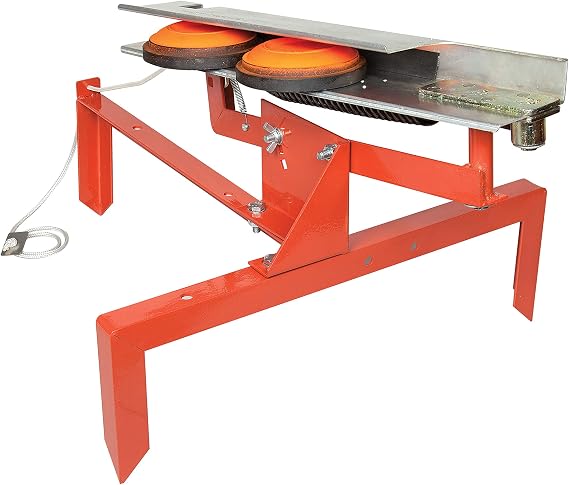
Ideal for shooting practice or competition, the Allen EZ Aim Foot Pedal Pull Cord Claymaster offers reliable launching of one or two clay pigeons. It suits shooters who want a stable, adjustable thrower that is simple to set up and transport. Its strongest feature lies in easy customization of throw distance and speed.
Setting up takes less than five minutes thanks to clear assembly design. The wide, stable platform keeps the thrower steady on different terrain.
The foot pedal and pull cord system provides straightforward operation without complexity. Adjusting the spring tension changes the throwing arm’s momentum, letting you control the distance and speed to match your practice needs.
Launching one or two targets works consistently, providing a realistic shooting experience. The solid-steel frame painted bright red stands up well to outdoor use, and the padded throwing arm prevents damage during loading. Some note that while durable, the thrower’s spring mechanism requires occasional maintenance to maintain smooth operation over time.
Consistent target throws and quick setup stand out as strong points, while some experience stiffness developing in the spring after frequent use that requires periodic attention. The padded arm reduces breakage, making it forgiving during loading, but the thrower needs manual effort for operation.
The clay thrower suits anyone wanting an affordable, portable machine to practice various shooting styles including clay, trap, and skeet. Shooters wanting motorized or battery-powered launchers should consider other products. Its solid build and adjustability appeal to those who value durability without complicated features.
Pros
- Launches one or two clay pigeons simultaneously
- Adjustable spring for different throwing distances
- Sturdy, high-visibility steel frame
- Assembles quickly in under five minutes
Cons
- Spring mechanism may need occasional maintenance
- No battery or motorized launching option
| Specification | Details |
|---|---|
| Model Number | 223315236 |
| Brand Name | AC Allen |
| Sport Type | Clay Pigeon Shooting |
| Included Components | Hunting, Airsoft and Paintball Accessories |
| Unit Count | 1 Count |
| Warranty | 2 year manufacturer |
12. Do All Outdoors Flyway 180X Clay Thrower

Steel construction and large-capacity design suit serious shooters needing long sessions without frequent reloads. It handles heavy use and rough terrain well, making it ideal for outdoor trap shooting where consistent target feeding is key.
Setup involves placing the thrower on level ground, connecting a 12V battery, and loading up to 180 clay pigeons. You can launch targets up to 55 yards with a fast 2.5-second recycle time. The wireless remote with a 300-foot range and foot pedal add convenience, letting you shoot from varied spots on the range.
The push/pull handle and big tires make moving it easier across uneven surfaces.
It throws targets consistently over long distances, with the motorized wobbler providing varied flight paths that increase practice difficulty. Built from heavy-duty steel, it feels solid but weighs 124 pounds, which limits how far it can be moved by one person. Praise highlights the automated wobbler’s realistic randomness, while common complaints mention the weight and the need for a battery not included.
Random flight paths created by the motorized wobbler add realism to shooting practice, creating varied targeting challenges. The main drawback is the device’s heavy weight, which makes it cumbersome to transport without assistance, especially in rough terrain. A reliable battery source is essential since it isn’t included.
Those who prioritize long shooting sessions with continuous clay feeding will find this thrower meets their needs well. The heavy steel build suits stable setups but might not work for those needing a lightweight, easily portable trap thrower. Shooters without a 12V battery or with limited help moving equipment should consider other options.
Pros
- Holds 180 clays for fewer reloads
- Randomized flight with motorized wobbler
- Wireless remote up to 300 feet range
- Push/pull handle with large tires for transport
Cons
- Heavy at 124 pounds, hard to move alone
- Does not include 12V battery
| Specification | Details |
|---|---|
| Material | Steel |
| Clay Capacity | 180 clays |
| Throw Distance | 55+ yards |
| Recycle Time | 2.5 seconds |
| Weight | 124 pounds |
| Remote Range | 300 feet |
13. Champion Workhorse Electronic Trap

Compact size and portability make the Champion Workhorse Electronic Trap a practical choice for shooters who need easy transport without sacrificing range. It suits anyone looking to practice clay pigeon shooting with reliable, electronic operation capable of throwing targets up to 75 yards.
Setting up is straightforward since it comes with a cover and manual, and its 53-clay magazine reduces frequent reloads. The 2.5 second reset lets you keep a steady pace during a session.
Its weight and size allow simple placement whether at home or an open field, making repeated setup and takedown manageable.
Performance meets expectations with solid target distance and consistent throws. The build feels durable enough for regular use, with quality materials. The main praise highlights its long shot range and fast reset time, while common complaints focus on battery life needs and occasional mechanical jams during reload.
Long target range and fast reset are highly appreciated for extended shooting sessions. On the downside, frequent battery recharging interrupts practice flow and occasional clay jams mean some attention is needed during use.
Shooters wanting a portable trap with solid performance and good clay capacity will find this a fit. Those needing ultra-reliable mechanical operation or longer battery life might consider other models better focused on those traits.
Pros
- Compacts down for easy transport
- Long 75-yard target throws
- Quick 2.5 second reset time
- Large 53-clay magazine capacity
Cons
- Needs frequent battery charging
- Reloads can jam occasionally
| Specification | Details |
|---|---|
| Target Throw Distance | up to 75 yards |
| Clay Magazine Capacity | 53 clays |
| Reset Time | 2.5 seconds |
| Included Components | Trap thrower, Cover, Manual |
| Model Number | 40916 |
14. Shooting Made Easy Full-Cock Manual Clay Thrower

For anyone serious about practicing clay shooting, the Shooting Made Easy Full-Cock Manual Clay Thrower offers customization and solid build quality. It suits shooters who want to control throwing distance and speed while relying on a strong, weather-resistant frame that holds steady outdoors.
Setting up involves choosing between mounting on the ground or on a tire, both options included for flexibility. The adjustable tension on the throwing arm lets you dial in how fast and far the clays fly.
A cushioned pad prevents target breakage, so fewer clays get wasted. The manual operation means no batteries are required, making it ready wherever you go.
This thrower performs consistently well with singles or doubles, offering a realistic shooting challenge. Constructed from steel and aluminum, it stands up to the elements and repeated use. One common drawback is that the clay discs may break sometimes despite the cushioned pad, especially at higher tension settings.
The steel frame remains stable during use without shifting or wobbling.
Positive remarks focus on how the thrower stays stable and adjustable, delivering a good mix of challenge and reliability. The main complaint revolves around the plastic parts and clay breakage despite the cushioned pad, so extra care is needed when increasing tension to avoid wasting targets.
Anyone seeking a customizable, sturdy clay thrower for varied mounting setups will find this a solid choice. Those wanting a quieter or fully electric machine should consider other options better suited for automated and quieter operation.
Pros
- Adjustable throwing speed and distance
- Durable steel and aluminum construction
- Includes both tire and ground mounts
- Manual operation with no batteries needed
Cons
- Clays can break at higher tension settings
- Entirely plastic parts may feel less solid
| Specification | Details |
|---|---|
| Material | Steel frame with aluminum components |
| Mounting Options | Ground or tire mount included |
| Throwing Method | Manual full-cock |
| Adjustable Tension | Yes, adjustable spring tension |
| Power Source | No battery required |
| Included Components | SME FCT Trap Thrower |
15. MTM EZ-II-30 Manual Clay Target Thrower

Setting up for a clay shooting session needs a reliable thrower that handles regular use outdoors without issues. Designed for shooters at any skill level, this manual clay target thrower stands out for its steady, consistent launches that help improve accuracy and reaction time.
It’s built from tough, weather-resistant plastic, so leaving it out in the elements won’t damage it quickly. The single-piece design with MTM’s power curve means you just load a clay, cock it, and release a predictable target every time. It’s straightforward and fast to set up for any practice or casual shooting day.
The launch angles and distance stay impressively consistent which makes target practice productive. The plastic feels sturdy and should handle outdoor conditions without falling apart.
A common note is that it requires some arm strength to cock each clay, which might slow down rapid shooting sessions.
Steady throws are frequently praised for making practice focused and effective. The main drawback mentioned often is the effort needed to cock the thrower each time, which slows down fast-paced shooting drills. The plastic frame handles rough outdoor use well but may show wear over very long periods.
People looking for a reliable, manual clay thrower that keeps targets consistent will appreciate this design. Those wanting quick successive throws or less physical effort might prefer an automatic or battery-powered version instead.
Pros
- Consistent launch angles and distances
- Durable weather-resistant plastic body
- Simple manual operation without batteries
- Suitable for all skill levels
Cons
- Cocking requires noticeable arm strength
- Not ideal for rapid-fire shooting sessions
| Specification | Details |
|---|---|
| Brand Name | MTM |
| Model Number | EZ-II-30 |
| Material | Weather-resistant plastic |
| Sport Type | Clay Shooting |
| Unit Count | 1 |
Best Clay Bird Throwers Comparison Table
| Product | Weight | Material | Capacity | Warranty |
|---|---|---|---|---|
| VEVOR Clay Thrower | 27.1 pounds | Carbon Steel & Aluminum Alloy | 28 Clays | – |
| Caldwell Claymore Solo | 4.54 kg | Steel | One Size | Limited Lifetime |
| Caldwell ClayCopter Electric | – | – | – | Limited Lifetime |
| Champion High FlyString | 1 kg | Blend | – | Limited Manufacturer |
| Champion WheelyBird Trap | – | – | – | – |
| VEVOR Pull-Cord Launcher | 9.5 pounds | Carbon Steel & Aluminum Alloy | – | 1 Year Manufacturer |
| Buzzlett Pull-Cord Thrower | 4.57 kg | Blend | – | 1 Year Manufacturer |
| Do All Wheelhouse 50 | 132 pounds | Steel | One Size | See Manufacturer |
| VEVOR Single Double Thrower | 22.5 pounds | Carbon Steel & Aluminum Alloy | – | – |
| Do All Raven 75 | – | – | – | See Manufacturer |
| Allen EZ Aim Claymaster | – | – | – | 2 year manufacturer |
| Do All Flyway 180X | 124 pounds | Steel | – | 1 Year Manufacturer |
| Champion Workhorse Electronic | – | – | – | Contact Manufacturer |
| Shooting Made Easy Manual | – | – | Singles or Doubles | One Year Warranty |
| MTM EZ-II-30 Manual | – | – | – | – |
- Weight27.1 pounds
- MaterialCarbon Steel & Aluminum Alloy
- Capacity28 Clays
- Warranty–
- Weight4.54 kg
- MaterialSteel
- CapacityOne Size
- WarrantyLimited Lifetime
- Weight–
- Material–
- Capacity–
- WarrantyLimited Lifetime
- Weight1 kg
- MaterialBlend
- Capacity–
- WarrantyLimited Manufacturer
- Weight–
- Material–
- Capacity–
- Warranty–
- Weight9.5 pounds
- MaterialCarbon Steel & Aluminum Alloy
- Capacity–
- Warranty1 Year Manufacturer
- Weight4.57 kg
- MaterialBlend
- Capacity–
- Warranty1 Year Manufacturer
- Weight132 pounds
- MaterialSteel
- CapacityOne Size
- WarrantySee Manufacturer
- Weight22.5 pounds
- MaterialCarbon Steel & Aluminum Alloy
- Capacity–
- Warranty–
- Weight–
- Material–
- Capacity–
- WarrantySee Manufacturer
- Weight–
- Material–
- Capacity–
- Warranty2 year manufacturer
- Weight124 pounds
- MaterialSteel
- Capacity–
- Warranty1 Year Manufacturer
- Weight–
- Material–
- Capacity–
- WarrantyContact Manufacturer
- Weight–
- Material–
- CapacitySingles or Doubles
- WarrantyOne Year Warranty
- Weight–
- Material–
- Capacity–
- Warranty–
How to Choose the Best Clay Bird Thrower
The key factors for a good clay bird thrower are durability, ease of use, and adjustable settings for different throw distances. Choosing the right combination helps avoid frequent repairs and ensures consistent performance during practice or competitions, saving both time and money in the long run.
Throwing Power and Distance
Launching clay targets reliably to a decent height and distance affects how well you can practice shooting or compete. Some models can hurl targets over 100 yards, which suits experienced users aiming to simulate real hunting scenarios.
Others are better suited for beginners, offering adjustable power settings to limit distance to around 40-60 yards. Selecting the right range prevents wasted clays or targets flying out of reach, which happens often with models lacking power control.
Adjustable power is essential for matching different skill levels and shooting conditions. A thrower with simple, clearly marked settings lets you dial in the force quickly.
Consistency in output matters a lot too. Repeated throws should be stable in arc and velocity; otherwise, targets can veer off course, making practice frustrating and less productive. Good models use strong springs or gas shocks with solid anchor points to maintain this stability under heavy use.
Durability and Build Quality
Placing a device outdoors exposes it to rain, sun, and dirt daily. Models constructed with heavy-gauge steel or reinforced aluminum hold up much better compared to cheaper plastic designs, which often crack or warp after a season. The finish plays a significant role too; powder-coated surfaces resist rust and maintain their appearance.
In practical terms, a well-built piece lets you leave it outside without constant worry about corrosion or damage, saving trips to repair or replace parts.
Sturdiness is another critical factor. A lightweight frame might tip when launching heavier targets, ruining your setup and causing frustration.
A solid base or tripod stabilizes the launcher, making each throw consistent and safe. Look for models with wide, weighted bases or steel tripods standing at least 3 feet tall. Frequent contact with shattered fragments also takes a toll on the mechanism, so durable materials around the launching arm reduce wear and maintain smooth operation over time.
Ease of Use and Setup
Setting up this gear can take minutes or can drag on forever depending on the model. Some units snap together with basic clips and support rods, letting you start shooting in under five minutes. Others require screwing parts together or adjusting tension repeatedly, which is frustrating, especially in cold or windy weather.
A reliable one often offers clear markings on angle and power controls, usually in degrees and foot-pounds, allowing quick preset adjustments without guesswork. Fumbling with unclear knobs wastes time, kills shooting rhythm, and can reduce the number of rounds you get through before your arm tires.
Portability should not be overlooked either. Look for lightweight aluminum or composite frames under 20 pounds that fold down to manageable sizes; carrying a bulky frame through uneven terrain can sap energy.
Built-in handles, tripods with foldable legs, or dedicated carrying cases add convenience. Adjustments for angle and power should be easy to make while on the move, without needing tools. These features make transporting and setting up at new locations straightforward, encouraging more frequent practice sessions outdoors.
Safety Features
Using a thrower without a stable base often leads to accidental launches or the device tipping over during operation. Stability makes a significant difference, especially in outdoor environments with uneven ground.
A solid design typically includes a wide tripod base or a heavy-duty frame made from steel or reinforced aluminum. Models that weigh around 15 to 20 pounds usually stay put better, reducing the risk of sudden movements that could cause injury or damage.
Clear safety mechanisms are another critical element. Look for products with locking pins or protective covers that block the launch mechanism during loading.
This prevents the device from firing unexpectedly, which can result in serious harm. Protection from flying debris, often provided by a shield or cage surrounding the throwing arm, keeps the operator and bystanders safe. Regular users opt for gear with easily accessible safety switches that quickly disable the device in emergencies, making every session less stressful and more controlled.
Clay Compatibility and Capacity
Using a device that only fits standard clay targets can quickly become frustrating. Many throwers handle 108mm skeet or trap targets, but some also support smaller minis or larger doubles. A model that accommodates multiple sizes avoids the hassle of switching equipment between shooting sessions.
In real use, a mismatch means clays may not sit securely or could be launched unpredictably, wasting ammo and time. Look for units that specify compatibility with common sizes like 90mm to 110mm and note if they accept different shapes reliably.
Capacity matters a lot for uninterrupted practice. Basic throwers often hold just one clay at a time, requiring manual reload after each shot. Higher-end options can hold three to five at once, feeding automatically and allowing a faster shooting rhythm.
The ability to adjust the throwing angle is crucial, too. Devices offering a range of 0 to 45 degrees or more let you vary trajectories to mimic real bird flight paths.
Check for sturdy adjustment mechanisms; cheap ones can slip during use, ruining consistency.
Proper Maintenance and Care for Prolonged Clay Bird Thrower Performance
Regularly cleaning the clay bird thrower after each use prevents debris and clay residue from affecting its mechanics. Residual clay can harden and cause the thrower to jam or reduce the tension on the launching arm, leading to inconsistent throws.
Simple steps to maintain your thrower:
- Wipe down the throwing arm and release mechanism with a damp cloth to remove any clay dust or dirt.
- Check all screws and bolts, tightening any that have loosened from repeated use.
- Lubricate moving parts with a light machine oil, focusing on pivot points to ensure smooth operation.
- Store the thrower indoors or under a cover to protect it from moisture and sunlight, which can degrade rubber bands or other elastic components.
- Replace worn rubber bands or tension springs promptly to maintain consistent throw power and distance.
Following these steps keeps the thrower reliable and extends its working life, making each clay target throw predictable and safe.
Safety Precautions to Follow When Using a Clay Bird Thrower
Always check the surrounding area before operating a clay bird thrower. Clear any obstacles and make sure no one is in the line of fire or near the machine while it’s in use. Wearing eye protection is essential since flying clay fragments can cause injury.
Secure the thrower on solid, level ground to prevent tipping during operation. Use the locking mechanisms provided to keep the arm stable between launches.
Never override safety locks, as they are designed to prevent accidental release.
Additional safety tips include:
- Keep fingers and hands away from moving parts when loading or adjusting the thrower.
- Inspect the thrower for cracks or damage before every session to avoid malfunctions.
- Store the thrower indoors or under cover to protect it from weather-related wear.
- Follow the manufacturer’s loading guidelines to prevent overloading or mechanical strain.
Following these precautions reduces risk and prolongs the usability of the thrower.
Comparing Manual vs. Automatic Clay Bird Throwers: Pros and Cons
Manual clay bird throwers require physical effort to launch each target, making them ideal for those who want control over the speed and angle of release. They tend to be lighter and more portable, which helps if you frequently change locations or store them in tight spaces. On the downside, repeated use can become tiring, especially during long practice sessions.
Automatic throwers use an electric motor or gas-powered mechanism to launch birds consistently, which is helpful for maintaining a steady rhythm in shooting practice. These machines usually offer adjustable speed settings and angles, providing variety without extra strain.
They often weigh more and need a power source or fuel, adding complexity to setup and transport.
Key points to consider:
- Manual throwers are simpler and cheaper but require more physical effort.
- Automatic throwers offer convenience and consistency but are heavier and pricier.
- Maintenance for automatic models is generally more involved due to mechanical parts.
People Also Asked
How Do I Properly Care for a Clay Bird Thrower?
Keep the clay bird thrower clean and dry to prevent rust or damage. Regularly check and tighten bolts or screws. Store it in a cool, dry place to avoid warping or corrosion from moisture.
What Size Clay Bird Thrower Fits Most Shotgun Calibers?
A 12-gauge clay bird thrower fits most standard shotguns since 12-gauge is the most common shotgun size. This size offers a good balance for throwing various clay targets effectively.
Is Using a Clay Bird Thrower Safe for Beginners?
Clay bird throwing is safe for beginners when instructions are followed and safety gear like glasses is used. Start with slower, low-arc throws to get comfortable aiming and shooting.
How Long Does a Typical Clay Bird Thrower Last?
A well-maintained clay bird thrower typically lasts several years. Frequent use and outdoor exposure might shorten its lifespan, so cleaning after each session can keep it functional longer.
What Are Common Problems with Clay Bird Throwers and Solutions?
Common problems include jams and misfires, often caused by dirt or worn parts. Cleaning the thrower regularly and replacing worn springs or levers helps keep it working reliably.
Conclusion
Choosing the best clay bird thrower comes down to the power and distance it can achieve, how easy it is to set up and operate, and its durability for regular use. You want a model that matches your skill level and practice needs without requiring constant maintenance or complex adjustments.
Consider the space you have available and how often you plan to use it before making a decision. Spending a bit more upfront can pay off if you train frequently, while a simpler, budget-friendly option might work for occasional practice.
Check the comparison table and detailed picks above to find a thrower that fits your specific situation.