
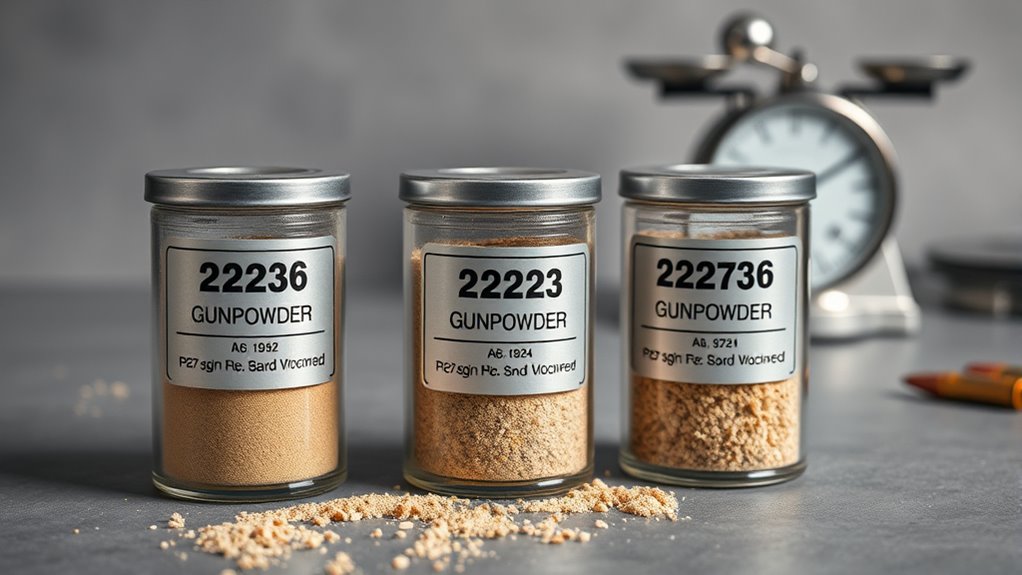
If you’ve ever tried reloading .223 rounds, you know how tricky it can be to find the right gunpowder that balances performance and safety. You’re not alone—many shooters struggle to pick powders that deliver consistent velocity without pushing pressures too high. It’s frustrating when your reloads don’t perform as expected or when you worry about safety margins.
Luckily, there are trusted powders that can help you achieve top results whether you’re going for precision, speed, or a bit of both. Knowing which powders to choose based on bullet weight and cartridge design makes all the difference.
Based on trusted manuals, the three best powders for reloading .223 in 2026 balance safe pressures, velocity, and accuracy. Prioritize slow- to mid-burn rate powders for higher velocities and stable pressures, and pick fast-burning options for lighter bullets.
Use data from reliable handbooks like the Lyman AR Reloading Handbook 2nd Edition, Long Range Precision Reloading Handbook, and Hornady 9th Edition to match bullet weight and cartridge design. You’ll learn more as you continue to explore practical load data and safety tips.
| Image | Name | Editor's Rating | Price |
|---|---|---|---|

|
Lyman AR Reloading Handbook 2nd Edition
|
|
|
|
Lyman Long Range Precision Reloading Han...
|
|
|
|
Hornady 9th Edition Handbook of Cartridg...
|
|
Lyman AR Reloading Handbook 2nd Edition
- Reloading handbook dedicated to the Modern Sporting...
The Lyman AR Reloading Handbook 2nd Edition is designed for reloaders who want precise, tested data tailored to AR-style rifles. It helps you craft safe, optimized loads for popular AR calibers like .223, 224 Valkyrie, and 6.8 Remington. This focused approach ensures your reloading process is both reliable and efficient.
Inside, you’ll find detailed information on bullet and powder choices, including options for sub-sonic and cast bullets. The handbook also covers practical aspects such as building your AR and understanding gas system lengths, which can improve rifle performance. This makes it more than just a loading manual—it’s a useful guide for AR customization.
The handbook’s compact size and lightweight design make it easy to use in the field or at your workbench. Its clear layout and thorough content reduce guesswork, helping you maintain consistency and safety when reloading. By using this guide, you can expect greater confidence in your AR ammunition.
Maintenance is straightforward since the handbook focuses on tested, reliable data rather than speculative loads. Keeping it handy ensures you always have trusted reference material for your AR reloading needs. The emphasis on AR-specific content may not suit general reloaders, but it’s ideal for those dedicated to AR platforms.
Overall, this handbook delivers practical, AR-centric knowledge that supports safe reloading and better rifle performance. It’s a valuable resource for anyone serious about fine-tuning their AR ammo.
Best for: AR enthusiasts and reloaders seeking detailed, AR-specific loading data and practical guidance for building and tuning AR-platform rifles.
What We Like:
- Detailed loading data for popular AR calibers and sub-sonic loads
- Practical guidance on AR assembly and gas system lengths
- Compact and lightweight for easy use in varied settings
- Focus on tested, reliable information for safe reloading
Specification:
| Specification Title | Detailed Description |
|---|---|
| Edition | 2nd Edition |
| Weight | Approximately 0.71 pounds |
| Focus | AR-style rifles and AR-specific reloading data |
| Calibers Covered | .223, 224 Valkyrie, 6.8 Remington, 300 AAC, and more |
| Content Type | Loading data, bullet and powder options, AR build articles |
| Format | Compact handbook suitable for field or bench use |
Lyman Long Range Precision Reloading Handbook, White, 8.50 (9816060)
- Long range cartridge data includes 223 Rem, 6mm dasher, 6x47...
- Features a large selection of target bullets from berger, Lapua,...
- Includes pressure, Velocity data, and Ballistic tables
- Articles by top PRS Shooters and industry experts
- Printed in full color
When precision is critical, the Lyman Long Range Precision Reloading Handbook (White, 8.50) becomes an essential companion. It offers detailed, authoritative reloading data designed specifically for long-range shooters. This handbook helps you achieve consistent results by providing reliable pressure and velocity figures across a broad range of cartridges, including the popular 223 Rem.
The handbook’s clear, full-color layout makes it easy to interpret complex data quickly. It includes comprehensive ballistic tables and target cartridge information that enhance accuracy for reloaders. You’ll find valuable insights from top PRS shooters, adding practical advice relevant to competitive environments.
Designed for durability, this 8.5 by 11-inch volume withstands regular use on the bench or in your reloading area. Its size and weight mean it’s best suited for detailed planning rather than quick field reference. The handbook supports bullets from respected brands like Berger, Lapua, Sierra, and Hornady, making it valuable for a wide spectrum of precision applications.
Maintenance is straightforward since the handbook is a printed resource, ensuring your data remains accessible without the need for electronic devices. Its thorough coverage helps you refine your loads methodically, reducing guesswork and enhancing confidence in your shooting performance.
Best for: competitive precision rifle shooters needing reliable long-range reloading data for a wide variety of cartridges.
What We Like:
- Detailed pressure and velocity data for consistent load development
- Full-color ballistic tables for easy data interpretation
- Expert articles from top PRS competitors
- Supports popular bullet brands for versatile use
- Durable format suited to frequent reference at home or in the workshop
Specification:
| Specification Title | Detailed Description |
|---|---|
| Product Name | Lyman Long Range Precision Reloading Handbook |
| Edition | White, 8.50 |
| Dimensions | 8.5 x 11 inches |
| Weight | Approximately 0.75 pounds |
| Content | Reloading data, ballistic tables, expert articles |
| Cartridge Coverage | Includes a wide list, featuring 223 Rem |
| Bullet Brands Supported | Berger, Lapua, Sierra, Hornady |
| Print Format | Full-color |
| Intended Use | Precision long-range reloading and competition |
Hornady 9th Edition Handbook of Cartridge Reloading.
- An invaluable resource for your reloading bench
- Many new cartridges
- Includes a variety of propellants
- In-depth, easy-to-understand explanations of internal, external...
- Velocity/powder charts for quick and easy reference
The Hornady 9th Edition Handbook of Cartridge Reloading is an essential tool for reloaders aiming to achieve precise cartridge performance. It offers detailed velocity and powder charts that help you optimize loads specifically for cartridges like the 223. This handbook simplifies the complex process of reloading by providing clear, reliable data that enhances accuracy and safety.
Designed to cover a wide range of cartridges and propellants, this edition includes thorough explanations of internal, external, and terminal ballistics. These insights deepen your understanding of how different factors affect bullet behavior, making it easier to tailor loads to your needs. The handbook’s comprehensive approach supports both beginners and experienced reloaders.
Its portable size and weight make it convenient to use at the bench or in the field. Measuring 9.2 by 6.1 by 1.6 inches and weighing about 3.1 pounds, it strikes a balance between accessibility and durability. The physical format ensures quick reference without relying on digital devices, which may not always be practical during reloading sessions.
Maintenance is straightforward, as the handbook requires no special care beyond normal handling to preserve its condition. However, users should note that printed data may eventually become outdated as new cartridges and powders are introduced. Familiarity with reloading concepts will maximize the value gained from this resource.
Overall, the Hornady 9th Edition Handbook serves as a reliable, informative guide that helps reloaders make informed decisions and improve cartridge performance with confidence.
Best for: Reloaders and shooting enthusiasts seeking precise, data-driven cartridge reloading information including velocity and powder charts.
What We Like:
- Extensive data on a variety of cartridges and propellants
- Clear explanations of internal, external, and terminal ballistics
- Portable size suitable for field or bench use
- Reliable printed reference for quick access
- Enhances safe and accurate reloading practices
Specification:
| Specification Title | Detailed Description |
|---|---|
| Edition | 9th Edition |
| Weight | Approximately 3.1 pounds |
| Dimensions | 9.2 x 6.1 x 1.6 inches |
| Manufacturer | Hornady |
| Content | Cartridge reloading data, velocity and powder charts, ballistics explanations |
| Intended Use | Cartridge reloading reference |
| Format | Printed handbook |
Factors to Consider When Choosing Gunpowder for Reloading 223
When you’re choosing powder for 223 reloading, think about powder type, burn rate, and how caliber-specific load limits shape your charges. Consider how velocity stabilization, temperature sensitivity, and your rifle’s performance interact with those choices.
Keep a close eye on the burn rate and pressure expectations to balance consistency, safety, and accuracy.
Powder Type Considerations
Choosing the right powder type for .223 reloading hinges on balancing burn rate, metering behavior, and pressure, so you can hit your velocity and accuracy goals safely. You’ll select slow-burning powders for higher velocities and appropriate pressure ceilings, while fast-burning types suit lighter bullets or tight velocity targets.
Ball, flake, and tubular powders each flow differently, affecting metering consistency and ease of charging each case. The powder’s chemical makeup, including burn rate modifiers and stabilizers, impacts ignition reliability and overall cartridge performance.
For subsonic versus supersonic loads, specific powders are recommended to manage recoil, noise, and accuracy. Always align powder type with chosen bullet weights and cartridge design to optimize safety and performance, avoiding incompatibilities that could compromise pressure margin and firearm wear.
Caliber-Specific Load Limits
Caliber-specific load limits are the safety backbone of reloading a .223. You must respect maximum powder charges defined for each caliber to prevent excessive pressure that can damage your firearm or injure you. Overloading beyond the recommended charge isn’t worth the risk, even if it promises higher velocity.
Use the load limits provided in reputable reloading manuals and apply them strictly for the .223. The powder’s type and burn rate directly influence these safe limits, so your choice matters as much as the cartridge you’re loading.
Adhering to caliber-specific limits helps you achieve better consistency, accuracy, and safety in every session. Stay disciplined, verify data, and avoid substitutions without proper guidance.
Burn Rate Selection
Burn rate is a key lever in dialing in .223 reloads: it governs how quickly powder burns, shaping peak pressure, velocity, and overall accuracy. You’ll match burn rate to bullet weight and barrel length to keep pressures safe and performance consistent.
Faster powders suit shorter barrels and lighter bullets, delivering quicker burn and potentially higher velocity with reduced temperature sensitivity. Slower powders align with longer barrels and heavier bullets, promoting steadier pressure curves and improved accuracy.
Selecting the right burn rate helps prevent overpressure or incomplete combustion, protecting both you and your firearm. Balance burn rate with your firearm’s specs and desired recoil, then verify loads with careful testing.
This approach supports predictable performance, safe operation, and repeatable results in your .223 reloads.
Velocity Stabilization Factors
Velocity stability hinges on choosing powders with predictable burn characteristics and matching charge weights to your rifle and load. You gain steadier velocities when the burn rate aligns with barrel length, so faster powders can deliver tighter spreads at shorter tubes. Proper powder selection and charge weight help minimize velocity fluctuations caused by temperature and environment.
Uniform grain size and shape support consistent ignition and burn progression, reducing variability across shots. Guarantee seating depth and crimping are consistent, so the powder burn remains uniform from round to round and shot to shot. Favor powders that come with documented velocity profiles for .223, as tested data lets you anticipate performance and lower the chance of unexpected velocity shifts that hurt accuracy.
Temperature Sensitivity Impacts
Temperature sensitivity matters because ambient conditions can shift pressure and velocity in ways that affect both accuracy and safety. You should expect warmer temps to quicken burn rates for some powders, raising pressures and risking overpressure if you don’t adjust loads or choose more stable options. Cooler temps slow burn rates, lowering velocities and yielding inconsistent performance, which complicates achieving consistent group sizes.
Store powders in a controlled environment to minimize moisture and temp swings that degrade powder consistency over time. When selecting powders, favor those with known temperature stability, and be prepared to adjust charges based on current ambient conditions for reliable results. Prioritize documented performance across temperature ranges to maintain safety margins and shoot-to-shoot consistency.
Pressure Regulation Guidelines
How do you keep pressures safe when reloading .223? You must follow maximum load pressures from reputable manuals to prevent firearm damage or safety hazards. Ensure consistent powder metering and measurement so pressure stays stable across loads.
Choose powders with burn rates appropriate for .223, especially when tuning loads for specific rifle chambers, to keep pressures within safe limits. Watch for chamber pressure signs—flattened primers or ejector marks—that indicate excessive pressure.
When necessary, adjust load data based on environmental factors like temperature and altitude to maintain ideal pressure regulation for safe and accurate shooting. By tying these practices to reliable data and careful measurement, you’ll achieve predictable results while reducing risk.
Safety and Verification Steps
When choosing gunpowder for reloading .223, safety and verification should come first. You verify the powder’s lot number and batch consistency to guarantee uniformity and safety in reloading. Always follow the manufacturer’s load data and start with the minimum recommended charge to prevent overpressure.
Use a reliable powder scale to accurately measure the amount, avoiding under- or over-charging. Store powder in a cool, dry place away from heat sources and open flames to prevent accidental ignition. Regularly inspect and test your reloads in a controlled environment before firing to confirm safe chamber pressures.
Maintain strict adherence to procedures and keep records of lot numbers, dates, and test results for traceability and ongoing safety.
Frequently Asked Questions
How Does Powder Temperature Affect 223 Loads in Semi-Auto Rifles?
Powder temperature matters for 223 loads, especially in semi-auto rifles, because it affects internal ballistics and pressures. Warmer temps raise chamber pressure slightly, which can increase velocity and wear if you’re near max limits. Cooler days lower pressures and velocities.
Consistency matters—avoid switching lot numbers or powders with big temperature coefficients. Use appropriate seating depth and maintain safe pressure margins with reliable, tested data. Always verify loads with current manufacturer guidelines.
What Safety Margins Exist for Using Universal Powders in 223?
Safety margins for using universal powders in 223 are tight; you should start low, work up patiently, and verify each lot, lot-to-lot. You’ll want consistent seating depth, stable temperatures, and warned velocities. Never exceed published max loads, and respect case volume.
Monitor pressure signs, and stop if dusting, flattening primers, or sticky extraction appears. Always consult manufacturer data, use a proven reloading manual, and practice safe storage, handling, and sighted, cautious reloading routines.
Can Small Pistol Primers Be Used in 223 Rifle Loads?
No, you shouldn’t use small pistol primers in standard .223 rifle loads. Rifle primers are designed for higher pressures and hotter ignition, and small pistol primers can lead to misfires, pressure spikes, or unreliable performance.
If you’re loading .223, stick with rifle primers of the appropriate size and your published load data. If you’re experimenting, proceed cautiously, work up slowly, and ignore non-rifle primer recommendations from non-authoritative sources. Safety first.
How Does Case Neck Tension Influence Powder Burn Rate in 223?
Back in 1967, you’d notice neck tension affects burn uniformity. Case neck tension helps seal in pressure, so too-tight necks raise friction and slow powder burn; too-loose necks let gas blow by, causing erratic burn.
In 223, you want consistent neck tension to promote uniform velocity. Keep shoulders straight, crimps snug but not crushing, and test with precision cases.
Remember: consistent neck dimensions yield repeatable powder burn and accuracy.
Are There Regional Powder Availability Myths for 223 Reloading?
Yes, there are regional powder availability myths for 223 reloading. You’ll hear that certain powders are “unavailable forever” or extremely hard to find, yet supply chains shift seasonally.
You should check local retailers, online distributors, and club members, and avoid assuming scarcity. Stay flexible with powder types, consider substitutes when safe, and verify data from trusted sources before loading.
Don’t chase rumors—verify, plan, and adapt to real stock updates.
Conclusion
You’ll feel the thrill of precision like never before, as these powders turn your 223 into a rocket-fueled whisper of accuracy. Choose one, and your groups will shrink faster than a magician’s hat trick, your brass will sing, and your confidence will skyrocket higher than a clown at a kite festival.
It’s not magic, it’s science—supercharged with carefully tested data from top handbooks. Load smart, shoot straight, and watch your results explode with jaw-dropping consistency.
For the best performance, trust the 3 best gunpowder for reloading 223 to elevate your shooting experience to the next level.