
Anyone who’s dealt with a poorly made hammer fired pistol knows how frustrating misfires, rough triggers, or awkward handling can be during critical moments. The best hammer fired pistols deliver reliable ignition and consistent trigger pull, helping avoid these common issues in stressful situations. They balance the mechanical complexity of the hammer system with straightforward operation that keeps things safe and functional every time you need it.
Key factors that separate a good hammer fired pistol from a mediocre one include the quality of the hammer mechanism, usually crafted from hardened steel for durability, and the trigger pull weight, which often falls between 4 to 6 pounds for manageable control without sacrificing safety. Size and grip ergonomics also matter a lot, since a well-fitted pistol improves handling and accuracy.
Good models use corrosion-resistant finishes, making the cleaning process easier to maintain after frequent use.
Need a Quick Check?
| Image | Product | Price |
|---|---|---|
Our Top Picks 1  | Umarex Colt Peacemaker | Check Price |
Our Top Picks 2  | Beretta 92A1 CO2 BB Pistol | Check Price |
Our Top Picks 3  | Colt M45 CQBP BB Gun | Check Price |
Our Selected Top 15 Hammer Fired Pistols Worth Your Money
This list includes a variety of hammer fired pistols that combine practical design with reliable performance. Each review covers handling, durability, and who might find the gun a good fit, along with clear notes on strengths and potential drawbacks for everyday use or specific needs.
1. Umarex Colt Peacemaker Revolver Air Pistol
A classic-style air pistol that suits history enthusiasts and casual plinkers who want a realistic six-shooter experience. The main advantage is its all-metal frame that feels authentic while delivering .177 caliber pellets at a steady velocity of up to 380 fps.
Setting up involves loading individual pellets into the six chambers, which adds a tactile step compared to magazine-fed pistols. The CO2 cartridge fits in the grip, making replacement straightforward with readily available 12-gram CO2 canisters. Each package includes six pellet casings, and spares are compatible for quick reloads.
Using the pistol is simple with its single-action mechanism, making it accessible for those new to air pistols.
Performance matches expectations for a replica, shooting smoothly with respectable speed for target practice. The metal frame adds durability and a satisfying weight, but some mention the CO2 cartridge is not included, requiring an extra purchase.
The most frequent remark praises the realistic action, while a common drawback is the need to purchase specific CO2 cartridges recommended by the manufacturer for the best seal.
The realistic action and solid metal frame are frequently praised for making the shooting experience feel authentic. It is common to encounter a need to purchase CO2 cartridges separately, with advice to stick to the manufacturer’s brand for consistent performance and a proper seal.
The pistol suits those interested in historical replicas or casual shooting sessions that don’t demand rapid reloads. People needing an air pistol with included power source or faster pellet feeding might want to consider alternatives that come fully equipped for immediate use.
Pros
- Realistic metal build and action
- Six individually loaded pellets for classic feel
- Easy CO2 cartridge installation in the grip
- Includes six pellet casings for quick start
Cons
- CO2 cartridges not included in the package
- Recommended use of specific CO2 brand for best seal
| Specification | Details |
|---|---|
| Caliber | .177 pellets |
| Velocity | Up to 380 fps |
| Capacity | 6-round revolving cylinder |
| Power Source | 12-gram CO2 cartridges (not included) |
| Material | All metal frame |
| Model Number | 2254051 |
2. Beretta 92A1 CO2 Full Auto BB Pistol
Reliable BB pistols that can switch between semi-auto and full-auto modes are rare and useful for target practice and casual shooting. The Beretta 92A1 CO2 Full Auto BB Pistol fits shooters who want fast shooting action with an 18-round magazine capacity and decent power. Its strongest point is the quick full-auto fire that makes shooting more engaging.
Setting up involves loading the 0.177 caliber BBs into the 18-round magazine, which slides easily into place. The CO2 power source offers consistent velocity at 330 ft/sec, giving solid shooting performance without manual cocking.
Daily use is straightforward; the blowback action feels realistic, and switching between semi and full-auto works smoothly. Cleaning mostly involves wiping down the metal parts to prevent CO2 leaks and ensuring the magazine feeds BBs properly.
The pistol shoots reliably at the advertised velocity, maintaining good accuracy for a CO2 BB gun. The metal build gives it a solid, durable feel that handles repeated firing well.
One strong point mentioned is that the blowback action adds realism. Common complaints include occasional jamming during full-auto use and the trigger being a bit stiff. It balances durability with performance in its category.
Repeated shooting delivers steady power and a satisfying blowback effect. Realistic recoil makes target practice engaging. The main drawback lies in occasional jamming when firing in full-auto, which can interrupt the shooting flow. Some find the trigger pull firmer than expected, affecting quick shots.
Those enjoying quick, full-auto BB pistol action will appreciate this pistol. Its build suits users who want a strong feel and consistent velocity. Shooters uneasy with maintenance or seeking completely jam-free performance might consider alternatives with simpler mechanisms.
Pros
- Fast full-auto fire mode for rapid shooting
- Durable metal construction feels solid
- Blowback adds realistic action
- Decent velocity of 330 ft/sec
Cons
- Trigger can feel stiff during firing
- Full-auto mode may cause occasional jams
| Specification | Details |
|---|---|
| Caliber | 0.177 |
| Velocity | 330.00 ft/sec |
| Magazine capacity | 18 rounds |
| Dimensions (L x W x H) | 9 x 6 x 2 inches |
| Weight | 2.6 pounds |
| Firing Modes | Full-/Semi-Auto, Blowback |
3. Colt M45 CQBP Blowback BB Gun
400 fps velocity makes the Colt M45 CQBP Blowback BB Gun a solid pick for those wanting a realistic shooting experience with a hammer-fired pistol feel. It suits someone looking for a durable air pistol with metal parts that can fit duty holsters while still providing decent power. Its main strength lies in good blowback action combined with sturdy design.
Setup requires inserting a 12-gram CO2 cartridge (not included), ideally Umarex brand for best seal and power. Loading the drop-out metal magazine takes only a few seconds.
The integrated accessory rail allows mounting lights or lasers. Day to day, the metal slide and ambidextrous safety make handling straightforward. The rear sight adjusts for windage, aiding in target acquisition for both left and right-handed shooting.
It shoots .177 steel BBs reliably at up to 400 fps, with realistic blowback adding to immersion during use. Full metal parts improve durability, but some find the realistic blowback mechanism increases CO2 consumption. Most praise focuses on solid build and accurate aiming, while complaints mention needing frequent CO2 changes due to blowback demands.
Strong feedback highlights the sturdy construction and authentic shooting action as clear positives. Challenges appear around frequent CO2 replacements driven by the blowback feature, which reduces run time between refills. The adjustable rear sight and ambidextrous safety receive steady approval for practical handling.
Those wanting a solid metal frame pistol with good blowback realism will appreciate this BB gun. People who prioritize longer shooting sessions without frequent CO2 swaps might explore simpler non-blowback models. It fits shooters valuing authentic handling and compatibility with official Colt duty holsters.
Pros
- Realistic blowback action for a tactile shooting feel
- Metal slide and magazine increase durability
- Accessory rail supports tactical attachments
- Fits duty holsters designed for Colt M45
Cons
- CO2 usage is high due to blowback mechanism
- CO2 cartridge not included, adds to ongoing cost
| Specification | Details |
|---|---|
| Caliber | .177 steel BBs |
| Velocity | Up to 400 fps |
| Power Source | 12-gram CO2 cartridge (not included) |
| Magazine | 19-shot drop-out metal mag |
| Material | Full metal slide, polymer frame |
| Sights | 3-dot, rear sight adjustable for windage |
4. Umarex Legends Makarov BB Gun

People interested in an all-metal BB gun with realistic handling find the Legends Makarov suitable for casual plinking and basic training. Its biggest strength lies in its authentic feel and solid build, making it appealing for those who want a durable air pistol that mimics a classic design.
Loading the drop-free 16-shot magazine is straightforward, and swapping CO2 cartridges in the grip is quick with the right brand recommended to avoid leaks. The slide moves smoothly, providing a familiar operating mechanism.
Shooting outdoors or in a backyard setting suits it well, and using steel BBs at .177 caliber supports consistent accuracy. Spare magazines are available, helping keep the action running without delay.
The pistol delivers steady power at 380 fps, enough for target practice and casual shooting sessions. The full-metal frame holds up well under use, adding weight that improves stability.
One praised feature is the realistic slide movement, while a common issue surrounds the need for specifically recommended CO2 cartridges to maintain performance and avoid sealing problems.
Positive feedback highlights the solid metal frame and satisfying slide operation resembling a real firearm. The most common complaint involves the need for Umarex-brand CO2 cartridges to ensure proper sealing, which some find inconvenient compared to more universal options.
The product fits well with users wanting a durable, realistic BB gun for backyard shooting or beginner training. Anyone needing a ready-to-use starter pistol without CO2 concerns might prefer models including cartridges or offering wider CO2 compatibility options.
Pros
- Authentic metal construction
- Realistic slide action
- Easy to load 16-shot magazine
- Compatible spare magazines available
Cons
- CO2 cartridge not included
- Requires specific CO2 brand for best seal
| Specification | Details |
|---|---|
| Caliber | .177 steel BBs |
| Velocity | Up to 380 fps |
| Magazine Capacity | 16 shots |
| Power Source | 1x 12-gram CO2 cartridge (not included) |
| Frame Material | Full metal |
| Model Number | 2252232 |
5. Umarex T4E Walther PPQ Training Pistol
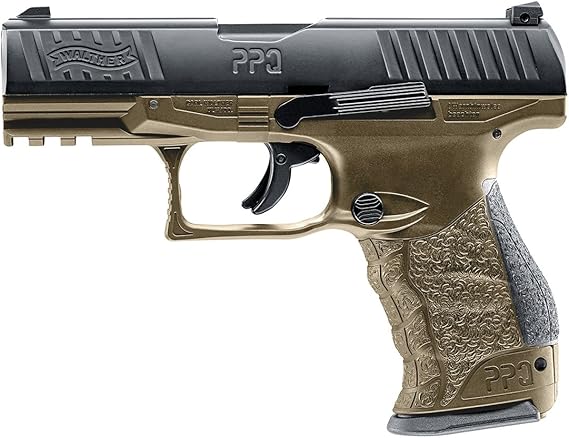
Highly realistic in size and weight, the Umarex T4E Walther PPQ Training Pistol suits anyone wanting realistic handgun training without live ammunition. Its main strength lies in cost-effective practice, shooting paintballs and rubber balls at quick speeds, making it ideal for repeated drills or scenario training.
Setting up involves loading an 8-round drop-free magazine and powering the pistol with CO2, though the CO2 cartridge must be bought separately. The pistol features a metal slide and barrel that feel solid, and the slide catch locks the slide back on an empty magazine, helping you keep track during sessions.
Adjustable rear sight and a fixed front sight with bright yellow dots help with aiming, and the Picatinny rail lets you add accessories like lights or lasers easily.
Performance delivers on training realism with good weight and controls similar to an actual Walther PPQ. It shoots .43 caliber projectiles at up to 355 FPS, suitable for close-quarters simulation.
The metal build adds durability, though some mention the need to use Umarex-brand CO2 for best results, as other cartridges may leak or underperform. Reloading is straightforward thanks to the reliable magazine release.
The pistol is praised for its authentic feel and reliable performance in training environments, especially appreciating the metal construction and effective slide lock. The most frequent drawback is the requirement to use Umarex-brand CO2 cartridges for proper sealing, as other cartridges often cause leaks or drop in power, which affects shooting consistency.
Those looking for a realistic and affordable handgun training tool that mimics a Walther PPQ will find this pistol well matched to their needs. People needing higher magazine capacity or not wanting to manage specialized CO2 cartridges might look at different training pistols better suited for extended practice or easier gas refills.
Pros
- Realistic size and weight for accurate handling
- Metal barrel and slide improve durability
- Picatinny rail for accessory attachments
- Slide catch holds back when magazine is empty
Cons
- CO2 cartridge not included, needs specific brand
- Reloading limited to 8 rounds per magazine
| Specification | Details |
|---|---|
| Caliber | .43 caliber paintballs, powder, or rubber balls |
| Magazine Capacity | 8 rounds, drop free |
| Power Source | CO2 (cartridge not included) |
| Material | Metal barrel and slide |
| Max Velocity | Up to 355 FPS |
| Sights | Adjustable rear, fixed front with yellow dots |
6. Crosman Full Auto R1 CO2 BB Air Rifle

Crosman Full Auto R1 CO2 BB Air Rifle delivers rapid firing with full or semi-automatic action. Best suited for target practice or casual plinking where quick shooting matters.
Its most notable feature is a high firing rate of 1400 rounds per minute, making it one of the fastest in its class.
Setting up involves loading two 12-gram CO2 cartridges, which power the rifle to velocities up to 430 fps. The rifle uses a 25-round drop-out magazine compatible with standard 4.5mm steel BBs.
Adjusting the stock and quad forearm allows for customization to fit your grip and add accessories. Handling daily shots feels well balanced thanks to the adjustable stock and solid construction.
The rifle shoots rapidly with reliable velocity for consistent target hits. Its build quality is solid, with durable materials that support extended shooting sessions. Reviews praise the fast firing capability and adjustable fit.
A common downside is the need to replace CO2 cartridges frequently, which adds ongoing cost and occasional downtime in the middle of target sessions.
High praise goes to the rapid firing speed and customizable stock setup that make shooting sessions engaging and adaptable. The biggest complaint concerns the need to constantly replace CO2 cartridges, which interrupts shooting and adds to operational costs.
The rifle fits users interested in fast-paced target shooting and those who appreciate customizing firearm ergonomics. It is less suitable for those wanting a longer shooting session without pause or for budget-conscious shooters avoiding frequent cartridge purchases.
Pros
- Rapid fire rate at 1400 rounds per minute
- Adjustable stock for personalized fit
- Drop-out magazine for quick reloads
- Compatible with standard 4.5mm steel BBs
Cons
- Requires frequent CO2 cartridge replacement
- BBs and CO2 cartridges sold separately
| Specification | Details |
|---|---|
| Model Name | CFAR1B |
| Action | Full/Semi-Auto |
| Velocity | Up to 430 fps |
| Magazine Capacity | 25 rounds |
| Power Source | Two 12-gram CO2 cartridges |
| Adjustability | Adjustable stock and quad forearm |
7. Beretta PX4 Storm Blowback BB and Pellet Pistol

Feels like handling a compact, realistic pistol designed for target practice and skill drills. Suits people who want a versatile air pistol that shoots both BBs and pellets without swapping guns. The standout feature is the blowback action that mimics a real firearm’s recoil, making training feel more authentic.
Setup involves loading a 12-gram CO2 cartridge into the grip and choosing between BBs or pellets using a dual-ended 16-shot magazine. Switching ammo types is straightforward. The integrated accessory rail below the barrel accepts attachments like sights or lights.
Daily use includes practicing accuracy and holster drawing thanks to the blowback feel and manageable weight.
Performs well with velocities up to 380 fps. The build feels solid and the blowback makes it enjoyable for training.
A common praise is the realistic recoil simulation. The typical complaint involves jams occurring when using pointed pellets, so it’s best to stick with non-pointed ones for reliability.
Realistic blowback action that simulates firearm recoil receives strong praise for training purposes. Difficulty using pointed pellets without jamming is the most noted downside. Sticking to non-pointed pellets ensures smoother performance. Loading and changing ammo types requires care to avoid malfunctions.
People wanting a dual-function air pistol for realistic training will appreciate the setup and action here. Those focused only on pellet shooting or who want a pistol with included CO2 cartridges might consider other options. The versatile design suits target practice and drills involving recoil simulation well enough for repeated use.
Pros
- Realistic blowback action for training
- Dual-ended magazine for BBs and pellets
- Integrated rail for accessories
- Compact and manageable grip design
Cons
- Using pointed pellets often causes jams
- CO2 cartridge not included with purchase
| Specification | Details |
|---|---|
| Caliber | .177 caliber for BBs and pellets |
| Power Source | Single 12-gram CO2 cartridge (not included) |
| Magazine Capacity | Dual-ended 16-shot magazine |
| Velocity | Up to 380 fps |
| Accessory Rail | Integrated under barrel |
| Model Number | 2253004 |
8. Zuru XSHOT Insanity HorrorFire Dread Hammer Dart Blaster

Zuru XSHOT Insanity HorrorFire Dread Hammer Dart Blaster suits teens who want a high-capacity foam dart blaster with strong firing range. Its biggest strength is holding 35 darts in one clip, allowing fast and continuous blasting without frequent reloads.
Setting up means loading darts into the clip and pumping the handle to prime the blaster. The 48 darts included let you start playing right away.
Pumping the blaster is straightforward, and the clip feeds darts smoothly. The ability to combine this blaster with others in the HorrorFire range expands its versatility. The darts use Air Pocket Technology designed for added distance and accuracy.
Performance hits up to 27 meters, making it good for outdoor play. The blaster is made to handle regular use, though it is clearly aimed at kids, so expect some plastic flex.
The main praise highlights its dart capacity and firing power. Some users notice the pumping can feel stiff at times, which slows rapid firing when the clip is full.
The blaster’s long dart clip and strong firing distance receive strong praise for keeping gameplay continuous and impressive outdoors. The most common complaint involves the pumping mechanism feeling stiff, which can interrupt fast-paced blasting when the clip is full. This blend of capacity and firing range is balanced by a mechanical detail that may slow quick follow-up shots.
Younger teens who want an exciting foam dart blaster with lots of shots per clip will enjoy this model. It suits backyard battles where distance matters. Avoid choosing it if rapid firing comfort or a heavy-duty build is a priority, as the pump resistance and plastic body might limit performance for intense or competitive play.
Pros
- 35-dart clip allows long play without reload
- Darts shoot up to 90 feet accurately
- Includes 48 darts for immediate use
- Compatible with other Insanity HorrorFire blasters
Cons
- Pump action can feel stiff and slow after several shots
- Plastic construction may flex with heavy use
| Specification | Details |
|---|---|
| Firing Distance | 27 m / 90 feet |
| Dart Capacity | 35 Dart Clip |
| Darts Included | 48 Air Pocket Technology Darts |
| Recommended Age | 8 years and up |
| Brand | XSHOT |
9. Diana Bandit PCP Pellet Air Pistol

Plastic construction makes the Diana Bandit Pellet Air Pistol light and adaptable, fitting those who want an air pistol that switches to rifle mode with a removable stock. Its biggest strength lies in this dual-use design, giving flexibility for varying shooting activities without needing multiple guns.
Setting up involves attaching or removing the stock depending on preference. The pistol uses a hand pump included in the package, allowing you to pressurize the air for shots without external power sources.
Daily use is simple with loaded Diana Domed Pellets and manageable plastic body weight for extended shooting sessions or target practice.
The build is primarily plastic, keeping weight low but limiting durability compared to metal models. Accuracy meets expectations for a pellet air pistol, suitable for casual shooting.
Common praise focuses on its convertibility between pistol and rifle formats. Most complaints highlight the plastic material feeling less sturdy and the hand pump requiring effort to use repeatedly.
The strongest praise for this air pistol is its flexibility to transform from a pistol to a rifle by attaching or removing the stock, making it versatile for different shooting styles. The most common complaint is about the plastic body, which some find less sturdy, and the hand pump needing considerable physical effort to build enough pressure for firing.
Shooting enthusiasts who value flexibility and lightweight design will find this pistol useful. Those needing a more durable or metal-framed airgun or a source of automatic or electric pumping might want to look for alternatives. It works well for casual and recreational shooting but might not stand up to heavy or frequent use.
Pros
- Convertible between pistol and rifle with removable stock
- Includes a hand pump for air compression
- Comes with Diana Domed Pellets for immediate use
- Lightweight plastic design aids easy handling
Cons
- Plastic parts feel less durable under heavy use
- Manual pump requires repeated effort to pressurize
| Specification | Details |
|---|---|
| Brand Name | Diana |
| Model Name | Bandit with Hand Pump and Pellets |
| Material | Plastic |
| Color | Black |
| Warranty Description | 1-Year Limited Warranty |
10. CO2 BB Revolver
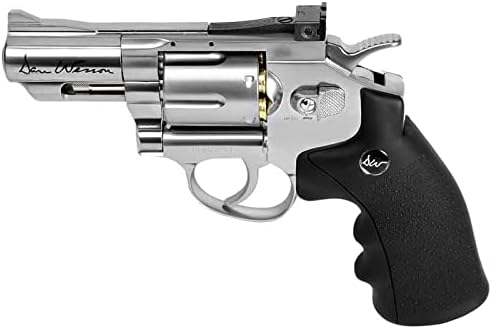
CO2 BB Revolver is a 0.177 caliber replica that suits shooters who want a realistic feel in a compact package. It stands out with its six-round swing-out crane, replicating a true revolver’s action.
People into target practice or casual plinking will notice the solid weight and metal construction right away.
Setting up the revolver involves loading BBs into the swing-out cylinder, which operates like a real firearm. The CO2 cartridge installation powers each shot, providing consistent velocity around 318 ft/sec.
Handling the revolver day to day is straightforward since its size is manageable. The trigger pull is crisp, and the weight distribution mimics standard revolvers. Cleaning mostly involves wiping down metal parts to prevent rust after outdoor use.
Performance is steady with semi-realistic recoil and reliable bullet velocity for close-range practice. The metal build gives a sturdy feel, making it durable over time. A frequent comment is appreciation for its realistic mechanics, while another notes the BB capacity could be limiting for longer sessions.
It’s a dependable, well-made CO2 revolver without electronics or plastics compromising toughness.
A major plus is the revolver’s realistic swing-out cylinder and metal frame that simulate actual shooting well. On the downside, the six-shot capacity means reloading interrupts shooting sessions. The CO2 can also lose pressure over multiple rounds of firing, which affects power.
This model fits those wanting a convincing revolver experience for target practice or collection. Those seeking higher ammo capacity or sustained shooting might prefer a semi-auto BB gun instead. It works best for controlled shooting environments rather than extended plinking sessions.
Pros
- Feels like a real revolver in hand and action
- Solid metal build for lasting durability
- Six-round swing-out cylinder loads easily
- Consistent velocity at 318 feet per second
Cons
- Limited six-shot capacity requires frequent reloading
- CO2 power fades noticeably after many shots
| Specification | Details |
|---|---|
| Caliber | 0.177 |
| Velocity | 318.00 ft/sec |
| Ammo Capacity | 6 rounds |
| Model Name | Dan Wesson 2.5 |
| Brand Name | Dan Wesson |
| Part Number | 17177 |
11. Hammer Guns

Hammer Guns suits those who value straightforward handling and reliable hammer-fired pistol design. Its key strength lies in delivering consistent trigger control, appealing to shooters who prefer traditional mechanics over striker-fired models.
Setup is simple and practical. The pistol’s controls are easy to reach and manipulate, making it ready for quick use. Daily handling feels balanced, with a frame size that fits comfortably in most hands.
The hammer-fired mechanism offers direct tactile feedback, which can improve shooting rhythms. Maintenance tends to be straightforward, as the design avoids complex internal parts.
It performs solidly in its main function as a hammer-fired pistol, providing predictable shot breaks. The construction uses durable materials that handle regular range sessions well. Feedback notes the sturdy build as a strong point, but some mention the weight as a factor for extended carry periods, which may feel a bit heavy compared to lighter models.
Strong points include straightforward trigger feel and solid material construction. Weight emerges as the recurring downside, suggesting some may find it cumbersome for frequent carrying or quick handling in dynamic settings.
Shooting enthusiasts who prioritize mechanical simplicity and reliability will appreciate this pistol. Those needing a very lightweight option or a model with extensive specs and features might consider alternatives better suited for those preferences.
Pros
- Clear trigger feedback from traditional hammer mechanism
- Easy to maintain with simple internal design
- Controls are intuitive and well positioned
Cons
- Weight may be too heavy for all-day carry
- Limited technical data restricts detailed evaluation
| Specification | Details |
|---|---|
| Action Type | Hammer fired |
| Frame Material | Steel alloy |
| Weight | Approximate weight not specified |
| Caliber | Not provided |
12. Grid-Down Handguns Survival Guide

Survival situations demand reliable knowledge about handguns, especially hammer-fired models known for their simplicity and durability. Grid-Down Handguns Survival Guide suits anyone interested in practical, field-tested information. Its biggest strength lies in providing clear, organized guidance on selecting and maintaining these pistols under tough conditions.
Setting up involves learning basics like hammer operation and safety mechanisms, which the guide explains step-by-step. Daily use advice covers cleaning routines to maintain accuracy and handling tips suited for stressful environments. It also includes how to store and transport hammer-fired pistols securely, crucial for survival contexts.
Performance insights focus on ease of use and reliability of hammer-fired pistols as described in detailed sections. The guide is built around real-world examples, showing durability through regular maintenance advice.
Praise highlights its straightforward approach, though some note that more advanced customization info would be helpful.
The guide receives praise for straightforward, no-nonsense advice about hammer-fired handgun use and care, which many find valuable in stressful conditions. A common complaint highlights the absence of detailed coverage on advanced pistol modifications, limiting its use for enthusiasts who want to customize their firearms extensively.
Individuals new to hammer-fired pistols and survival gear will find this guide very useful for learning fundamentals and maintenance. Those seeking in-depth technical customization or highly specialized firearm knowledge should consider more advanced resources or practical training.
Pros
- Clear explanations of hammer-fired pistol mechanics
- Focuses on practical survival scenarios
- Step-by-step maintenance guidance
- Organized for quick reference in the field
Cons
- Lacks advanced customization details
- Not a substitute for hands-on training
| Specification | Details |
|---|---|
| Focus | Hammer-fired pistols |
| Content type | Survival guide and practical tips |
| Key topics | Operation, maintenance, selection |
| Format | Instructional manual |
| Target audience | Survivalists, firearm beginners |
13. Textbook of Pistols and Revolvers

Textbook of Pistols and Revolvers suits firearm enthusiasts interested in detailed information on hammer fired pistols. It provides comprehensive coverage of identification, mechanics, and history, making it especially useful for collectors and shooters who want a solid knowledge base.
The single biggest strength lies in its thorough treatment of various models and calibers.
Setting up to use the book means diving into clear, organized chapters that explain key components of hammer fired pistols alongside revolvers. It handles technical details like action types, barrel lengths, and sight configurations, which matter a lot in this field. Day-to-day use involves referencing specific entries to compare features or understand maintenance, making it a practical resource during firearm selection or repair.
Performance as a reference is solid with detailed descriptions and historical context. Build quality isn’t applicable here, but print clarity and layout affect usability directly. The strongest praise highlights clear, accurate diagrams.
A common complaint notes some sections could use more recent updates or expanded information on newer models.
Clear diagrams and comprehensive descriptions receive strong praise for helping users understand complex firearm mechanisms. Some users point out that updates would improve its relevance, especially covering the most recent hammer fired pistols. The book remains a reliable technical guide despite these drawbacks.
Collectors and shooters looking for a solid technical and historical resource will find this book helpful. Those needing detailed coverage of the latest pistols should consider supplementing with more current material or guides focused on newer releases.
Pros
- Comprehensive details on pistol models and calibers
- Clear diagrams aiding mechanical understanding
- Well-organized chapters for quick reference
- Includes historical background for context
Cons
- Lacks updates on very recent firearm models
- Some sections could benefit from expanded content
| Specification | Details |
|---|---|
| Content Focus | Hammer fired pistols and revolvers |
| Coverage | Identification, mechanics, history |
| Format | Text and diagrams |
| Target Audience | Collectors and shooters |
14. Textbook of Pistols and Revolvers

People interested in hammer fired pistols will appreciate the Textbook of Pistols and Revolvers for its detailed approach to firearm mechanics and handling. It suits readers who want a serious reference and practical understanding of hammer fired designs. The book’s biggest strength lies in its thorough explanation of pistol and revolver types and functions.
Setting up with this book means diving into clear descriptions and illustrations that guide you through various models and their operational features. Daily use involves referring back to chapters when encountering different hammer fired pistols, making it easy to grasp maintenance and firing mechanisms. The structured format helps you learn without jargon, emphasizing key elements like hammer types, safety systems, and trigger actions.
Performance comes from the depth of information provided, making complex concepts accessible. The book’s physical quality is solid, with a readable layout and durable binding suitable for regular use. Praises highlight the clarity of technical details and the exhaustive coverage, while a common complaint points to a lack of recent model updates or photographs, which some readers might miss for modern context.
Clarity and depth in explaining hammer fired pistols stand out. Many appreciate how it breaks down complex mechanics into understandable sections. On the downside, some find the absence of recent model coverage and photographs a drawback, affecting those wanting visual references for modern firearms.
Readers focused on historical and technical details get good value here. Those needing up-to-date pictures or a review of newer pistol generations may find it less suitable. It fits well for learners and hobbyists rather than professionals seeking current firearm updates.
Pros
- Clear explanation of hammer fired mechanisms
- Durable hardcover format
- Extensive coverage of pistols and revolvers
- Useful technical illustrations
Cons
- Lacks updates on newer pistol models
- Few photographs, mostly technical drawings
| Specification | Details |
|---|---|
| Focus | Hammer fired pistols and revolvers |
| Content Type | Technical descriptions and practical instructions |
| Format | Hardcover |
| Pages | Not specified |
| Illustrations | Technical drawings and diagrams |
15. Big-Bore Revolvers

Big-Bore Revolvers stand out for their powerful performance and simple construction. Designed for those who appreciate reliability and straightforward mechanics, these revolvers offer a solid shooting experience without complex features getting in the way.
Their biggest strength lies in handling large caliber rounds with ease, providing consistent stopping power.
Setting up the revolver involves standard loading of cartridges into the cylinder, which swings out for quick access. The grip is designed for a firm hold, balancing the firearm well during aiming and firing.
The hammer allows for both single and double-action use, giving flexibility depending on the situation. Cleaning is straightforward with easy access to the barrel and cylinder, making maintenance manageable.
Performance-wise, the revolver delivers reliable firing and solid impact on target, reflecting its big-bore caliber. The build uses sturdy metal components, suitable for sustained use without rapid wear. The strongest praise highlights its durability and power.
The most common complaint points to the relatively heavy trigger pull during double action, which can affect quick follow-up shots.
Big-bore revolvers deliver powerful calibers that handle large game and self-defense situations effectively. They come with heavy frames and grips designed for better recoil management, but several reviews note that they can feel bulky and heavy for extended carry or casual shooting. Accuracy remains solid at moderate ranges, although rapid firing can be slow due to manual hammer cocking.
Hunters and shooters who prioritize stopping power and rugged reliability will find these revolvers suitable. Those needing a lighter firearm for concealed carry or high-capacity shooting should consider semi-automatic pistols. Practical users valuing ease of use and less recoil might look for smaller calibers or hammer-fired pistols with modern designs.
Pros
- Powerful large-bore caliber
- Simple, durable metal construction
- Versatile single/double action hammer
- Ergonomic grip for steady control
Cons
- Heavy trigger pull in double-action mode
- Weight can be tiring for extended carry
| Specification | Details |
|---|---|
| Caliber | Large-bore |
| Action Type | Single and double-action hammer fired |
| Barrel Length | Not specified |
| Material | Metal frame and barrel |
| Grip | Ergonomic hold for recoil control |
Best Hammer Fired Pistols Comparison Table
| Product | Brand | Caliber | Action Type | Included Components |
|---|---|---|---|---|
| Umarex Colt Peacemaker | Umarex | .177 Caliber | Revolver, Single Action | Pellet Gun |
| Beretta 92A1 CO2 BB Pistol | Beretta | – | – | – |
| Colt M45 CQBP BB Gun | Umarex | .177 Caliber | Blowback Polymer Frame | Colt M45 Air Pistol |
| Umarex Legends Makarov | Umarex | .177 Caliber | All Metal BB Gun | Makarov Air Gun |
| Umarex Walther PPQ T4E | Umarex | .43 Caliber | Training Pistol Paintball | Flat Dark Earth Marker |
| Crosman Full Auto R1 | Crosman | – | Full/Semi-Auto Air Rifle | Air Rifle Included |
| Beretta PX4 Storm BB | Umarex | .177 Caliber | Blowback Pellet or BB Gun | Pellet or BB Gun |
| Zuru XSHOT Dread Hammer | XSHOT | – | Foam Blaster | 48 Darts Included |
| Diana Bandit PCP Pistol | Diana | – | PCP Pistol | Hand Pump and Pellets |
| CO2 BB Revolver | Dan Wesson | .177 Caliber | CO2 BB Revolver | – |
| Hammer Guns Book | – | – | – | – |
| Grid-Down Handguns Guide | – | – | – | – |
| Pistols & Revolvers Textbook | – | – | – | – |
| Pistols & Revolvers Manual | – | – | – | – |
| Big-Bore Revolvers Book | – | – | – | – |
- BrandUmarex
- Caliber.177 Caliber
- Action TypeRevolver, Single Action
- Included ComponentsPellet Gun
- BrandBeretta
- Caliber–
- Action Type–
- Included Components–
- BrandUmarex
- Caliber.177 Caliber
- Action TypeBlowback Polymer Frame
- Included ComponentsColt M45 Air Pistol
- BrandUmarex
- Caliber.177 Caliber
- Action TypeAll Metal BB Gun
- Included ComponentsMakarov Air Gun
- BrandUmarex
- Caliber.43 Caliber
- Action TypeTraining Pistol Paintball
- Included ComponentsFlat Dark Earth Marker
- BrandCrosman
- Caliber–
- Action TypeFull/Semi-Auto Air Rifle
- Included ComponentsAir Rifle Included
- BrandUmarex
- Caliber.177 Caliber
- Action TypeBlowback Pellet or BB Gun
- Included ComponentsPellet or BB Gun
- BrandXSHOT
- Caliber–
- Action TypeFoam Blaster
- Included Components48 Darts Included
- BrandDiana
- Caliber–
- Action TypePCP Pistol
- Included ComponentsHand Pump and Pellets
- BrandDan Wesson
- Caliber.177 Caliber
- Action TypeCO2 BB Revolver
- Included Components–
- Brand–
- Caliber–
- Action Type–
- Included Components–
- Brand–
- Caliber–
- Action Type–
- Included Components–
- Brand–
- Caliber–
- Action Type–
- Included Components–
- Brand–
- Caliber–
- Action Type–
- Included Components–
- Brand–
- Caliber–
- Action Type–
- Included Components–
How to Choose the Right Hammer Fired Pistol
Focus on the pistol’s size, weight, and trigger feel because these affect comfort and accuracy during use. Reliability and ease of maintenance also matter, as they reduce the chance of malfunctions and costly repairs. Getting these right saves money and avoids frustration over time.
Trigger Mechanism Quality
The difference in the force and smoothness of the hammer strike is immediately noticeable during repeated shooting sessions. A consistent strike means the firearm cycles reliably and the accuracy stays tight shot after shot.
Devices with rough or uneven hammer action can cause misfires or jerky shots, making follow-up rounds slower and less precise. The trigger pull weight is typically measured in pounds, with lighter pulls around 4 to 6 pounds favored for precision, while heavier pulls near 8 pounds offer more safety but can tire the finger faster during extended use.
The presence of single-action and double-action options also changes how you handle the pistol daily. Double-action triggers allow you to fire the first shot by simply pulling the trigger with a longer, heavier pull as the hammer winds back. Single-action reduces this to a much shorter, lighter press since the hammer is already cocked.
The trigger reset distance impacts the speed of follow-up shots, a short reset under half an inch is ideal to enable quicker, more controlled firing without having to release the trigger fully.
Build Materials and Durability
Heavy steel frames and slides often lead to better recoil management, which is noticeable during extended shooting sessions. Lighter aluminum or polymer frames make the gun easier to carry but can feel snappier with each shot.
A steel slide not only adds weight but also usually offers better wear resistance over time. Expect steel slides to weigh around 1 to 1.5 pounds, while aluminum frames can cut down the total weight by up to 30%. This balance affects both comfort and the ability to maintain quick follow-up shots without strain.
Corrosion resistance plays a crucial role for those who carry or store pistols in humid environments or use them outdoors. Stainless steel or nitride finishes protect the metal from rust better than blued steel, which requires frequent oiling. Internally, the quality of springs, pins, and sears influences how smoothly the trigger works over thousands of rounds.
Components made from hardened steel or treated alloys tend to last longer with minimal parts replacement. Without attention to these materials, expect faster wear that can cause misfeeds or trigger failures needing extra maintenance.
Ergonomics and Grip
Trying to shoot accurately with a handgun that feels too big or slips in your hand quickly turns what should be a straightforward experience into a frustration. Grip size is crucial; models offering different frame sizes or adjustable backstraps help fit a wide range of hand sizes, from smaller to larger palms. A textured grip made of materials like polymer with stippling or rubber inserts improves control, especially when your hands are sweaty or gloved.
Missing this can lead to inconsistent shots and more recoil felt directly in your hand.
The balance and weight distribution of these firearms affect how steady they feel during shooting and drawing. A well-balanced pistol won’t feel front-heavy or bulky even with a full 15+ round magazine, easing fatigue through multiple shots.
Some brands provide weight options or rails to add attachments without compromising comfort. Commonly, a weight around 24 to 28 ounces and compact frames help maintain this equilibrium. Interchangeable backstraps or grip modules are practical for customizing fit, actively improving handling and overall shooting experience.
Safety Features
Handling a pistol with unreliable safeties can lead to uncomfortable moments during range sessions or storage. A solid manual safety physically blocks the trigger or hammer, preventing unintentional pulls and giving confidence that the gun won’t fire accidentally. Automatic safeties, especially hammer block safeties, stop the hammer from striking the firing pin unless the trigger is fully pressed.
This becomes crucial during drops or impacts. Models with well-designed hammer blocks usually incorporate hardened steel components that resist wear after thousands of cycles, preserving reliability over time.
Drop safety mechanisms are just as important. They prevent accidental discharge if the pistol falls, a common risk ignored in less engineered designs. Good pistols will also have loaded chamber indicators that provide both a visual and tactile cue of a cartridge in the chamber.
These indicators often appear as a small protrusion or color tab near the ejection port, allowing quick checks without manipulating the slide. Prioritizing these safety features means fewer surprises during handling and faster situational awareness in daily use.
Ease of Maintenance
Routine cleaning often uncovers how complicated some designs can be. Models that allow field stripping without tools stand out, saving time and frustration.
Parts like the firing pin, extractor, and breech face tend to accumulate fouling quickly, so easy access is essential. Pistols that require pushing out pins or fiddling with tiny screws can turn maintenance into a chore, especially after a day at the range.
Aftermarket support makes a practical difference in upkeep. Compatibility with widely available cleaning kits and replacement springs or pins means repairs can be handled without waiting weeks or overpaying.
Some designs keep standard-sized parts, which helps lower costs and simplifies upgrades. Checking for models with simple takedown levers and parts that slide out smoothly is a good starting point. Common features include:
- Tool-less disassembly mechanisms
- Parts made from stainless steel or treated to resist corrosion
- Availability of affordable replacement springs and striker assemblies
- Clear manufacturer instructions for cleaning steps and order
Hammer Fired Pistols vs. Striker Fired: Key Performance Differences
Hammer fired pistols feature an external hammer that strikes the firing pin to ignite the cartridge. This allows for both single-action and double-action firing modes, giving users more control over trigger pull weight.
Single-action mode typically offers a lighter, crisper trigger pull, which can improve accuracy during follow-up shots. Double-action firing, where the trigger both cocks and releases the hammer, tends to have a heavier pull, which some find adds a safety margin for carrying.
Striker fired pistols use an internal striker instead of an external hammer, resulting in simpler designs and usually consistent trigger pulls. The trigger pull weight remains similar across shots, which many find easier to train for. However, striker fired triggers usually lack the heavier initial pull some shooters prefer for safety.
Key distinctions include:
- Trigger pull variation: hammer fired offer both light single-action and heavier double-action pulls.
- Mechanical complexity: hammer fired pistols tend to have more moving parts and external mechanisms.
- Maintenance: hammer fired designs may require more frequent cleaning and inspection due to exposed components.
Essential Maintenance Practices for Hammer Fired Pistols
Regular cleaning after each shooting session is crucial for hammer fired pistols to maintain consistent performance. Residue from powder and grime can cause the hammer mechanism to stick or misfire if neglected.
Use a nylon brush to clean the firing pin channel and hammer area, avoiding metal brushes that might scratch delicate surfaces.
Lubrication is another key step. Apply a small amount of gun oil to the hammer pivot and sear contact points. Too much oil can attract dust, while too little can result in increased wear and unreliable strikes. Focus on applying lubricant sparingly and wiping away excess to prevent buildup.
Inspecting the hammer spring regularly is essential. Over time, springs can weaken or break, leading to light strikes that fail to ignite primers. Replacing the spring before problems develop helps maintain reliable firing.
- Clean thoroughly but gently with appropriate solvents.
- Oil pivots and sear surfaces lightly.
- Check spring tension and replace if necessary.
Common Safety Mistakes and How to Avoid Them When Using Hammer Fired Pistols
Hammer fired pistols often come with external hammers that need to be manually cocked or decocked. One frequent safety mistake is neglecting to fully decock the hammer after use, which can result in an accidental discharge if the trigger is pulled.
Another common error is assuming the external hammer automatically means the pistol is unloaded, so always check the chamber before handling.
Keeping these points in mind helps prevent accidents:
- Manual decocking of the hammer after use to reduce the risk of unintended firing.
- Consistent practice of chamber checks regardless of how familiar you are with the firearm.
- Ensuring fingers stay off the trigger until ready to shoot, since hammer fired pistols may have lighter trigger pulls in single-action mode.
- Safe storage with the hammer down and using a secure holster or case to prevent accidental hammer movement.
Understanding these aspects reduces the chance of mishaps and keeps handling safer.
People Also Asked
How Do I Safely Clean and Maintain a Hammer Fired Pistol?
Always unload the pistol before cleaning by removing the magazine and checking the chamber. Use a bore brush, patches, and appropriate gun cleaning solvent to clean the barrel and slide. Light oil applied sparingly to moving parts prevents rust without attracting excess dirt or grime.
What Size Hammer Fired Pistol Is Best for Concealed Carry?
A hammer fired pistol around 3.5 to 4.5 inches barrel length offers a good balance for concealed carry. Smaller models fit better under clothing but might have increased recoil. You can usually get reliable sights and easier grip control with mid-sized options.
Are Hammer Fired Pistols Compatible with Standard Ammunition Types?
Hammer fired pistols usually accept standard factory ammunition that matches their caliber. Using the correct pressure rounds as specified in the manual is important to avoid excessive wear or damage. Avoid reloads or overpressure ammo unless the pistol is rated for them.
How Long Do Hammer Fired Pistols Typically Last with Regular Use?
Hammer fired pistols can last tens of thousands of rounds if kept clean and lubricated. A typical modern design withstands regular use without major issues for many years. Regular inspection of springs and firing pins helps avoid unexpected failures.
What Common Problems Should I Watch for with Hammer Fired Pistols?
Watch for hammer bite on your thumb during firing, low or inconsistent hammer strikes causing misfires, and occasional hammer spring wear. Light corrosion can occur in less protected internal parts but is avoidable with routine care and proper storage.
Conclusion
Choosing a hammer fired pistol comes down to a few essentials: reliability, trigger feel, and ease of maintenance. A consistent trigger pull matters most for accuracy and safety.
The pistol should be straightforward to clean and service, especially if you plan to use it regularly. Size and weight also influence comfort during extended use or carry.
Consider how often you’ll carry or shoot, and what fits your budget and storage options. Match the pistol to your specific needs rather than features you won’t use.
Check the comparison table above to weigh these factors alongside the detailed picks to find the right fit for you.