
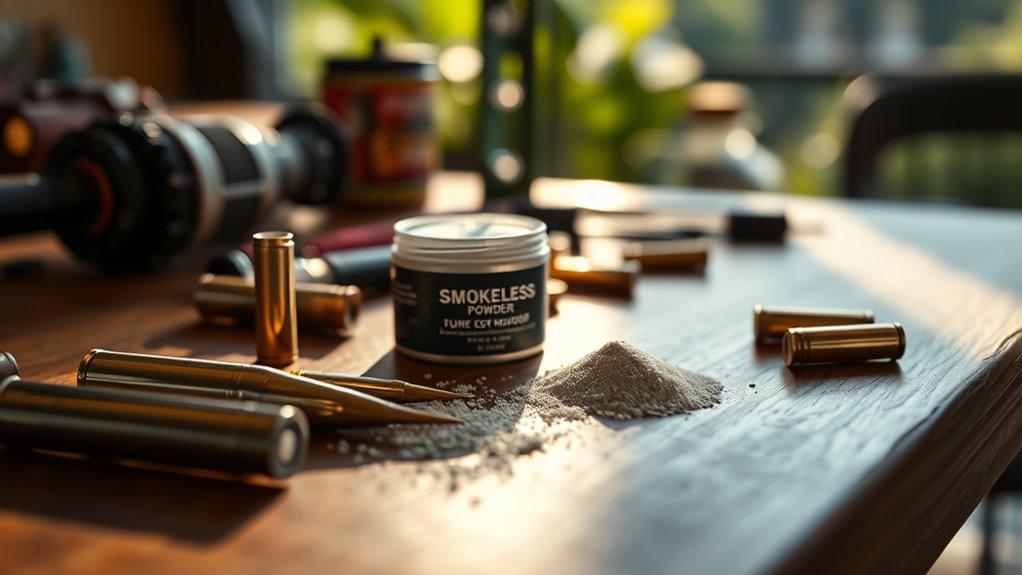
Finding the perfect smokeless powder can feel like a constant challenge, especially when you’re aiming for both safety and top-notch performance. You’re not alone—many shooters struggle to pick a powder that delivers consistent results without risking overpressure or poor ignition.
It’s frustrating when your accuracy suffers or your loads don’t behave as expected.
For 2026, the best smokeless powder balances a reliable burn rate, temperature stability, and consistent charge for peak performance and safety.
You’ll want a powder that matches your specific caliber’s pressure and velocity needs while staying effective across various environmental conditions.
Precision in measuring charges and using trusted load data is key to avoid dangerous overpressure or weak ignition.
Choosing the right powder can transform your accuracy and dependability. Explore how to optimize your selections for every shooting scenario.
| Image | Name | Editor's Rating | Price |
|---|---|---|---|
|
Handloader August 2023 - The Ammunition Reloading Journal...
|
|
Handloader August 2023 Ammunition Reloading Journal
If precision and reliability matter in your ammunition reloading, the Handloader August 2023 Ammunition Reloading Journal delivers focused expertise. This journal helps you navigate the complexities of smokeless powders with clear insights on burn rates and load data. It’s designed to guide you in creating ammunition that performs consistently.
The journal goes beyond basics, offering detailed techniques for both handgun and rifle reloading. Whether you’re fine-tuning standard rounds or experimenting with wildcat cartridges, this resource supports your efforts to achieve better accuracy. It also includes tips on pet loads, making it a versatile tool for custom shooting needs.
Its manual-like format makes the information easy to follow and apply. This practicality reduces guesswork and improves your workflow during reloading sessions. The compact design means the journal fits easily into your workshop or range bag, keeping your reference close at hand.
Maintaining your knowledge with this issue helps you reload smarter and safer. While its focus on reloading limits broader firearm topics, it excels as a specialized, hands-on guide. Some users might prefer digital formats, but the physical journal offers a tactile, durable resource that stands up to frequent use.
Best for: Reloading enthusiasts seeking detailed, expert guidance on smokeless powders, custom cartridges, and precise reloading techniques.
What We Like:
- Clear, detailed coverage of smokeless powder properties and load data
- Practical guidance for handgun, rifle, and wildcat cartridge reloading
- Compact, durable format ideal for workshop or range use
- Expert tips that support accuracy and safety in ammunition crafting
Specification:
| Specification Title | Detailed Description |
|---|---|
| Publication Date | August 2023 |
| Focus | Smokeless powder, reloading techniques, wildcat cartridges |
| Format | Physical journal with compact design |
| Content Type | Technical articles, load data, expert columns |
| Target Audience | Reloading hobbyists and professionals |
| Coverage | Handgun and rifle reloading, pet loads, specialized cartridges |
Factors to Consider When Choosing Smokeless Powder
When choosing smokeless powder, you need to contemplate burn rate characteristics and how well the powder matches your caliber. Pay attention to temperature sensitivity and how it affects pressure curves during shooting.
Consistent powder charges also play an essential role in achieving reliable performance.
Burn Rate Characteristics
Understanding burn rate characteristics is essential because they directly impact the pressure inside your cartridge and the bullet’s velocity. Smokeless powders come in fast, medium, and slow burn rates, with fast powders suited for handguns and slow powders ideal for magnum rifles.
You need to take into account factors like temperature, compression, and granule size, as they can affect how consistently the powder burns. Consistency matters—it guarantees uniform velocities and accuracy with every shot.
To pick the right powder, you can use a burn rate chart, which compares different powders and helps you match one to your specific load. Paying close attention to burn rate characteristics lets you optimize performance and safety in your reloading process.
Powder Compatibility With Caliber
Burn rate plays a key role in matching smokeless powder to your chosen caliber, as each caliber demands specific pressure and velocity levels for safe and accurate shooting. Using a powder that burns too fast can cause dangerous high pressures, while one that burns too slow may leave you with incomplete combustion and poor accuracy.
You should consult reloading manuals or guides to find powders recommended for your caliber, as these resources provide tested and safe options. The bullet’s weight and construction also affect your powder choice because they change the velocity and pressure needed for peak performance.
Temperature Sensitivity Effects
Because temperature directly influences how smokeless powder burns, you need to evaluate its sensitivity when choosing the right type for your reloads. Temperature changes affect burn rates, causing shifts in pressure and velocity that impact consistency. Higher temps speed up combustion, risking overpressure, while colder conditions may cause incomplete ignition and weaker performance.
Different powders handle these shifts differently—some stay stable across extremes, others don’t—so pick one suited for your typical environment. Also, consider how you store your powder; temperature swings can alter its chemical behavior over time.
To guarantee dependable ammo, you should test your loads across various temperatures. This hands-on approach helps you understand how your chosen powder performs before relying on it in real-world conditions.
Pressure Curve Analysis
Temperature fluctuations don’t just affect how smokeless powder ignites; they also influence the pressure curve generated during firing. When you analyze the pressure curve, you can optimize your load data by finding the ideal powder charge that maintains consistent pressure as the bullet travels down the barrel.
Different powders produce unique pressure curves, affecting when peak pressure occurs, which impacts recoil and muzzle rise. By understanding these curves, you avoid dangerous over-pressure situations that could damage your firearm or cause injury.
Using pressure curve analysis, you can fine-tune your loads for specific firearms, ensuring safe, reliable, and accurate performance. Paying attention to pressure curves ultimately helps you achieve better velocity consistency and accuracy with every shot.
Powder Charge Consistency
When you’re reloading ammunition, maintaining powder charge consistency is essential for achieving reliable accuracy and velocity. Even small variations in powder charge can cause unpredictable pressure changes, affecting both safety and firearm performance.
To keep your rounds performing uniformly, always follow the charge weights recommended in reloading manuals for your specific cartridges and powders. Using a precise scale to measure each charge helps minimize inconsistencies and guarantees every round meets your desired specs.
Additionally, be mindful of environmental factors like temperature and humidity, as they can influence powder burn rates and overall performance. Keeping your reloading conditions consistent will help you produce ammunition that performs reliably shot after shot.
Availability And Cost
How readily you can find smokeless powder and what it costs will heavily influence your choices as a reloader. Availability often fluctuates due to demand, regulatory changes, and production limits, so you might face challenges accessing your preferred powder.
Prices vary widely depending on the type, brand, and local market conditions, often reflecting the powder’s popularity and performance. To save money, consider buying in bulk since many retailers offer discounts for larger quantities.
Load Data Reliability
Finding the right smokeless powder at a good price is only part of the equation—you also need reliable load data to confirm your ammunition performs safely and consistently. Load data reliability guarantees you avoid risks tied to over- or under-charging your rounds. Always rely on established reloading manuals and reputable sources since they provide verified, accurate powder measurements.
Remember, smokeless powders vary in burn rates, so use load data specific to your chosen powder to maintain performance. Consistent testing conditions like temperature and humidity affect load data accuracy, so consider these factors carefully. To stay safe, cross-reference load data across multiple trusted sources.
This practice helps you spot discrepancies and confirms your reloading process remains both safe and effective.
Frequently Asked Questions
How Should Smokeless Powder Be Stored Safely?
You should store smokeless powder in a cool, dry place away from heat sources and open flames. Keep it in its original container, tightly sealed to prevent moisture exposure. Make sure the storage area is well-ventilated and out of reach of children or pets.
Avoid storing it near corrosive chemicals or solvents. Regularly inspect the container for damage, and always follow local regulations for safe storage and handling to minimize risks.
Can Smokeless Powder Expire or Go Bad?
Yes, smokeless powder can expire or go bad over time. If you don’t store it properly—like keeping it in a cool, dry place sealed from humidity—it can lose its effectiveness or become unsafe.
You should check the powder for clumping, discoloration, or a foul smell before use. Always follow the manufacturer’s recommendations and replace old powder to guarantee your reloads remain consistent and safe.
What Are the Environmental Impacts of Smokeless Powder?
Imagine smokeless powder turning the sky into a toxic fog overnight! In reality, it releases nitrogen oxides and other pollutants when burned, contributing to air pollution and acid rain. You might not see it, but these emissions can harm ecosystems and human health.
Plus, leftover residues can contaminate soil and water if not disposed of properly. So, while smokeless powder’s cleaner than black powder, it still impacts the environment more than you’d want.
Is Smokeless Powder Reusable After a Misfire?
No, you shouldn’t reuse smokeless powder after a misfire. Once the primer ignites the powder, even if the round doesn’t fire properly, the powder’s properties change, making it unreliable and unsafe.
Handling or trying to salvage it can cause inconsistent performance or dangerous malfunctions. It’s best to dispose of misfired rounds safely and use fresh powder for your reloads to keep your shooting safe and consistent.
How Does Temperature Affect Smokeless Powder Performance?
Ever wonder why your shots feel different on a hot day? Temperature directly affects smokeless powder’s burn rate—higher heat makes it burn faster, increasing pressure and velocity, which can impact accuracy and safety. Cold temperatures slow the burn, lowering performance.
You’ve got to store powder in stable conditions to keep consistency. So, don’t let temperature surprises ruin your shooting; keep your powder cool and dry for the best results every time.
Conclusion
When choosing the best smokeless powder for 2026, remember that “slow and steady wins the race.” You’ll want to focus on burn rate, compatibility with your caliber, and how temperature affects performance.
Don’t overlook pressure curves and charge consistency, as they guarantee safe, reliable reloads. Availability and cost also matter—don’t get caught without your preferred powder.
By considering these factors carefully, you’ll reload smarter and shoot better every time with the best smokeless powder for 2026.