
Shaky hands and constant readjustments can turn birdwatching or long-distance viewing into a frustrating exercise. The best stabilised binoculars solve this by using mechanisms that counteract hand tremors, delivering a steady view even at high magnifications. Without stabilization, details blur and the experience quickly becomes tiring, especially during extended use or in windy conditions.
Key factors that determine the quality of stabilised binoculars include the effectiveness of the image stabilization system, usually measured in degrees or the amount of shake it can counteract. A typical good model can stabilize movement up to 3-4 degrees, making 8x to 12x magnification practical.
Build materials matter too: magnesium alloy bodies offer a good balance of strength and light weight, while waterproof and fog-proof seals ensure durability outdoors. Ease of maintenance, such as accessible lens coatings and battery compartments, also influences how user-friendly these binoculars remain over time.
Need a Quick Check?
| Image | Product | Price |
|---|---|---|
Our Top Picks 1 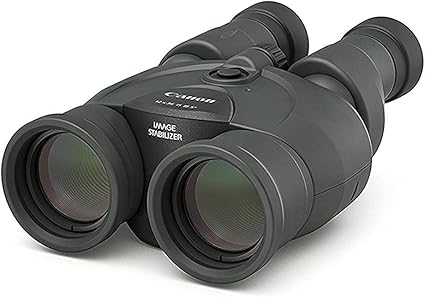 | Canon 12×36 IS | Check Price |
Our Top Picks 2  | Canon 15×50 IS | Check Price |
Our Top Picks 3  | Canon 10×20 IS | Check Price |
Our Selected Top 15 Stabilised Binoculars Worth Considering
This list includes a variety of stabilised binoculars designed for steady viewing in different conditions, from casual wildlife watching to professional use. Each review highlights performance features, suitability for various users, and key strengths and drawbacks to help find the right match.
1. Canon 12×36 Image Stabilization Binoculars
Canon 12×36 Image Stabilization Binoculars stand out with their 12x magnification and advanced image stabilization tech borrowed from Canon EF lenses. These binoculars suit birdwatchers and hunters who need clear, stable views without the usual hand tremor blur.
Their compact size and bright optics make them convenient for carrying during outdoor activities.
Carrying them feels manageable thanks to the 36mm objective lens diameter that balances brightness and portability. Setting up is straightforward with a tripod mount option and center manual focus, which works well for quick adjustments.
The 14.5mm eye relief reduces eye strain especially for glasses wearers, while the stable image reduces effort needed to keep the view steady during long sessions.
Image quality comes through sharply with minimal distortion across the entire field of view, aided by the Porro II prisms and doublet field-flattener lenses. The binoculars perform well in low-light thanks to multicoated optics and water resistance adds reliability in damp conditions. Praise centers on the effective image stabilization, while some find the exit-pupil diameter of 3mm less bright in very low light.
Effective image stabilization is a common highlight, making it easier to hold steady shots during birdwatching or hunting. However, some point out that the 3mm exit-pupil makes images less bright when light levels fall, which can be a drawback in dawn or dusk conditions. Focusing manually with the center wheel can also slow down quick target acquisition.
Those valuing a compact, stabilized binocular with comfortable eye relief will find this a fitting choice. People who need very bright views in dim light or want automatic focus might prefer alternative models. The water-resistant build and tripod mount also add appeal for outdoor users who prioritize durability and steady viewing setups.
Pros
- Strong image stabilization reduces hand shake effects
- Long eye relief comfortable for glasses wearers
- Compact and lightweight for easy carrying
- Sharp, distortion-free images across the view
Cons
- Exit-pupil diameter of 3mm limits brightness in low light
- Manual focus requires adjustment effort for quick targets
| Specification | Details |
|---|---|
| Magnification | 12x |
| Objective Lens Diameter | 36 millimeters |
| Eye Relief | 14 millimeters |
| Image Stabilization | Vari-Angle Prism |
| Prism Type | Porro Prism |
| Water Resistance | Water Resistant |
2. Canon 15×50 IS Binoculars
Canon 15×50 IS Binoculars shine in high-magnification optical image stabilization. Ideal for bird watchers who need steady, detailed views at 15x zoom, these binoculars combine powerful optics with built-in handshaking correction.
Daily use includes quick setup thanks to the large center focusing knob and fold-down rubber eyecups that accommodate glasses wearers. The 50mm objective lens delivers plenty of light, which helps in low light or dense foliage.
Image stabilization activates via a simple button, reducing blurry images from shaky hands during extended use outdoors.
Performance matches expectations with sharp, bright images and effective vibration compensation during handheld viewing. The build features water-resistant slip-resistant armor for grip and weather protection.
Complaints center on bulkiness for long treks, but durability and comfort get frequent praise from users.
Sharp image stabilization stands out, reducing handshaking significantly for handheld use. The binoculars handle vibrations well but feel heavy compared to smaller models. Users often prefer a tripod for lengthy observation sessions. The optics deliver bright, clear views, though carrying them all day can be tiring.
Bird watchers who prioritize image clarity with handheld stability appreciate this model’s features. Those seeking lightweight or compact binoculars might consider alternative options better suited for travel or long-distance trekking without support gear.
Pros
- Effective optical image stabilization for sharp viewing
- Bright field of view with 50mm lenses
- Comfortable 15mm eye relief for longer sessions
- Durable weather-resistant and slip-resistant armor
Cons
- Noticeable weight and bulk during long hikes
- Tripod mount needed for very steady viewing
| Specification | Details |
|---|---|
| Magnification | 15 x |
| Objective Lens Diameter | 50 millimeters |
| Eye Relief | 15 millimeters |
| Field of View | 236.2 feet |
| Focus Type | Center Focus |
| Water Resistance | Water Resistant |
3. Canon 10×20 IS Binoculars
Compact and lightweight design makes these binoculars well suited for bird watchers who want strong magnification in a small package. The main strength lies in the high efficiency shift-system image stabilizer, which helps keep images steady even when holding them by hand.
Setting up involves manual focusing and adjusting the diopter to match your vision, which is straightforward once you get the hang of it. The built-in image stabilization works automatically in power IS mode, allowing clear views without needing extra support. They attach to a tripod if preferred, useful for longer observation sessions.
Being lightweight means you can carry them on hikes without feeling burdened, though water resistance is not an option, so use in dry conditions only.
The 10x magnification combined with the 20mm objective lenses provides sharp views with the help of super spectra coating on the glass. Build quality feels solid but compact, typical of high-end optical gear.
Image stabilization is praised for cutting down shake, but the manual focus requires extra attention and may feel slow for fast-moving subjects. Lack of water resistance can be a drawback in wet environments.
Strongest praise is for the image stabilization that keeps views steady even when holding the binoculars without support. Most common complaint involves the manual focus, which demands patience especially when tracking fast-moving birds. Some find the lack of water resistance limiting during outdoor use when weather conditions change unexpectedly.
Those who want lightweight binoculars with clear, steady view for bird watching in dry conditions will appreciate this model. It is less suited to users needing quick focus adjustments or who plan to use them in wet environments. Users who prioritize durability and wet weather readiness should look elsewhere.
Pros
- Effective image stabilization reduces hand shake
- Compact and lightweight for easy carrying
- Super Spectra Coating improves image clarity
- Tripod mount option for steady use
Cons
- Manual focus can be slow on moving subjects
- Not suitable for wet or humid environments
| Specification | Details |
|---|---|
| Magnification | 10x |
| Objective Lens Diameter | 20 mm |
| Image Stabilization | High efficiency shift-system IS |
| Focus Type | Manual |
| Field of View | 5.3 degrees |
| Water Resistance | Not water resistant |
4. Canon 12×36 IS Binoculars

Strong stabilization and bright optics make 12×36 IS binoculars ideal for bird watchers or event spectators. Image Stabilization cuts down on shake allowing steady viewing at 12x magnification, matching serious observers who need handheld optics that hold up during prolonged use.
Setup is straightforward with AA batteries powering stabilization for around 9 hours. A smooth center focus wheel along with ±3 diopter adjustment makes fine tuning fast. At 6.9 inches and just over 23 ounces, they are compact enough to carry easily.
Wide 60° apparent angle and generous 14.5mm eye relief add comfort for extended sessions, even for glasses wearers.
Its Porro prism design improves depth perception compared to roof prisms. Multicoatings reduce glare and maintain sharp contrast. The body feels solid but is not water resistant, which means caution needed in wet weather.
Customers praise the clear image and smooth stabilization but some find the binoculars slightly bulky compared to smaller models.
Clear and steady views are common highlights, with stable images even when handheld at 12x magnification. Still, the lack of water resistance is a frequent downside, requiring care outdoors in damp conditions. The binoculars handle tracking subjects well thanks to the wide field of view and smooth stabilization.
Anyone focusing on birding, sports, or nature watching will appreciate the sharp image and stability. Those who prioritize weatherproof gear or ultra-light binoculars may prefer alternatives better suited to harsher environments or long treks where weight is critical.
Pros
- Effective image stabilization with gyro sensors
- Wide 60° apparent angle for tracking moving subjects
- Long 14.5mm eye relief for glasses comfort
- Includes harness strap and cleaning kit
Cons
- Not water resistant; avoid use in rain
- Heavier and bulkier than many compact binoculars
| Specification | Details |
|---|---|
| Magnification Maximum | 12 x |
| Objective Lens Diameter | 36 mm |
| Eye Relief | 14.5 millimeters |
| Focus Type | Center Focus |
| Diopter Adjustment Range | ±3 diopters |
| Weight | Just over 23 oz |
5. SIG SAUER Zulu6 HDX Pro 42mm Binoculars

Aluminum housing defines the SIG SAUER Zulu6 HDX Pro 42mm Binoculars, designed for serious hunters needing high magnification without extra support. Its standout feature is the advanced 4th generation Optical Image Stabilization, which keeps the view steady even at 14x magnification in challenging conditions.
Setting up requires just inserting two standard AA batteries, which provide up to 40 hours of use and switch off automatically after ten minutes of inactivity. The focus and image stabilization adjust quickly with large, well-placed controls. Coatings on the lenses reduce glare and handle smudges and water easily, making daily use smooth in variable weather.
Optical clarity is sharp with ED glass and premium prisms, presenting natural colors and high light transmission. The rugged body offers IPX7 waterproofing and abrasion resistance, making it fit for rough environments.
Brightness and detail hold steady through the stabilizer, but some users find the weight heavier than expected for all-day carrying.
Stable and bright viewing stands out as the biggest advantage thanks to the 4th generation stabilization and ED glass optics. The product holds up to tough, wet conditions well, but the weight and size make it better suited for shorter sessions or situations where a heavier binocular is manageable. Auto shutoff occasionally requires manual reactivation during extended viewing.
Hunters and outdoor watchers benefiting from controlled vibration and high magnification will appreciate these binoculars. People needing light, compact optics for long treks or all-day carry might want to consider lighter alternatives since the weight can become tiring after hours of use.
Pros
- Steady 14x image stabilization without tripod
- Long battery life with common AA batteries
- Waterproof and abrasion-resistant build
- Wide field of view aids quick target finding
Cons
- Heavier compared to non-stabilized models
- Auto shutoff can interrupt longer observations
| Specification | Details |
|---|---|
| Objective Lens Diameter | 42 millimeters |
| Magnification Maximum | 14x |
| Water Resistance Level | IPX7 waterproof |
| Battery Type | Two standard AA cells |
| Battery Life | Up to 40 hours |
6. SIG SAUER Zulu6 HDX OIS 16×42 Binoculars

Image stabilization stands out clearly with SIG SAUER Zulu6 HDX OIS 16×42 Binoculars, ideal for hunters or sports enthusiasts needing clear vision without a tripod. Its Optical Image Stabilization technology helps steady the view on uneven terrain or when holding the binoculars by hand, making it easy to track moving targets.
Setting up is straightforward with manual focus, and the automatic adjustment feels intuitive when switching between subjects. Two OIS modes adjust stabilization according to your activity, Scan Mode for general observation and Target Mode to lock in on a specific point with 50% more stability. Weather resistance adds confidence for use in wet or misty conditions, while the 42mm objective lenses balance light capture with portability.
Optics deliver sharp, high-definition images thanks to HDX lenses, keeping detail clear even at 16x magnification. The binoculars are lightweight enough to carry comfortably during long hunts or events.
The most seen praise centers on the crisp image clarity combined with effective stabilization. A frequent drawback concerns the eye relief being limited to 16 millimeters, which might feel tight for some wearing glasses.
SIG SAUER Zulu6 HDX binoculars offer excellent image stabilization with two modes that reduce shaking and vibration, making it easier to spot targets without a tripod. The HDX lenses improve light transmission and clarity, providing clear views even in low light. Some find the binoculars a bit heavy for extended handheld use, which can cause arm fatigue over long periods.
Hunters and outdoor enthusiasts who need steady, clear optics for spotting game will appreciate the Zulu6 HDX. Those requiring lightweight binoculars for all-day carry or casual use might prefer a simpler model with less stabilization and less weight. This pair excels in stability but may be more than necessary for basic wildlife viewing.
Pros
- Effective dual-mode optical image stabilization
- Sharp HDX glass lenses for clear images
- IPX-7 waterproof rating for all-weather use
- Lightweight design suitable for long periods
Cons
- Limited eye relief at 16 millimeters
- Manual focus may need frequent adjustment
| Specification | Details |
|---|---|
| Magnification Maximum | 16 x |
| Objective Lens Diameter | 42 millimeters |
| Eye Relief | 16 millimeters |
| Coating | SpectraCoat |
| Water Resistance Level | Waterproof (IPX-7) |
| Focus Type | Manual |
7. SIG SAUER Zulu6 HDX Pro 14×50 Binoculars

Ideal for serious hunters and outdoor enthusiasts needing sharp, stable views at 14x magnification, these binoculars excel in stabilizing handheld images in difficult conditions. Their biggest strength lies in the built-in OmniScan OIS stabilization tech that cuts down vibration and shake, improving clarity without extra gear.
Handling these binoculars day to day feels solid and thought-out. Battery compartments split on each side balance the weight well.
The focus wheel and diopter ring have textured surfaces that make adjustments straightforward without slipping. A foam case and neck strap come with the set, making them easy to carry and store after use. Adding a tripod is an option for prolonged viewing sessions.
Performance is detailed and bright, helped by bright 50mm lenses and advanced coatings that reduce glare and increase color accuracy in low light. Most praise points to sharp, stable images at 14x, even if your hands aren’t perfectly steady. The frame is tough thermoplastic with rubber armor that feels grippy and durable, but some notice the binoculars can be on the heavier side for long treks.
Most users note how steady the images remain even when holding the binoculars without support, making detailed spotting possible at 14x magnification. The main drawback is the weight, which can tire the arms after hours in the field. The solid build and durable coatings receive strong approval for reliability outdoors.
Those wanting stabilized binoculars for hunting or wildlife viewing will appreciate the balance of power and clarity here, especially with the waterproof design. People needing a lightweight or budget solution may prefer alternatives that sacrifice stabilization but reduce bulk and cost.
Pros
- Advanced image stabilization for clearer views
- Bright lenses with anti-reflection coatings
- Waterproof and fog-proof for harsh conditions
- Ergonomic design with textured controls
Cons
- Relatively heavy for extended handheld use
- Expensive compared to standard binoculars
| Specification | Details |
|---|---|
| Magnification Maximum | 14 x |
| Objective Lens Diameter | 50 millimeters |
| Field of View | 3.7 degrees |
| Water Resistance Level | Waterproof (IPX-7) |
| Battery Type | 2 AA alkaline batteries (included) |
| Runtime | Up to 40 hours |
8. Nikon 12×25 Stabilized Binoculars

Watching distant events or wildlife clearly can be a challenge when your hands aren’t steady. Sports fans, concert goers, and travelers will find these binoculars helpful, as their main strength lies in advanced image stabilization that keeps the view steady despite natural hand movements.
Getting them ready to use involves adjusting the smooth central focus wheel, which stays firm under your fingers, and customizing the eyecups for comfort whether you wear glasses or not. The compact design fits easily in a pocket or small bag, making it convenient to carry around during all kinds of outings without adding much bulk or weight.
The stabilized image technology works as promised, providing clear, bright images without distracting shake. The build feels solid with a waterproof housing and a closed-bridge design that balances well in your hands over extended periods.
One common complaint is the relatively short eyecup eye relief of 2.1 millimeters, which can be tight for some eyeglass wearers.
Stabilization does a strong job of keeping the image clear during handheld use, which many find essential in dynamic environments. The limited eye relief is a frequent limitation, especially for people who wear eyeglasses during viewing sessions, making extended use less comfortable in those cases.
Those who attend outdoor events or enjoy wildlife watching without carrying heavy gear will appreciate the lightweight, portable design. Anyone needing longer eye relief or automated focusing might want to consider different options better suited to those specific needs.
Pros
- Highly effective image stabilization reduces hand shake
- Compact and lightweight for easy travel
- Bright, detailed view with coated lenses
- Long battery life with auto shutoff
Cons
- Short eye relief can cause discomfort with glasses
- Focus requires manual adjustment only
| Specification | Details |
|---|---|
| Magnification | 12x |
| Objective Lens Diameter | 25 millimeters |
| Eye Relief | 2.1 millimeters |
| Field of View | 236 feet |
| Battery Life | Up to 12 hours |
| Water Resistance | Waterproof |
9. Nikon 10×25 Stabilized Binoculars
Image stabilization makes these 10×25 binoculars a solid choice for people who want steady views without a tripod. Compact and lightweight, they suit travelers, sports spectators, and outdoor explorers who need clear, stable images on the move. The stabilization technology stands out as the main advantage for anyone struggling with shaky hands.
Setup starts by inserting standard AA batteries, which power the binoculars for up to 12 hours. Adjusting the focus uses a textured central wheel that feels precise.
The eyecups slide and twist to fit users with glasses or without, adding comfort in longer viewing sessions. Carrying them is easy thanks to the slim roof prism design that fits well in hands and pockets.
Clear, bright images hold steady thanks to electronic image stabilization that compensates for hand movement. Build quality feels solid with a waterproof housing and closed-bridge design for balanced handling. A common note is that some users find the stabilization less effective in very low light.
The image quality remains sharp and colors stay true in well-lit conditions.
Stabilization technology keeps images clear during active use but struggles a bit as light dims. The binoculars handle well and deliver crisp optics, though some feel the small exit pupil limits brightness in dark environments. Controls and battery life receive consistent praise for reliability in various conditions.
People who need stable views for daytime sports and travel will appreciate the lightweight, waterproof design and solid battery performance. Those requiring very bright images in low light or long-duration nighttime use may want to consider binoculars with larger lenses or a different stabilization approach.
Pros
- Effective image stabilization during handheld use
- Compact, lightweight design fits pockets easily
- Sharp, bright optics with true-to-life colors
- Long battery life with automatic shutoff
Cons
- Stabilization performance drops in low light
- Exit-pupil diameter only 2.5 millimeters
| Specification | Details |
|---|---|
| Magnification | 10x |
| Objective Lens Diameter | 25 millimeters |
| Eye Relief | 14 millimeters |
| Water Resistance | Waterproof |
| Power Source | AA batteries, up to 12 hours |
| Field of View | 101 degrees |
10. Canon 10×42 L IS Binoculars

Bird watchers and outdoor enthusiasts benefit from steady views with these 10×42 binoculars. Their image stabilization feature is the main draw, making it easier to track moving subjects or scan for details without tiring your hands or eyes quickly.
Setting up involves inserting two AA alkaline batteries, which keep the image stabilization working smoothly. Adjust focus using the large center knob, which is conveniently located for quick tweaks. The neoprene strap and padded case add comfort and protection during transport.
The eyepiece rainguard and waterproof design support use in damp conditions, making it practical for various weather.
Optical clarity is reliable thanks to ultralow-dispersion lead-free glass and fully super spectra coatings. The binoculars handle shakiness well, keeping images stable and comfortable to view at 10x magnification. Feedback notes the build feels solid and weatherproof but points out the device can be heavy over long periods of handheld use, which may cause fatigue during extended outings.
Steady, clear images even when your hands aren’t perfectly still is the feature most praised. The binoculars create a stable view that helps avoid eye strain during long sessions. The main complaint is their weight, which becomes noticeable over time and might require resting or use of a tripod, especially if carrying them for hours.
Those who need to watch birds or wildlife without tripod support will appreciate the built-in stabilization and waterproof design. Frequent users planning long treks might consider lighter options or models without stabilization to reduce arm fatigue. The accessories provided add practical value for varied outdoor conditions.
Pros
- Image stabilization reduces hand-shake effects clearly
- Large focusing knob easy to adjust precisely
- Waterproof and fog proof for outdoor reliability
- Comfortable neoprene strap included for carrying
Cons
- Heavier feeling during long handheld use
- Battery replacement needed for stabilization function
| Specification | Details |
|---|---|
| Magnification Maximum | 10 x |
| Objective Lens Diameter | 42 millimeters |
| Eye Relief | 16 millimeters |
| Water Resistance Level | Waterproof |
| Focus Type | Center Focus |
| Prism Type | Porro Prism |
11. Canon 18×50 IS Binoculars

Canon’s 18×50 IS binoculars offer high 18x magnification with image stabilization that suits anyone needing long-distance viewing without a tripod. Their built-in stabilization helps keep images steady in hand, useful for marine spotting, wildlife watching, or stadium seating where shaking is common.
This combination makes detail spotting in distant scenes more manageable compared to other high-power binoculars.
Setup includes inserting provided AA batteries and focusing with the autofocus system. The water-resistant body holds up outdoors, and the included harness and travel bag make carrying easier over longer periods. The 15mm eye relief helps maintain comfort during extended use.
Optional 58mm filters or lens hoods can be added to adapt to bright or humid environments, improving image contrast and protection.
Optically, the binoculars deliver sharp, high-contrast views thanks to ultralow dispersion glass and field flattening lenses. The 19.7’ close focus distance allows near subject observation without losing clarity.
The image stabilizer effectively counters small hand tremors but some notice a learning curve using autofocus smoothly. The binoculars feel solid and practical, although a few mention the size as a drawback for very long hikes.
One of the strongest advantages is how well the image stabilizer reduces shake at 18x magnification, allowing steady views without a tripod. The main complaint concerns the autofocus system, which can feel jerky or slow to adjust in some situations. Some users also find the binoculars a bit heavy for all-day carrying.
People who need high-powered, stabilized binoculars for spotting wildlife or events from a fixed position will find these work well. Those expecting very lightweight or compact design for hiking long distances might prefer models with lower magnification and fewer features to reduce size and weight.
Pros
- Effective image stabilization for handheld clarity
- Sharp optics with ultralow dispersion glass
- Close focus distance of 19.7 feet at 18x zoom
- Water resistant for outdoor use
Cons
- Autofocus can be tricky at times
- Relatively bulky for hiking or prolonged carry
| Specification | Details |
|---|---|
| Magnification Maximum | 18x |
| Objective Lens Diameter | 50 mm |
| Eye Relief | 15 millimeters |
| Focus Type | Autofocus |
| Water Resistance Level | Water Resistant |
| Field of View | 3 degrees |
12. Canon 15×50 IS Binoculars

Canon 15×50 IS Binoculars deliver sharp 15x magnification with image stabilization, suited for birdwatchers, marine observers, and astronomy enthusiasts needing steady, distant views without a tripod. Strongest feature is its Vari Angle prism system that compensates for hand shake at high magnification levels.
Setup involves inserting AA batteries included with charger, attaching the binocular harness, and adjusting the interpupillary distance and diopter for your eyes. The single button for image stabilization sits naturally under the right forefinger, making quick activation simple during use. Twist-up eyecups and an armored body provide comfort and protection during extended outdoor sessions.
Optics provide bright, contrast-rich images unaffected by chromatic or spherical aberrations because of ultra-low dispersion glass and doublet field flatteners. Water-resistant construction and ergonomic grips make it durable in changing conditions.
The main praise highlights its image stabilization at 15x magnification, while some find the binoculars heavier to carry for long periods.
The image stabilization feature consistently provides steady views even at 15x magnification, making it easier to observe wildlife and distant objects. Some find the binoculars heavier than expected, which can lead to fatigue during extended handheld use or long hikes.
Those needing clear, stable views for birding or marine observation will appreciate the optics and stabilization combined. People prioritizing lighter, compact binoculars for casual use or travel might prefer a model with lower magnification or smaller objectives.
Pros
- Strong image stabilization reduces hand shake
- Bright views with accurate color and contrast
- Weather resistant and durable armored body
- Wide field of view for scanning areas
Cons
- Relatively heavy for handheld use long-term
- Manual focus requires careful adjustment
| Specification | Details |
|---|---|
| Magnification Maximum | 15x |
| Objective Lens Diameter | 50 mm |
| Field of View | 236 feet at 1000 yards |
| Apparent Angle of View | 67 degrees |
| Focus Type | Center Focus |
| Water Resistance Level | Water Resistant |
13. Fujinon Techno Stabi TS1440 14×40 Binoculars

Stabilized binoculars that handle movement well make a big difference when viewing distant objects outdoors. Designed for hikers and outdoor enthusiasts, these deliver strong image stability with 5 degrees of stabilization. They stand out most for making handheld use comfortable at 14x magnification without shaky views.
Setting up involves inserting 4 AA alkaline batteries, which power the image stabilization. The binoculars have a sturdy rubber armored body that feels secure in hand, even during long sessions. Center focus with a ±5 diopter adjustment simplifies sharpening images quickly.
A tripod mount option adds flexibility for stationary viewing. They keep fog and water out thanks to waterproof and fogproof construction, making them reliable in various weather conditions.
Performance is solid for detailed viewing thanks to multi-layer coated lenses and phase coating that boost light transmission and clarity. The fiberglass-reinforced plastic makes the unit tough without being too heavy. Stability noticeably reduces image shake, though some mention the 14x zoom can feel a bit intense for quick handheld adjustments.
The focus mechanism works smoothly, but a few note that the eyecup design could be more comfortable for extended use.
Image stabilization on this model significantly cuts down handheld shake, making detailed viewing more practical at 14x magnification. The rugged yet lightweight construction combined with waterproof features suits various environments well. Some users find the eyecups a bit uncomfortable during extended viewing sessions, which might limit comfort outdoors for long periods.
People who spend time hiking or observing wildlife in motion will appreciate the strong stabilization and tough build. Those who prioritize eyecup comfort or prefer a steadier experience at very high magnifications may benefit from exploring other models with softer eye cushions or slightly lower zoom levels.
Pros
- Effective 5-degree image stabilization
- Waterproof and fogproof for outdoor use
- Rubber armor ensures a solid grip
- Tripod mount adds versatile viewing options
Cons
- Eyecups could be more comfortable for long use
- High 14x zoom can be sensitive to quick movements
| Specification | Details |
|---|---|
| Magnification Maximum | 14× |
| Objective Lens Diameter | 40 millimeters |
| Battery Type | 4 × AA alkaline |
| Field of View | 5 degrees |
| Water Resistance | Waterproof |
| Focus Type | Center Focus |
14. Fujinon Techno Stabi TS-L2040 20×40 Binoculars

Sharp 20x magnification and reliable image stabilization make these binoculars a solid pick for bird watchers, hikers, and boaters. Their standout feature is the electronic image stabilization that reduces shake to a noticeable degree, allowing clearer viewing at high magnifications without a tripod.
Setup involves inserting two AAA batteries, which support up to 30 hours of use on a full charge, enough for a full day outdoors. The compact size and light weight mean they can be held comfortably for long stretches. Water resistance adds confidence for boating or rainy hikes.
Manual focus and diopter adjustment allow precise control but take a bit of practice to dial in quickly.
Image stabilization by ±3° effectively cuts down on blur even at 20x zoom. Extra-low dispersion glass and multicoatings deliver a bright, detailed picture with reduced color fringing. The binoculars feel solid yet lightweight at 30 oz.
Frequent feedback praises the steady view for handheld use, while some find the manual focus fiddly during fast action or low light.
Electronic stabilization stands out by keeping the image steady at 20x magnification during hand-held use, which is uncommon for binoculars of this power. Some users find the manual focusing mechanism less responsive when trying to quickly track fast-moving subjects or in fading light.
This suits anyone wanting clear, steady views on the move without carrying a tripod, especially bird watchers and boaters who need stability in motion. A simpler focusing system may be better for those needing quick target acquisition or frequent adjustments in varying light conditions.
Pros
- Effective electronic image stabilization
- Bright, detailed views with advanced coatings
- Lightweight and compact design
- Long battery life for extended use
Cons
- Manual focus can be slow to adjust
- Exit pupil of 2 mm may limit low-light comfort
| Specification | Details |
|---|---|
| Magnification | 20x |
| Objective Lens Diameter | 40 mm |
| Image Stabilization | ±3° correction |
| Weight | 30 oz (850 g) |
| Battery Type & Life | 2 AAA batteries, up to 30 hours |
| Water Resistance | Waterproof |
15. Fujifilm Fujinon Techno Stabi 16×28 Binoculars

Metal housing and waterproof sealing make these binoculars suited for outdoor activities like bird watching and boating. The standout feature is the 16x image stabilization that reduces hand vibration, helping you see clear details at high magnification without needing a tripod.
Setting up requires just flipping a switch to activate stabilization, which shuts off automatically after 10 minutes of no use to save battery. The center focus dial is straightforward, and you can adjust twist-up eyecups to match whether you wear glasses. The 16mm eye relief keeps the view comfortable during long sessions, and the sealed waterproof design lets you use them confidently in damp or rainy conditions.
View quality benefits from anti-reflective multicoated lenses producing bright and well-colored images. Stabilization works well up to ±3° vibration, keeping the view steady for spotting fine details at 16x magnification. The binoculars feel solidly built but stay compact with 28mm objective lenses.
Some feedback notes stabilization may take a moment to engage fully, and the exit pupil of 1.8mm can feel a bit narrow in really low light.
Clear and steady views even at 16x zoom draw the most praise, especially for outdoor use on boats or uneven terrain. There is a note that stabilization does not kick in entirely instantly, which might momentarily affect viewing experience. The waterproofing combined with bright images makes it stand out in its class.
People seeking stable, high-powered binoculars for bird watching or concerts in daylight will appreciate these. The waterproof feature suits use near water or in wet weather. Those needing better performance in low light or faster stabilization might want to consider alternatives with larger lenses or faster-start systems.
Pros
- Strong image stabilization ±3° vibration suppression
- Waterproof design for wet environments
- Comfortable 16mm eye relief with adjustable eyecups
- Bright, clear images with multicoated lenses
Cons
- Stabilization activation can be slightly delayed
- 1.8mm exit pupil limits low-light performance
| Specification | Details |
|---|---|
| Magnification Maximum | 16x |
| Objective Lens Diameter | 28 millimeters |
| Field of View | 210.8 feet |
| Eye Relief | 16 millimeters |
| Water Resistance Level | Waterproof |
| Focus Type | Center Focus |
Best Stabilised Binoculars Comparison Table
| Product | Magnification | Objective Lens Diameter | Water Resistance | Best For |
|---|---|---|---|---|
| Canon 12×36 IS | 12x | 36mm | Water Resistant | Hunting |
| Canon 15×50 IS | 15x | 50mm | Water Resistant | Bird Watching |
| Canon 10×20 IS | 20x | 20mm | Not Water Resistant | Bird Watching |
| Canon 12×36 IS (Alt) | 12x | 36mm | Not Water Resistant | – |
| SIG SAUER Zulu6 HDX Pro | 1x | 42mm | Water Resistant | – |
| SIG SAUER Zulu6 HDX OIS | 16x | 42mm | Waterproof | Hunting, Sports |
| SIG SAUER Zulu6 HDX Pro | 14x | 50mm | Waterproof | Hunting, Sports |
| Nikon 12×25 Stabilized | 12x | 25mm | Waterproof | Outdoor Activities |
| Nikon 10×25 Stabilized | 10x | 25mm | Waterproof | Hiking, Sport Watching |
| Canon 10×42 L IS | 10x | 42mm | Waterproof | Bird Watching |
| Canon 18×50 IS | 18x | 50mm | Water Resistant | – |
| Canon 15×50 IS (Alt) | 15x | 50mm | Water Resistant | – |
| Fujinon Techno Stabi TS1440 | 14x | 40mm | Waterproof | Hiking, Outdoors |
| Fujinon Techno Stabi TS-L2040 | 20x | 40mm | Waterproof | Bird Watching, Concerts |
| Fujifilm Techno Stabi 16×28 | 16x | 28mm | Waterproof | Bird Watching, Concerts |
- Magnification12x
- Objective Lens Diameter36mm
- Water ResistanceWater Resistant
- Best ForHunting
- Magnification15x
- Objective Lens Diameter50mm
- Water ResistanceWater Resistant
- Best ForBird Watching
- Magnification20x
- Objective Lens Diameter20mm
- Water ResistanceNot Water Resistant
- Best ForBird Watching
- Magnification12x
- Objective Lens Diameter36mm
- Water ResistanceNot Water Resistant
- Best For–
- Magnification1x
- Objective Lens Diameter42mm
- Water ResistanceWater Resistant
- Best For–
- Magnification16x
- Objective Lens Diameter42mm
- Water ResistanceWaterproof
- Best ForHunting, Sports
- Magnification14x
- Objective Lens Diameter50mm
- Water ResistanceWaterproof
- Best ForHunting, Sports
- Magnification12x
- Objective Lens Diameter25mm
- Water ResistanceWaterproof
- Best ForOutdoor Activities
- Magnification10x
- Objective Lens Diameter25mm
- Water ResistanceWaterproof
- Best ForHiking, Sport Watching
- Magnification10x
- Objective Lens Diameter42mm
- Water ResistanceWaterproof
- Best ForBird Watching
- Magnification18x
- Objective Lens Diameter50mm
- Water ResistanceWater Resistant
- Best For–
- Magnification15x
- Objective Lens Diameter50mm
- Water ResistanceWater Resistant
- Best For–
- Magnification14x
- Objective Lens Diameter40mm
- Water ResistanceWaterproof
- Best ForHiking, Outdoors
- Magnification20x
- Objective Lens Diameter40mm
- Water ResistanceWaterproof
- Best ForBird Watching, Concerts
- Magnification16x
- Objective Lens Diameter28mm
- Water ResistanceWaterproof
- Best ForBird Watching, Concerts
How to Choose the Right Stabilised Binoculars
Choosing stabilised binoculars requires focusing on image clarity, battery life, and weight for comfort during extended use. Choosing well ensures steady viewing without frequent adjustments, saving money by avoiding replacements and reducing eye strain during activities like birdwatching or sports events.
Image Stabilisation Quality
Trying to hold binoculars steady for long periods quickly reveals the importance of effective reduction of hand shake and vibrations. Models that manage to stabilise image shifts caused by subtle hand movements prevent eye strain and improve focus on small or distant details. A strong stabilising mechanism responds within milliseconds, blocking disturbances before they blur the view.
Without this, images constantly bounce or jitter, making birdwatching or target spotting frustrating, especially at high magnifications above 10x.
Experience shows that the speed and accuracy of stabilisation directly affect comfort and clarity. Slow or weak systems leave the image wobbling, forcing frequent manual adjustments. Good ones employ gyroscopes or sensors tuned to instantly correct movement on the order of 1 to 2 milliseconds, usually paired with optical components like multi-coated lenses that maintain brightness and sharpness during shifts.
Paying attention to how fast the image steadies after each jolt is crucial; less than 0.01 degrees of maximum residual shake often marks a reliable device.
Optical Performance
Trying to track a bird or moving object with high magnification can be frustrating when the field of view is too narrow. Many models offer a magnification around 8x to 10x, which balances zoom with a usable field of view. A wider field, such as 300 to 400 feet at 1000 yards, makes it easier to spot and follow subjects, especially outdoors.
Higher magnification can make the image shakier and harder to stabilize, while too low leaves distant details fuzzy or small.
Lens quality and coatings have a direct impact on brightness and color accuracy in various lighting conditions. Look for multi-coated optics made from good glass like BAK-4 prisms to reduce glare and improve sharpness.
Without proper coatings, images can appear dull or washed out, especially during dawn or dusk. Clarity at different distances depends on precise focusing and the ability to maintain detail without chromatic aberration or distortion. Models with better lenses show crisp details across the frame and perform well even in shady or overcast environments.
Ergonomics and Handling
Holding these devices steady for long periods quickly reveals the impact of weight and size. Models exceeding 1.5 kg become noticeably tiring after 30 minutes without a support. Devices around 800-1000 grams strike a balance between solid build and prolonged use without discomfort, especially during activities like birdwatching or sports.
Compact options fit easily in backpacks but often sacrifice grip size or control spacing, making fine adjustments a challenge.
The grip design can make or break extended sessions. Rubberized, textured surfaces prevent slipping even when hands sweat, while poorly designed grips cause frequent repositioning, tiring your hands faster. Controls for focus and zoom should be reachable without shifting the main grip, smooth, tactile dials preferred, with click-stops for precision but not so stiff they hurt during repeated tweaks.
Eye relief distances between 15-20 mm accommodate users with glasses and reduce strain, allowing comfortable positioning without constant refocusing or awkward head tilts.
Battery Life and Power Source
Long trips outdoors often reveal how crucial battery type and availability can be. Models powered by AA or AAA batteries stand out for easy replacements anywhere, with common store availability making quick swaps possible. Rechargeable lithium-ion packs offer longer operation, sometimes up to 20 hours, but finding a charger on the trail can be tough.
Some models include USB-C charging, making topping up during breaks convenient, especially if you carry a power bank.
Battery life directly impacts usage time without interruptions. Expect at least 8-10 hours of continuous use from conventional battery types; anything less means carrying multiple spares, which adds weight.
Another point is ease of access to the battery compartment. Some designs require removing several screws or detaching parts, complicating quick replacements outdoors. The best setups let you swap batteries in seconds, even with gloves on.
Durability and Weather Resistance
On a misty morning hike, binoculars with poor sealing quickly fog up inside the lenses, making it impossible to get a clear view. Those with waterproofing and fog proofing features use nitrogen or argon gas to prevent internal moisture buildup, maintaining crisp vision even in damp or cold conditions. Look for devices rated at IPX7 or higher, meaning they can handle immersion in up to 1 meter of water for 30 minutes without damage.
This level of protection also keeps dust and dirt out, which otherwise can scratch lenses or jam moving parts.
Durability hinges largely on the casing materials. Rubber-armored bodies reduce impact damage when binoculars drop or knock against hard surfaces.
Metal or high-grade polycarbonate frames add strength without too much weight. Temperature fluctuations can cause internal components to expand or contract, potentially misaligning the optics. Quality builds resist these changes, so the view stays sharp whether under scorching sun or freezing cold.
Expect a well-made pair to weigh between 700 and 1000 grams for balanced handling while being tough enough for rough outdoor use.
Tips for Maximizing Stability and Image Clarity While Using Stabilised Binoculars
Most stabilised binoculars come with adjustable settings that control the level of image stabilization. Starting with a moderate setting helps to balance battery consumption and image clarity, offering steady visuals without draining power too fast.
Holding the binoculars with both hands, close to the body, reduces wobbling. Resting your elbows on a stable surface like a railing or tripod mount also improves steadiness over extended viewing periods.
Follow these steps to get the clearest image:
- Adjust the diopter ring to match your eyesight precisely, ensuring sharp focus on the target.
- Use the center focus knob smoothly; avoid sudden movements that can introduce shaking.
- Keep your breathing even. Positioning yourself comfortably to minimize body sway will help maintain stability.
- Turn off stabilization momentarily if you are observing a stationary object for a long time to save battery.
Regularly cleaning the lenses with a proper microfiber cloth prevents buildup that can blur images, especially in outdoor environments.
Maintenance and Care Practices to Prolong the Lifespan of Stabilised Binoculars
Cleaning the lenses regularly is crucial for maintaining clear vision through stabilised binoculars. Use a soft microfiber cloth to gently remove dust or smudges.
Avoid using household cleaners or abrasive materials, as they can damage the lens coatings. A proper lens cleaning solution designed specifically for optics works best.
Protecting the binoculars from moisture helps prevent internal fogging and corrosion. Store them in a dry place and use supplied protective cases when not in use.
When the binoculars get wet, dry them thoroughly with a soft towel before storage. Some models come with desiccant packs, which absorb moisture and should be replaced periodically.
Battery care is another key element. Remove batteries if the binoculars won’t be used for extended periods to avoid leakage. Rechargeable models should be charged according to manufacturer recommendations to prevent reduced capacity over time.
Handling the binoculars with care also means avoiding impacts or drops since the stabilisation mechanism is sensitive. Regular inspections for loose parts or unusual noises can catch small problems before they become serious.
Comparing Stabilised Binoculars with Optical Image Stabilization Alternatives
Stabilised binoculars use built-in gyroscopes or electronic sensors to counteract hand tremors, which helps keep the image steady during long viewing sessions. This makes them highly effective for activities like birdwatching from a boat or spotting distant wildlife while trekking.
Optical image stabilization (OIS), often found in cameras and some binocular models, works by adjusting lenses or sensors to reduce vibration effects. However, stabilized binoculars generally offer smoother and more consistent stability over longer periods, especially when zooming in.
Key differences include:
- Power source: Stabilised binoculars require batteries to maintain stability; optical image stabilization relies on mechanical adjustments, often consuming less power.
- Complexity and weight: Built-in stabilization adds bulk and weight, which might affect comfort during extended use.
- Effectiveness: Electronic stabilization maintains a steady image even with larger movements, while OIS is effective against small shakes.
Choosing between them depends on typical use conditions and the balance between steadiness and portability.
People Also Asked
How Do I Properly Care for Stabilised Binoculars?
Clean the lenses gently with a microfiber cloth and avoid moisture exposure. Storing them in a padded case helps prevent damage during transport.
What Size Stabilised Binoculars Are Easiest to Carry During Travel?
Compact models with 8x or 10x magnification around 200-300 grams are easier to carry on trips. They fit comfortably in a daypack or a large coat pocket without feeling bulky.
Are Stabilised Binoculars Safe to Use for Extended Periods?
Using stabilised binoculars for long stretches is generally safe but can cause some eye fatigue. Taking short breaks every 30-40 minutes reduces strain and keeps viewing comfortable.
How Long Do Stabilised Binocular Batteries Typically Last?
Battery life usually ranges between 8 to 12 hours depending on the model and usage. Carrying spare batteries is wise during extended outdoor activities to avoid interruptions.
What Common Problems Should I Expect with Stabilised Binoculars?
Expect occasional image jitter if stabilization fails and battery drain issues over time. Regularly checking the battery compartment and cleaning the optical parts prevents most common problems.
Conclusion
Choosing the right stabilised binoculars comes down to three main things: image clarity, the effectiveness of the stabilisation, and how comfortable the binoculars are to hold for long periods. Battery life matters too, especially if you plan to use them outdoors for extended times. Size and weight also play a role depending on how you want to carry them.
Consider how often you’ll use the binoculars and where you’ll take them. When using them only occasionally in a small space, a compact model with moderate price might work best. For frequent use or rough environments, sturdier and longer-lasting options are better despite a higher cost.
Check the comparison table above and the detailed reviews to see what fits your needs and budget.